

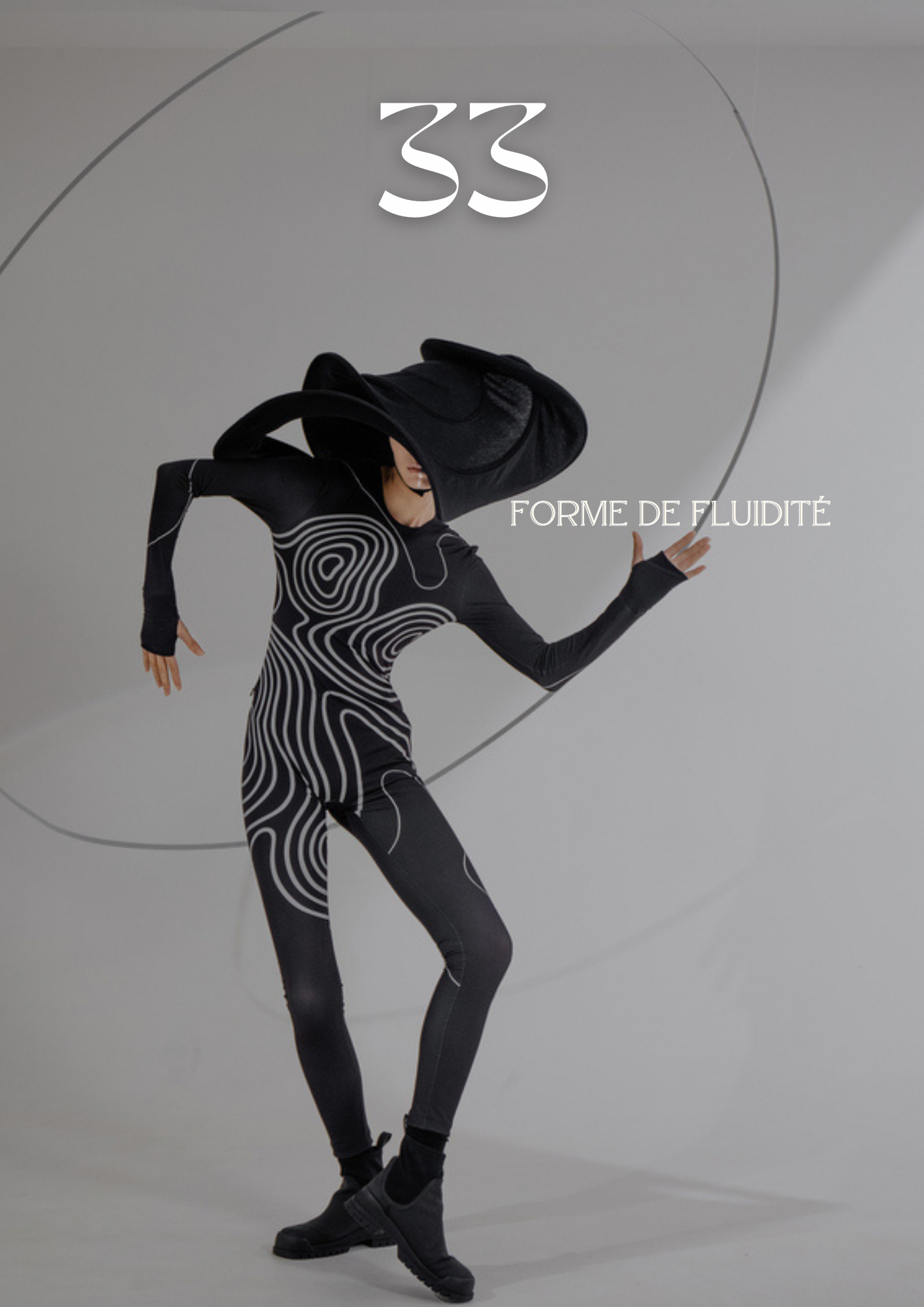
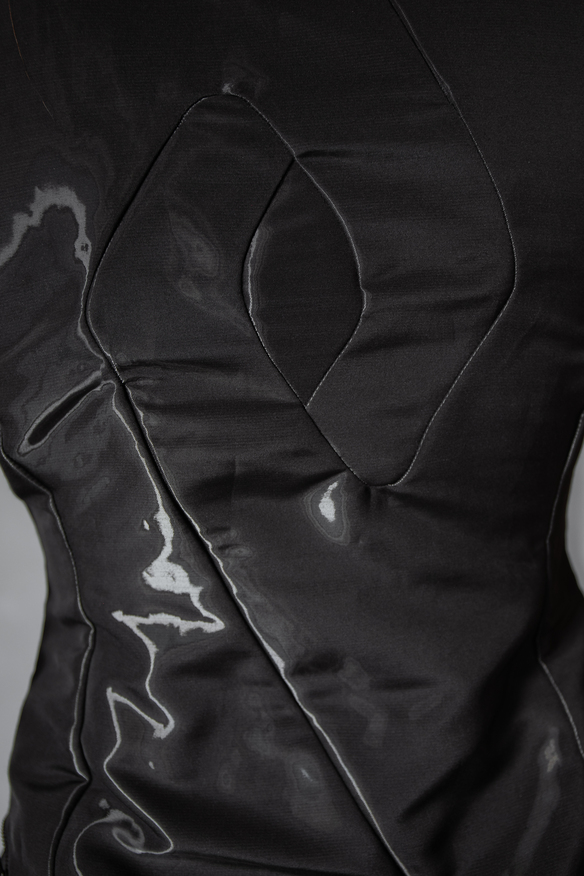
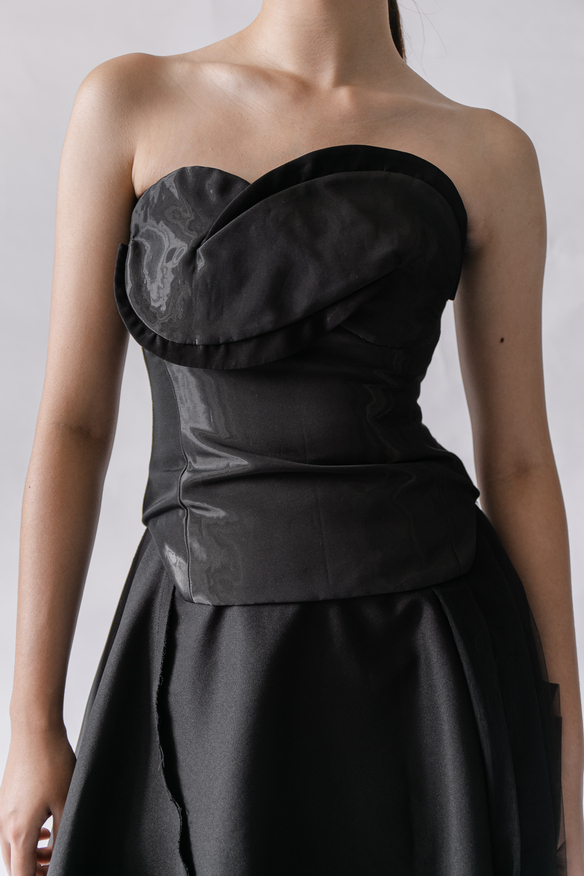
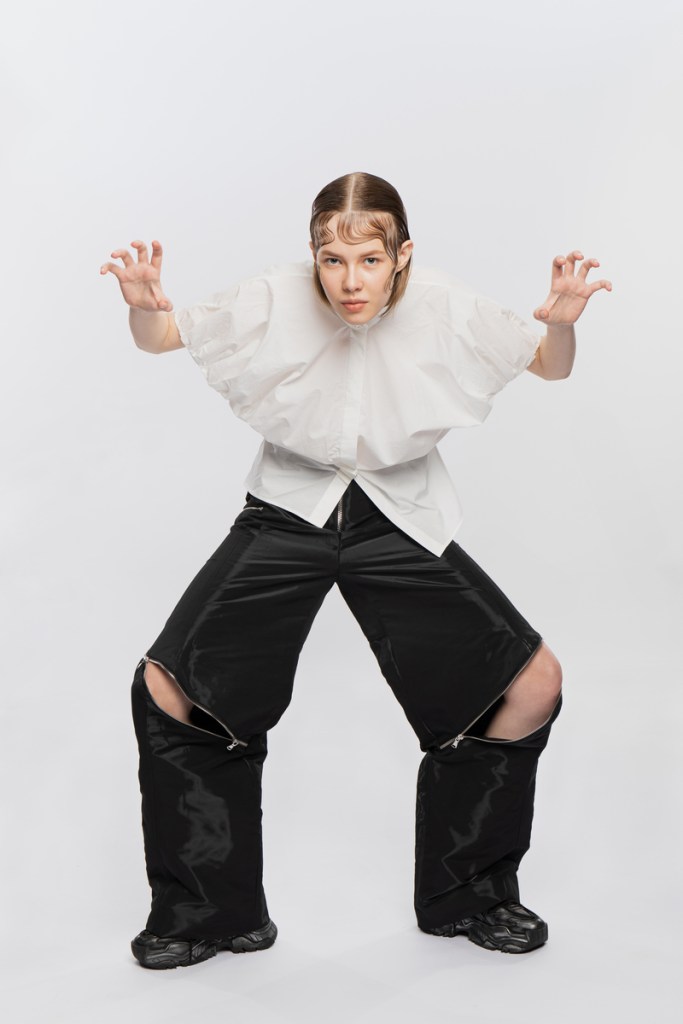
FORME DE FLUIDITÉ is a womenswear designer brand for daily occasions founded by architect, Sophia XiNLI. The brand’s creations merge structural form and sensuous texture inspired by art and architecture, evoking a sense of edgy and artistic wonder. With a passion for exploring the implicit intertwining of form and emotion the brand challenges the traditionally accepted role of daily clothing to arouse the wearer’s aesthetic resonance and express an alternative approach of contemporary femininity.


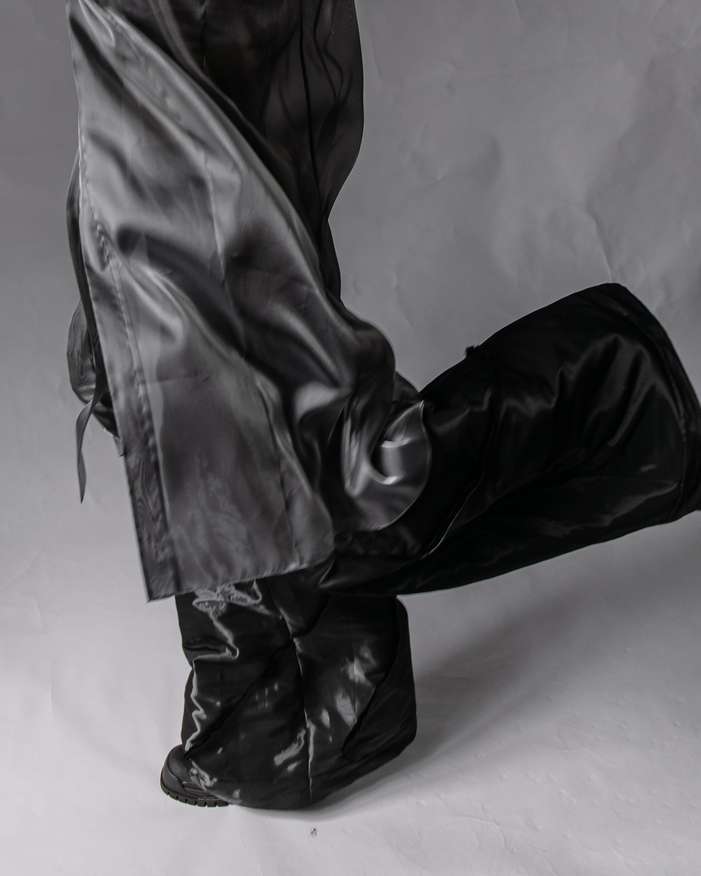
Sophia XiNLI, the founder of FORME DE FLUIDITÉ, practised as an architect in Shanghai and Hong Kong for more than 10 years. She has been involved in a series of high profile architectural and interior projects as project leader, including the first Mercedes Me Store in Hong Kong and the award-winning Nan Wan clubhouse in Guangzhou, China.
Having painted since childhood, later developing an interest in photography, this along with her architectural design work has formed Sophia’s lifetime devotion to explore the implicit connection between physical form and spiritual perception.
Sophia‘s passion for clothing design has been a natural progression from her architectural design work in which she had a love of form and detail. After determining to pursue her career in fashion she attended Central Saint Martins to ground herself in draping and then became apprentice to an experienced tailor to equip herself with essential pattern-making and sewing skills. In 2020, Sophia founded FORME DE FLUIDITÉ as a more personal and spiritual platform to express her philosophy of design and aesthetics.
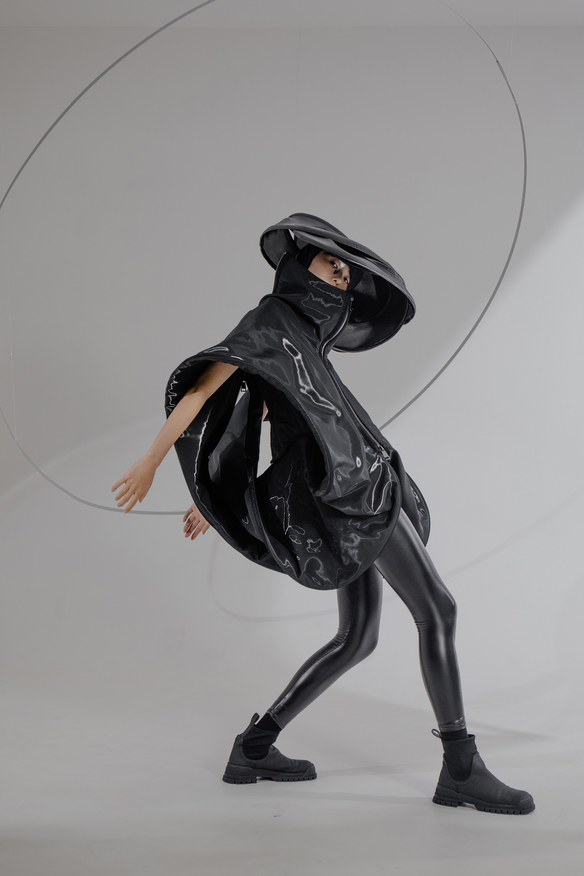

IN CONVERSATION WITH SOPHIA XINLI
When did you first realise you wanted to pursue a career as a designer after your background as an architect?
During my time working as an architectural designer I developed a fascination with geometric forms and how they shape our perceptions.
I came to realise that I really wanted to create a platform of my own to allow me to express my design philosophy freely, without constraints. I knew this passion would be a wider exploration for beyond the architectural world and I have been passionate about fashion for quite some time -so, naturally, that looked like the way forwards for me. In fact, I saw fashion as smaller scale architecture. I believed that in combining my architectural thought with fashion, I could create something very different and interesting. Those were the foundations of my brand, FORME DE FLUIDITÉ.
How FORME DE FLUIDITÉ is making the difference combining shapes with human perception?
I see garments as art objects and their forms can be perceived and be influential in the same way as art – like sculptures. When wearing clothes, people can be inspired and spiritually resonate with them. This is what I had in my mind when founding FORME DE FLUIDITÉ. My design process starts in a more intuitive state; and the inspiration of the forms comes from a wider world, such as art and architecture. In this way, our designs end up breaking the standard fashion design paradigms and advocate a lifestyle of individuality and a curiosity with the universe.


Who have been your biggest mentors in architecture related to fashion and what is the best advice they have ever given you?
Among the architects I have worked with, there are two that inspired me the most. One is my tutor from postgraduate school. Through him I learned about the storytelling of the design and how to communicate the design philosophy more efficiently with the audience. The other one was a talented senior architect I worked with when working in Hong Kong. The experience of closely working with him helped me form a solid foundation for my future design work, and also develop my persistence with details.
And there are another two well-known architects that have inspired me greatly — Japanese architect Tadao Ando and Swiss architect Peter Zumthor. Both focus on the use of the light, shadows and texture to form the space. It was whilst studying their work that I realised physical space can create spiritual connections with the audience. This became the very subject that I would like to explore in depth.
Can you talk about how you combine handwork with technology and the relationship of the machine to the couture?
My design involves a lot of creation of three-dimentional forms and I like to start working directly throught draping on the mannequin to explore the possibilities. Sometimes I use paper modelling and 3D computer modelling,as I used to do in architectural design, to help myself think.
After confirming the draft forms then I will hand the design to our pattern makers to develop. Our craftsmen in Hong Kong still keep the hand-made working methods, inheriting some very traditional and exquisite craftsmanship. But our designs are becoming more futuristic. This kind of integration between the new and the traditional is really interesting.
I can see that in the near future we will introduce parametric design into our work, which I have previously used in architectural design, – to bring more possibilities to fashion.


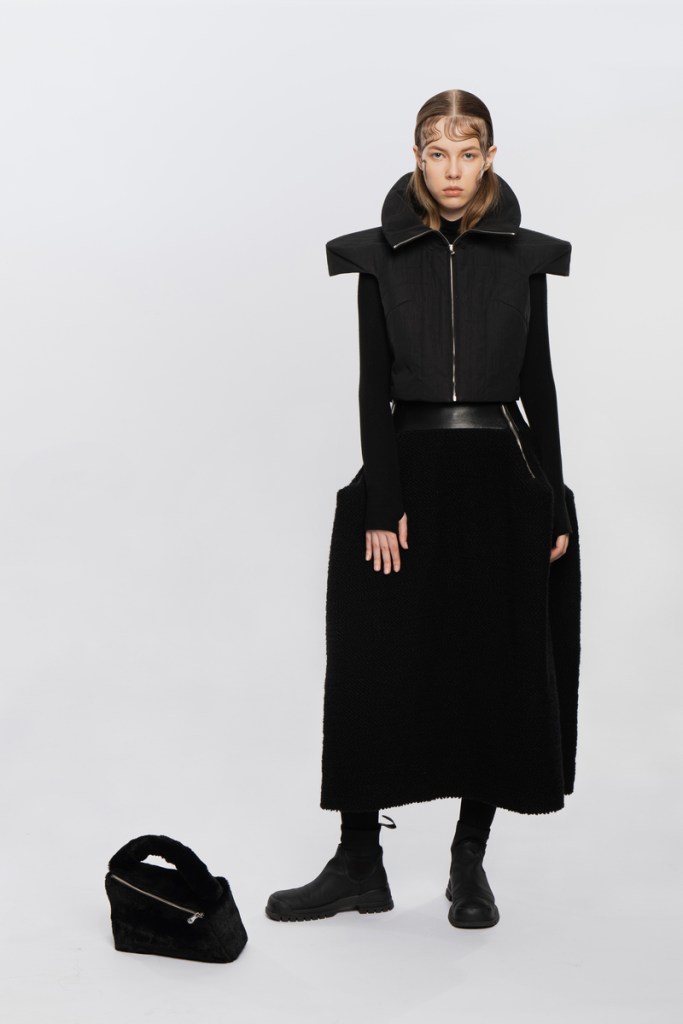
If you could go back and tell yourself one thing before beginning your career what would it be?
It would be “be yourself.”
It has taken me a long time to understand what creativity is due to my childhood experience growing up in the heart of industrial Mainland China. After so many years studying and working in the creative field, I have realized that creativity comes from each individual’s perception of the world. “Be yourself” would be the first step for being creative and that is what I would like to tell myself before beginning this creative career.
What was your biggest challenge when starting FORME DE FLUIDITÉ?
My biggest challenge was to understand how to run a business as a brand. It is a very different skill from being a good designer. To run a fashion business, you have to be crystal clear about the positioning of the brand, and how to refine the core and language of the brand and effectively express it to the audience, and how to balance the inner desire as a designer with the market demand. These are fields that I’d never experienced before working as an architectural designer.
Who would you most like to see wearing your garments?
The kind of people I would love to see wearing FDF have curiosity and independent minds. They are interested in art, science and design, and have their own aesthetic taste. They are happy to experience the new and not bound by rules. They love expressing their unique voice by what they do, what they wear and what they experience.


Name a few icons you admire or you would like to collaborate with.
In the fashion world I very much admire Rei Kawakubo’s forward vision and her unconstrained designs. Also I’m very impressed by Kei Ninomiya’s design structure and details. Besides, outside of the fashion world, I’m inspired a lot by Olafur Eliasson, Pablo Palazuelo and Naum Gabo about the forms, space and perceptions.
A letter to your future self. What would you write?
Dear future self,
What we have chosen was never going to be an easy path. On the day you see these words again, no matter what kind of state you are in, I hope you have always kept our original intention in mind – why we wanted to do this and what should have always been the most important things. And please remember to continue to celebrate each and every achivement along the way, even the small ones. Enjoy the journey. Be patient. And, be yourself, as always.






 33 MAGAZINE