

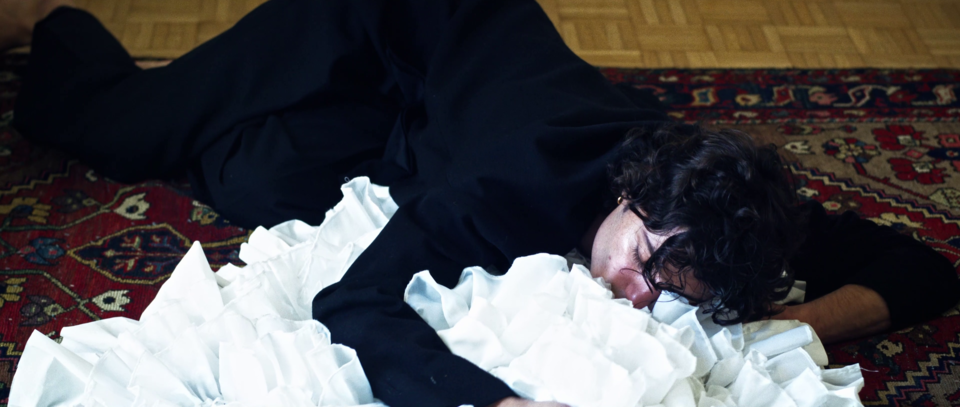
We are delighted to present an exclusive interview with Davide De Caro, the visionary Neapolitan stylist and creative director behind the captivating fashion film Candore (2025). This short film, a collaboration with talented filmmaker, photographer, and artist Paoli De Luca, invites us to explore the rich textures of life and emotion through a unique artistic lens.
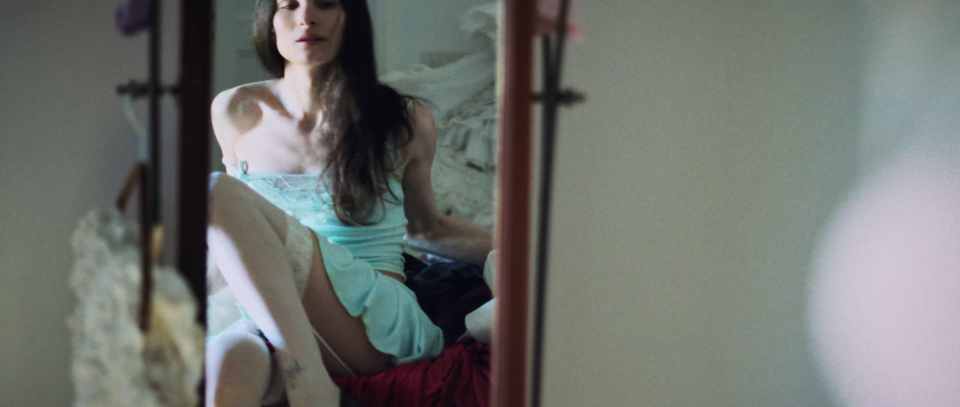
Set against the stunning backdrop of Naples, Candore weaves a poignant narrative that follows Adriana, a Neapolitan trans girl seeking solace from the mundanity of her daily life through cherished moments spent with her friend, Marcello. The film beautifully captures the eroticism of fleeting glances and intimate exchanges within a liminal, yet deeply romantic setting. By breaking away from the stereotypes often associated with representations of Naples, De Caro and De Luca create a fresh perspective that celebrates both individuality and connection.
The film showcases exquisite garments from renowned designers such as Nicola Indelicato, Adriana Hot Couture, Société Anonyme, Daria D’Ambrosio, and Lorenzo Seghezzi, each piece contributing to the film’s rich visual language. The original soundtrack by Neapolitan producer Marculedu enhances the storytelling, drawing viewers further into the emotive atmosphere that De Caro meticulously crafts.
Davide De Caro, having honed his skills at Polimoda in Florence, has an impressive background enriched by experiences working alongside prominent artists such as Brunori SAS, as well as contributions to esteemed publications like Vogue, Marie Claire, and Artribune. In our forthcoming interview, we delve into De Caro’s creative process, the inspiration behind Candore, and his vision for the intersection of fashion and film. This conversation with Davide De Caro promises to shed light on visual arts + the powerful stories that emerge when art and real life blend:
Can you elaborate on the initial inspiration behind “Candore”? What themes were you most eager to explore through the characters of Adriana and Marcello, and how do these themes subtly shift throughout the film?
The core inspiration behind Candore comes from my ongoing fascination with identity — it’s the reason I gravitated toward fashion as my main form of expression. Before Paoli and Mauro sent me the script, we talked at length about what fashion means to me: an immediate, intimate way of connecting with one’s inner self. It’s how I’ve explored my own gender, moving fluidly between masculine and feminine, and Paoli — as a trans artist — understood this instinctively.
What drew me most to the story is the game Adriana and Marcello play: playful, erotic, a little dangerous. By dressing each other, they carve out a private space where they can explore desire and identity, away from the constraints and expectations that shape their daily lives.
The film presents an exchange of glances between the protagonists that speaks volumes about their relationship. Can you discuss the significance of this intimate gesture within the context of the film, and how you aimed to visually represent this through your styling choices?
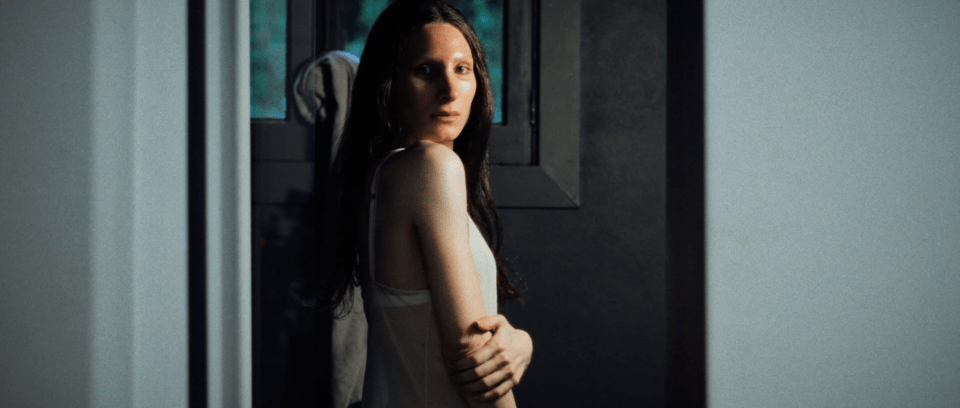
The exchange of glances is the heart of Candore. It’s about gaze as power — Adriana desires him, and with a single look she shows him who’s boss, overturning the usual narrative that frames trans women as submissive or defined by male desire. Her gaze shifts the entire dynamic.
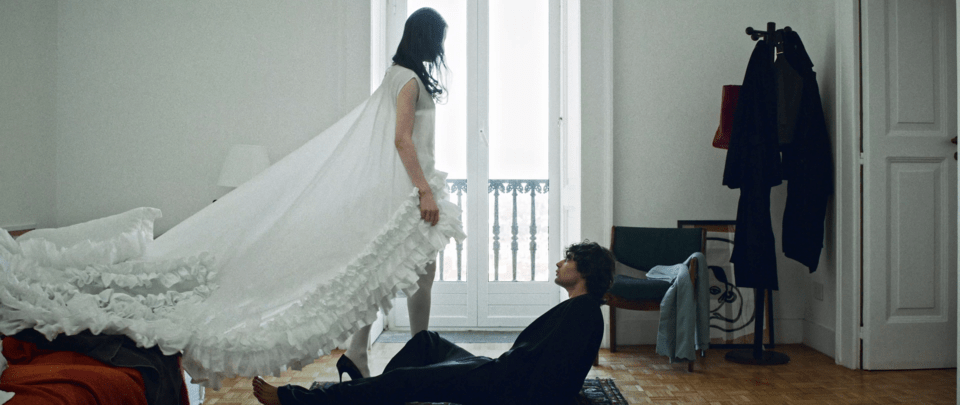
The styling reinforces this. He’s dressed in sober, refined pieces, almost understated, while she gets to play — to be bold, expressive, and fully in control. The clothes mirror the power exchange, revealing who leads the game long before the characters do anything.
In what ways did you want to challenge the typical representations of Naples in “Candore,” and how did this desire influence the visual and narrative elements of the project? Were there specific stereotypes you aimed to dismantle?
Naples — our home and part of the project’s core — is too often reduced to a vain mix of food, soccer, and seaside clichés. As part of southern Italy, it’s frequently framed as poor or backward, overshadowing its complexity and its deep, historic relationship with queerness.
Central to this are the figures of the femminielli — people existing beyond the male–female binary, documented since the sixteenth century and fully integrated into daily life, who echo ancient sacred figures. Traditions like the spusarizio masculino (a marriage between two men) reflect a culture where gender fluidity was never criminalized and often symbolized wholeness. Their legacy still resonates today.
With Candore, we wanted to reclaim this narrative: Naples as a place of spontaneity, desire, and unapologetic queer expression — shown through our own eyes, beyond stereotypes.
The choice of garments from designers like Nicola Indelicato and Adriana Hot Couture plays a vital role in character development. Can you discuss how you selected specific pieces for each character and what each choice conveys about their personalities?
The initial selection included pieces from many brands, but the dialogue that truly defined the characters centered on Adriana Hot Couture and Daria D’Ambrosio for Adriana, and Nicola Indelicato and Société Anonyme for Marcello.
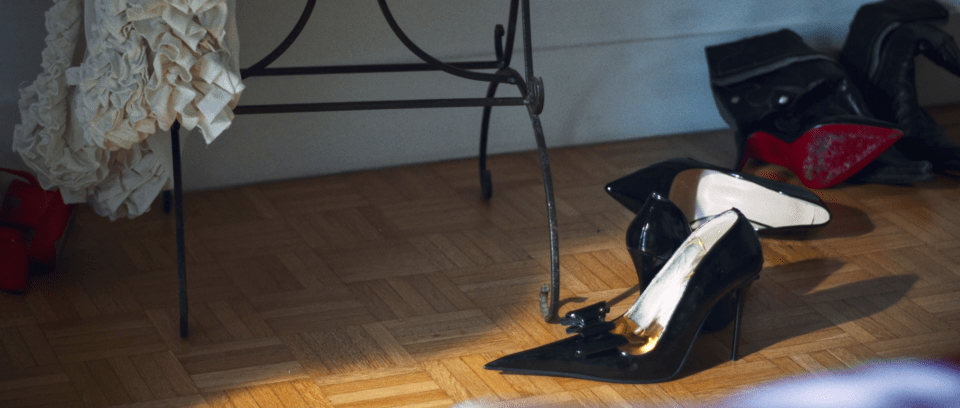
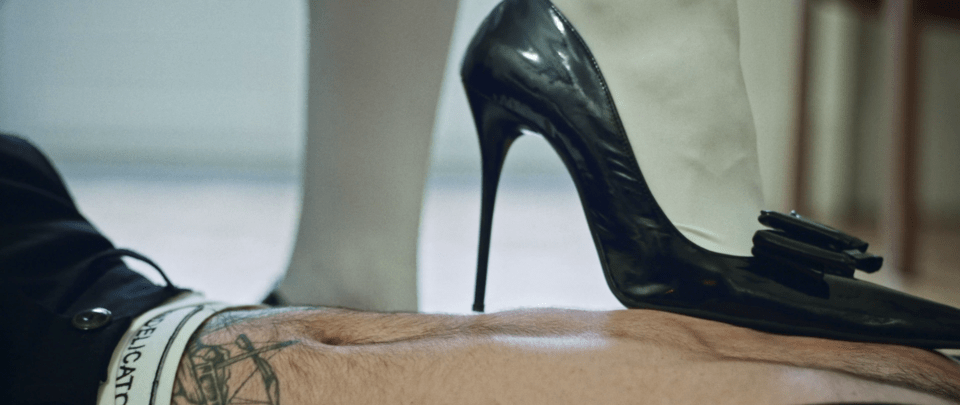
Adriana Hot Couture embodies inclusivity, freedom, and feminine empowerment. The Shiny Faux Leather Pointy Heels became central to her look — provocative and almost weapon-like. A Daria D’Ambrosio dress from the AMBROSIUS collection added contrast, with fluid, ethereal shapes and ruffles that amplify her bold, expressive presence, reflecting the control she exerts through her gaze.
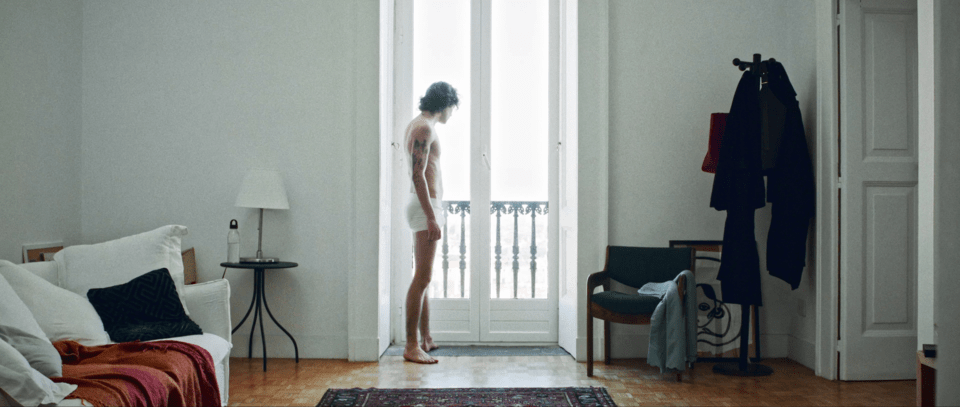
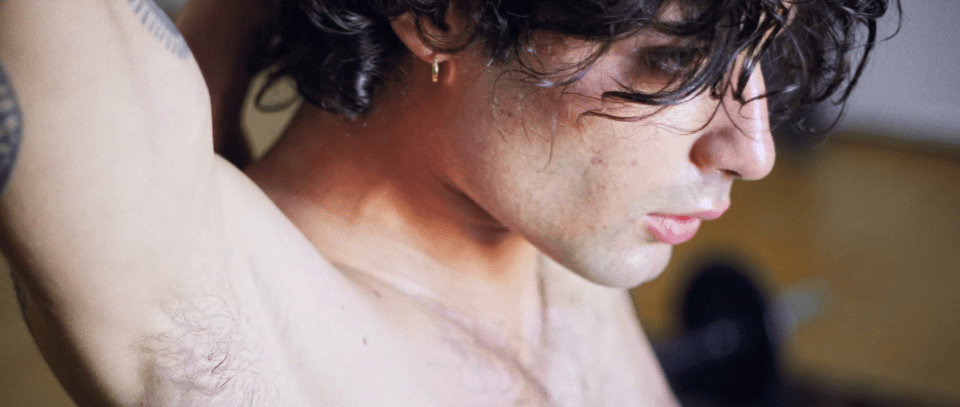
Marcello’s wardrobe plays with tension and restraint: Nicola Indelicato’s jockstrap reveals erotic curiosity and self-admiration, while the Société Anonyme smoking jacket and trousers reflect his quiet elegance. Together, their clothing underscores the characters’ intimate dynamic, translating unspoken desire and shifting control into visual form.
You worked closely with Neapolitan producer Marculedu to develop an original soundtrack for the film. How did the music influence the overall atmosphere of “Candore,” and how did you incorporate the sound design into the visual storytelling?
In Candore, it was the film itself that inspired the music, not the other way around. Marculedu began composing after seeing the completed footage, using the visuals as a guide to translate the atmosphere into sound. He immersed himself in the textures, fabrics, and even imagined scents of the house, crafting a frequency palette that mirrors the emotional arc of Adriana and Marcello. The score builds tension in real time, as if performed live within each scene, making the music feel intrinsic to the characters’ experience and amplifying the intimacy, eroticism, and rhythm of their movements.
The film navigates the tension between an aseptic, liminal setting and the deeply romantic interactions of the characters. Can you explain how you balanced these contrasting elements in your role as stylist and art director, and what was your vision for the setting itself?
Balancing an aseptic, liminal space with the romantic tension between Adriana and Marcello was one of the central challenges of Candore. As stylist and art director, I wanted the setting to reflect my relationship with queerness, identity, and belonging, creating an environment where color, contrast, and volume could speak as clearly as the clothes.
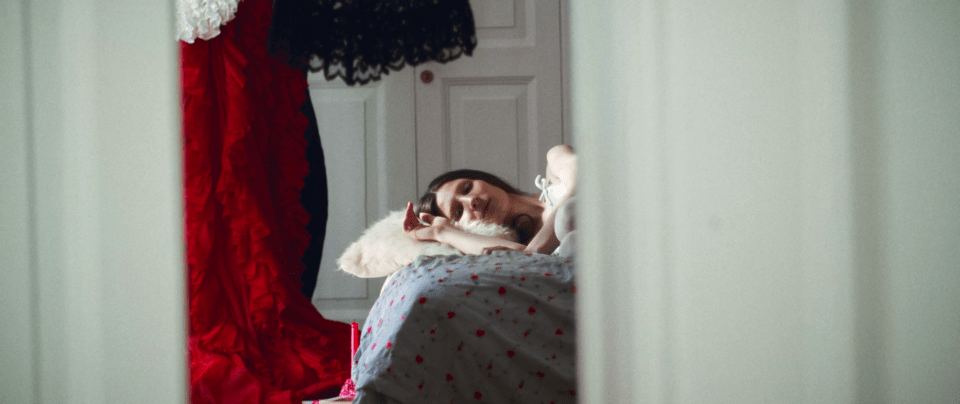
Working closely with Paoli, set designer Chiara Guerrasio and her assistant Luca Di Pace, we shaped a space that held sensuality, freedom, and elegance in equal measure. The location — a rented apartment on Corso Vittorio Emanuele — offered the perfect duality: close to Naples’ chaotic energy yet refined and elevated. Inside, we transformed Adriana’s nearly empty room by suspending garments from thin black threads, lettingfashion become part of the architecture. The rest of the apartment remained minimal and orderly.
This contrast mirrors the film’s emotional landscape: Adriana’s chaotic inner world contained, redirected, and challenged by her relationship with Marcello.
Collaboration appears to be a recurring theme in your work. How did your partnerships with the film’s crew, particularly cinematographers and editors, shape the final cut of “Candore”? Can you share any specific moments of collaboration that significantly impacted the project?
Collaboration shaped the entire language of Candore, especially in the dressing scene that becomes the film’s sensual heartbeat. With director Paoli De Luca and DOPs Ivan Attolino, Nicolò Esposito, and Leonardo Caprara, we designed the shot where Adriana traces Marcello’s body with her heel. The camera follows the heel in a slow, almost hypnotic movement, then freezes the instant she applies pressure — allowing tension, not dialogue, to speak.
Make-up artists Michele Perez and Sara Apicella deepened that intimacy, crafting Marcello’s sweat and the subtle heel mark that makes the power dynamic feel tangible. Marculedu’s score built a measured, magnetic climax beneath it all, while sound mixer
Giuseppe Panzanaro and sound editor Francesco Sorrentino shaped every breath, slide, and pause. And in the end, editor Marco Balzano brought all these layers together into a single sequence, making that moment feel suspended, charged, and unmistakably special.
Your background includes experience in both fashion and film; how did these two disciplines converge in “Candore”? Are there specific techniques or practices borrowed from fashion design that you applied to the film, and vice versa?
Fashion and film converge naturally in Candore because they’re rooted in the same instincts that shape all my work: my love for art, music, philosophy, and literature. These disciplines taught me to read images emotionally, not just aesthetically, and that approach guided every choice I made.
From fashion, I brought an obsession with silhouette, texture, and the way a garment can articulate identity before a character speaks. I treated each look like a philosophical object — something that carries meaning, tension, and desire within its shape.
From film, I borrowed rhythm and emotional pacing. Instead of asking only how does this look? I asked how does this move through light? How does it sound? what does it reveal when the camera breathes with it? Clothing became part of the mise-en-scène; every zip, heel click, and fabric crease helped drive the story.
In Candore, this sensitivity was essential. The garments shaped how the viewers perceive Adriana’s dominance, Marcello’s surrender, the erotic tension between them, and the mythology of their intimacy.Fashion gave the film its boldness and erotic charge; cinema gave the fashion its emotional depth. Together they formed a language where style becomes storytelling, and storytelling becomes a kind of philosophy in motion.
As a stylist, how do you see your role in the broader context of film production? In what ways do you believe stylistic choices can shape audience perceptions and emotional reactions to the narrative?
I see the stylist’s role as deeply narrative. We don’t just dress characters — we build the emotional architecture the audience reads instinctively. Clothes aren’t accessories to the story; they’re active participants. A zipper closing, a heel hitting the floor, a fabric clinging to the skin can shift the viewer’s perception instantly, revealing power, vulnerability, or desire accordingly.
My vision is shaped by influences that move quietly beneath everything I do: the dreamlike noir of David Lynch, the sensual melancholy of Lana Del Rey and the radical clarity of Paul B. Preciado — whose titanic work of calm, hopeful deconstruction informs every step I take. Their worlds — oneiric, intimate, reflective — remind me that aesthetics are never just surface. They’re ways of thinking, ways of being.
For me, styling becomes a form of silent storytelling: a language of textures and gestures that guides the viewer’s emotional reaction as much as the script or the camera does.
Looking ahead, what do you hope viewers take away from “Candore”? Are there specific conversations or reflections you wish to inspire regarding identity, connection, and the landscapes we inhabit? What impact do you envision the film having within contemporary discourse?
More than anything, I hope Candore gives young viewers what I hardly ever had growing up: creative work that offers an authentic, unapologetic representation of queer and Neapolitan identity — not filtered, nor stereotyped. Even with a small budget and a team of young, not-yet-established creatives, we wanted to prove that you can make something aesthetically ambitious and politically alive at the same time.
In a moment marked by a global shift towards conservatism — the rise of right-wing populism and growing support for conservative movements among younger generations — I feel an urgency to make art that resists. Art that insists on complexity, on desire, on fluidity, on the right to be seen.
If Candore can spark conversations about identity, connection, and the places we come from — if it can show that beauty and resistance can coexist — then it has already done its job.
CAST + CREW
PRODUCTION, COSTUME, ART DIRECTION: Davide De Caro @davidedecaro
STORY, SCREENPLAY: Paoli De Luca + Mauro Armenante @paolideluca + @mauroarmenant3
EDITORIAL PHOTOGRAPHY: Paoli De Luca @paolideluca
DIRECTOR OF PHOTOGRAPHY: Ivan Attolino, Nicolò Esposito, Leonardo Caprara @ivan_attollino + @_rog0._ + @_principe.leo_
SOUND MIXER: Giuseppe Panzanaro @giussee_ | SOUND EDITING: Francesco Sorrentino @trezzovskjiy
SET DESIGN: Chiara Guerrasio + Luca Di Pace @chiaraguerrasiooo + @_sololuca
MAKE-UP: Michele Perez and Sara Apicella @perezmakeup + @goldenmakeuparea__
EDITING: Marco Balzano @balzano_marco | CONTINUITY: Gianluca Scognamiglio @gianluxito
TALENT: Jasmine + Michele Guadagni @__jaasmyn3 + @ragazzodoro
ORIGINAL SCORE: marculedu @marculedu
PRODUCTION ASSISTANT: Alessandro Ragosta @ragostalessandro
SPECIAL THANKS: Nicola Indelicato – Société Anonyme – Adriana Hot Couture – Daria D’Ambrosio – Lorenzo Seghezzi – Salvatore Manzo – Femarjo Jewels
 33 MAGAZINE