

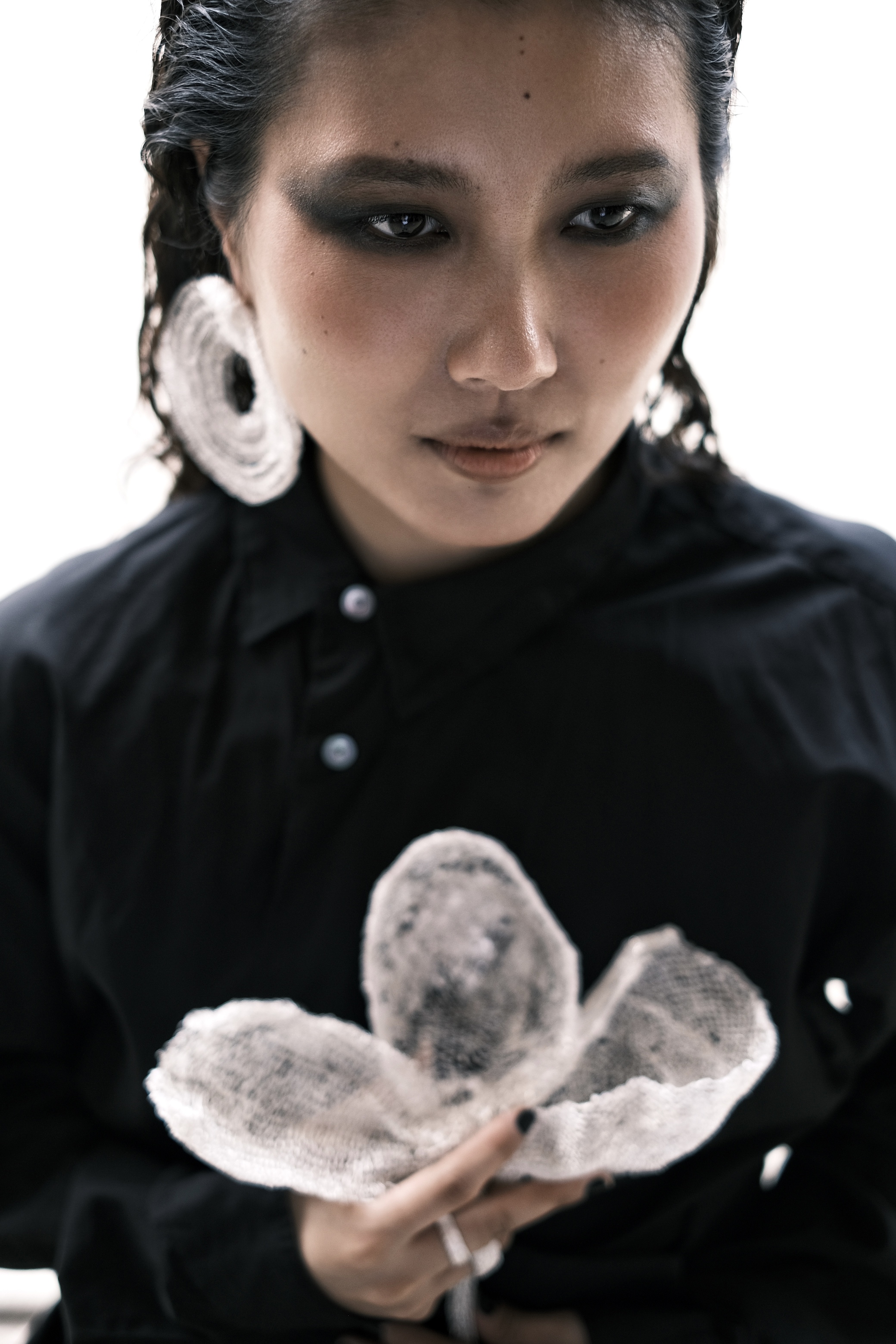
We bring you into the poetic world of contemporary jewelry, where each piece tells a story waiting to be uncovered. Meet Jacqueline Yajing Yao, the visionary founder of Jacqueline Euvoce, based in Atlanta, GA. Holding an M.F.A. in Jewelry from the esteemed Savannah College of Art and Design (SCAD), Jacqueline’s artistic trajectory began as a diamond setter at Tiffany & Co., a foundation that instilled in her a profound respect for precision and craftsmanship—a hallmark of her jewelry-making approach today.
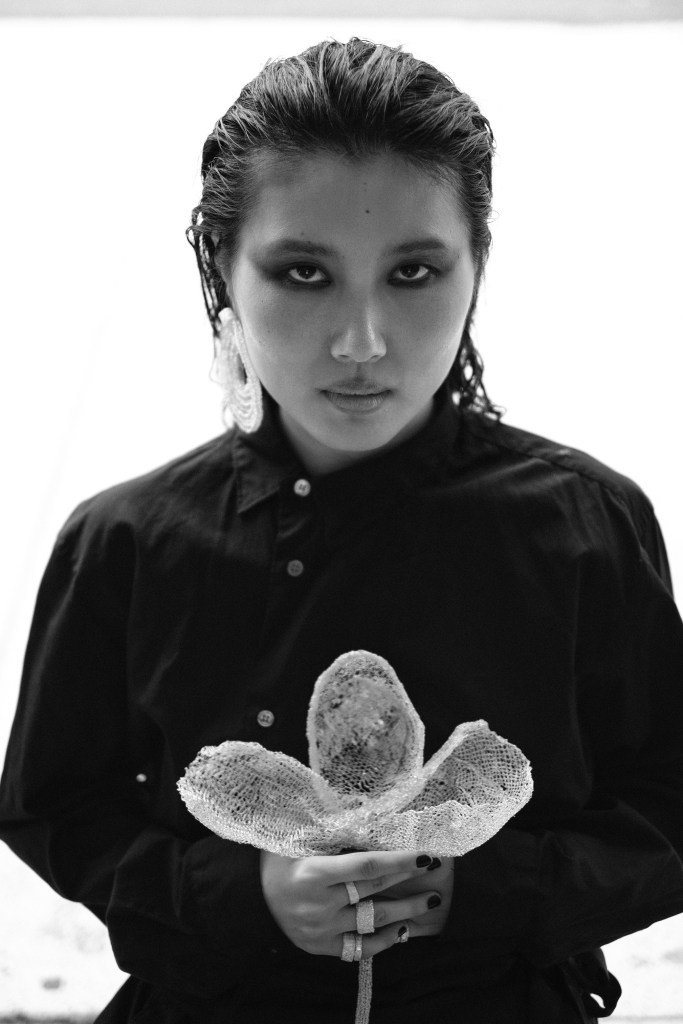
Jacqueline’s work is a harmonious fusion of traditional metalsmithing and conceptual design, resulting in sculptural, wearable objects that delve into themes of resilience, identity, space, and emotional memory. Using silver wire as her primary medium, she employs techniques such as weaving, crochet, forming, and soldering, transforming personal reflections into tactile art forms. Her pieces embody a delicate balance between structure and softness, intention and intuition, serving as quiet meditations on strength, beauty, and the connections that bind us. Jacqueline’s creations stand out as a testament to the slow, thoughtful process essential to true artistry. For her, jewelry is not merely an object; it serves as a bridge—connecting people, weaving memories, and igniting the imagination. Each piece is crafted by hand, an intimate dialogue between heart, hand, and metal that weaves tenderness and tension into physical existence.
Her work has graced prominent venues such as NYC Jewelry Week, Milano Jewelry Week, and the Philadelphia Museum of Art Craft Show, among others. Featured in esteemed publications like VOGUE British and GLAMOUR UK, Jacqueline’s artistry has earned accolades, including the Gold Prize in Accessory Jewelry at the International Design Awards in 2020.
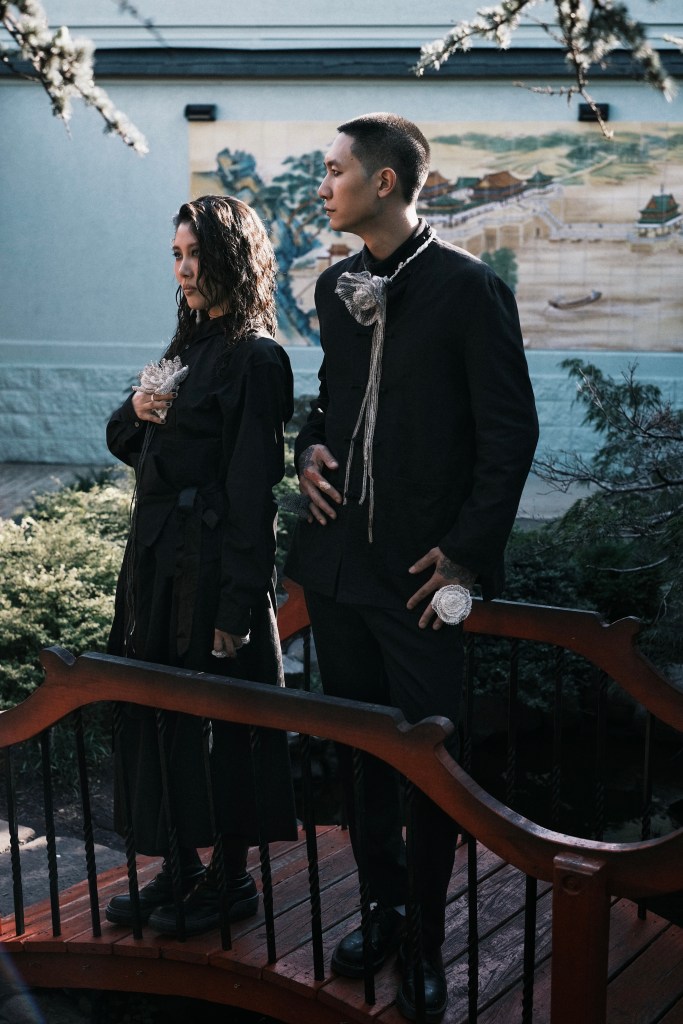
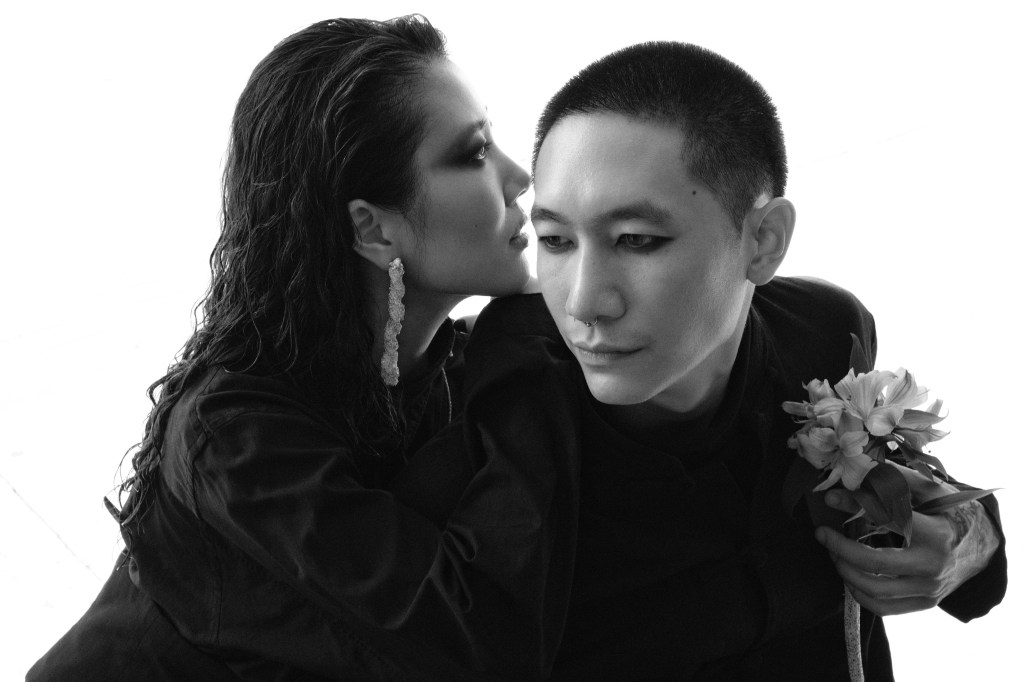
Beyond her studio, Jacqueline is a narrative architect in the contemporary jewelry community as the Content Coordinator for NYC Jewelry Week, where she shapes the stories that surround this vibrant field. Her latest collaboration, “Blossoming,” with multidisciplinary artist Andrew Blooms, aims to create a vibrant bridge within Atlanta’s Chinatown, connecting generations and honoring heritage while welcoming an evolving future.
Join us to meet Jacqueline Yajing Yao, where jewelry becomes a poetic dance between craftsmanship and meaning, inviting us all to slow down and appreciate the intricate beauty of human connection.
Jacqueline, your journey into jewelry began with an apprenticeship as a diamond setter at Tiffany & Co. Can you share how this experience shaped your understanding of craftsmanship and precision and how it informs your work today?
My time at Tiffany & Co. was a formative chapter in my journey as a jeweler. Working as a diamond setter meant that every detail mattered—every claw had to be aligned with absolute precision, and every facet of a stone needed to sit perfectly. There was no margin for error. Through this experience, I developed a deep respect for craftsmanship, not only as a technical requirement but as an act of devotion—to the material, to the process, and ultimately to the person who would wear the piece.
That discipline has stayed with me and continues to shape the way I work today. While my own practice has shifted toward weaving and crocheting silver wire into sculptural forms, the patience and meticulous care I learned at Tiffany remain at the core of my process. My pieces are delicate and soft, but every stitch and connection is built to be structurally sound, much like the invisible architecture of a bridge.
In many ways, Tiffany taught me to honor precision, and I now translate that into creating works that embody what I call “soft power”—objects that are gentle yet hold an undeniable strength. This balance of resilience and sensitivity is what gives my jewelry its voice: it becomes not just an ornament, but a vessel for memory, emotion, and human connection.
You hold an M.F.A. in Jewelry from SCAD. How did this formal education influence your artistic style and approach to jewelry making? Are there particular lessons or mentors from your time there that have significantly impacted your practice?
Pursuing my M.F.A. in Jewelry at SCAD gave me the freedom to explore jewelry not just as adornment but as a form of visual language and conceptual art. My thesis, Experience. Jewelry. Space, was born during that time, shaping how I think about jewelry as a bridge—between self and world, memory and imagination, maker and wearer. SCAD provided me with a space to experiment, question what jewelry is, and ground my work in both technical skill and conceptual depth.
One of the most valuable lessons I carried from SCAD was the importance of “space”—not only physical or material space but mental and emotional space. I began to understand how jewelry can create room for reflection, intimacy, and dialogue. That realization continues to guide my practice today. I was fortunate to have our amazing Chair, Jay Song, and my favorite professor, Lanelle Keyes, who encouraged me to embrace my instincts and to let weaving, crocheting, and material exploration become an extension of my inner voice. They taught me that jewelry can be minimal yet profound, quiet yet powerful. Their guidance reinforced my belief that jewelry holds the potential to be a bridge between the tangible and the intangible, and that has become the essence of my work.
Your jewelry explores themes such as resilience, identity, and emotional memory. Can you elaborate on how these themes manifest in your work, and what personal experiences contribute to your exploration of these concepts?
Resilience, identity, and emotional memory are at the heart of my practice. For me, jewelry is never just about form—it carries stories, both visible and invisible. I often think of my pieces as vessels that hold memory and emotion, almost like wearable sculptures that whisper back to the wearer.
Resilience comes through in the way I work with silver wire. Individually, each strand is fragile and delicate, but when woven together, they form something incredibly strong. This process mirrors human resilience—the idea that vulnerability and fragility can be transformed into strength through connection and persistence.
Identity enters my work through cultural memory and personal reflection. Growing up in China, traditions such as the longevity lock gifted to newborns shaped my early understanding of jewelry as something more than ornament. It was a blessing, a protector, a symbol of belonging. These ideas continue to inspire me to create pieces that embody heritage while remaining deeply personal.
Emotional memory guides much of my design process. When I weave or crochet wire, I often revisit past experiences—moments of silence, joy, or struggle. These emotions become embedded in the textures and patterns of the work. My hope is that when someone wears my jewelry, they, too, feel an echo of their own memories and connections. In this way, my work becomes a dialogue: between myself, the piece, and the person who chooses to wear it.
The techniques you employ, such as weaving and crochet, blend traditional metalsmithing with innovative design. How do you choose which techniques to use for a particular piece, and what significance do these methods hold for your artistic expression?
Weaving and crochet have become central to my language as a jeweler because they embody both fragility and strength. Each technique allows me to transform something as delicate as a strand of silver wire into a structure that is resilient, tactile, and full of meaning. The act of weaving is meditative for me—it mirrors the process of building connections, stitch by stitch, moment by moment.
After the weaving, I solder and hammer the pieces repeatedly. This rhythm reinforces the structure and gives the work a physical strength that contrasts with its delicate appearance. For me, that contrast is essential—the jewelry carries both softness and resilience within it.
When I choose a technique, it depends on the story I want to tell. Crochet can create organic, flowing forms that feel intimate, almost like capturing breath or memory. Weaving, on the other hand, establishes rhythm and structure, evoking the idea of bridges and grounding strength.
In the end, these processes embody my philosophy of “soft power.” They show how something fragile can be transformed into something enduring, and how vulnerability can hold its own quiet strength.
Jewelry, for you, is described as a bridge between people and experiences. How do you envision your pieces facilitating these connections, and can you share a story where your jewelry sparked an intimate dialogue for someone?
I have always seen jewelry as a bridge—something small and intimate that has the power to connect people, memories, and emotions. Unlike larger works of art, jewelry is worn close to the body; it moves with us, it absorbs our stories, and it often becomes part of who we are.
One of the most meaningful experiences happened during my solo exhibition. A lady stood in front of one of my pieces for a long time, simply smiling. I didn’t want to interrupt her, so I observed quietly. Later, when we spoke, she told me that the piece had brought back beautiful memories for her. I was so touched and grateful in that moment.
That is exactly what I hope for—that my work can create a space where people connect with themselves, their own memories, and emotions. It is not only about me or the object but about the dialogue between myself, my work, the viewer, and the intimate space we share. When someone finds their own story within my jewelry, that is the greatest reward.
Can you discuss the balance of structure and softness in your designs? How do you achieve this interplay in the materials and forms you choose?
Balancing softness with structure is central to my practice. On the surface, my pieces are light, delicate, and almost ephemeral—but beneath that softness lies a strength created through repetition, soldering, and hammering. Each stitch of silver wire builds upon another until the structure becomes resilient, able to hold itself and carry meaning.
For me, softness itself is a form of strength. Like water, the sun, or a mother, softness carries infinite power and has the ability to nurture life. This gentle force is not the opposite of strength—it is strength in its own right. It is continuous, sustaining, and deeply powerful. Through weaving delicate silver threads into enduring forms, my work seeks to embody and communicate this kind of energy.
What I hope people feel when they encounter my jewelry is this coexistence: that strength and softness are not opposites but partners. To me, this is “soft power”—a gentle force that grounds, empowers, and nurtures while remaining profoundly human.
Website: https://jacquelineeuvoce.com/
Follow JACQUELINE EUVOCE HERE
 33 MAGAZINE