

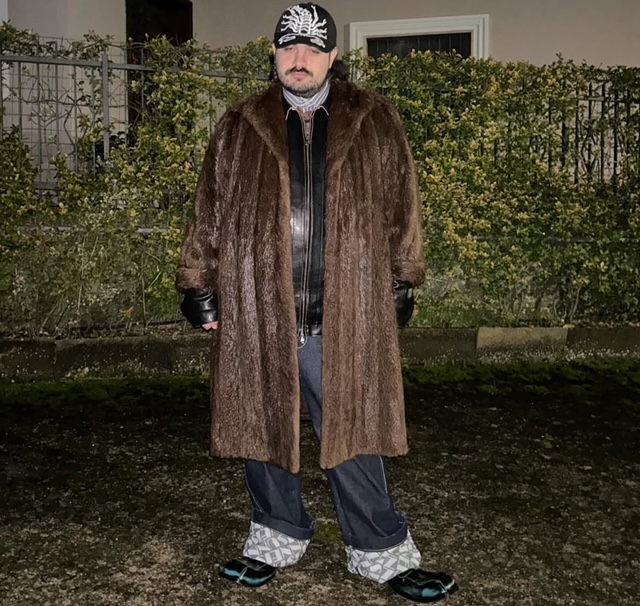
Luigi D’Elia, a talented fashion stylist: one of the most promising personalities in Italian fashion. At just 26 years old, his name appeared in the credits of music videos for major Italian artists and he has already collaborated with iconic brands. His creative vision has led him to work with international celebrities such as Tina Kunakey, Miriam Leone, and Eva Green. Luigi is on the riseand ready to make his mark in the fashion world!
Words + Interview by Mariachiara Esposito
The Transformative Role of Fashion + Celebrity Stylists as A Visual Language for the Future
The role of fashion stylists—particularly those who work closely with celebrities—has emerged as a vital component in shaping not just trends, but the very language of visual communication in our culture. Fashion is an expression of identity, values, and aspirations, and stylists serve as the interpreters of these narratives, using their unique vision to curate looks that resonate with the public. Their work transcends mere aesthetics; it serves as a profound commentary on societal shifts, cultural movements, and the complexities of contemporary identity. At its core, fashion is a visual language—a means of communicating ideas, emotions, and connections without uttering a single word. Fashion stylists are adept at reading this language and, through their artistry, they translate the desires and personalities of their clients into compelling visual statements. The clothing choices, accessories, and overall styling create a narrative that captures attention, sparks conversation, and influences public perception. When a celebrity steps onto the red carpet, for instance, their ensemble is not merely a fashion choice; it is an orchestrated display that tells a story, be it one of defiance, celebration, or redefinition of beauty standards.
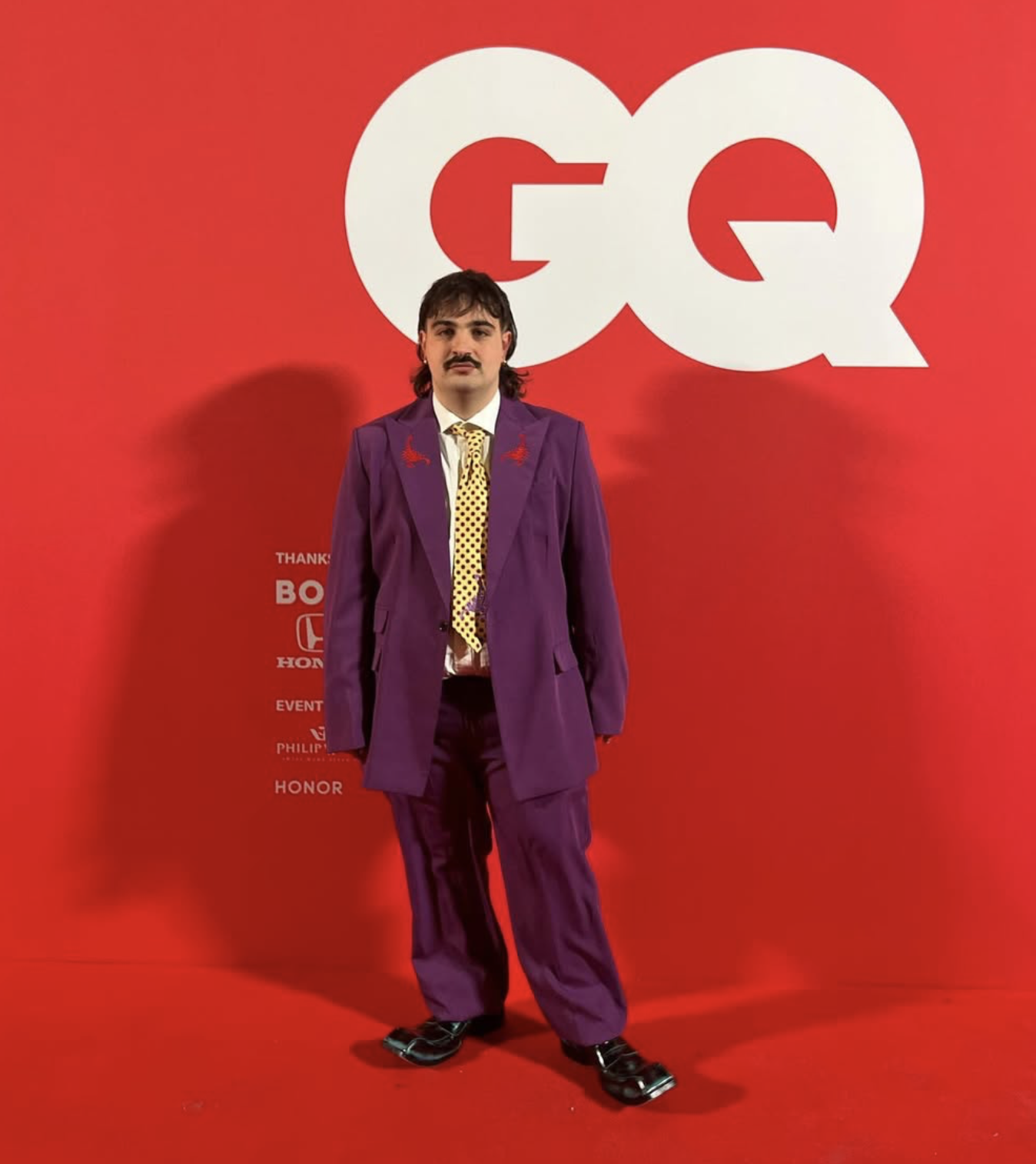
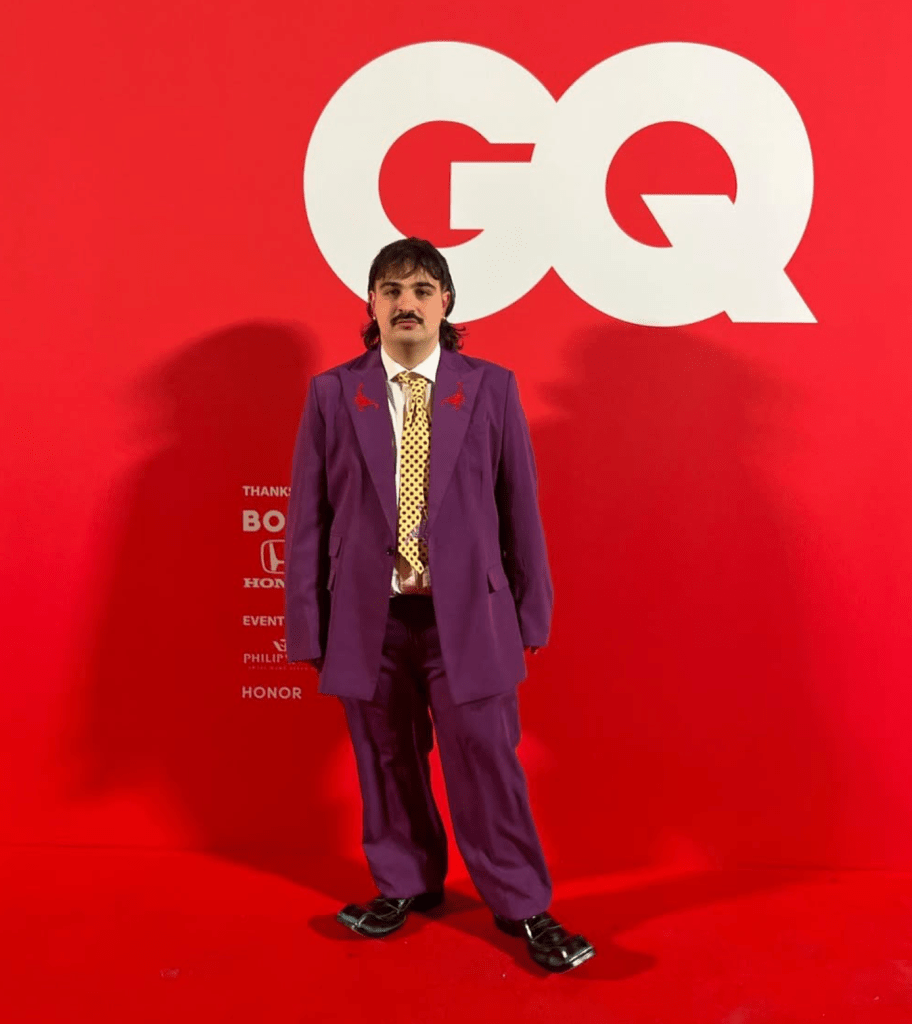
Fashion Stylist Luigi D’Elia at GQ Man of The Year in Milan, Italy
As cultural advocates, fashion stylists wield the power to shape contemporary dialogues around representation and diversity. In today’s society, where authenticity and inclusivity are increasingly valued, the choices made by stylists can challenge stereotypes and promote a wider range of voices within the fashion industry. By choosing to work with emerging designers, embracing sustainable practices, or highlighting marginalized communities, stylists can influence the trajectory of fashion design, encouraging innovation that aligns with the values of future generations. Moreover, the rise of digital platforms and social media has further amplified the fashion stylists’ impact. Through visually-driven content on digital platforms, stylists can reach vast audiences and create viral trends overnight. In shaping the future of fashion design, the role of the fashion stylist is twofold: they act as both curator and innovator. By harnessing their creativity and insight into cultural trends, they can inform designers about what resonates with audiences, paving the way for collections that are not only visually stunning but also socially relevant. Fashion stylists can help foresee the trends that will define the next generation of fashion, encouraging more thoughtful and impactful designs that reflect a more diverse and interconnected world.
As we move forward, the importance of fashion stylists as visual communicators will only continue to grow. They will remain key players in bridging the gap between fashion design and consumer culture, shaping narratives that resonate beyond the surface. Through their work, they not only influence the aesthetic landscape but also cultivate a richer understanding of the stories we wish to tell through fashion. In this dynamic interplay, the future of fashion design will likely be characterized by greater collaboration, inclusivity, and creativity, with stylists leading the charge toward new expressions and interpretations of style.
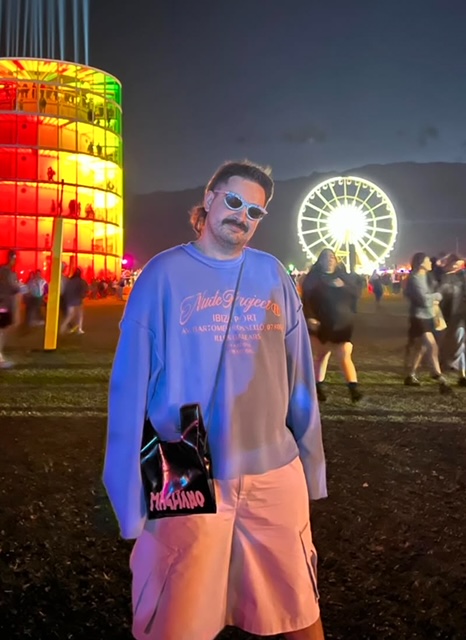

”STYLING IS NOT JUST AESTHETICS, BUT A VISUAL LANGUAGE THAT GOES BEYOND APPEARANCE” – Luigi D’Elia
In Italy, celebrity styling is not merely an art form focused on appearance but a true visual language. Each look chosen for a celebrity tells a story, communicates a message, and plays a role in shaping their public identity. The fashion stylist, therefore, becomes a storyteller, transforming clothing into a symbol that goes beyond simple aesthetics. In this context, professionals like Luigi D’Elia do more than curate looks – they contribute to a broader cultural conversation, where style serves as both a means of expression and a reflection of societal trends.
IN CONVERSATION WITH LUIGI D’ELIA
How did your journey into the fashion world start? What inspired you to pursue this career?
I have always been fascinated by the world of fashion since I was a child. I was a huge fan of the E! Entertainment programs on Sky, and watching shows like Fashion Police with Joan Rivers and The Rachel Zoe Project, I always thought that I would love to work in creating the looks for celebrities. My journey into fashion began by assisting many stylists who taught me how to do this job. This path is something I would recommend to anyone who wants to pursue this career because it is the only way that truly guarantees you the opportunity to learn the craft. After three years as an assistant, I started working on my own projects, both in the editorial field and with celebrities and talents, trying to develop my own personal and consistent style.
How important is the type of school you attend? Is it essential for someone pursuing this career?
The type of school you choose is absolutely important for pursuing this path, but I wouldn’t call it essential. Fashion academies are important because they give you a method and a broader cultural knowledge that you don’t necessarily learn on the job. The study of other forms of art, such as visual arts, music, the history of costume, art, and performance, is essential for defining your career and stylistic coherence. That being said, I wouldn’t define the educational path as essential because, unfortunately, fashion schools in Italy are increasingly private, and this is certainly not accessible to everyone. I believe that, apart from the educational path, the most important thing is to start working in the field, as I mentioned earlier, as an assistant. From these experiences, you can learn a lot.
What experiences do you consider important for your professional growth?
The experiences that have shaped me the most are definitely those linked to significant projects. The first one was definitely the 2021 Sanremo Festival, where I learned to manage work under extreme stress, but above all, I honed the art of problem-solving, which is a central skill in our work. Another very interesting experience was when I worked on the Styling team for X Factor, where you always have to work against all forms of time and space, ready for any unexpected event. Other more recent experiences that have shaped me a lot were when I had to create a creative and artistic direction for a character. In these cases, you have to work a lot on both cunning and creativity, using imagination to make the project captivating and fascinating to everyone.
You’ve worked with many prominent personalities. How do you tackle the challenge of interpreting their personal style while maintaining your creative vision?
Trying to maintain the personal style of the celebrities I work with and blend it with my own taste is always a fun challenge. At the beginning, I try to step back a bit, trying to understand their feelings, preferences, and tastes, and then I try to offer my own vision. I try to elevate their references and guide them toward a more editorial approach, even when working on more commercial tasks. There are times when the talents come to me and ask me to build an identity and an aesthetic concept for them, so in those cases, I try to think things through carefully and ensure that the path I envision for them makes sense and isn’t just a forced idea in my mind. What I aim to do is create a bridge between my ideas and the talent’s, so that we can work with shared and harmonious visions.
I saw that you had the opportunity to work with Mondo Marcio x GQ Man of the Year Awards, curating his look with brands like Cartier and Juun J. What elements or concepts did you base your choice of these two brands on for him? What do they represent for you in relation to his image and style?
The work I did for Mondo Marcio at the GQ Man of the Year Awards was probably the most beautiful work I did this year. I tried to imagine him with a look that suited his person and was respectful of what he wanted to communicate. My search began by immersing myself in the 90s hip-hop culture, using an approach close to the urban New York culture of the 90s. I liked the idea of finding a brand that could match large proportions and volumes, yet still connect with the world of tailoring. Juun J seemed like the perfect brand for the looks. As for Cartier, when it came to eyewear, it was my first choice. The result was very appreciated, even winning the award for the Best Look of the evening from GQ, which brought me great satisfaction.
How important is image + visual identity for you as a stylist?
I believe that for every stylist, visual identity and image are fundamental components of the work. In addition to these aspects, another important factor is having a vision and personal references. For example, I try to incorporate ironic elements into my work whenever I can. My biggest aesthetic influences are definitely from 70s and 80s Italian television, such as Raffaella Carrà, Renato Zero, but also, surprisingly, Lucio Dalla, who revolutionized an era with his collaborations with CP Company. I have always been fascinated by these icons who changed the way television and Italian fashion were done through great ironic research.
If you had to write a letter to your future self, what would you write?
This question is very difficult for me to answer because I don’t like talking or giving advice to myself. I try to live day by day without closing myself off from any career or personal opportunities. So, unfortunately, I don’t think I would ever write that letter.
What is your biggest dream?
For sure, my biggest dream has always been to bring major American awards shows to Italy, with great attention to looks, performances, and awards. Something like Sanremo, but giving it a younger and fresher appeal.
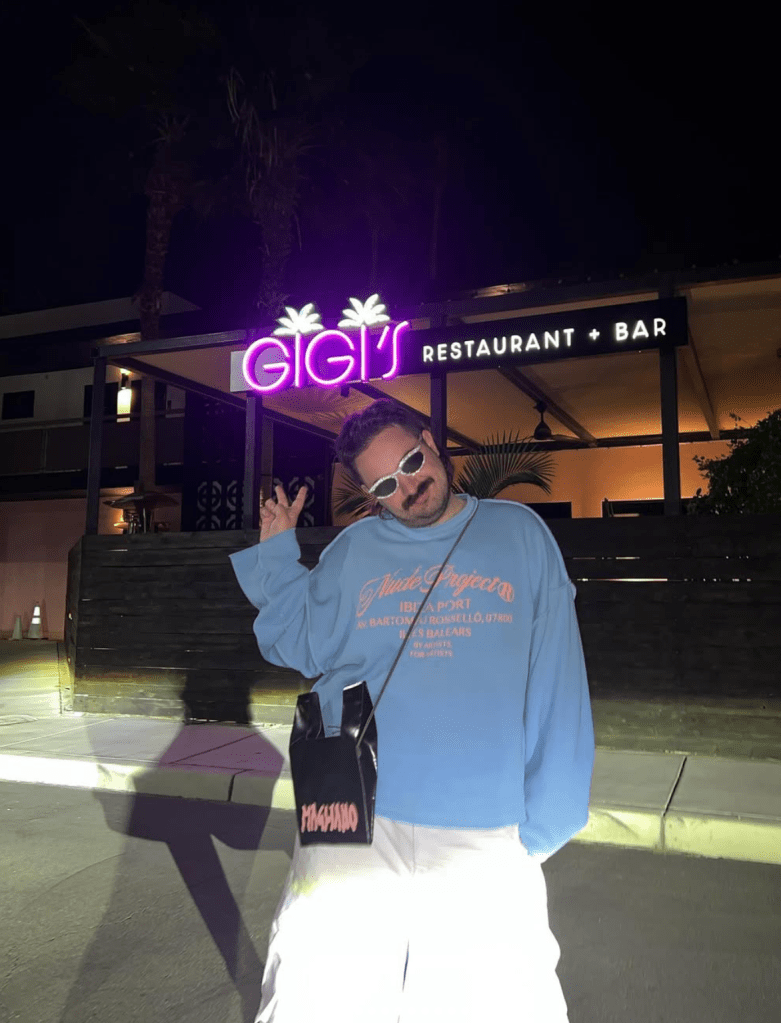
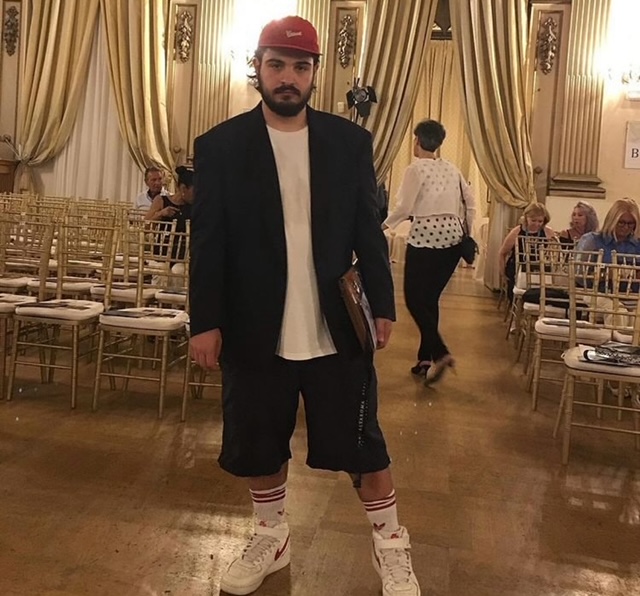
Follow LUIGI D’ELIA HERE
Words + Interview by Mariachiara Esposito | Images Courtesy of Luigi D’Elia
Editing + Publishing by Mira W. at MOODART School of Fashion Communication
 33 MAGAZINE