

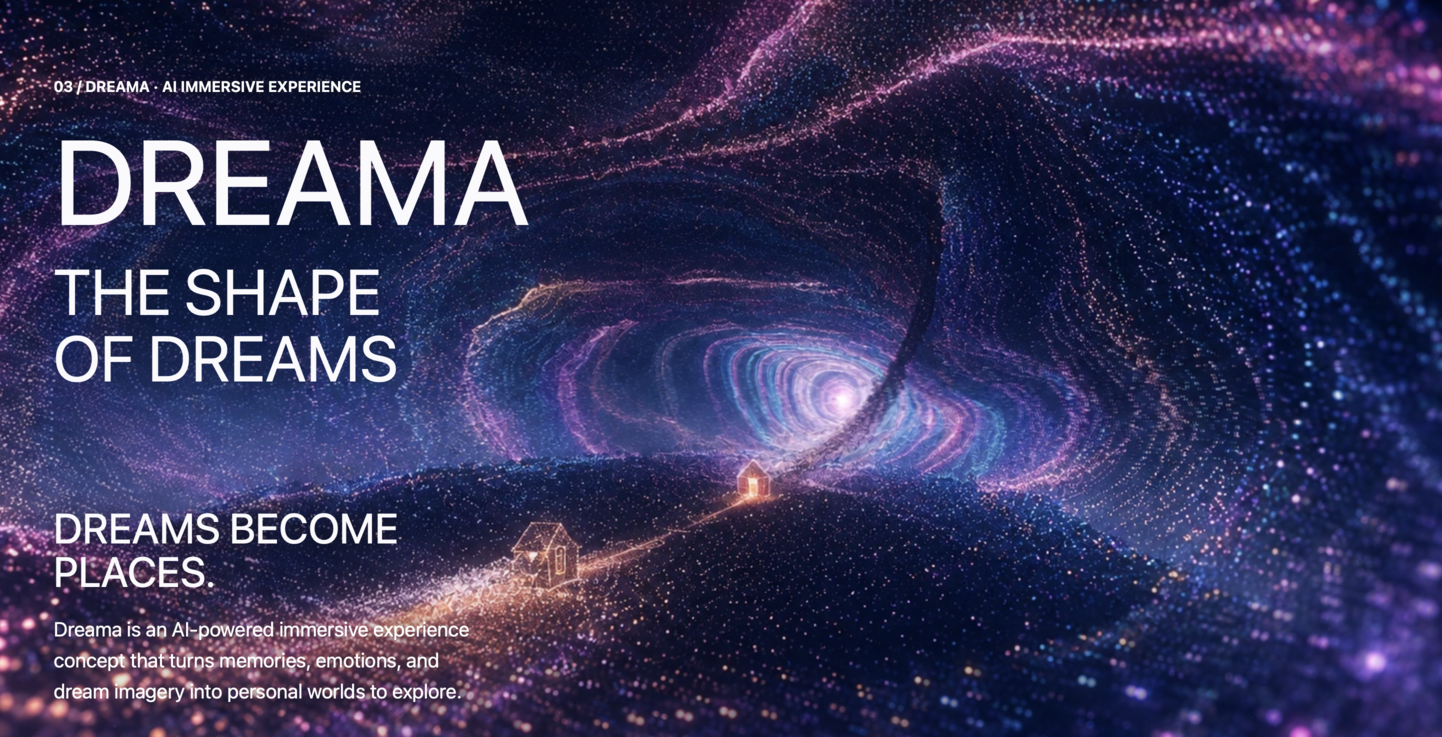
Helen Haitong Huang on AI Moving-Image Art, Immersive Storytelling, and the Future of Human Imagination
What if a memory could become a landscape? What if an emotion could take shape as a place to enter, explore, and experience?
These questions sit at the heart of Dreama, an AI-powered immersive experience concept created by artist Helen Haitong Huang. Working across generative media, immersive experiences, product systems, and cultural projects, Huang explores how emerging technologies can reshape imagination, identity, storytelling, and human experience. Her central idea for the project is captured in a simple, profound phrase: “Dreams become places.”
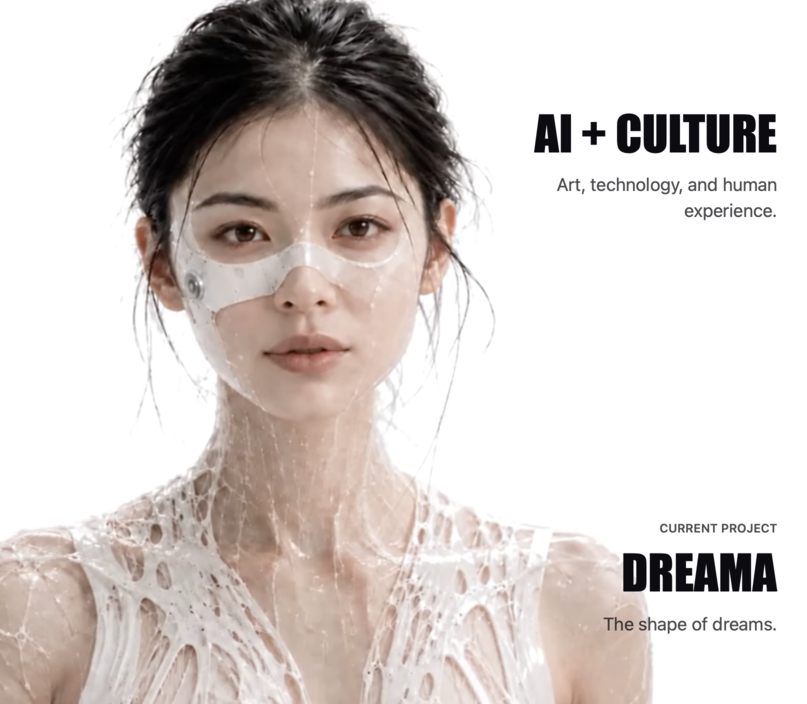
From Interface to Experience
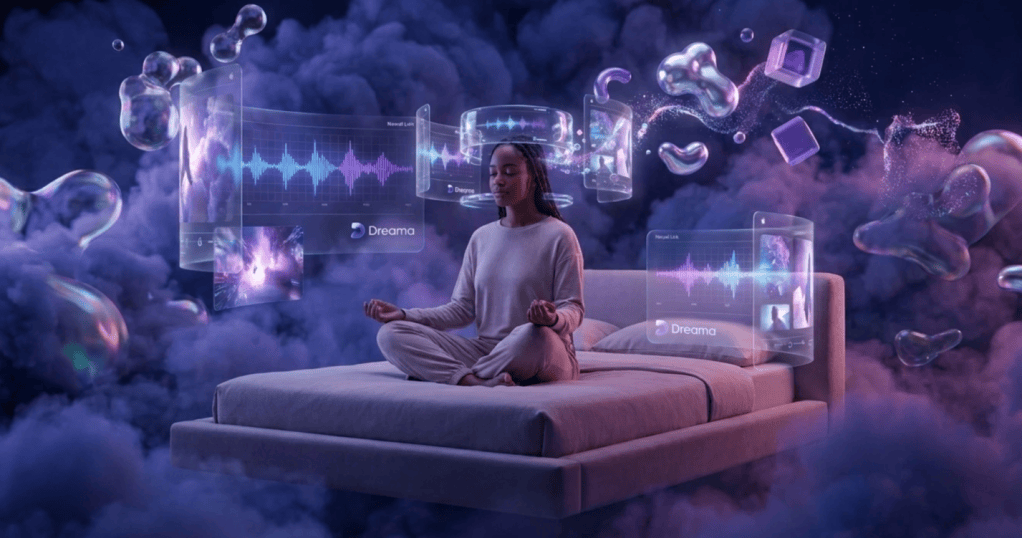
Dreama is built around a fundamental shift “from interface to experience.” Rather than treating technology as a screen or a tool that sits apart from everyday life, artist Helen Huang imagines a digital interface that becomes a seamless part of the physical environment.
In Dreama’s visual language, an intimate, recognizable human setting connects with an expansive, imagined landscape. A familiar room can open onto something vast, surreal, and emotionally charged. By pulling the private and the boundless into the same frame, the participant remains at the center while the dream world stretches beyond the limits of the everyday. Instead of simply viewing an image on a display, the user enters a larger atmosphere shaped entirely by their own personal material.
Giving Form to the Intangible
Emotions rarely arrive as linear stories; memories can be incomplete, fleeting, and difficult to put into words. Huang treats these fragments, associations, and unexpected shifts in perspective as raw material for a spatial experience.
Through AI, a feeling can influence the mood of a simulated environment, a remembered image can become a visual landmark, and fragments of thought can coalesce into a world that feels at once strange and familiar. The technology does not simply illustrate a person’s inner life—it proposes a new way of encountering it.
Importantly, Huang’s approach keeps human experience at the center. AI supports the translation of personal signals into new forms, but the ultimate meaning of those forms remains tethered to the individual. The technology creates the conditions for the dream world, but the participant’s own imagination gives it significance.
Showcasing Dreama in Paris
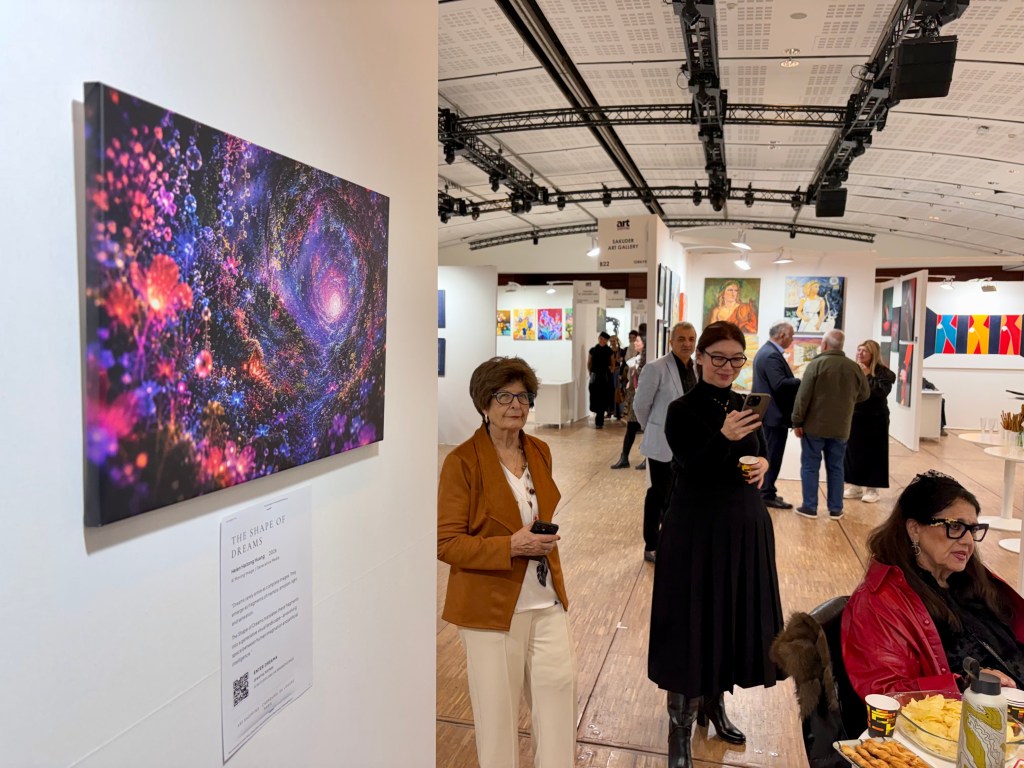
Huang recently showcased Dreama at Art Shopping Paris, the international contemporary art fair held at the prestigious Carrousel du Louvre. Presenting Dreama in this setting brought the technology-driven concept into a broader cultural conversation regarding creativity, perception, and the role of art in everyday life.
The fair’s approachable atmosphere allowed seasoned collectors and first-time art viewers alike to engage with the project. Huang’s premise offered an accessible point of entry for visitors to consider how a personal inner world might become an experience that can be shared, while still remaining intensely individual.
Ethics in Personal Technology
Designing experiences that involve the inner lives of people naturally brings forward critical questions about privacy, consent, and data control. What information should a participant choose to share? How can they remain in control of their material when technology engages with something as personal as memory or emotion?
For Huang, these questions are not separate from Dreama’s creative ambition; they are integral to it. The project points toward a delicate balance between computational possibility and human interpretation. The technology shapes the world, but its personal meaning cannot be reduced down to the algorithm that produced it. Dreama offers a glimpse of a future where digital tools act as thresholds rather than boundaries. When dreams become places, Helen Huang shows us how technology can become a medium to help us explore the vast landscapes within ourselves.
IN CONVERSATION WITH HELEN HUANG
Your work explores how emerging technologies can reshape imagination, identity, storytelling and human experience. How did these interests lead you to create Dreama?
Dreama began with my curiosity about the relationship between technology and the inner world of human experience. My background spans data science, creative direction, and immersive media. Working across these disciplines made me increasingly interested in a question: What if technology could do more than optimize our external lives? What if it could also help us explore the imagination, emotions, and memories that shape who we are?
We are entering an era in which artificial intelligence can generate extraordinary visual worlds, yet I believe the most meaningful question is not simply what machines can create, but what humans choose to express through them. I founded Dreama to explore this intersection. It is an evolving creative platform that transforms dream-inspired narratives and emotional impressions into cinematic experiences. For me, Dreama is ultimately about expanding the language of storytelling while keeping human imagination at its center.
You recently showcased Dreama at Art Shopping Paris, held at the Carrousel du Louvre. What was it like presenting an AI-powered immersive experience at an international contemporary art fair?
Presenting Dreama at Art Shopping Paris was an important moment in the project’s artistic development. The Carrousel du Louvre brought together a diverse international audience in a setting traditionally associated with painting, sculpture, photography, and other forms of contemporary art. Introducing AI-generated moving-image work into that environment created an opportunity to explore how emerging technologies can participate in broader artistic conversations.
What interested me most was the relationship between a digital artwork and a physical exhibition space. Although Dreama originates in a computational environment, its visual language draws upon deeply human experiences—dreams, memory, emotion, and imagination. The exhibition also reinforced my belief that AI-generated art should not be defined solely by its production technology. It deserves to be considered through the same questions we ask of other artistic practices: What does the work communicate? What emotions does it evoke? What perspective does the artist bring? For me, presenting Dreama in Paris was not simply about showing new technology. It was about positioning AI moving-image art within the continuing evolution of contemporary visual culture.
Art Shopping welcomes artists, galleries, collectors and art enthusiasts. How did visitors respond to Dreama, and did their reactions surprise you?
One of the most interesting aspects of presenting Dreama in an exhibition environment is the opportunity to see how different viewers interpret the same imagery.
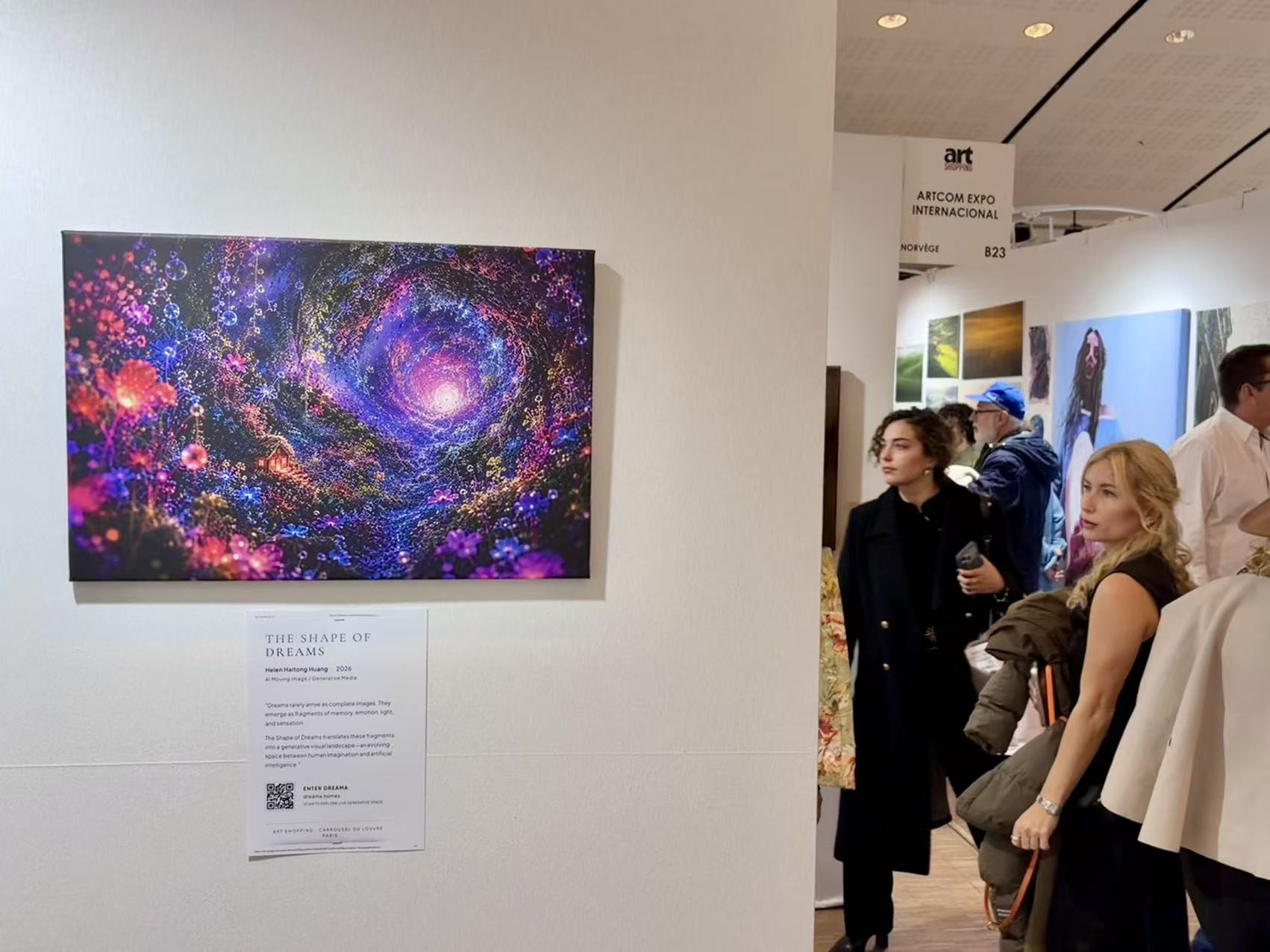
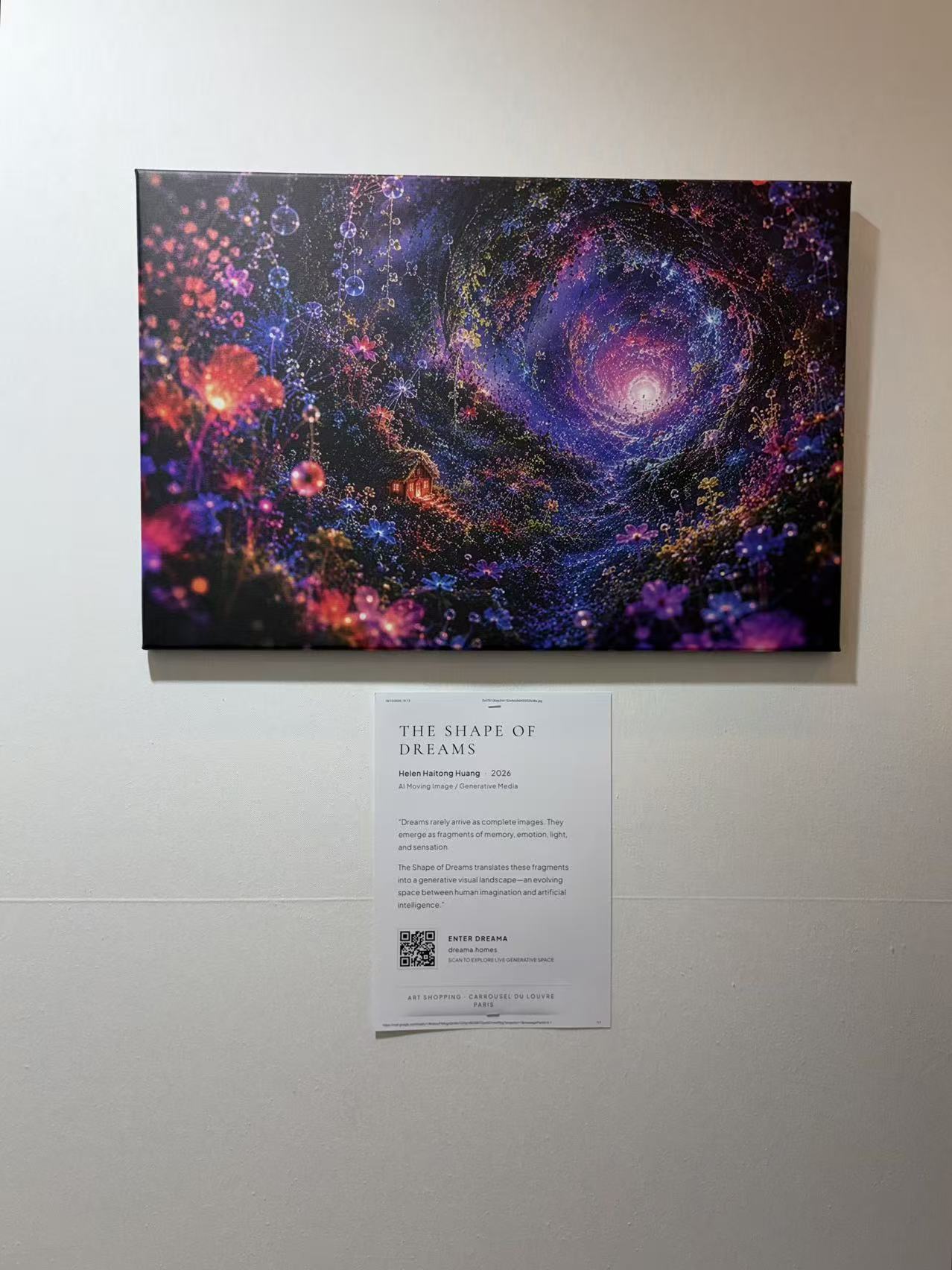
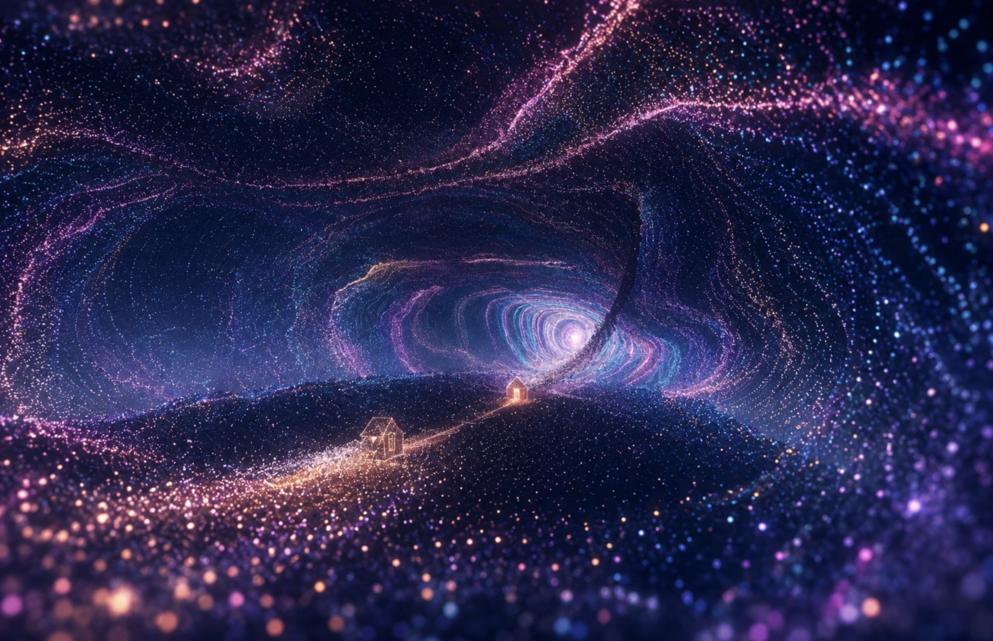
Dreama uses abstract landscapes, luminous particles, dreamlike environments, and cinematic transitions that leave room for personal interpretation. Rather than communicating a single predetermined narrative, the work invites viewers to bring their own associations and emotional experiences. What I find particularly meaningful is that a visual environment can suggest different stories to different people. A landscape might evoke nostalgia for one viewer, curiosity for another, or a sense of calm for someone else. This openness is central to my artistic approach. I am less interested in telling audiences exactly what they should feel than in creating conditions where their own imagination becomes part of the experience.
The fair attracts both first-time art buyers and experienced collectors. Did you find that different audiences engaged with Dreama in different ways?
Dreama sits at the intersection of contemporary art, moving images, and emerging technology, so I believe it naturally invites several ways of engaging with the work. For audiences familiar with traditional visual art, the composition, color, atmosphere, and emotional qualities of the imagery provide an immediate point of entry.
For viewers interested in digital art and creative technology, questions about the production process, generative systems, and the future of immersive media may become more prominent. For collectors, another interesting question emerges: How can a moving-image artwork exist beyond the conventional screen? Could it become part of a spatial installation, a personalized cinematic environment, or an evolving digital collection? These perspectives are not mutually exclusive. What excites me is the possibility of creating work that can move between artistic appreciation, technological experimentation, and new forms of cultural presentation. I see that intersection as an important part of Dreama’s future.
The phrase “Dreams become places” suggests that inner experiences can be entered and explored. What does this idea mean to you as an artist and designer?
“Dreams become places” captures one of the central ideas behind Dreama: the possibility of translating an internal experience into an environment that feels spatial, cinematic, and emotionally present.
Dreams are unusual because they are deeply personal, yet they often contain recognizable elements—architecture, landscapes, movement, light, familiar places, and unfamiliar worlds. As an artist, I am fascinated by how these fragments can become a new visual language.
Rather than treating a dream as something that must be interpreted literally, I approach it as creative material. A memory can become a landscape. An emotion can become a color. A fleeting impression can become an entire cinematic world. In this sense, Dreama is not about reconstructing dreams with scientific precision. It is about giving imagination a form that people can encounter, reflect upon, and potentially explore.
The dream is no longer only something we remember. It becomes something we can experience.
How does Dreama transform memories, emotions and subconscious imagery into a personal immersive world? What role does AI play in that process?
Dreama explores a creative process in which personal narratives, dream descriptions, and emotional impressions become the starting points for cinematic visual experiences. The process begins with human expression. A person might describe a dream, recall a particular atmosphere, or articulate a feeling that is difficult to communicate through conventional language. These inputs can then be translated into creative directions involving visual composition, movement, color, environmental design, and cinematic pacing. AI plays an important role in expanding the range of visual possibilities. Generative tools allow us to experiment with environments and transformations that might otherwise require extensive production resources.
However, I see AI as a creative medium rather than an autonomous storyteller. Human intention remains essential in selecting, refining, and shaping the final experience. Artistic decisions determine whether the resulting imagery feels coherent, emotionally meaningful, and appropriate to the original narrative. My goal is to develop a creative language in which technology expands the possibilities of expression without replacing the individual’s imagination.
The project is described as moving “from interface to experience.” How does that shift change the way someone interacts with technology—and with their own memories or emotions?
For much of the digital era, our relationship with technology has been organized around interfaces: screens, menus, buttons, and information. These interfaces are extremely useful, but they often encourage us to think about technology primarily as something we operate. With Dreama, I am interested in a different relationship—one in which technology becomes an environment we can experience. Instead of simply viewing a generated image, a person might encounter a cinematic world shaped by their own imagination. The experience becomes less about controlling an interface and more about reflection, atmosphere, and emotional engagement.
This shift is particularly interesting in the context of immersive media, where spatial design, sound, movement, and visual pacing can influence how a story is experienced. I believe the next generation of creative technology will not be defined only by increasingly sophisticated interfaces, but also by the quality of the human experiences those systems make possible. The future of interaction may be less about what we ask technology to do, and more about what technology enables us to feel, imagine, and understand.
Because Dreama draws on deeply personal material, how do you approach questions of privacy, consent and participants’ control over the experience?
Privacy and consent are fundamental considerations when working with personal narratives, especially those involving dreams, memories, and emotions. I believe that personal experiences should remain under the control of the individuals who share them. For Dreama, this means approaching the design of future participatory experiences around informed consent, transparency, and user agency. Participants should understand how their inputs may be used, what kind of experience will be generated, and what choices they have regarding the use or retention of personal material.
I believe that personal experiences should remain under the control of the individuals who share them. For Dreama, this means approaching the design of future participatory experiences around informed consent, transparency, and user agency. Participants should understand how their inputs may be used, what kind of experience will be generated, and what choices they have regarding the use or retention of personal material.
I am also interested in minimizing the amount of personal information required to create a meaningful artistic experience. A person should be able to explore imagination without feeling pressured to disclose deeply private details. Equally important is the emotional dimension of consent. An immersive experience should allow participants to decide how deeply they wish to engage and when they want to step away. My broader philosophy is that creative technology should expand human agency rather than diminish it. The more personal technology becomes, the more responsibility designers have to protect the individual’s freedom and autonomy.
Did showcasing Dreama in a contemporary art fair setting influence how you presented or thought about the project?
Absolutely. Presenting Dreama within a contemporary art exhibition encouraged me to think more deeply about the relationship between digital imagery, physical space, and artistic context. A moving-image work can exist on a personal device, a cinema screen, an XR display, or within an architectural installation. Each setting changes the relationship between the artwork and its audience.
In an art fair environment, I became particularly interested in how the work communicates without requiring an extensive technical explanation. The imagery must establish its own artistic presence through composition, atmosphere, visual rhythm, and emotional resonance.
This experience strengthened my interest in developing Dreama beyond a single digital format. I see opportunities to explore more spatial forms of presentation, where moving images interact with physical environments and invite audiences to experience cinematic storytelling in new ways. The exhibition reinforced an idea that has become increasingly important to my practice: the future of digital art is not necessarily confined to digital spaces.
After showcasing Dreama at Art Shopping Paris, what would you like to develop next? What possibilities do you see for AI and immersive art to deepen human imagination and connection?
My next goal is to continue developing Dreama as a creative ecosystem that connects AI moving images, immersive storytelling, and human-centered experiences. I am particularly interested in exploring how dream-inspired cinematic environments can move across different settings—from personal screens and XR devices to galleries, cinemas, and larger spatial installations. At the same time, I want to continue investigating how emerging technologies can support new forms of emotional expression and artistic participation.
Another important direction is cross-disciplinary collaboration. I believe the most compelling developments in this field will emerge through conversations between artists, filmmakers, designers, technologists, researchers, and cultural institutions. My work with Future Reality also reflects this interest in bringing different creative communities together.
Ultimately, I do not see the future of AI art as a competition between human creativity and machine capability. I see it as an opportunity to ask more ambitious questions about imagination, authorship, identity, and the ways people connect through shared experiences. My hope is that Dreama can contribute to a future in which technology does not distance us from our humanity, but gives us new ways to explore it.
About the Artist
Helen Haitong Huang is a creative director, visual artist, and founder of Dreama, an emerging creative project exploring AI moving images, immersive storytelling, and emotional well-being. Her interdisciplinary practice draws upon data science, cinematic visual language, and human-centered design to investigate how emerging technologies can expand artistic expression and create new forms of emotional and spatial experience.
Her work spans creative direction, digital art, cultural programming, and cross-industry collaborations. Through Dreama and Future Reality, she explores the relationship between human imagination, cinematic storytelling, and emerging media.
Website: https://dreama.homes/

