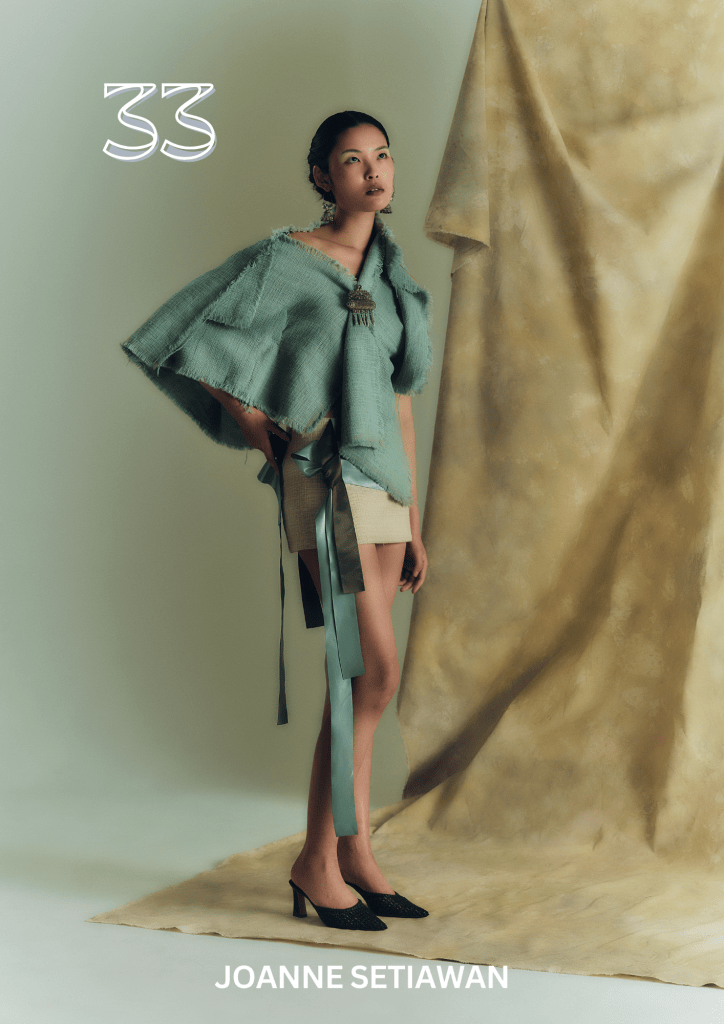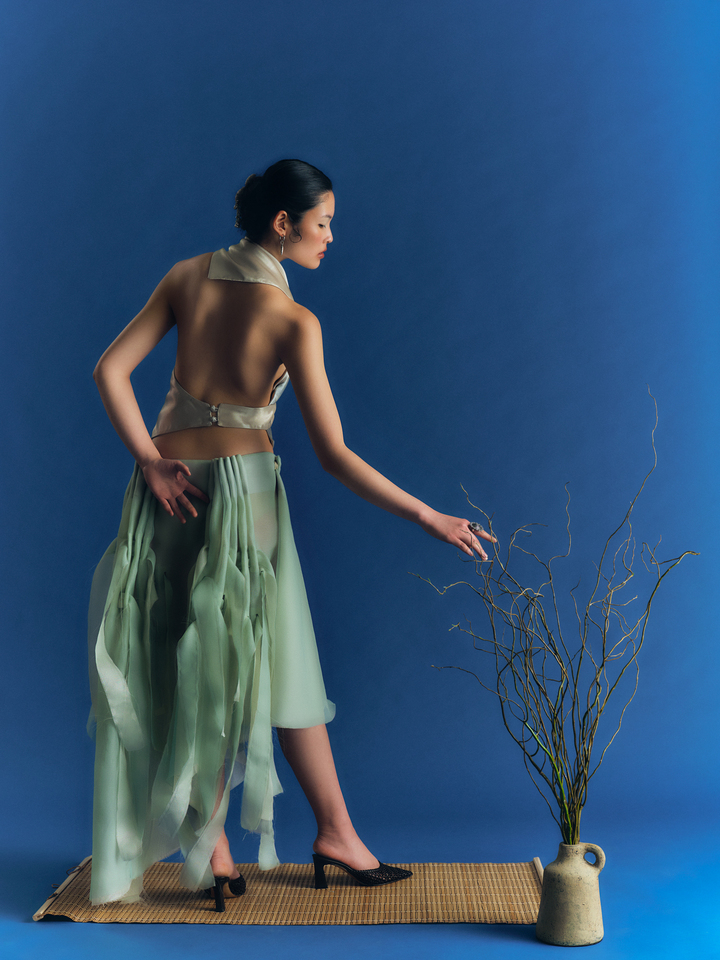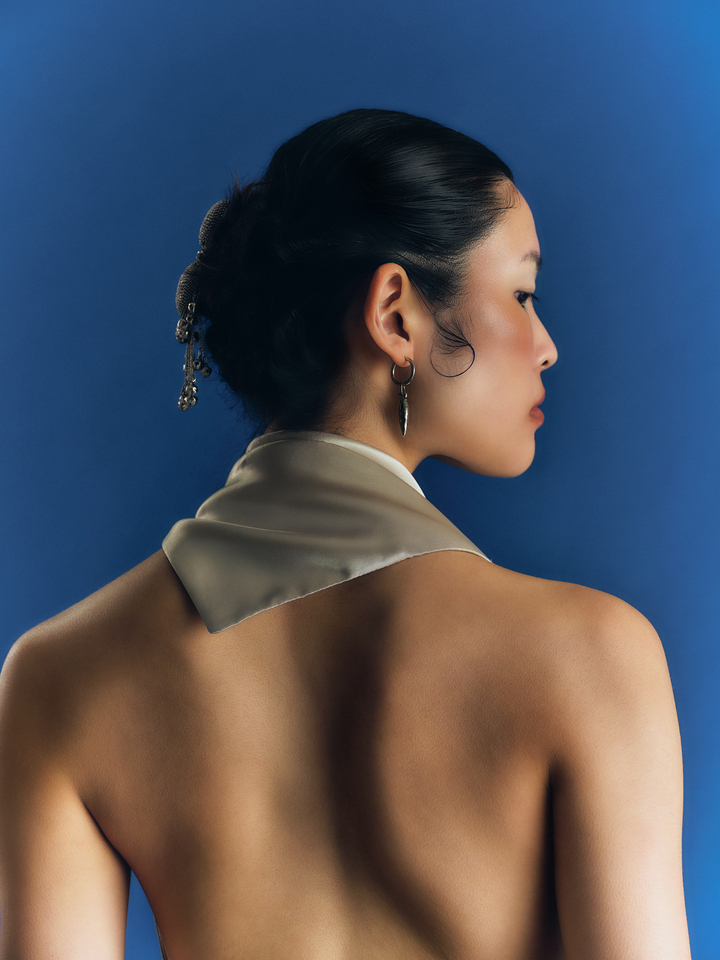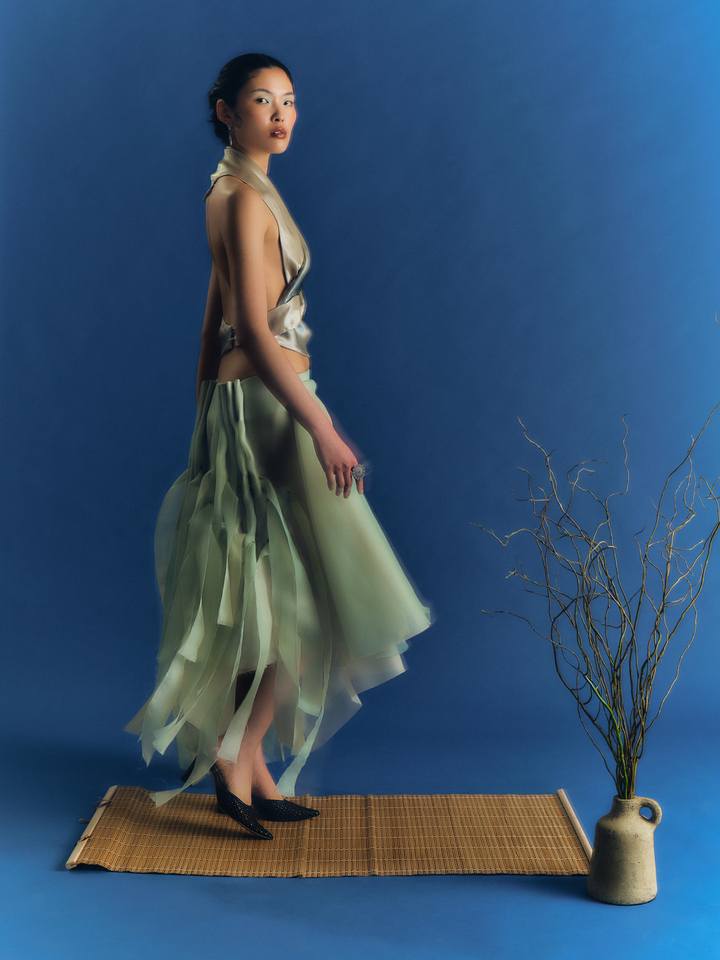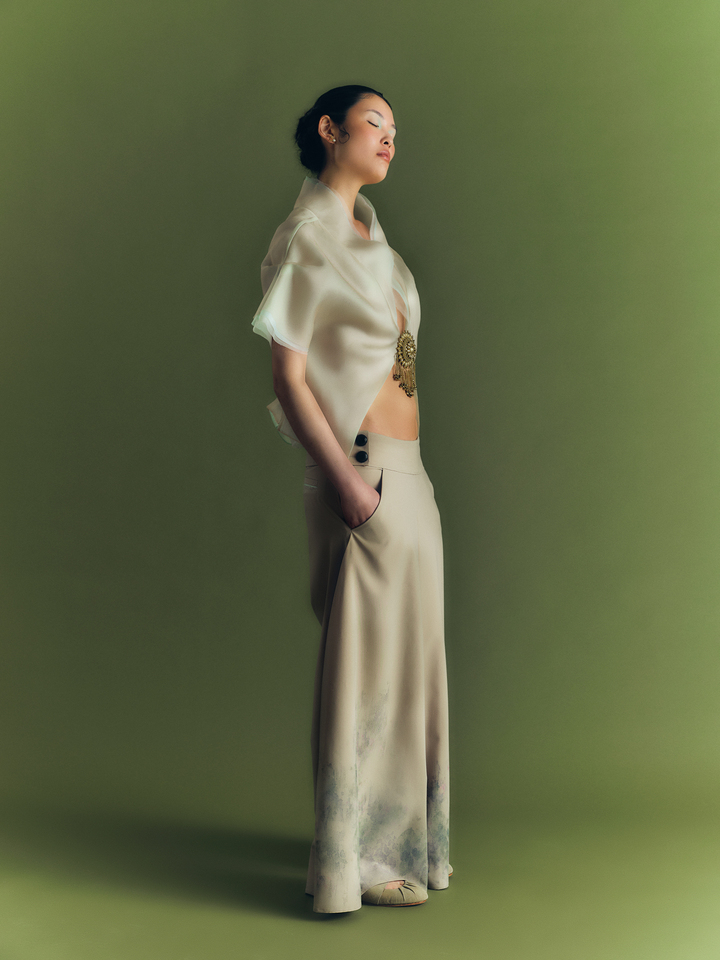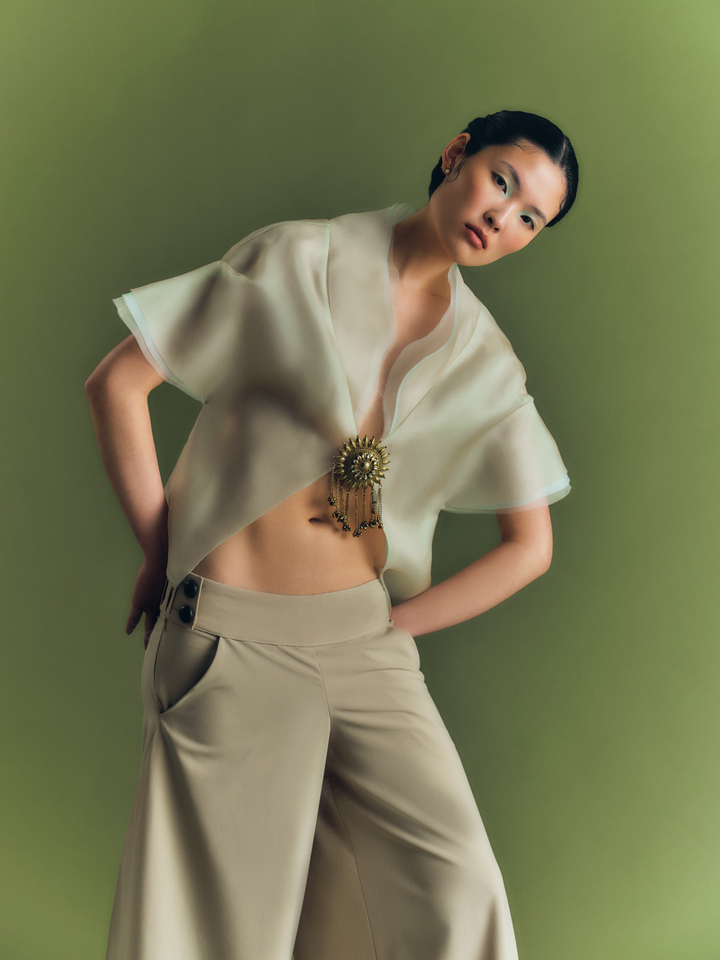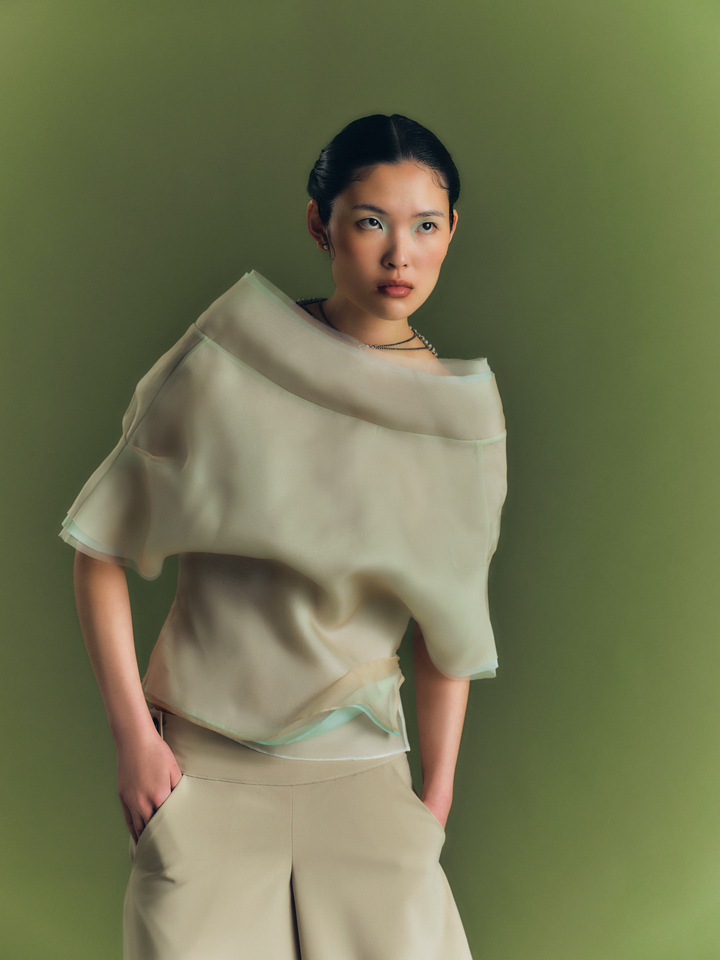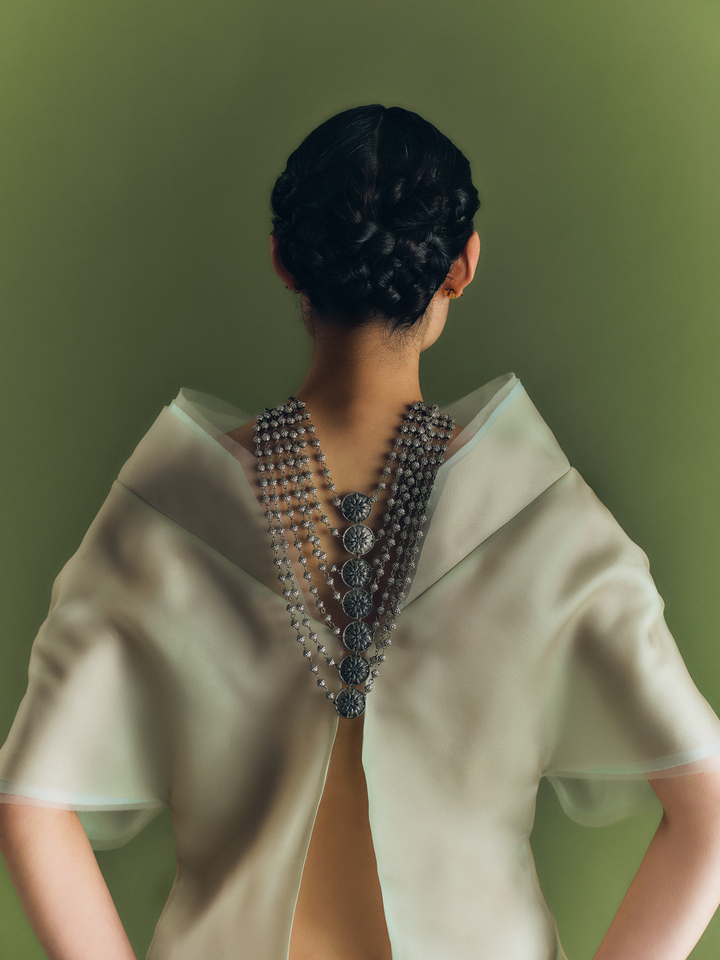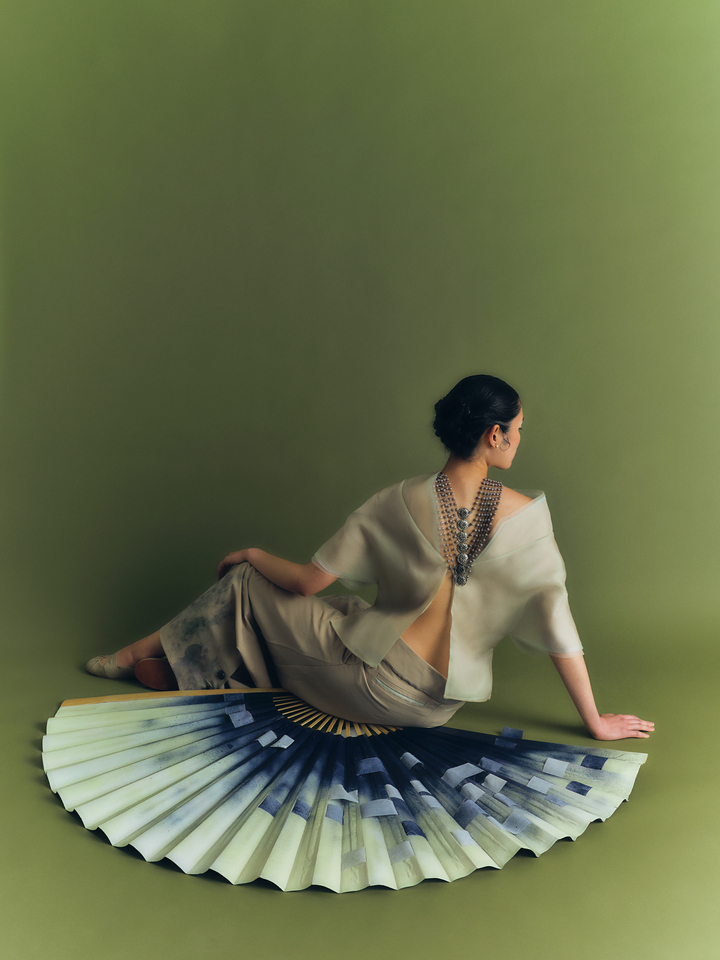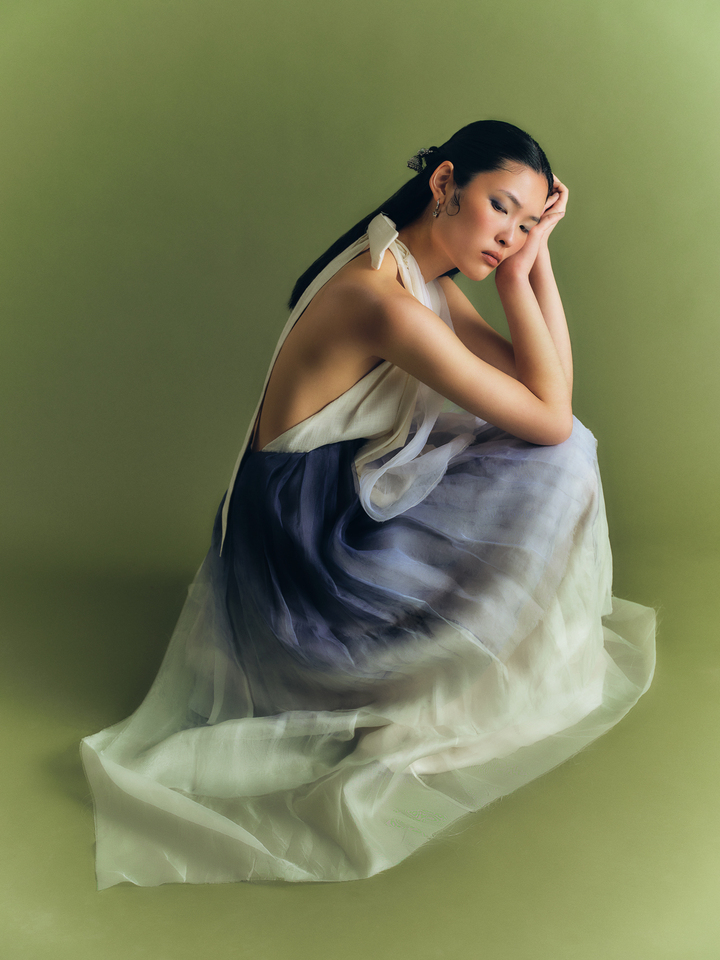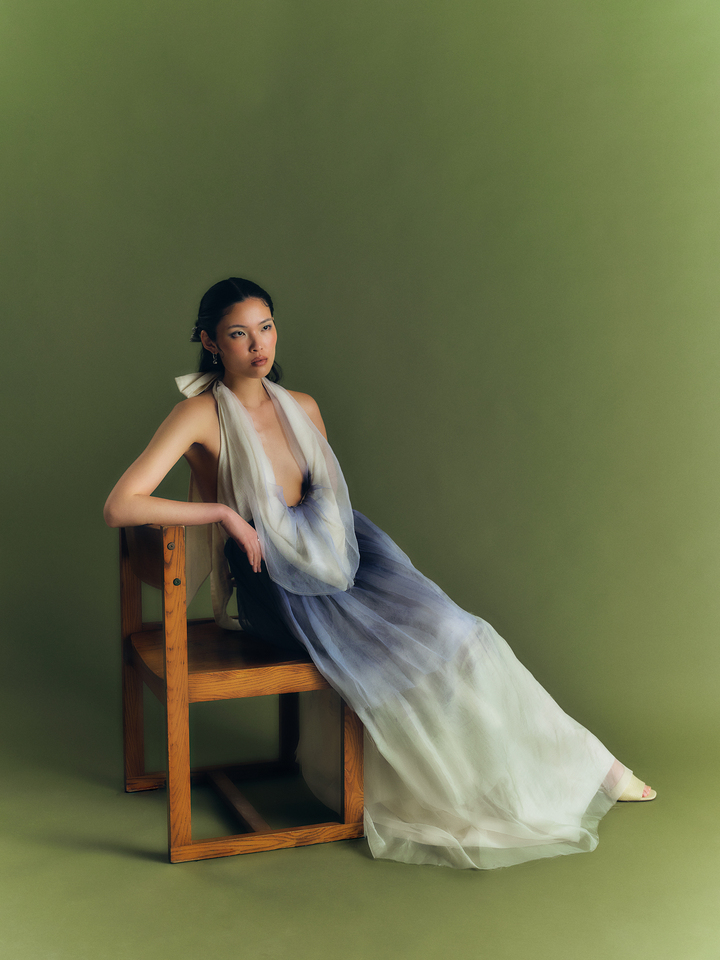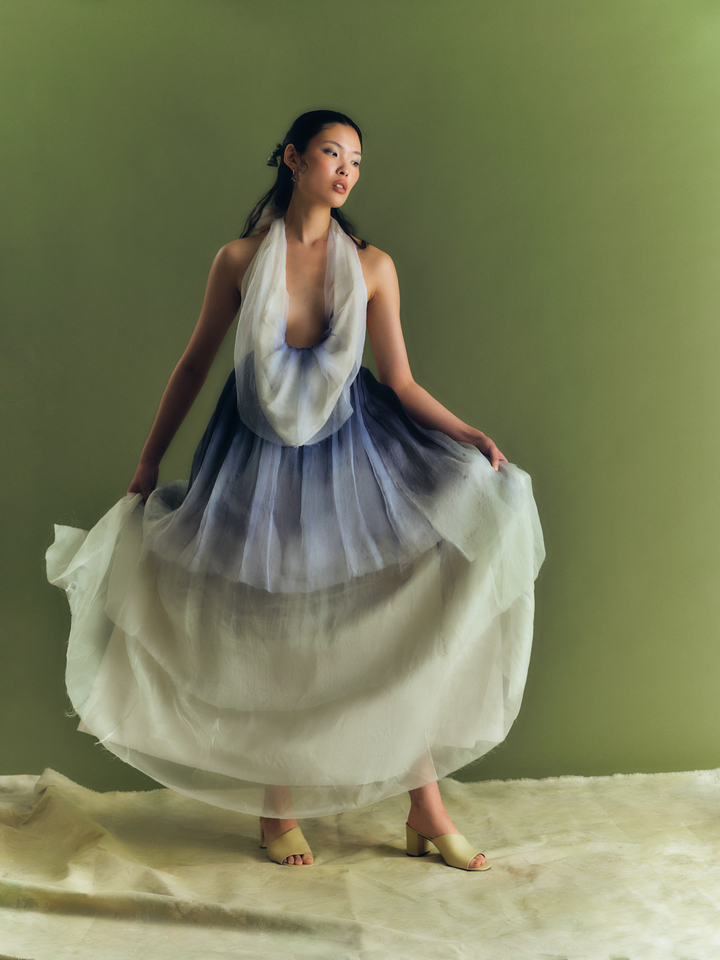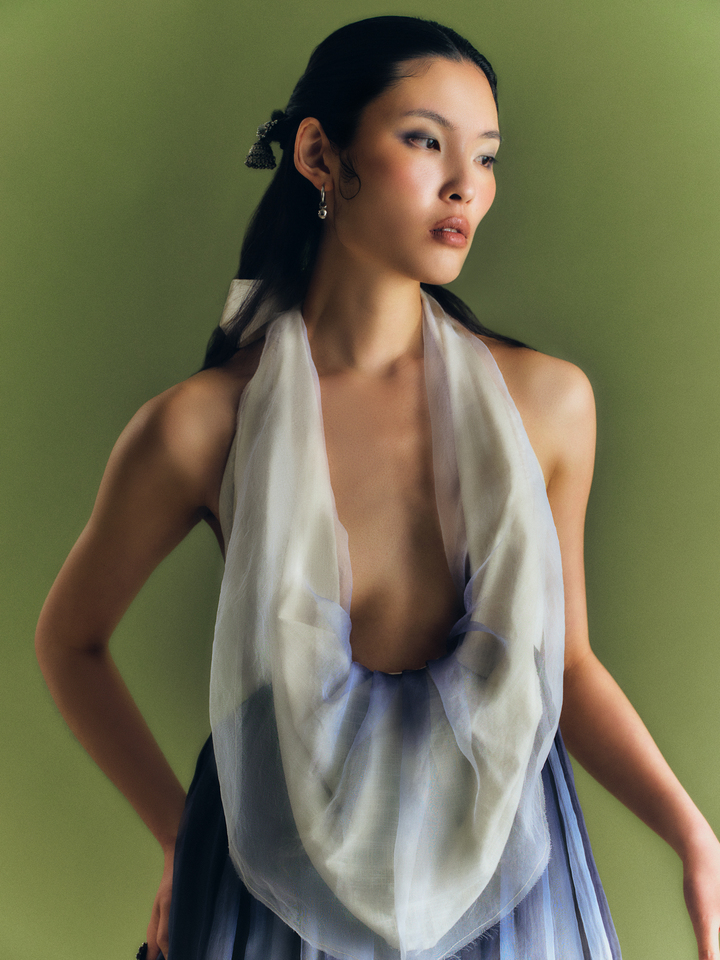
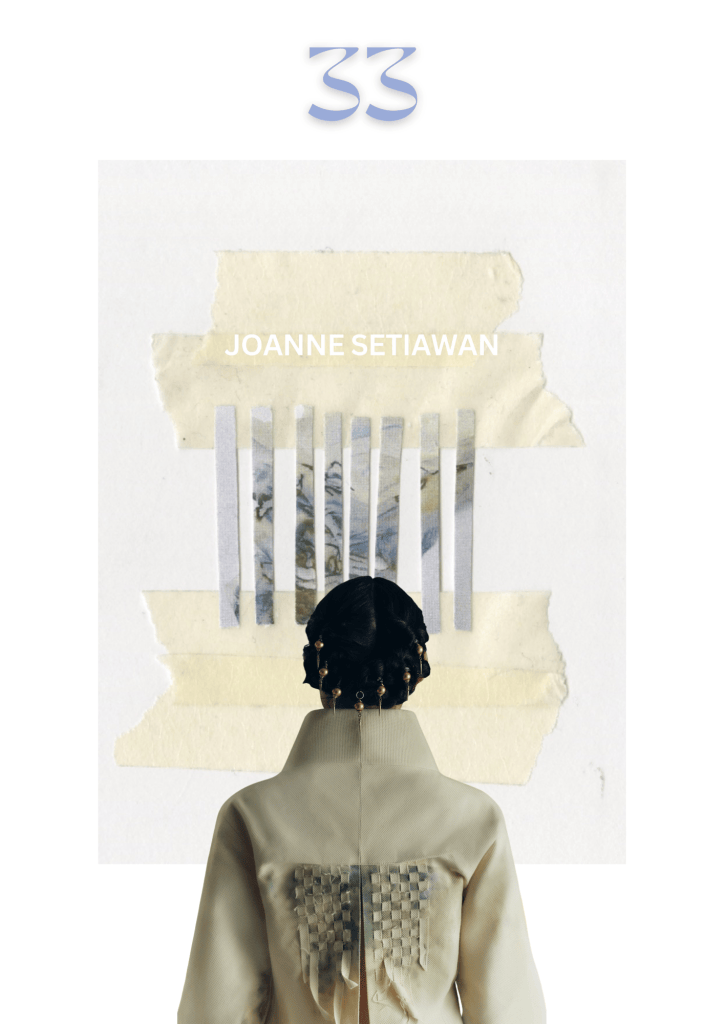
For Joanne Setiawan, a garment can hold what language cannot: the private textures of memory, the subtle codes of identity, and the feelings that linger long after an experience has passed. Born in Jakarta and now based in New York City, the artist and designer makes work shaped by movement between places and ways of seeing. She holds a BFA in Fashion Design from Parsons School of Design and has pursued additional training in print design at Central Saint Martins.
Growing up in Jakarta, Setiawan noticed that fashion was often valued for its status and appearance, while the ideas behind design received less attention. Self-expression, too, could be quiet—communicated through small choices rather than grand gestures. That attentiveness to detail became central to her practice. It also shaped her sense of how individuality might be carried in silhouette, texture and embellishment: not always declared, but carefully felt. Her understanding of art’s emotional power deepened when she began visiting galleries and exploring Indonesian art on her own. Discovering the paintings of Hendra Gunawan, and learning about the life and experiences that informed them, showed her how creative work can reveal something of the person who makes it. That kind of openness, she reflects, can feel vulnerable, especially when personal expression meets the expectations of a more conservative society. Yet the encounter affirmed a lasting belief: art and design should make us feel something, even when their meaning is not immediately clear.
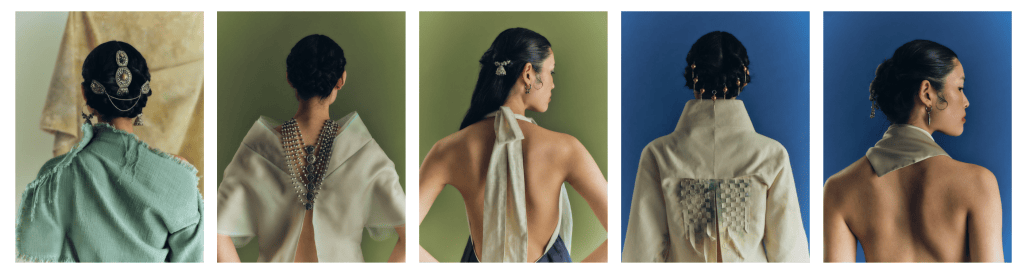
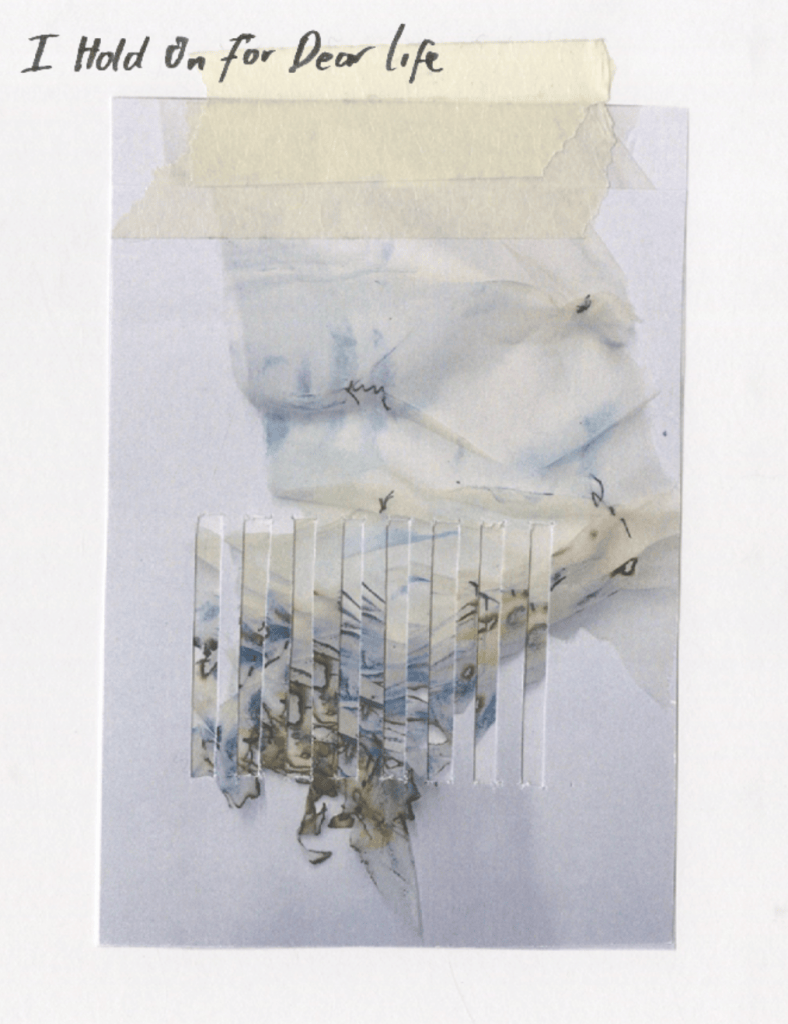
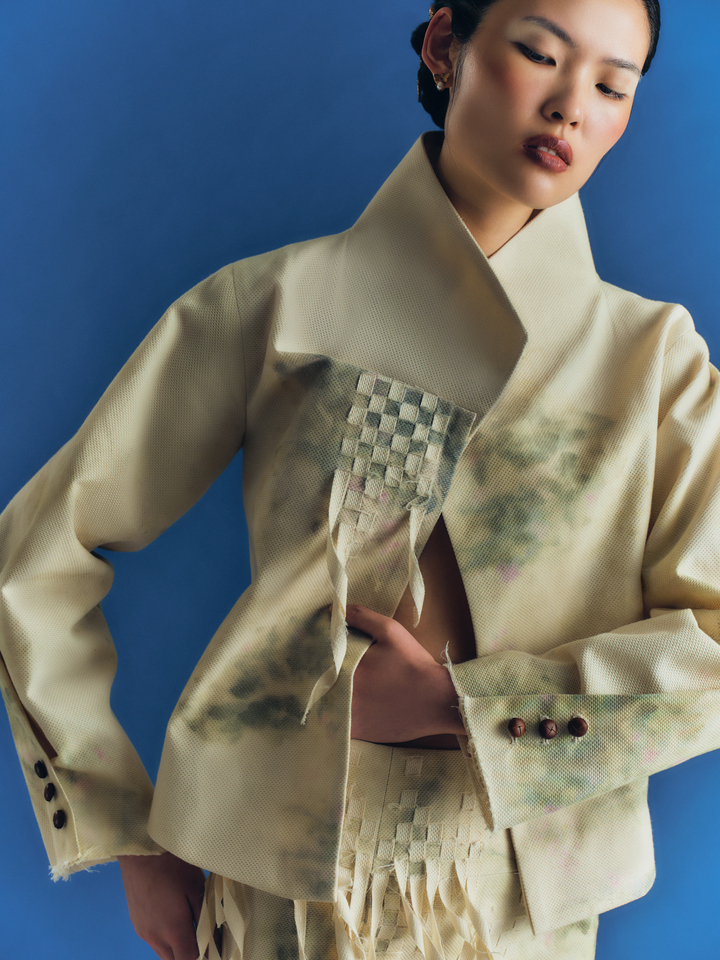
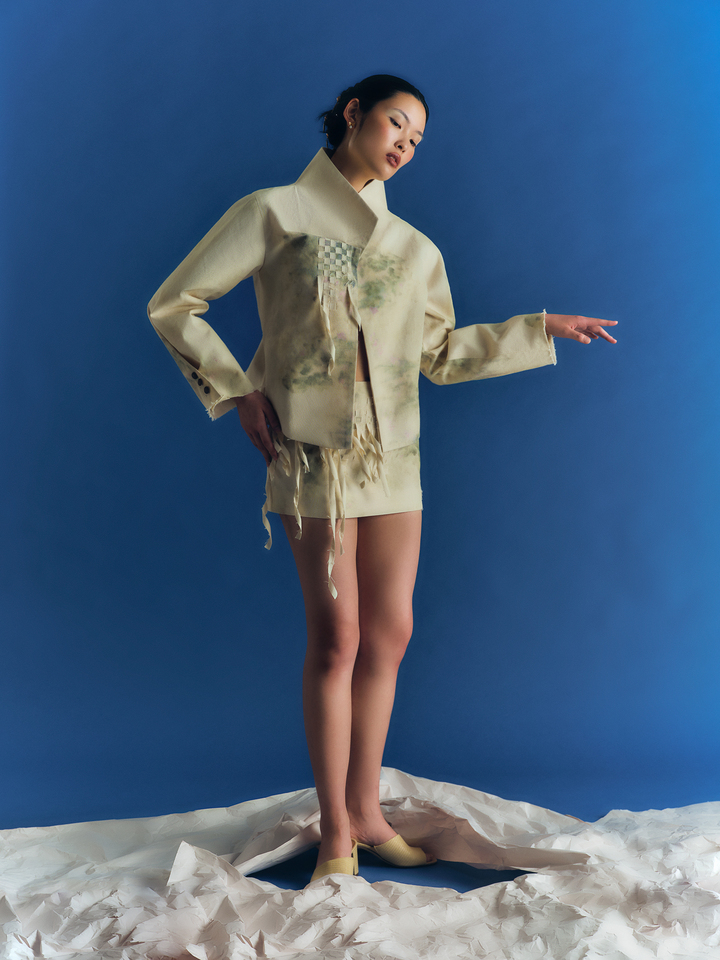
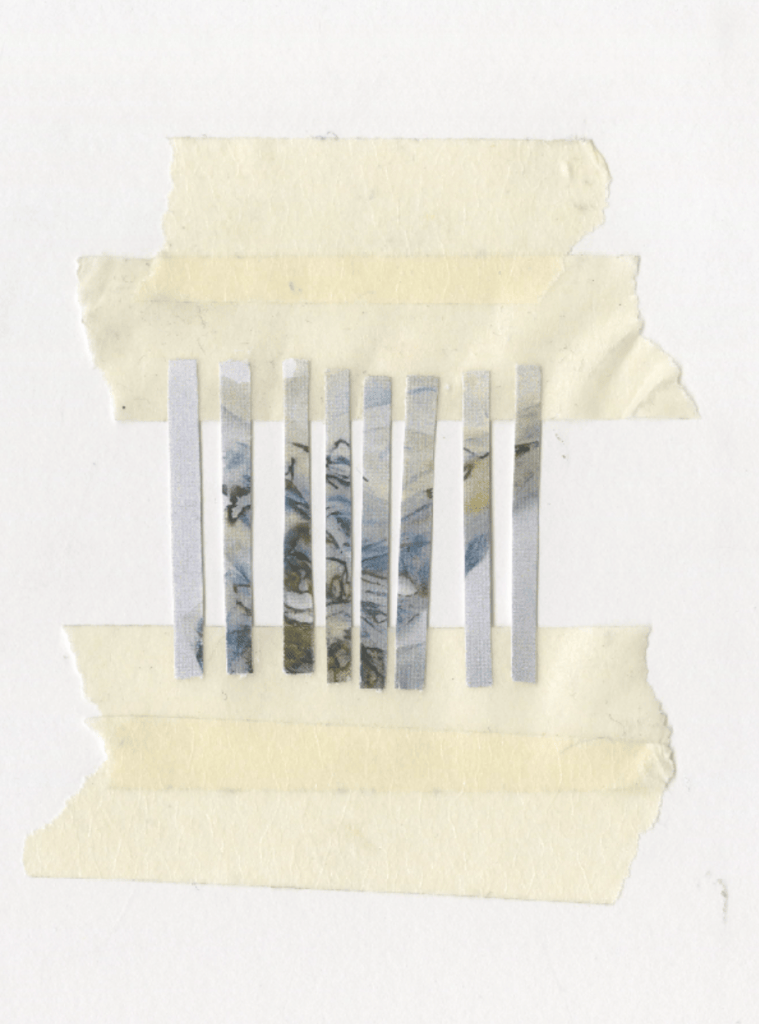
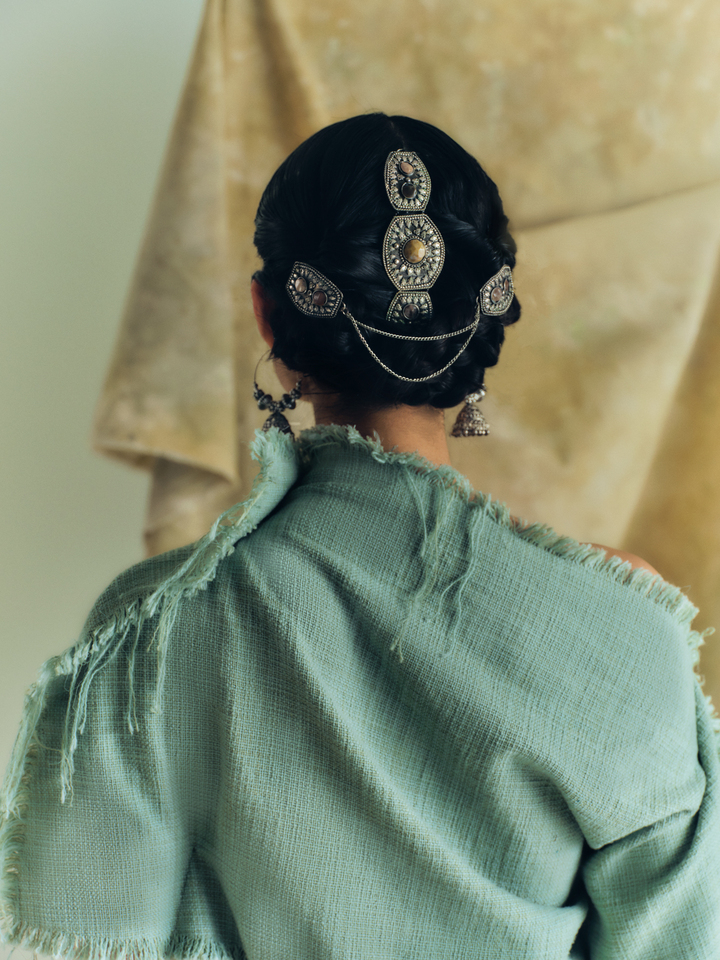
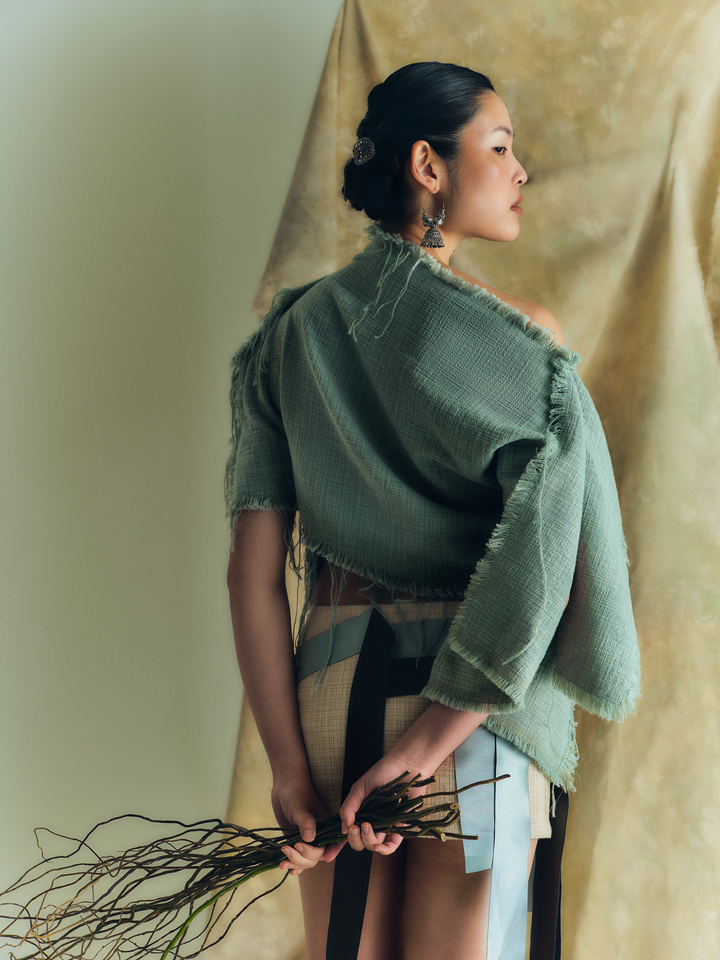
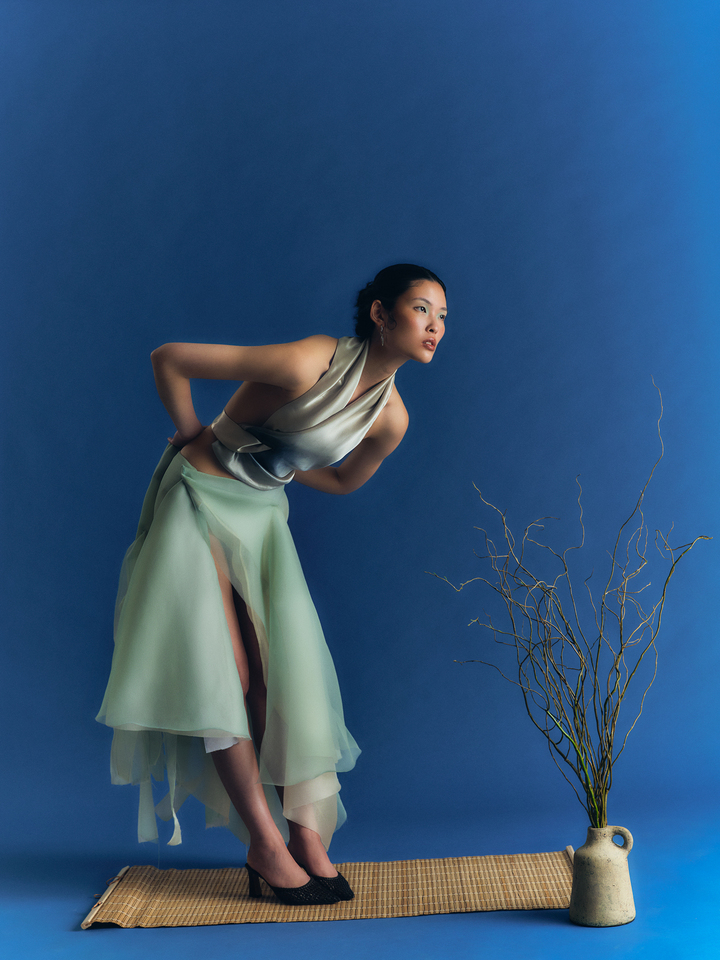
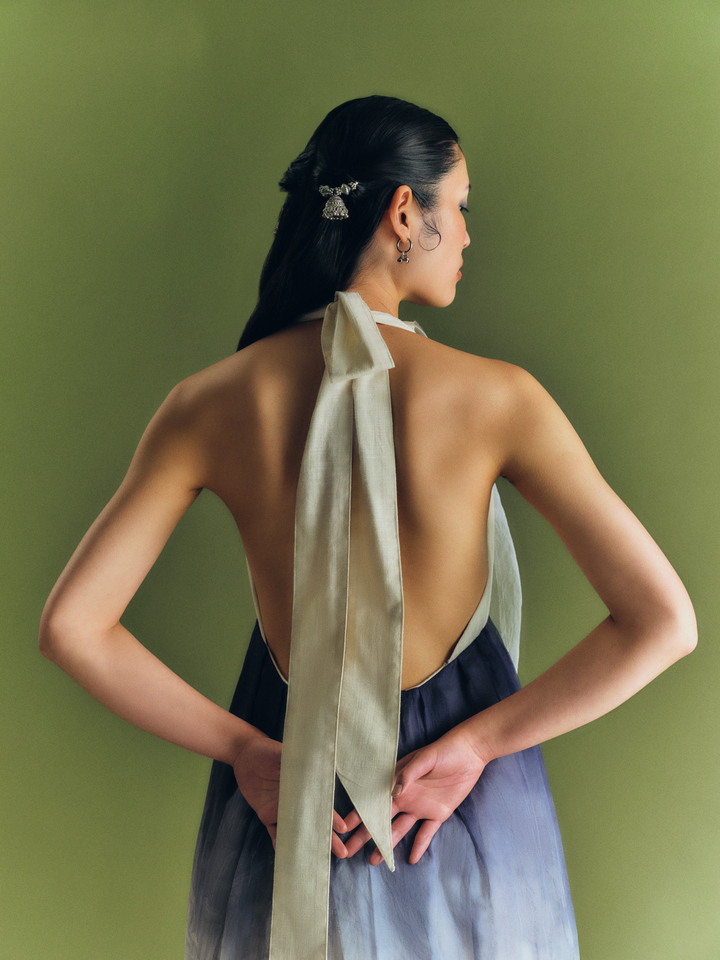
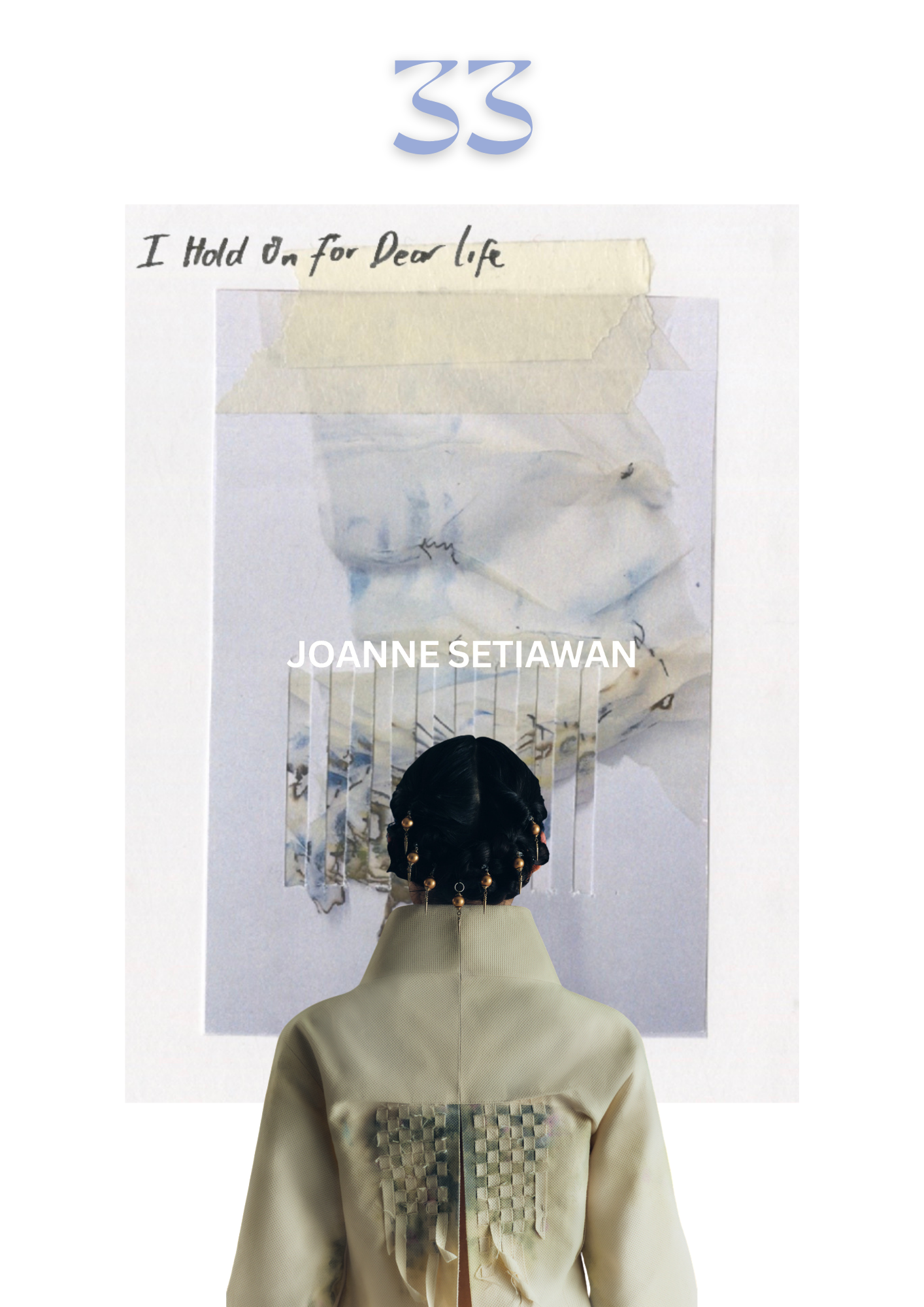
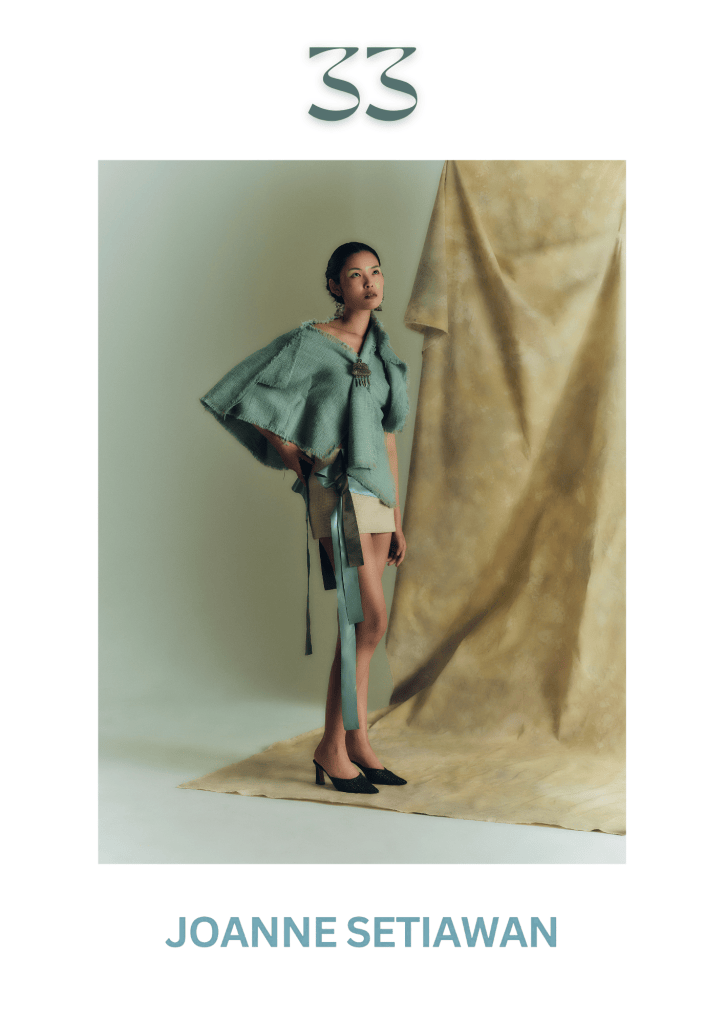
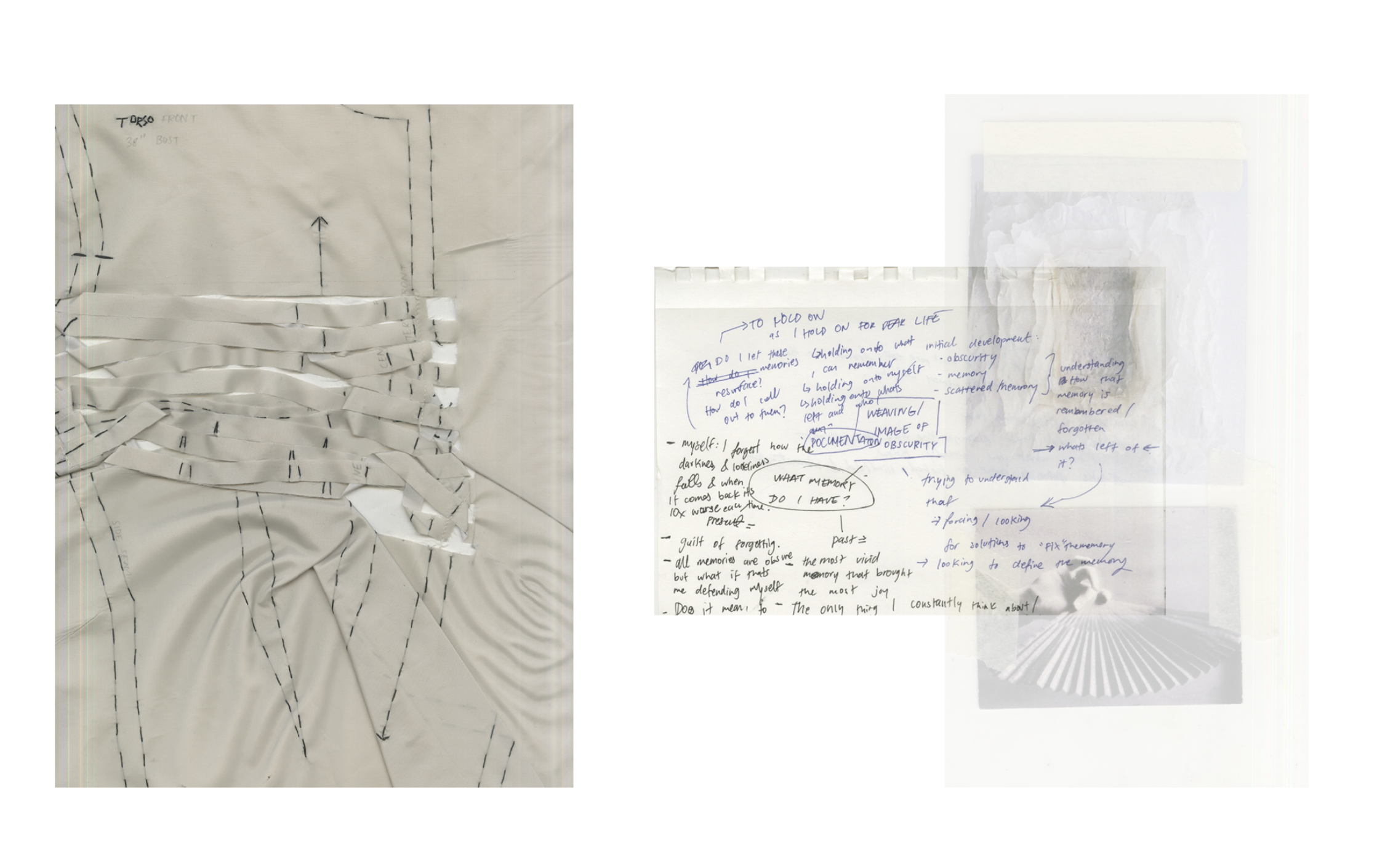
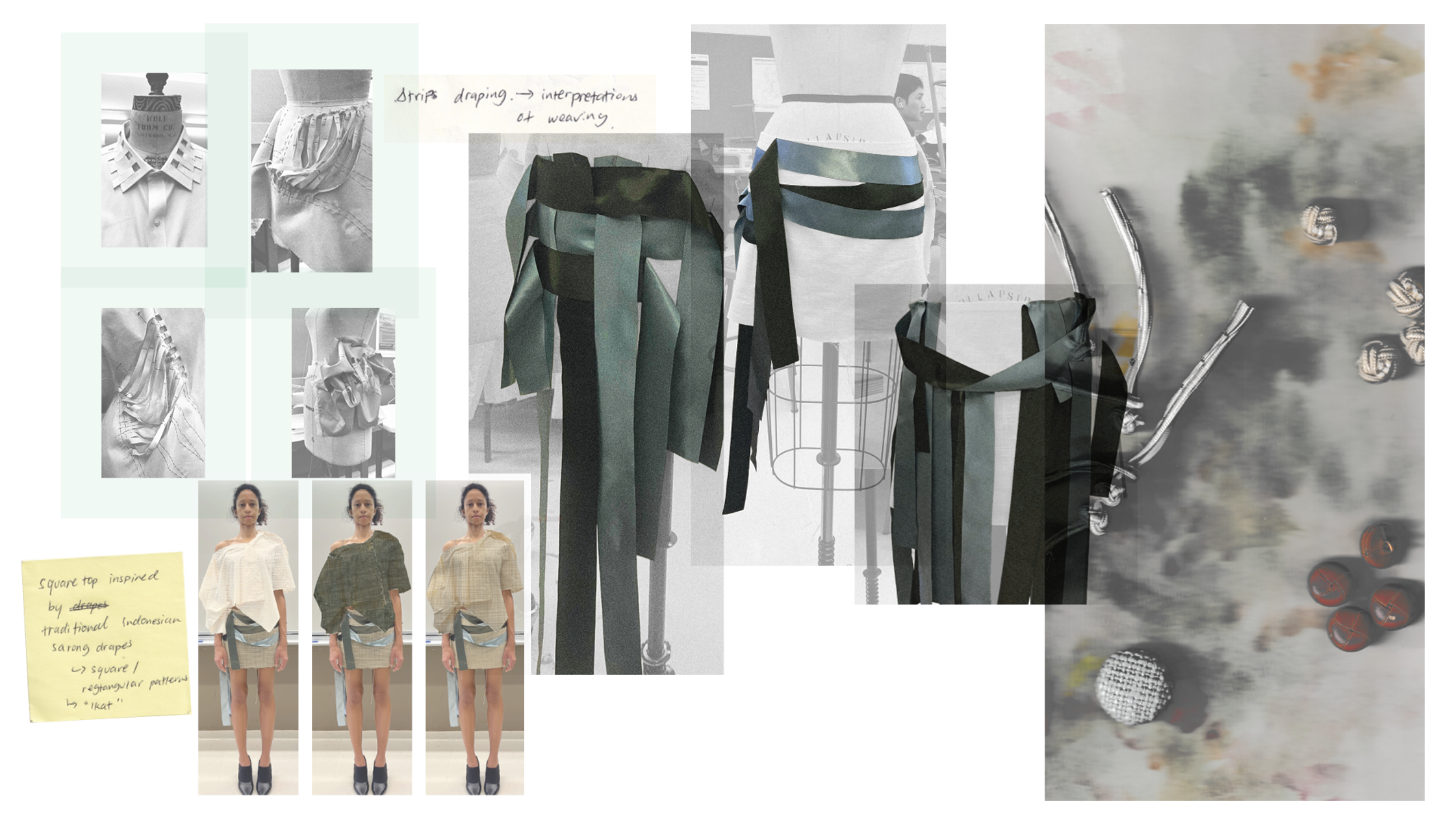
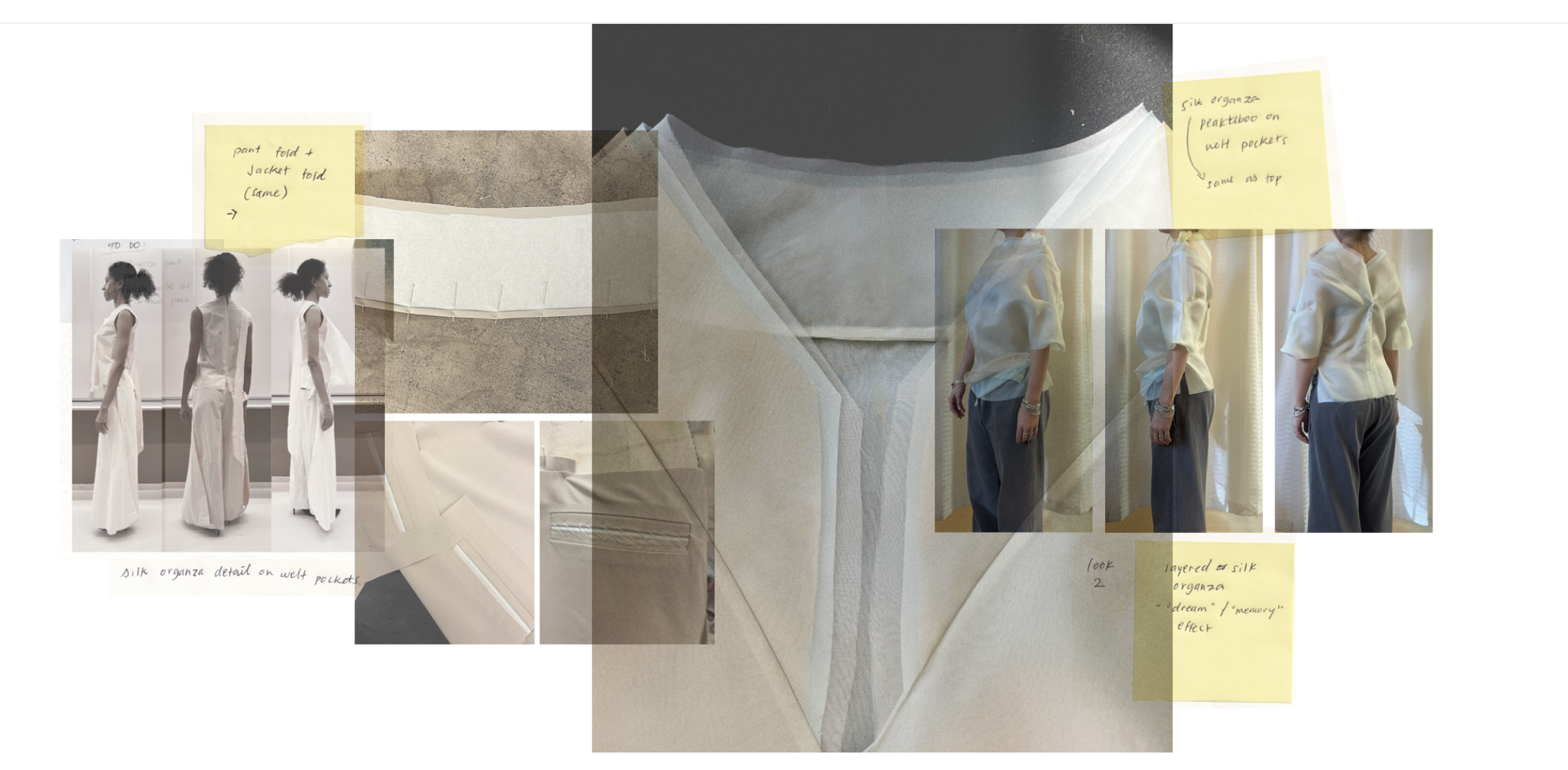
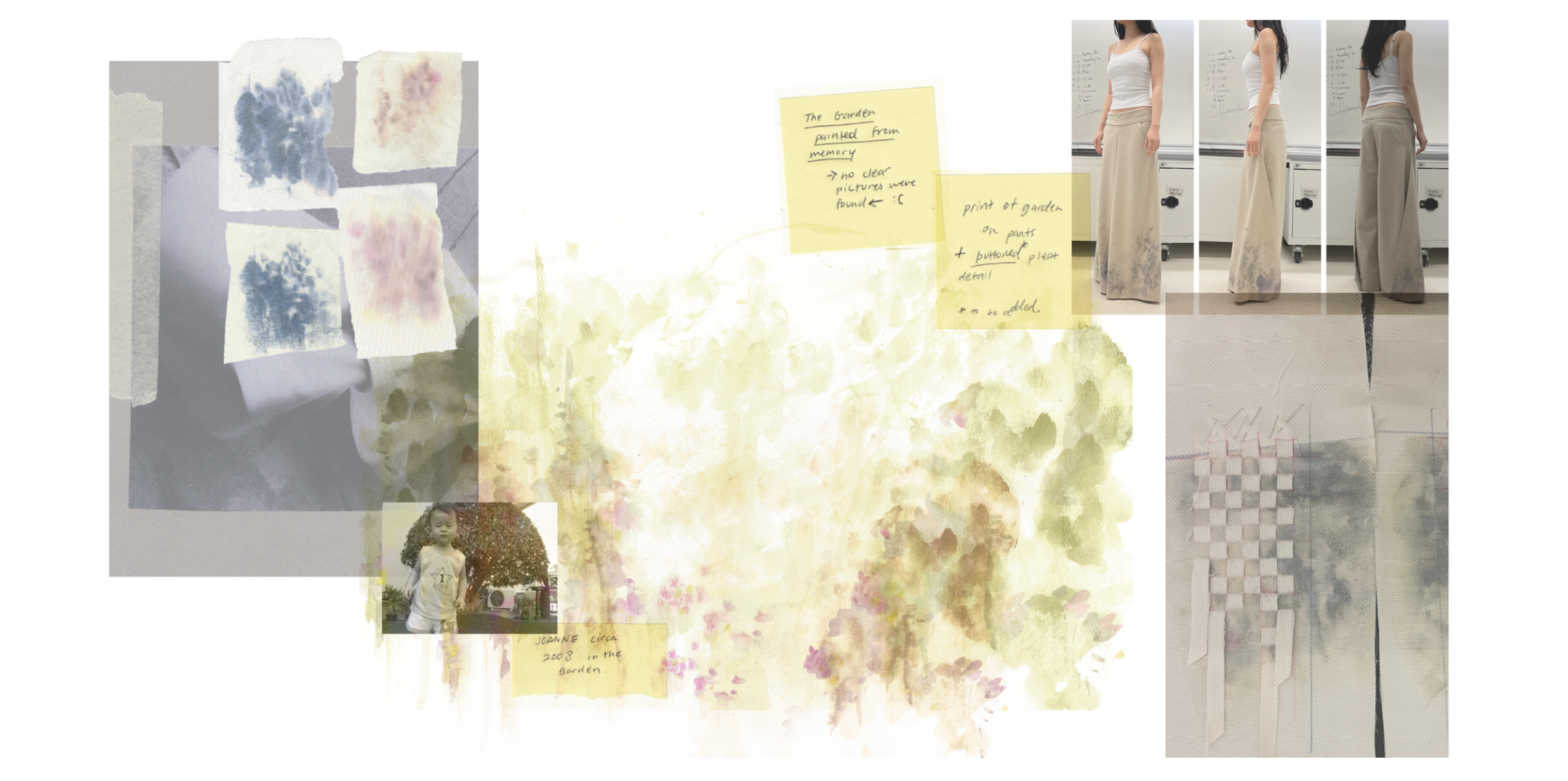
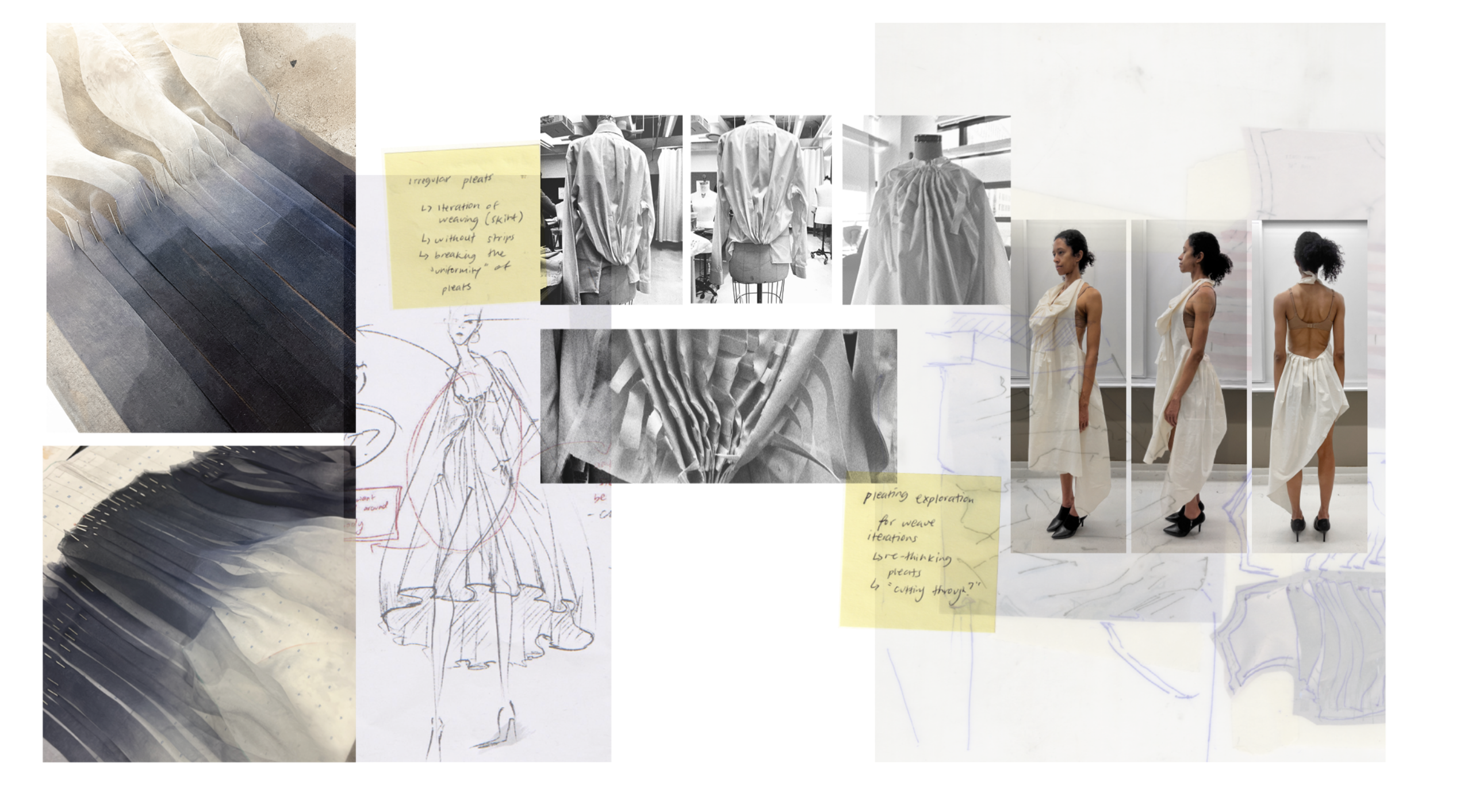
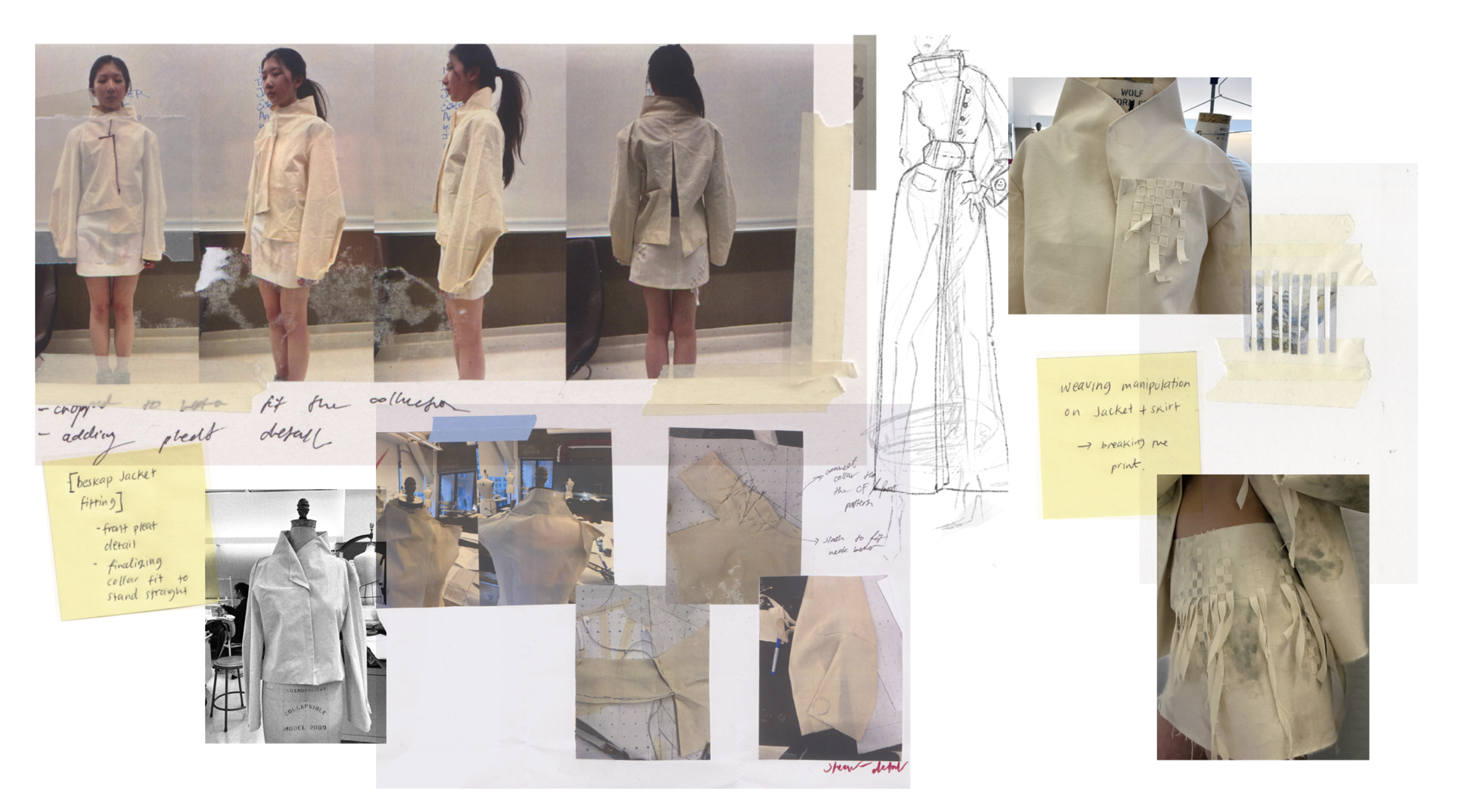
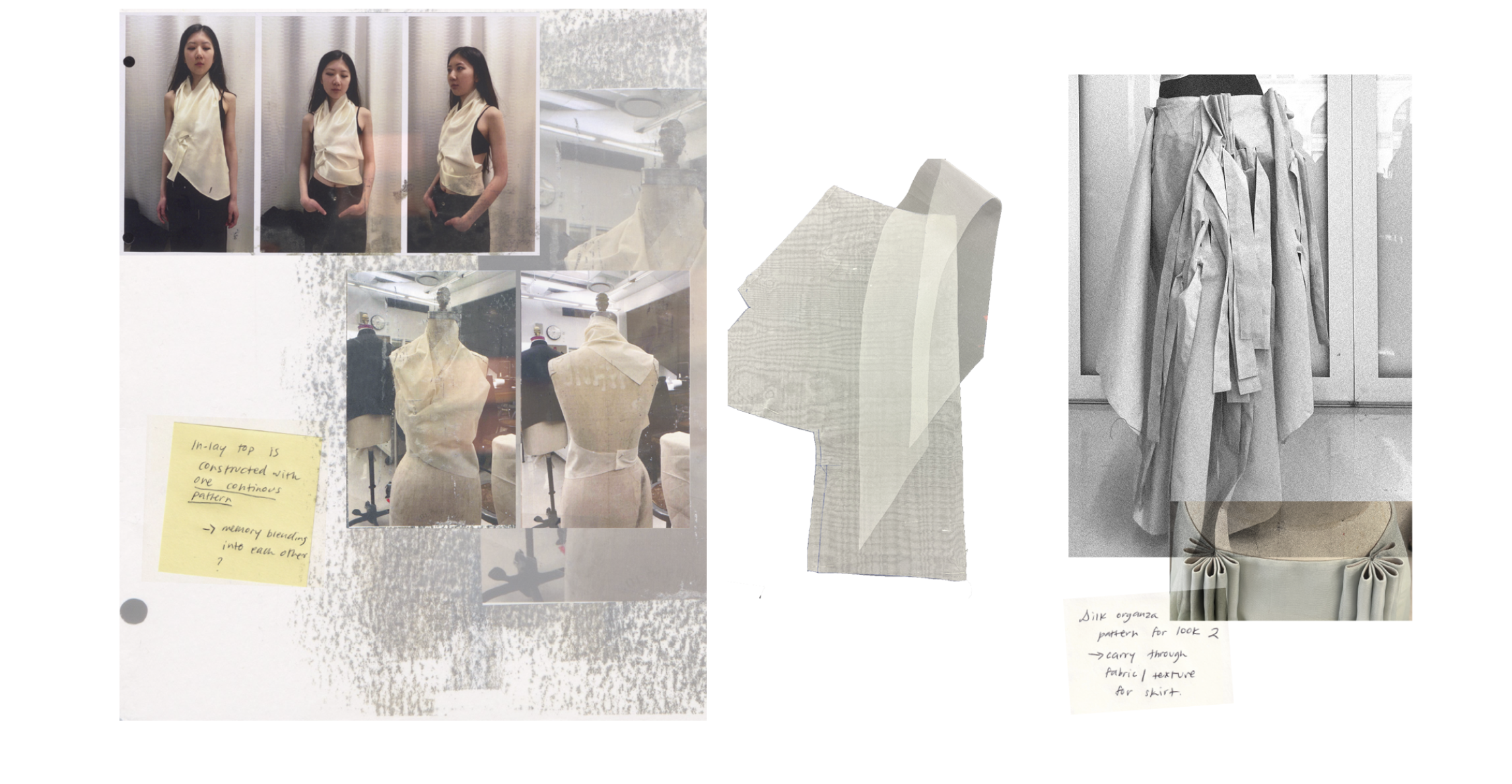
Setiawan’s latest mini collection, I hold on for dear life, turns toward memory as both material and method. Its starting point was a difficult period in her life, but rather than dwell on its pain, she chose to focus on the moments of joy she wanted to preserve. Revisiting the past in this way did not change what happened; it changed her relationship to what she remembers. The collection makes that process tangible across fashion, graphics, set design and creative direction. Her work also carries the experience of living between cultures. In New York, distance from Indonesia has, in some ways, brought her closer to her roots.
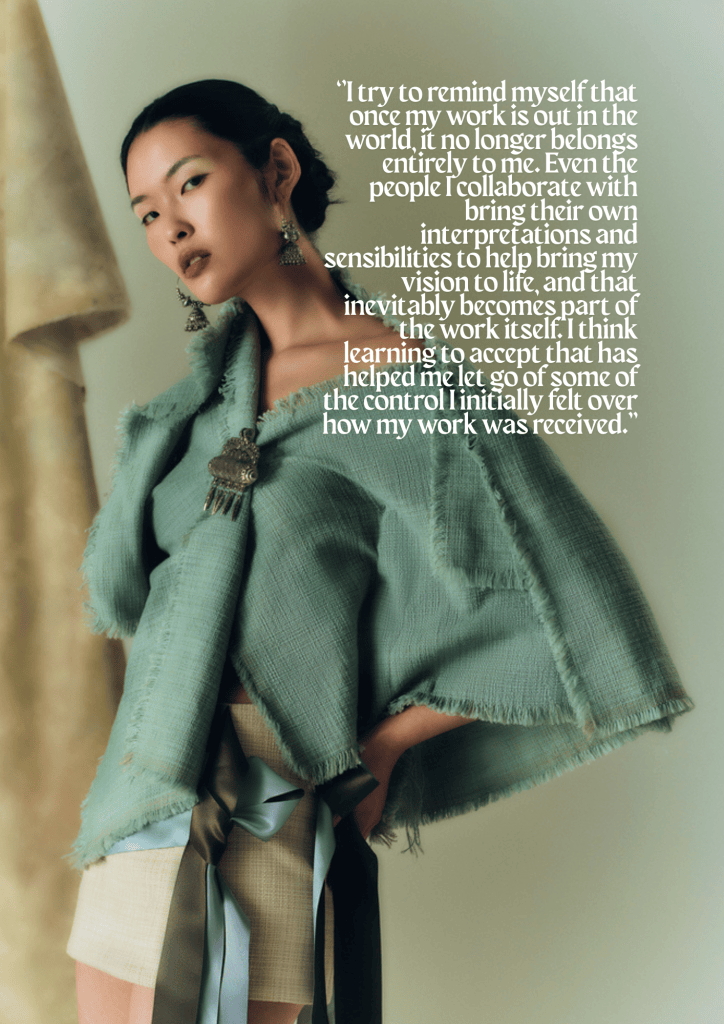
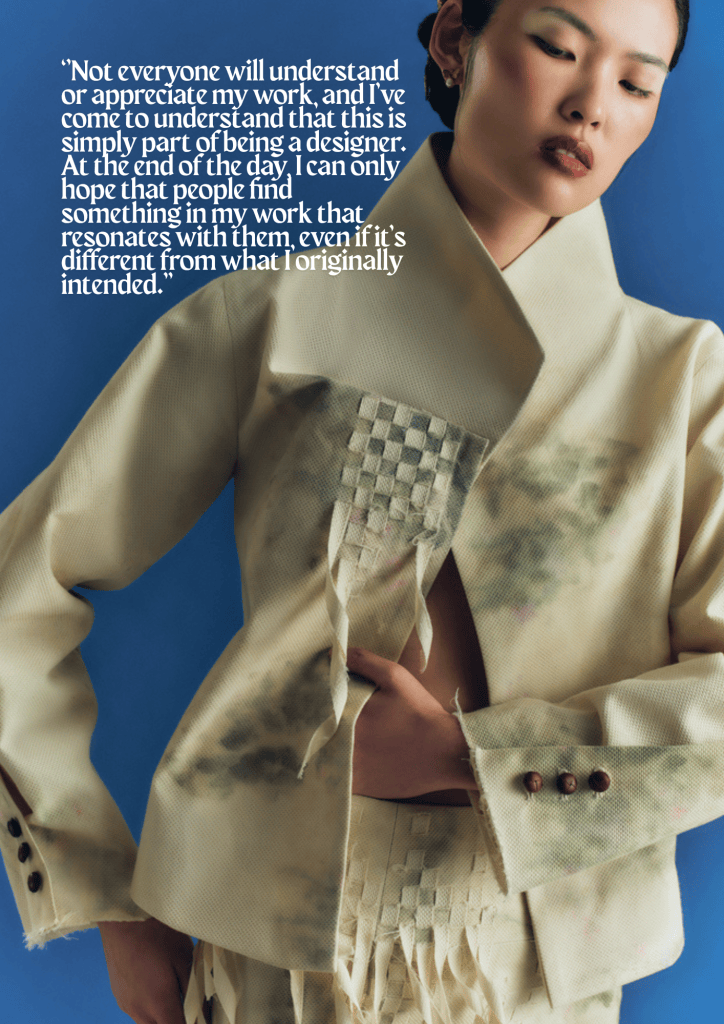
She is interested in how cultural meaning travels—and in what can be lost when it is translated. Some Indonesian expressions have no direct English equivalent; for Setiawan, design offers another kind of language, one that can convey feeling and invite curiosity beyond the immediately visible. That invitation extends to the viewer. Setiawan accepts that a work changes once it enters the world, gathering meanings from the people who encounter it and the collaborators who help bring it to life. She does not expect every viewer to read it as she intended. Instead, she hopes they will find a point of connection—perhaps in a detail, a mood or a memory of their own.
In I hold on for dear life, personal history becomes a way to consider how we remember, what we choose to keep, and how the past continues to shape who we are.
How has growing up in Jakarta shaped the way you understand and express your identity through design?
Growing up in Jakarta, I felt that artists and designers weren’t really given much visibility. We learned a lot about our culture and traditional arts, like batik and wayang, but contemporary art and fashion weren’t as present in mainstream Indonesian media. Although Jakarta has seen many emerging designers in recent years, there weren’t as many when I was growing up.
Fashion was something people cared about in terms of appearance and status, especially when it came to luxury brands, but I didn’t feel that the design itself was always valued. This made me more attentive to the smaller details, especially because people tended to be more reserved and self-expression often felt more subtle. I began to notice how individuality could exist in the details rather than through something immediately obvious.
Are there particular memories, places, or everyday details from your childhood that continue to influence your work?
It wasn’t until middle school that I took the initiative to visit galleries and explore Indonesian art for myself. It was my first real exposure to work that deeply impacted me. I remember researching Hendra Gunawan, an Indonesian painter, and being in awe of the depth and beauty of his work. Learning about his life and the experiences that shaped his paintings helped me understand that art and design are an extension of the self. They allow you to reveal parts of yourself to others, which can feel vulnerable, especially when you come from a more conservative society.
That realization stayed with me and solidified my belief that art and design should make you feel something. It doesn’t always have to be understood immediately, but it should evoke an emotion or leave something behind with the viewer.
How do you decide which elements of your personal history to bring into a collection?
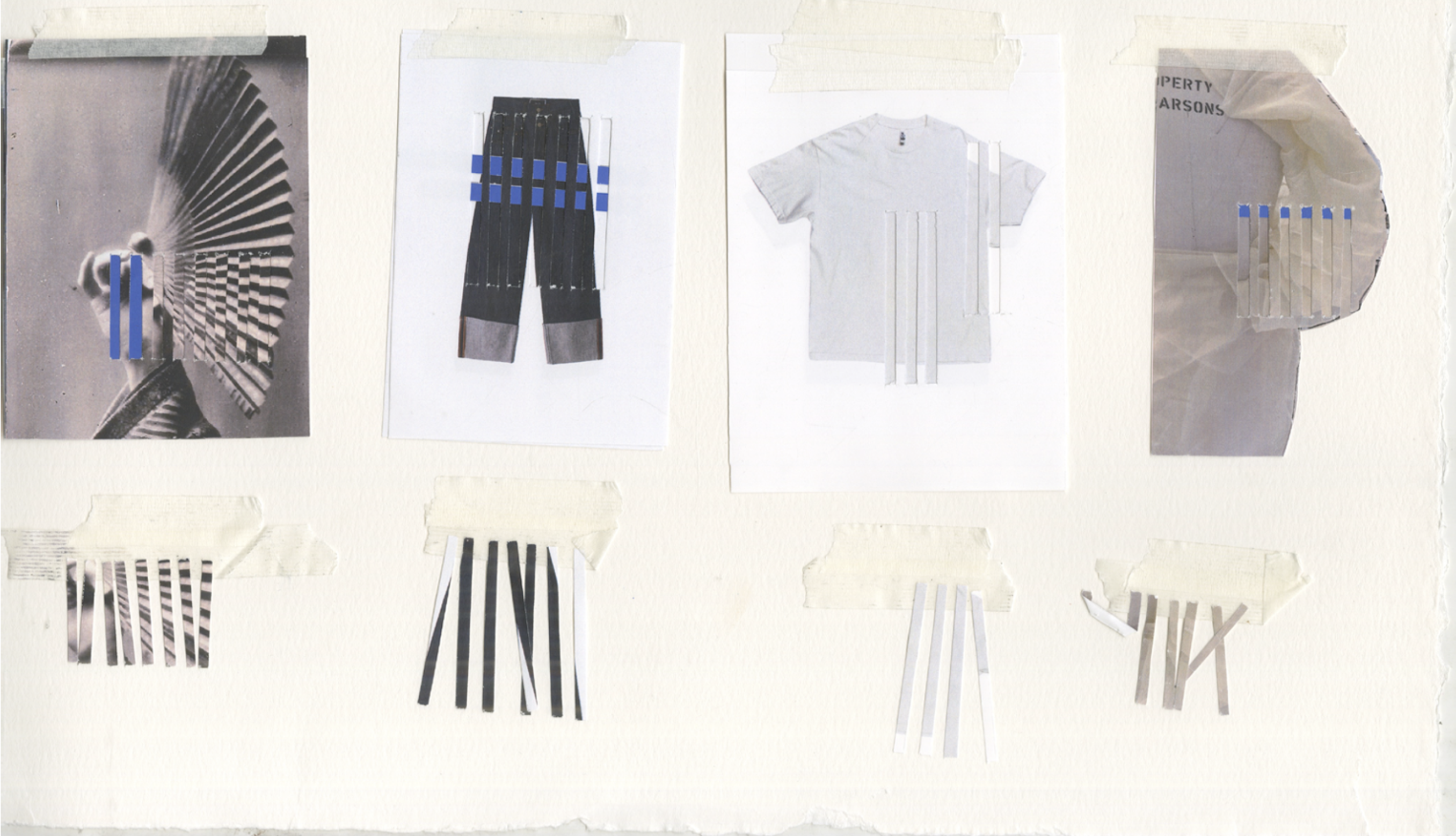
I think one of the biggest challenges with this collection was figuring out which parts of my personal story I wanted to share. It was something I had never really done before, and I had to learn how to navigate the friction of expressing something personal outwardly. It’s difficult to express these abstract concepts and emotions into something that is tangible; the honesty of experiencing something is lost in the translation of expression itself. For this collection, I chose to focus on the most euphoric parts of my memories. Although the initial inspiration came from a much more difficult period in my life, I wanted to shift my focus towards the parts that I wanted to hold on to.
I tend to be quite pessimistic and get caught up in my own thoughts. Instead of dwelling on the difficult parts of a memory, I allowed myself to revisit the good that came out of it. In doing so, I found that I could reshape my relationship with those parts of my life, not by changing what happened, but by choosing to remember it differently.
What does it mean to you to create work that exists between different cultures or places?
I think this has been one of the more difficult aspects of sharing my work. Indonesian culture is so rich, and there are so many exceptional work coming out of the art scene currently. It’s sad that it isn’t being recognized on a global scale. This is why I find it challenging to communicate how deeply my culture and upbringing have shaped my designs beyond what is immediately visible. While it’s rewarding to see people appreciate the aesthetics of my work, I also want that appreciation to go beyond the surface. I want people to become more interested in where these influences come from. In terms of both the cultural influences and personal experiences that have shaped the way I see and create. It’s important that my work not only reflects where I come from, but also as a space for others to discover it for themselves.
How do you balance personal references with the possibility that viewers may interpret your work differently?
Has living in New York changed the way you relate to your Indonesian background?
Definitely. Living in New York has allowed me to meet people from so many different backgrounds and cultures, and compared to many other communities, the Indonesian community here is relatively small. I think that distance has made me feel closer to my own culture in certain ways.
How do you approach cultural references in a way that feels personal rather than purely decorative?
I think that’s difficult to separate because so much of our culture is beautiful, and it’s instinctive to focus on that beauty first. But the aesthetics also carry so much meaning that it can be hard to communicate to someone who hasn’t experienced the culture firsthand.
There are certain expressions and sayings in Indonesian that simply don’t translate into English, and I think that reflects how much of a culture can get lost when you try to communicate it through another language. Designing acts as a universally understood language; it allows me to overcome the limitations of language and written words.
What would you like someone to discover about themselves when they encounter your work?
I hope the collection encourages people to reflect on their own memories. I’m quite a forgetful person myself, so I’ve come to appreciate the importance of looking back and revisiting the moments that have shaped us. There is something meaningful about returning to these memories, not necessarily to relive them, but to understand how they continue to influence who we are and how we grow.
Follow Joanne Setiawan HERE
Website https://joannesetiawan.com/