The Shape of Breath – An Installation That Holds You
In Hanghang Li’s proposed immersive work, movement becomes memory, threads become a kind of embrace, and the scent of lavender offers a way back to a moment the mind may have forgotten.
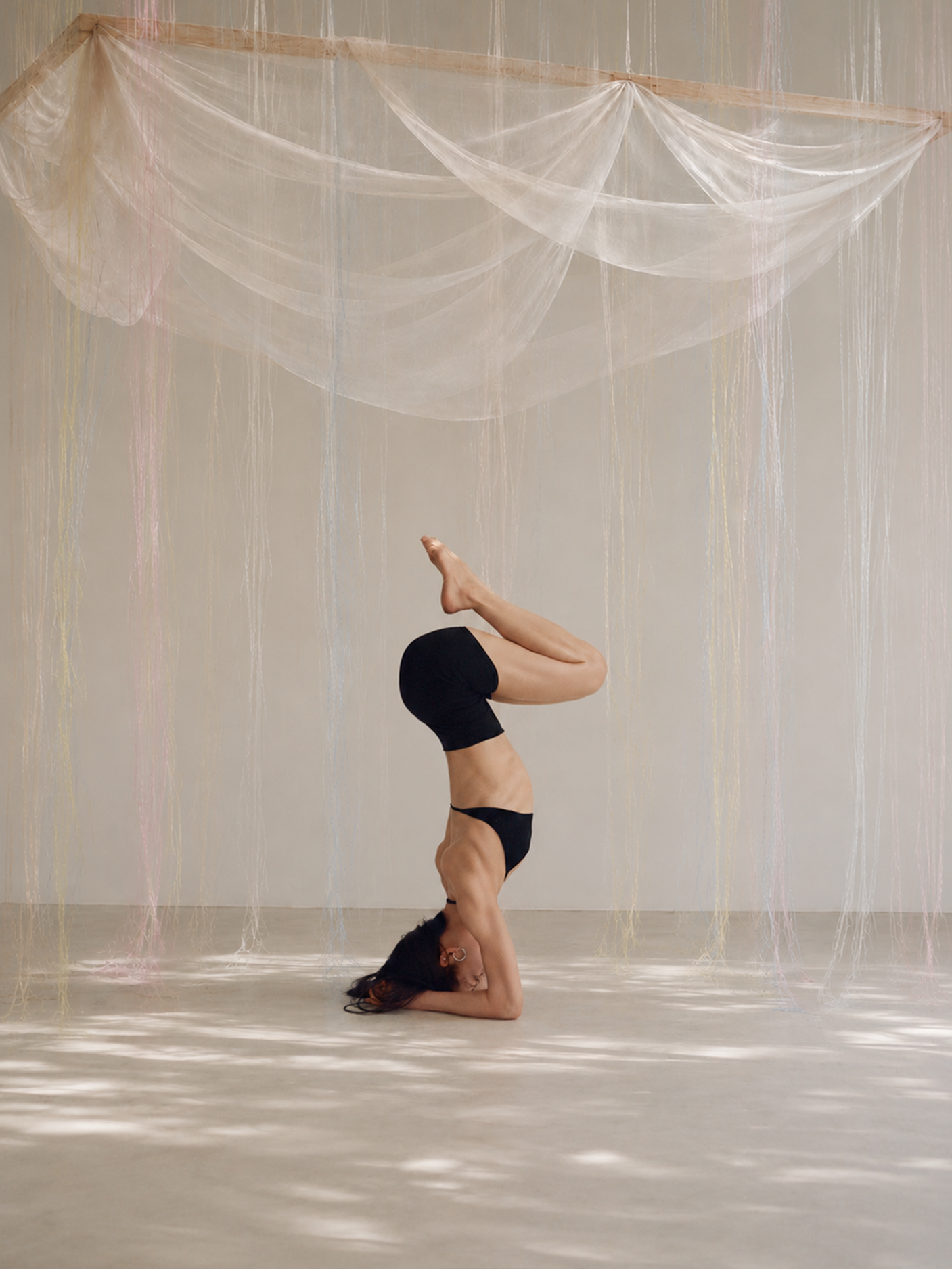
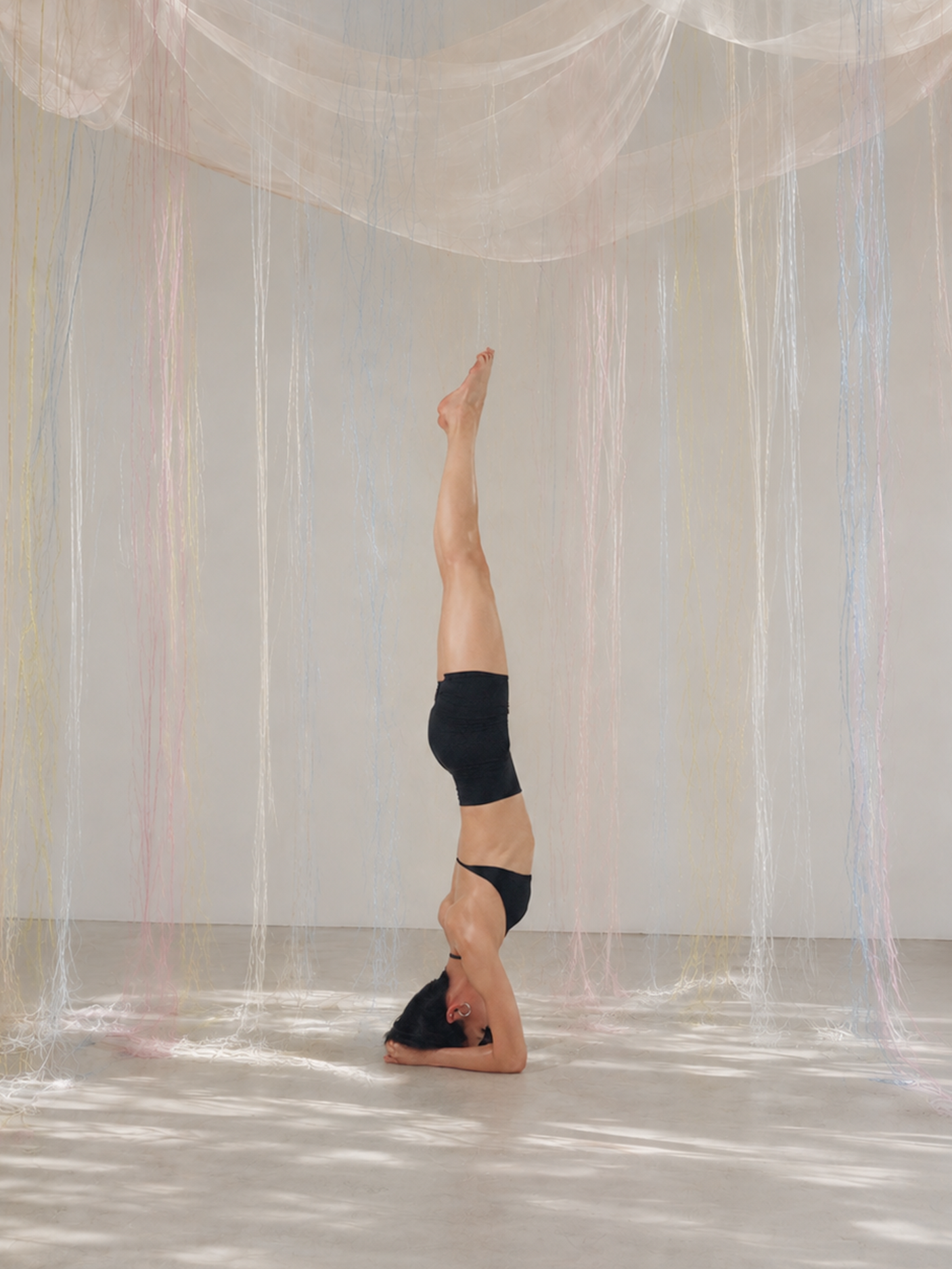
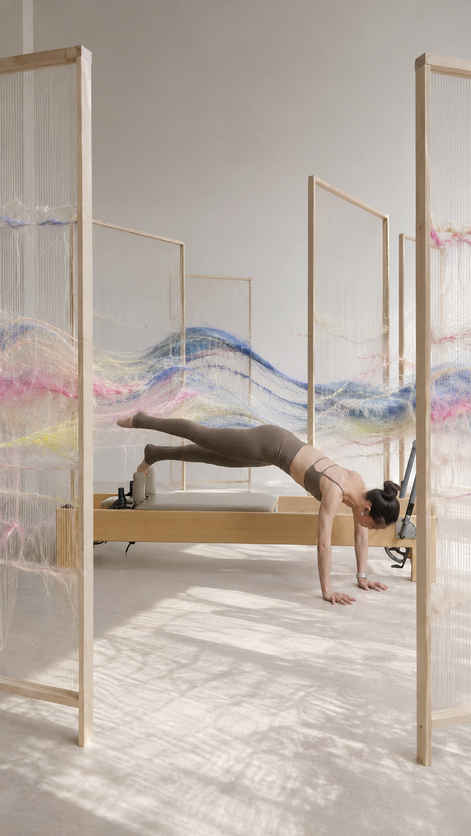
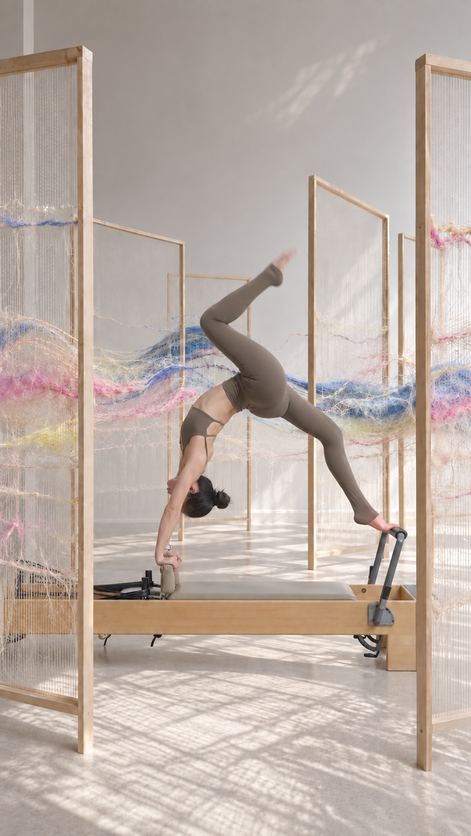
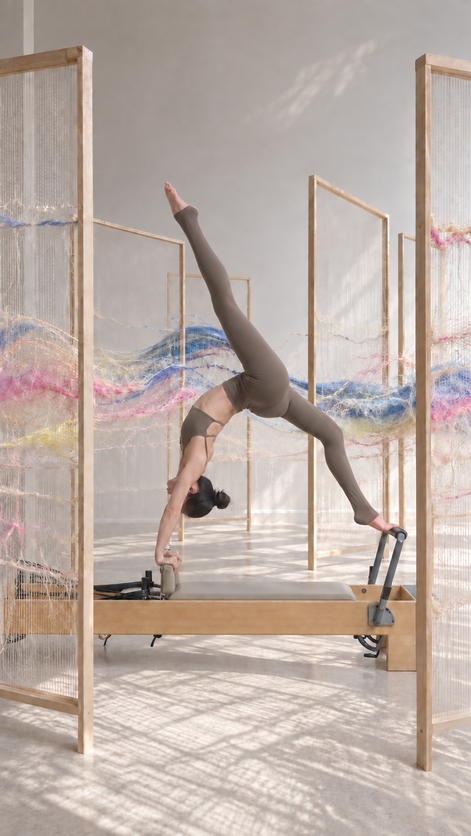
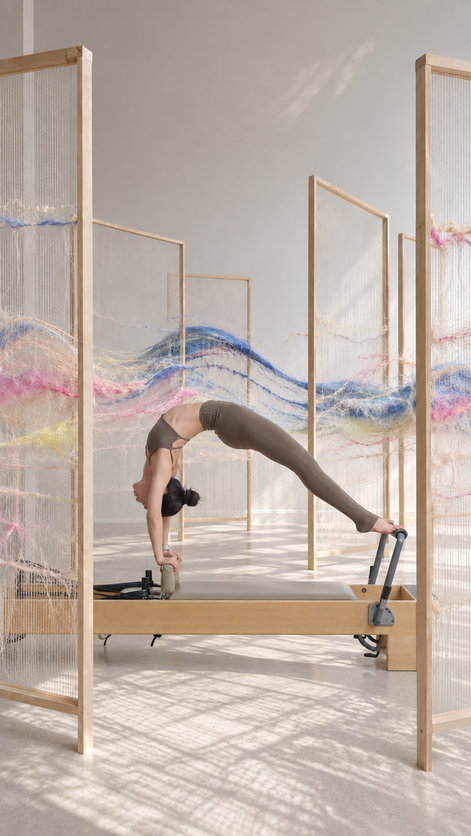
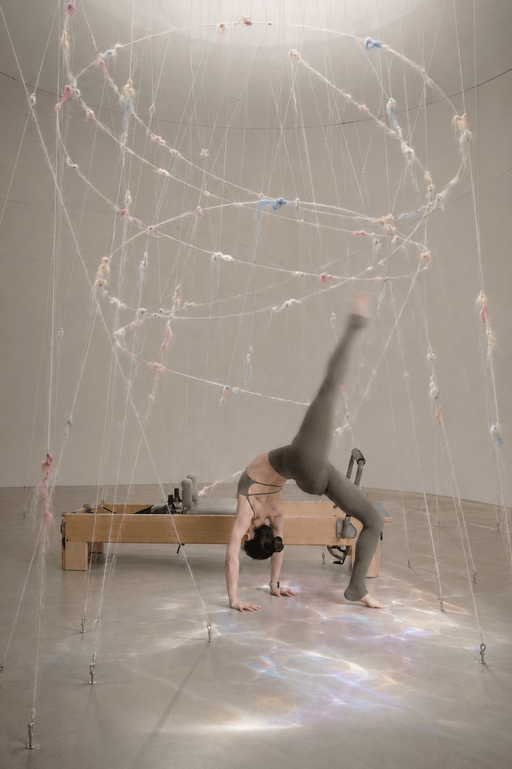
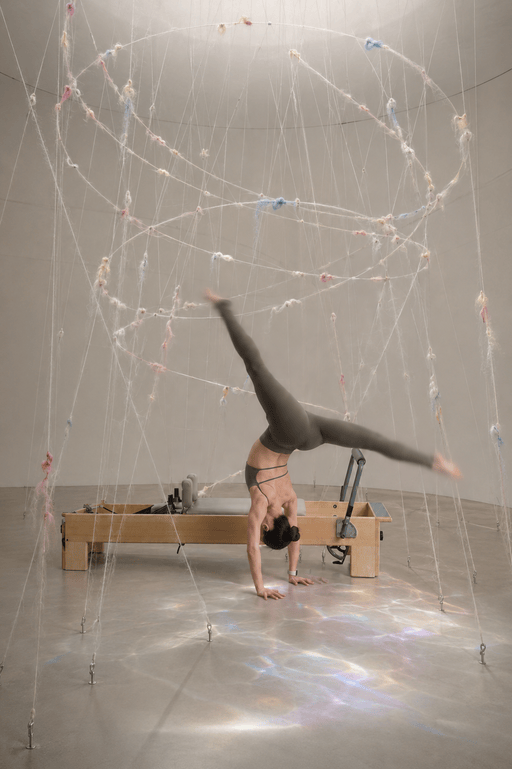
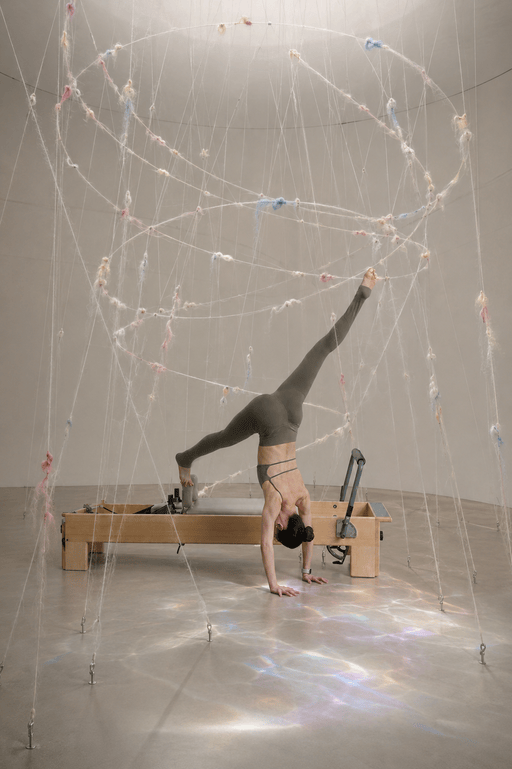
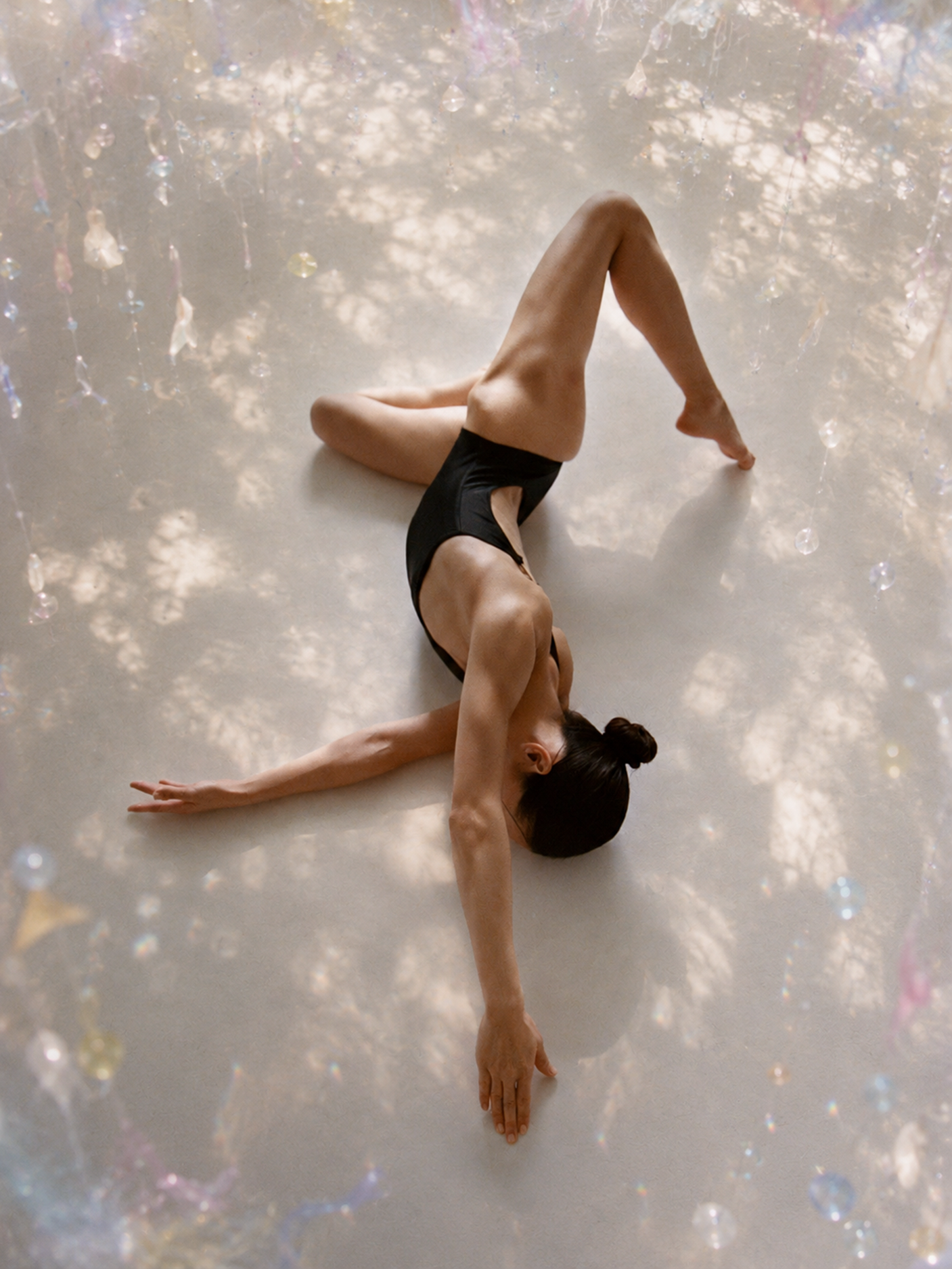
Imagine entering a quiet, gallery-like room and finding a Pilates reformer at its centre. Above it hangs a vast canopy of threads—mohair, alpaca and silk—descending from a precise wooden frame and spreading through the space like a cloud made tangible. The floor, the apparatus and the suspended fibres seem to belong to a single shifting landscape. A faint trace of lavender lingers in the air.
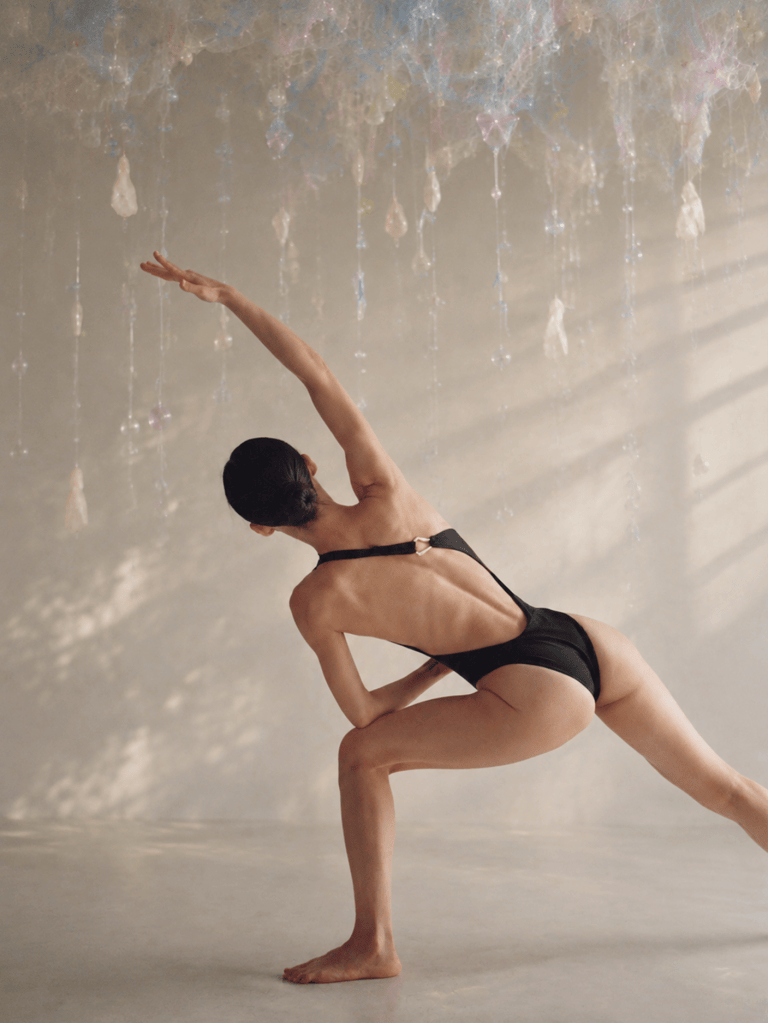
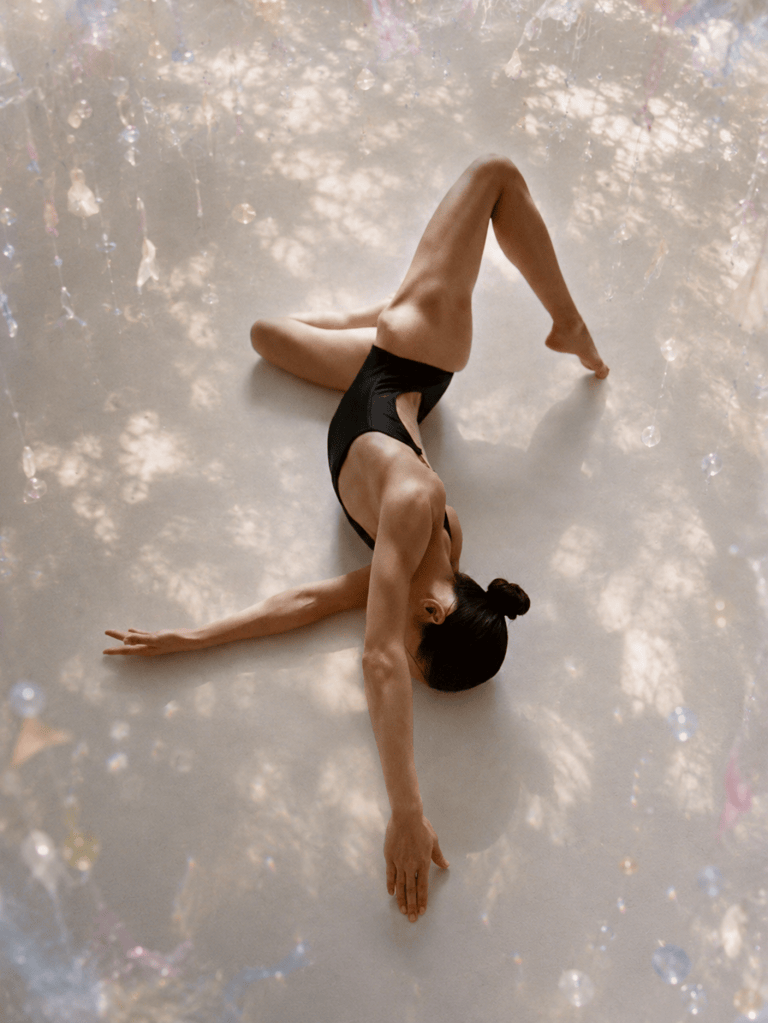
This is the world envisioned in The Shape of Breath, an AI-assisted installation concept by Hanghang Li. Its digital prototype, created in 2026 in collaboration with Yuxin Su, is a study for a physical installation now in development. The finished work is intended to be made with wood, fibre and lavender, with live movement at its centre. For now, the prototype offers a way to imagine how the space might feel: how the threads could sway, how colour might travel across them, and how the body might find its place within the environment. The installation is not simply a collection of hanging materials or a Pilates apparatus transformed into sculpture. Its subject is the entire spatial field: the floor beneath the participant, the fibres suspended overhead, the air between them. The room becomes a kind of breathing entity, responsive to movement and inviting the visitor to experience art not from a distance, but from within.
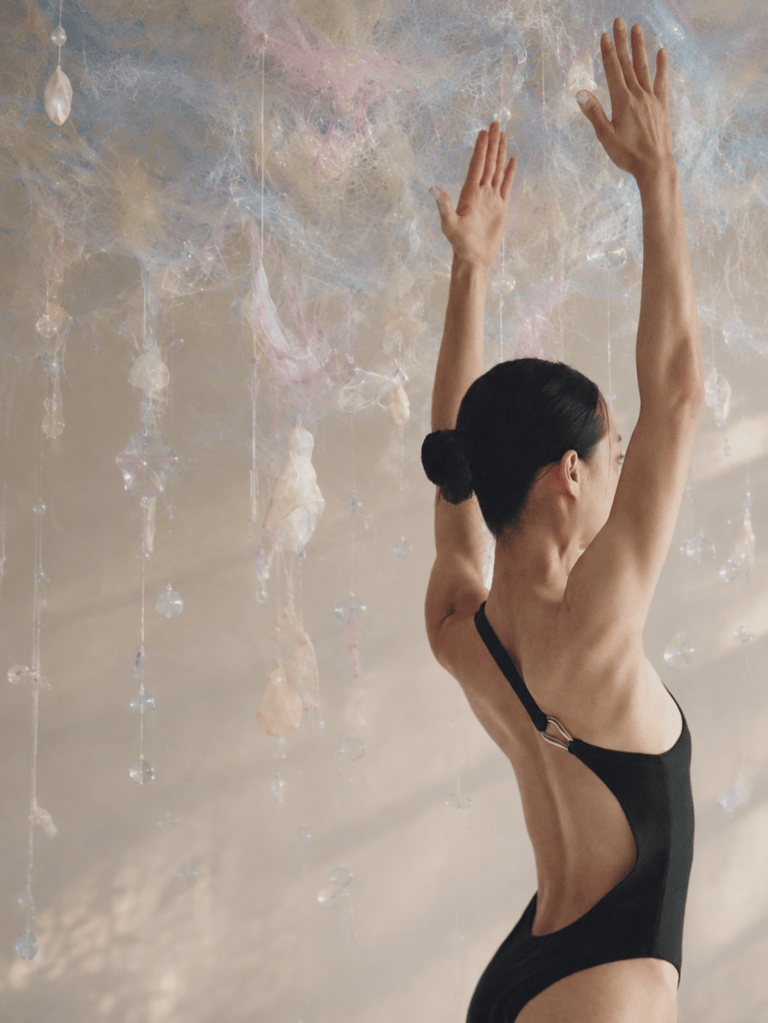
Li describes this encounter through the idea of sensory memory. Beyond strength and flexibility, she proposes that the body carries another dimension: a record made through sensation, movement, touch, breath and smell. A body may remember what the conscious mind has misplaced. A scent can summon an atmosphere; a familiar movement can recall a feeling of safety, strain or release. In this work, memory is not presented as a story to be read. It is approached as something the visitor might feel. The threads give this idea a physical form. At first, their colours move from deep blue to white and then soft pink, like a sky dissolving into dawn. But these colours are not intended as decoration alone. Blue evokes an interior world, the dark ground from which sensation rises. White becomes breath made visible. Pink recalls the warmth of skin—the trace of crying after the tears have passed. The colours hover without fixed names, suggesting that emotion may be felt before it can be explained.
The structure supporting them is equally significant. A geometric wooden frame provides a clear, measured skeleton. From it, the fibres fall in irregular, interwoven lines, softening the architecture around them. Li frames this contrast as a dialogue between East and West: the frame expressing Western precision, the floating threads an Eastern breath. The relationship is not simply one of opposition. Geometry gives the fibres a point of departure; the fibres, in turn, loosen the structure. Each language alters the other. Movement brings the installation into conversation with the body. When a participant breathes or shifts on the reformer, the threads may sway gently overhead. Their response is not intended to imitate the body or follow it in perfect synchrony. As Li’s visual statement puts it, “This is not synchrony. This is a conversation.” The participant’s breath and the movement of the fibres remain distinct, yet share the same space. The work asks for no correct performance and no prescribed interpretation. Its invitation is simply to notice: the ribs opening, the body settling, the space moving in response.
Touch extends that invitation. When a hand meets a thread, the material becomes more than something to look at. It may feel like a vine, a strand of water, or a gentle contact that recalls being held. In the language of the work, the threads become a kind of spine—an image for the different histories carried in different bodies. Their soft, shifting forms suggest that a person’s story is not fixed in a single posture. It bends, gathers, releases and changes.
Lavender adds another register to the experience. Sachets tied to the ends of the threads are intended to release a subtle scent, one that may stir a memory without dictating what that memory should be. “You forgot what happened that day / But the scent stayed,” Li writes. The line captures the installation’s interest in the uneven life of memory: the mind may lose the details, while the senses retain an impression. Smell, in this setting, is not a cue with a guaranteed meaning. It is an opening—personal, unpredictable and potentially tender. Li is careful to distinguish healing from cure. The work does not claim to treat or resolve distress. Instead, it imagines an environment in which softness, sensory attention and movement might help a visitor encounter their own experience without judgment. Fatigue and emotional release are not framed as failures to overcome, but as part of the body’s knowledge: evidence of effort, endurance and the possibility of letting go. The hoped-for outcome is not a prescribed revelation, but a moment in which the participant feels present, supported or less alone.
This emphasis on presence also informs the project’s relationship to the idea of a “Daily Museum”: a living space where art is not confined to objects on display. In this model, the students and participants are not merely an audience observing a finished work. Their movements, sensations and presence are part of the artwork’s unfolding life. The museum becomes a daily practice—a place where ordinary acts of breathing, stretching, resting and paying attention can become meaningful.
The model shifts the role of the viewer. In a conventional gallery, visitors might move around an artwork; here, the artwork surrounds them. The participant’s body is not an illustration of the concept, but its active medium. This is the premise behind Li’s phrase “a sensory theatre”: a space in which the body is not simply moving, but becoming—more aware of its own rhythms and of the environment around it.
The digital prototype makes this vision possible to explore before the physical installation is built. Li and Yuxin Su have used AI-assisted visualization to test spatial and sensory variables, including the density of the threads, the behaviour of light, colour transitions and the relationship between the body and the suspended fibres. In Li’s account, AI is a collaborator in visualization, not the author of the work. The concept, creative direction, sensory design and movement methodology remain hers. The prototype is a thinking tool: a way to picture the unseen before translating it into real materials. The project also connects to research into art therapy and sensory healing. USC Clinical Professor of Communication Ben Lee, Associate Director of the Communication Management (MCG) program, has been cited as praising the work’s translation of abstract ideas into an immersive visual experience. A statement supplied for publication describes the installation as “a masterful example of visual communication” that bridges academic research and immersive art.
The Shape of Breath asks what it might mean to feel held without being instructed how to feel. Its threads do not offer answers; they create conditions for attention. A participant may notice the coolness or warmth of the air, the movement of the ribs, the sensation of material under the fingertips, or a scent that recalls something unbidden. The experience may be quiet. It may be different for everyone.
Hanghang Li is the leading artist and visionary behind the project. Through her work, a familiar movement space becomes a setting for an expanded artistic practice—one in which the environment is not a backdrop, but an active presence. The Shape of Breath proposes that light, material, movement and scent can shape a space of care: not medicine in a literal or clinical sense, but an invitation to listen to the body and meet it with attention. In that encounter, the room itself seems to breathe. The participant breathes with it, and for a moment, the world feels less empty.