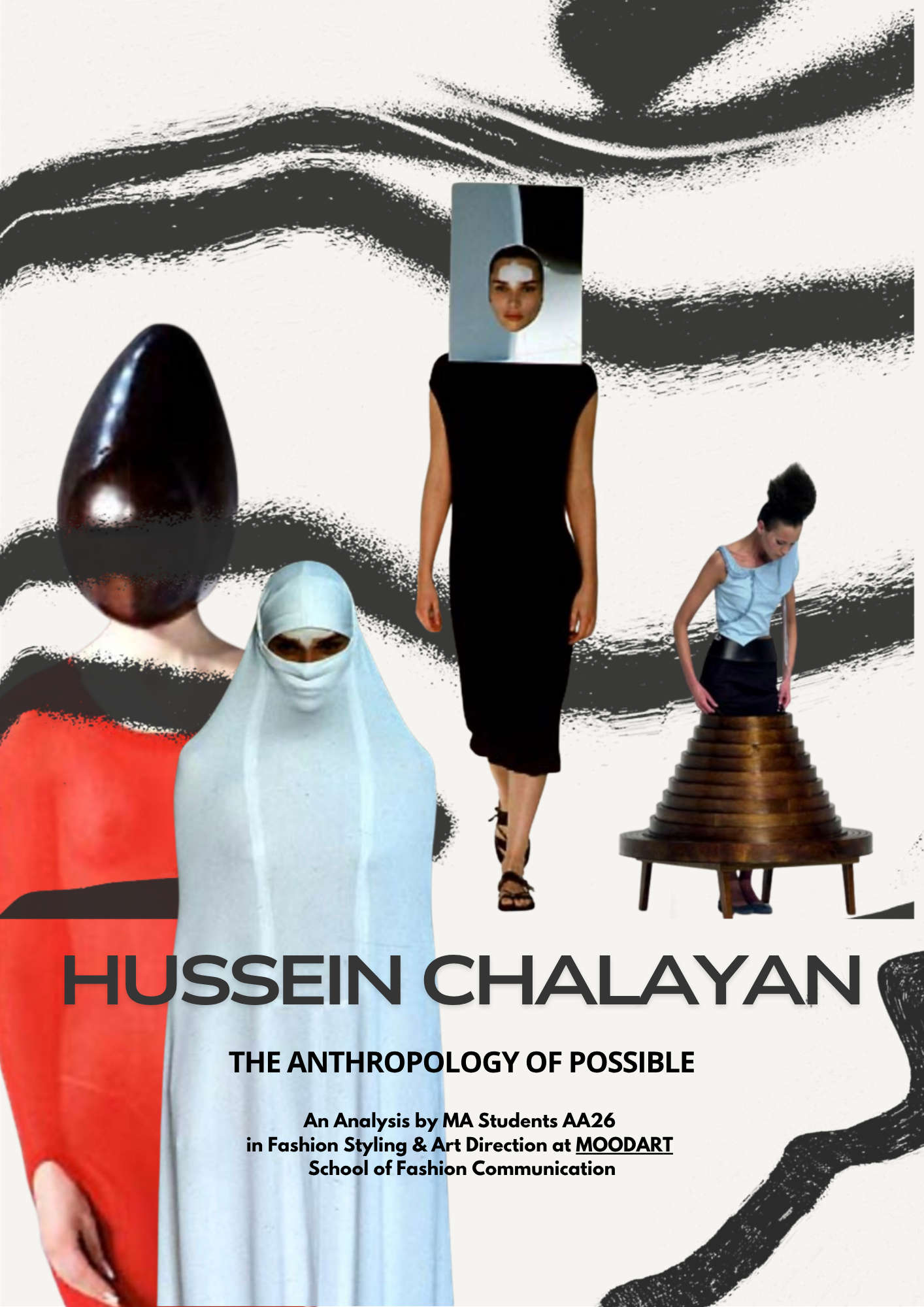
The Anthropology of the Possible
Hussein Chalayan – Fashion as a Sociological Device
An Analysis by MA Students AA26 in Fashion Styling & Art Direction at MOODART School of Fashion Communication
In contemporary fashion, there are moments when the runway ceases to be a mere display of garments and becomes a site of collective reflection. Hussein Chalayan belongs to that rare category of designers who have transformed fashion into a sociological device: a language capable of interrogating identity, the weight of memory, and the fragility of the individual amidst global transformation. More than a couturier, Chalayan is a cartographer of the body. For him, the garment is the liminal boundary between the “self” and the external world.
His research stems from a condition of modern unease: the necessity for the contemporary individual to constantly redefine themselves in a world marked by mobility, loss of roots, and the crisis of traditional identity. Born in Nicosia and shaped by a history of political tension, Chalayan brings a sensitivity to displacement and migration into his work. His aesthetic does not seek formal perfection but rather narrative conflict: the tension between belonging and flight, protection and vulnerability.
Analysis I: Spring/Summer 1998 – “Between”
Sociological Context
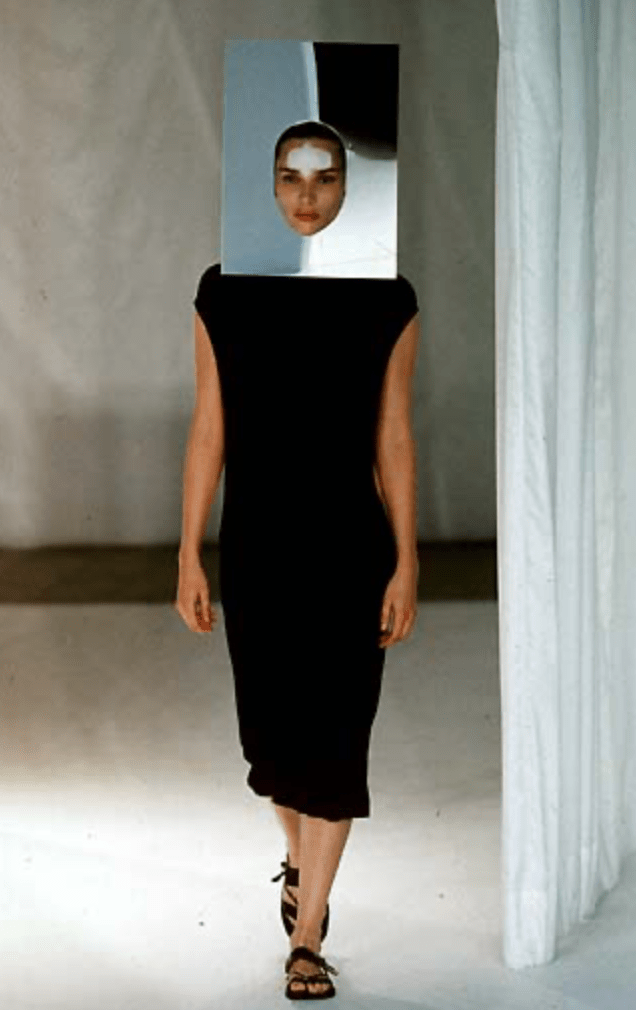
With Between, Chalayan anticipated the discourse on post-identity. He illustrates the condition of those living suspended between different cultures, suggesting that identity is no longer a monolith rooted in a single place, but a fluid state. In an era still clinging to rigid definitions, Chalayan proposes that inhabiting the “in-between” is not a state of incompleteness, but a new possibility of existence.
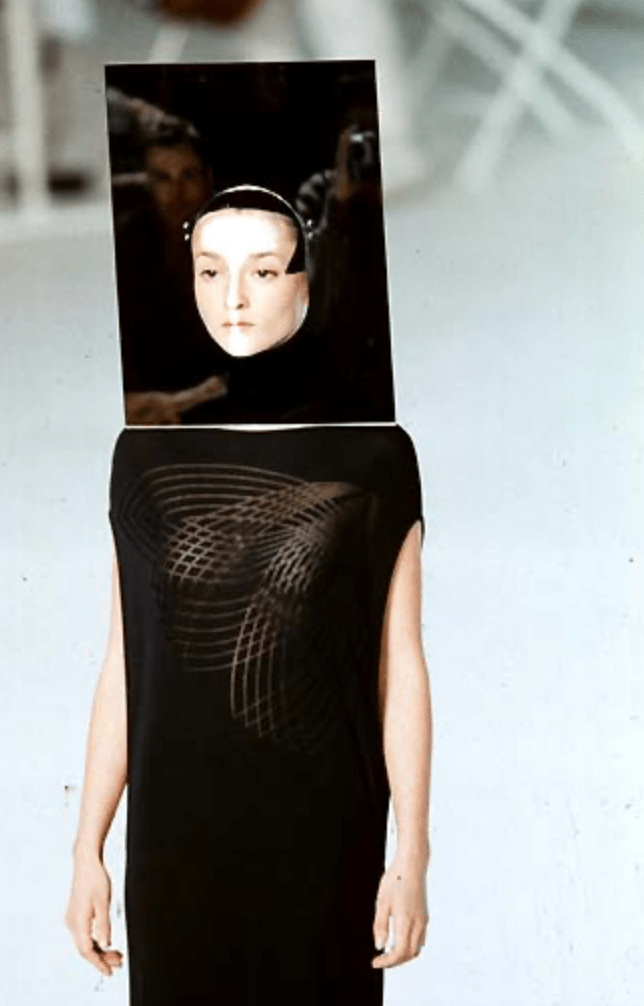
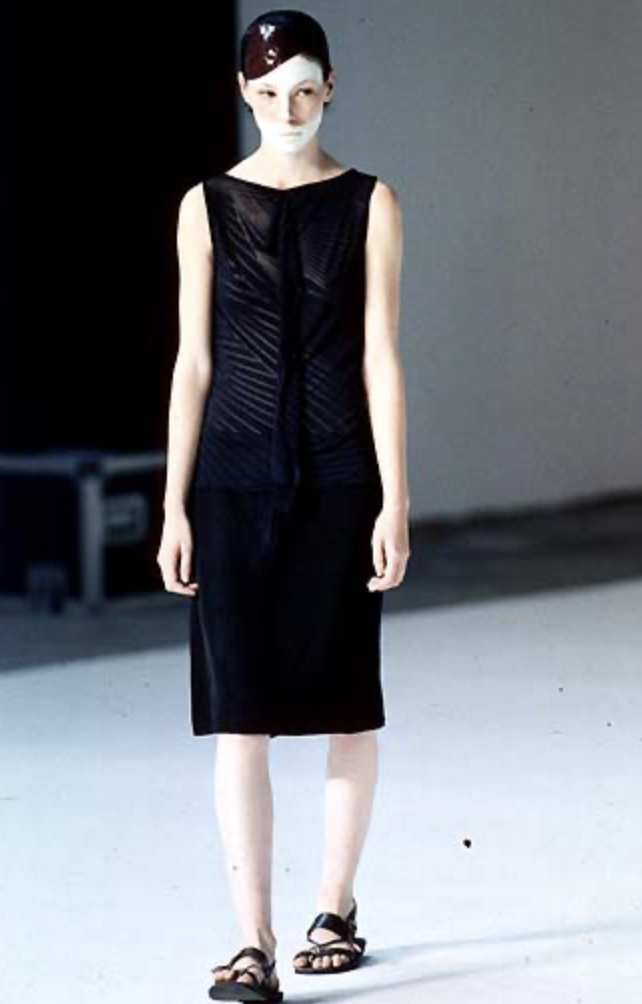
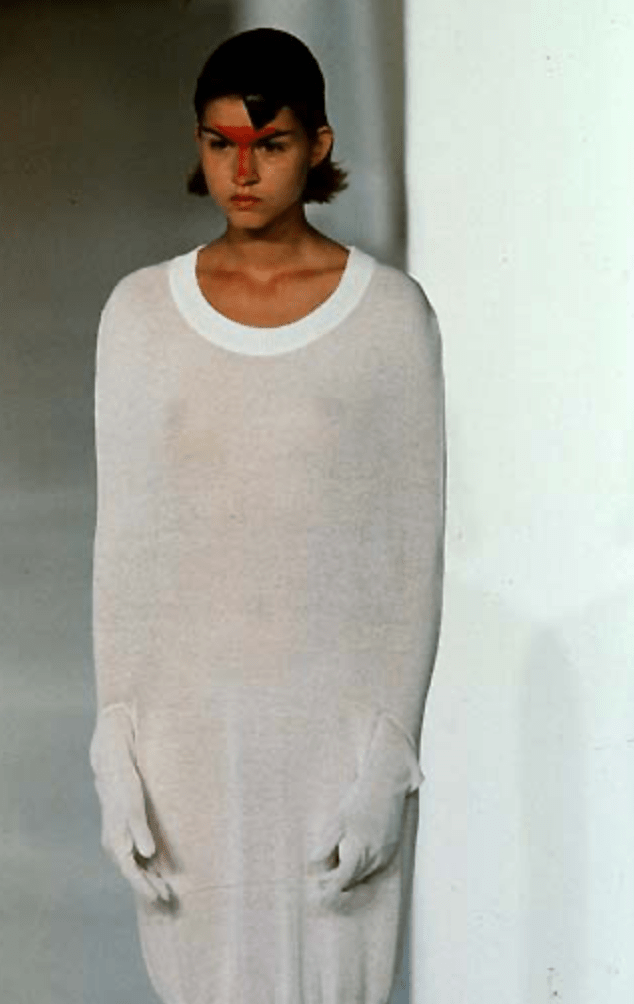
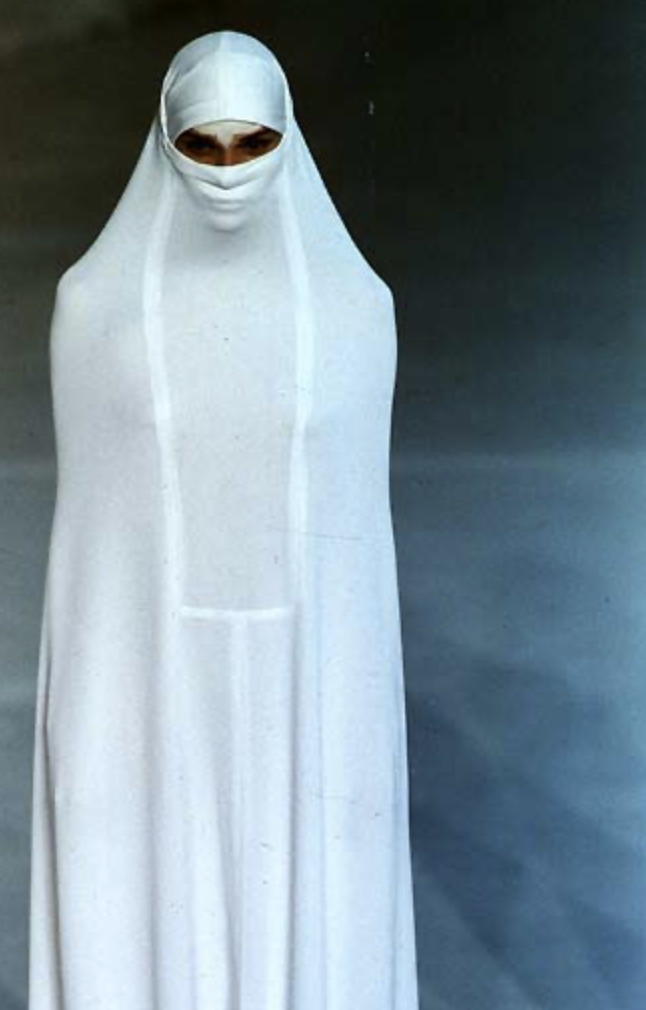
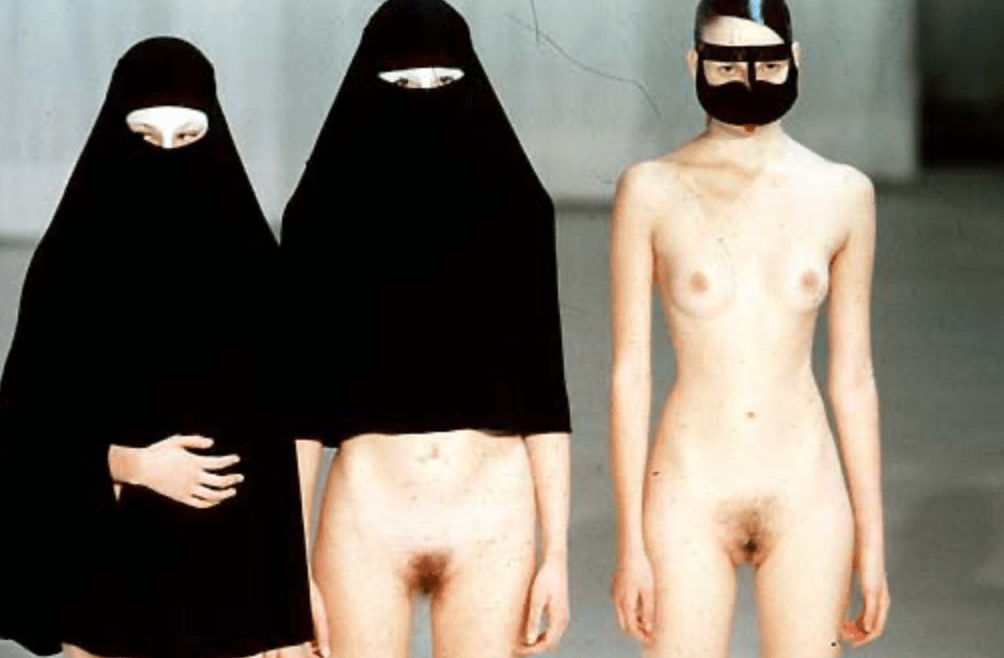
The collection explores the liminal condition: the state of suspension experienced by those between two worlds or two versions of the self. The central concept is identity as an unstable construction. The garments interrogate the boundary between the visible and the hidden, between the desire to belong and the necessity to remain distinct. Chalayan’s minimalism is never empty; it is laden with memory. The subtraction of decorative elements acts as a resistance against consumerist excess, concentrating meaning within geometric volumes. Here, the dressed body becomes the site where geopolitical tension manifests as fabric.
Between serves as a masterclass in the sociology of the body. The progressive transformation of the silhouettes—most notably the shifting lengths of the chadors—forces the viewer to confront the relationship between visibility, freedom, and social control. While the use of nudity sparked controversy in the 1990s, today we recognize its deeper value: Chalayan avoids the rhetoric of easy liberation, instead presenting the female body as a territory of constant negotiation between fragility and strength, emancipation and tradition.
SEE THE FULL Hussein Chalayan Ready-to-Wear – Spring / Summer 1998 ”Between” HERE
Analysis II: Fall 2000 – “Afterwords”
Sociological Context
In Afterwords, the garment takes on a dual sociological function: on one hand, it is a prosthesis (an extension of the self); on the other, it is a refuge (a portable home). In a world unprepared for the trauma of forced displacement and multiculturalism, Chalayan designs fashion that acts, quite literally, as an identity survival kit.
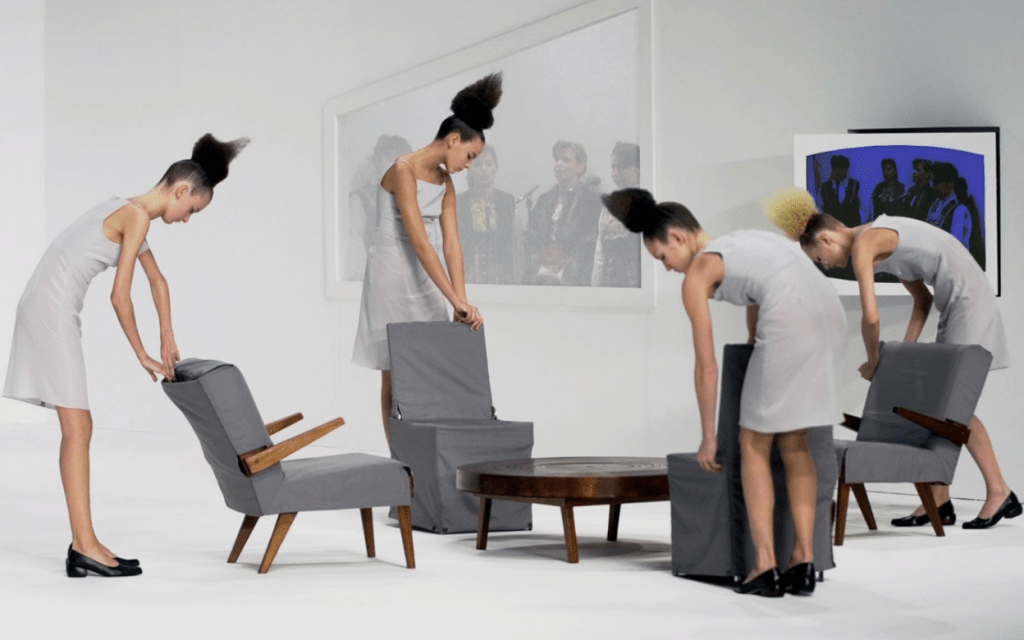
Inspired by war and the history of refugees—a theme close to Chalayan’s own Cypriot roots—the show begins in a calm, domestic atmosphere defined by fluid silhouettes and neutral tones. However, this domesticity is a narrative ruse. In the dramatic finale, the furniture—chairs, covers, and tables—enters into a direct relationship with the models’ bodies.
Chalayan dissolves the boundaries between fashion, design, and architecture. Models transform chair covers into dresses and the wooden frames into suitcases. The climax occurs when a model lifts a wooden table and transforms it into a skirt: a gesture that synthesizes the drama of migration. When a physical home is lost, objects become the custodians of identity. The body becomes the new home; identity no longer resides in the soil, but in what we can carry with us.
Chalayan exposes the consequences of uprooting in a society that struggles to accept change and diversity. By transforming “home” into “garment,” he invites us to rethink the concept of belonging, suggesting a more open and inclusive vision of cultural coexistence. It is a powerful reminder that behind every garment lies a human story of survival.

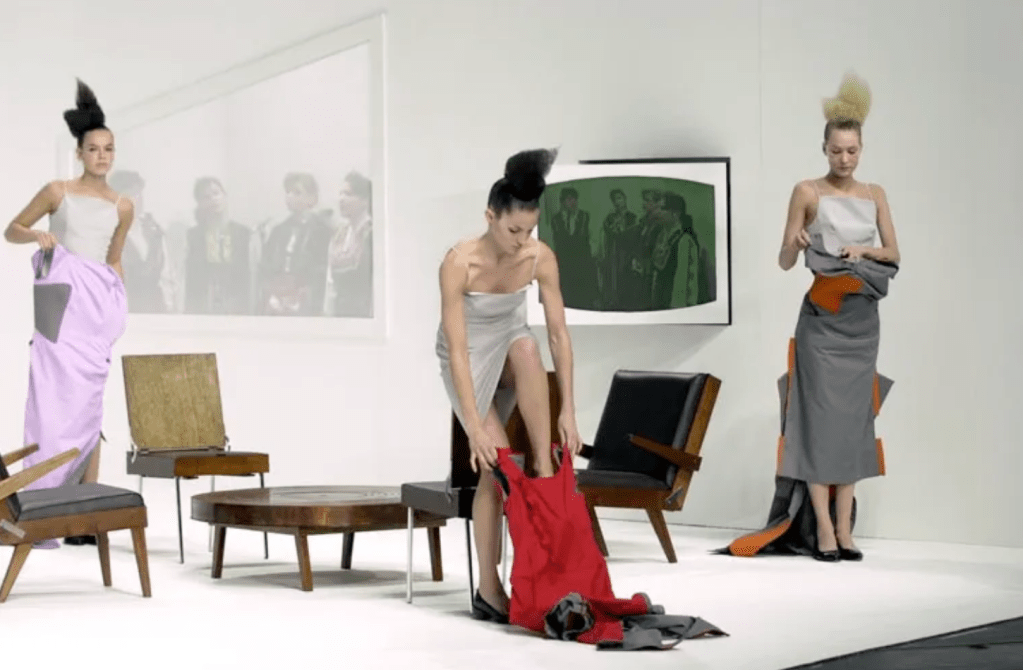
SEE THE FULL Hussein Chalayan Ready-to-Wear – Autumn/Winter 2000 “Afterwords” HERE
Hussein Chalayan’s work anticipated the defining issues of the 21st century: the crisis of stable identity, global mobility, and the need to redefine one’s place in an unstable world. His fashion is emancipatory because it refuses to imprison the individual in a definitive role.
His garments do more than cover the body; they narrate how the body moves through history. His rebellion is conceptual and profound—he does not break the rules of fashion; he questions them from within. In an age of visual excess, Chalayan reminds us that dressing is a political and philosophical act. He suggests that identity is not something to be preserved in stasis, but something to be perpetually reinvented. His work is the space where fragility turns into structure, and unease becomes a possibility for rebirth.
Words by MA Students AA26 in Fashion Styling & Art Direction at MOODART School of Fashion Communication