

The Alchemy of Craft and Identity at Polimoda’s 40th Anniversary Graduate Show
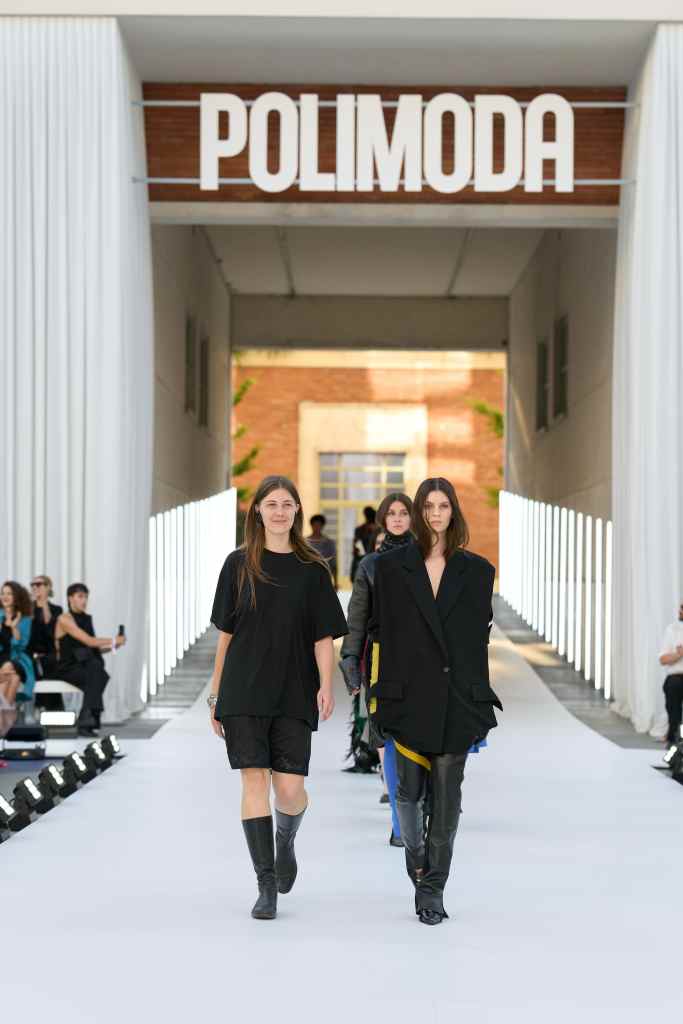
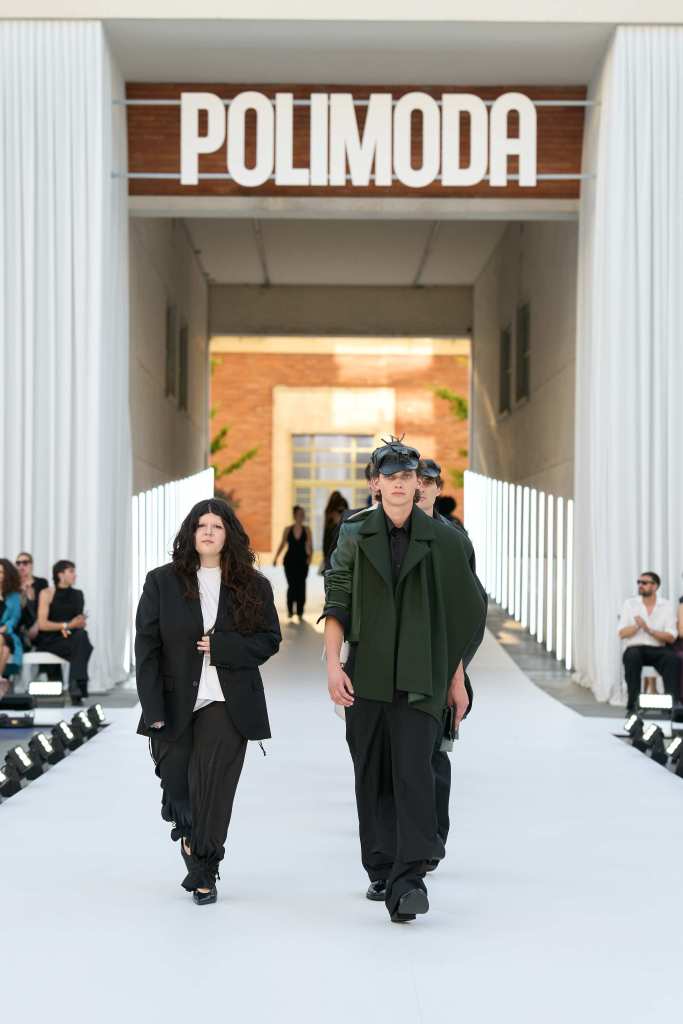
As the sun began to dip behind the brutalist silhouette of the Manifattura Tabacchi clock tower, the air in Florence carried a palpable sense of history in the making. This was not merely another seasonal debut during the opening of Pitti Uomo 110; it was a milestone four decades in the making. On June 15, 2026, Polimoda celebrated its 40th anniversary with a Graduate Show that served as a powerful testament to the school’s unique position as a bridge between the heritage of Made in Italy and the uninhibited visions of a global Generation Z.
Founded in 1986 through a strategic alliance between the municipalities of Florence and Prato and the Fashion Institute of Technology (FIT) in New York, Polimoda has evolved from a local powerhouse into a premier international fashion hub. Today, with a faculty of 200 industry mentors and a placement rate of 90%, it stands as a bastion of professional readiness. Yet, as the 2026 Graduate Show proved, this technical rigor does not come at the expense of soul.
Under the creative direction of Massimiliano Giornetti, the show felt like a homecoming. This year’s mentorship featured a poetic full circle: Luke and Lucie Meier, the co-creative directors of Jil Sander, returned to the very institution where they met and studied twenty-five years ago. Their influence—marked by a devotion to purity, purpose, and construction—was woven throughout the twenty collections that graced the runway.
The Runway
The show featured 20 designers from 15 different nations, presenting over 100 looks that functioned as “emotional and conceptual statements.” These were not just clothes; they were vessels for navigating a world marked by rapid change and digital fragmentation.
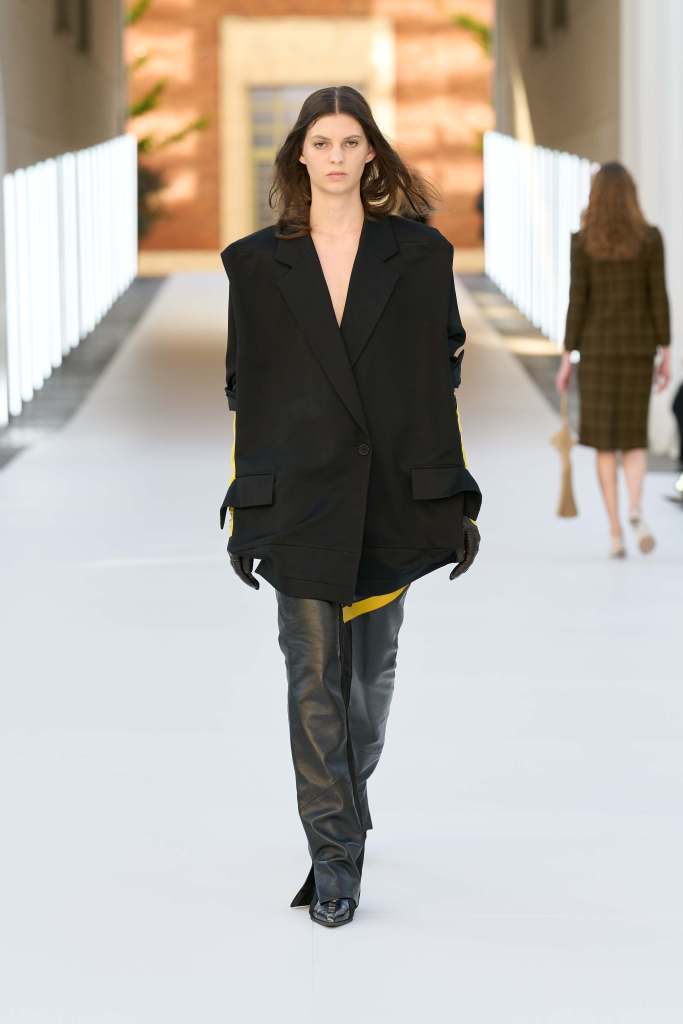
The narrative arc of the show moved through diverse landscapes of the human psyche. Isabella “Zaz” Alvarino (USA) opened with Hot Nerds, a collection that transmuted the grief of losing a friend into architectural tailoring.
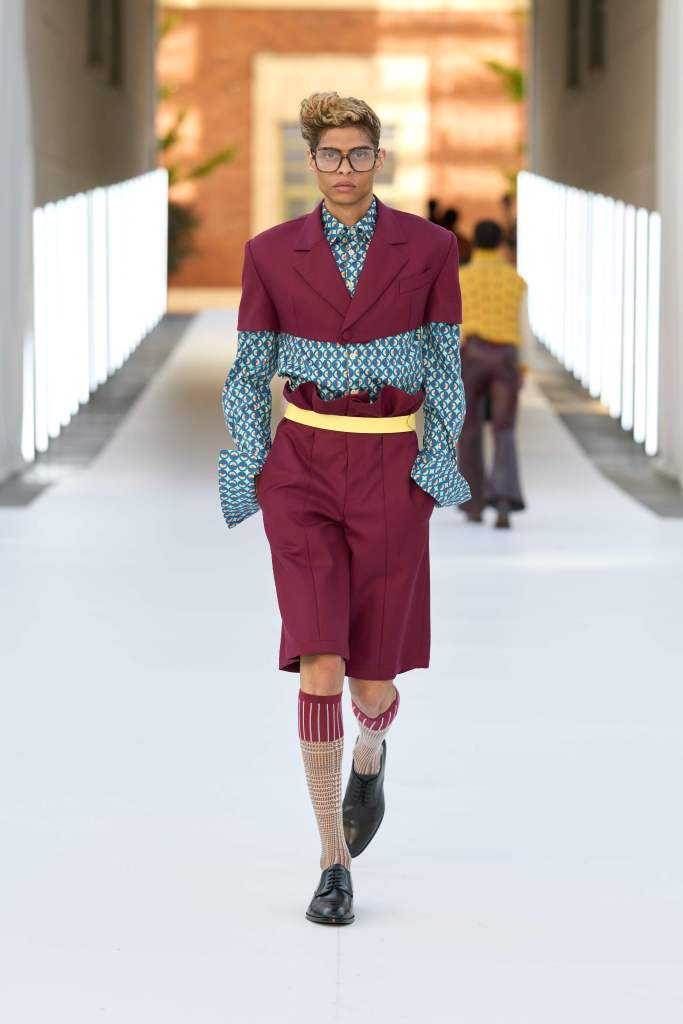
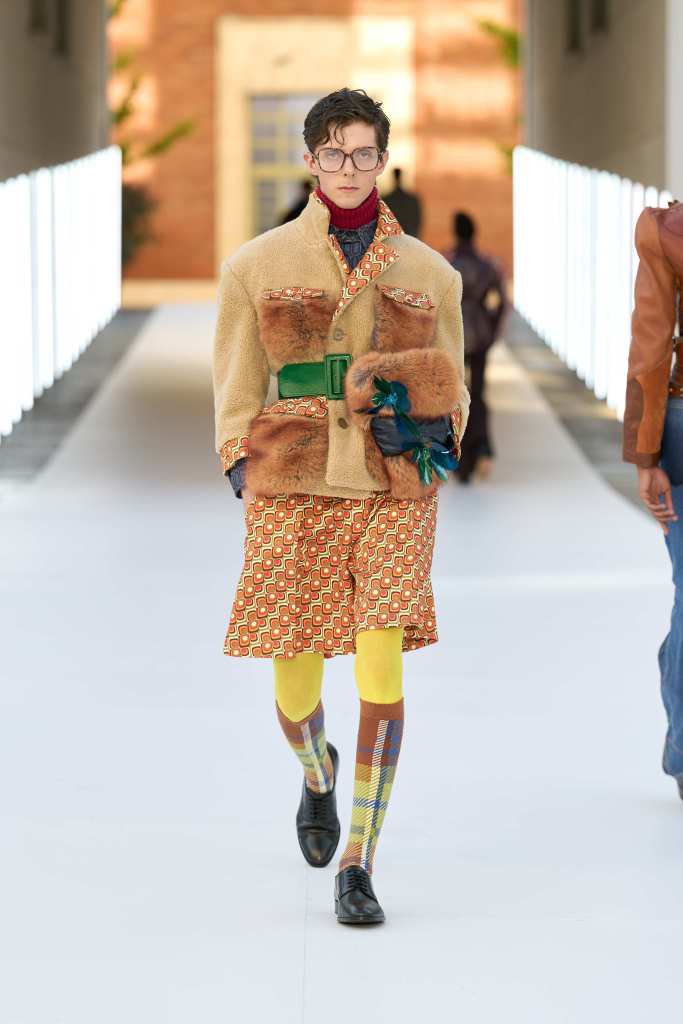
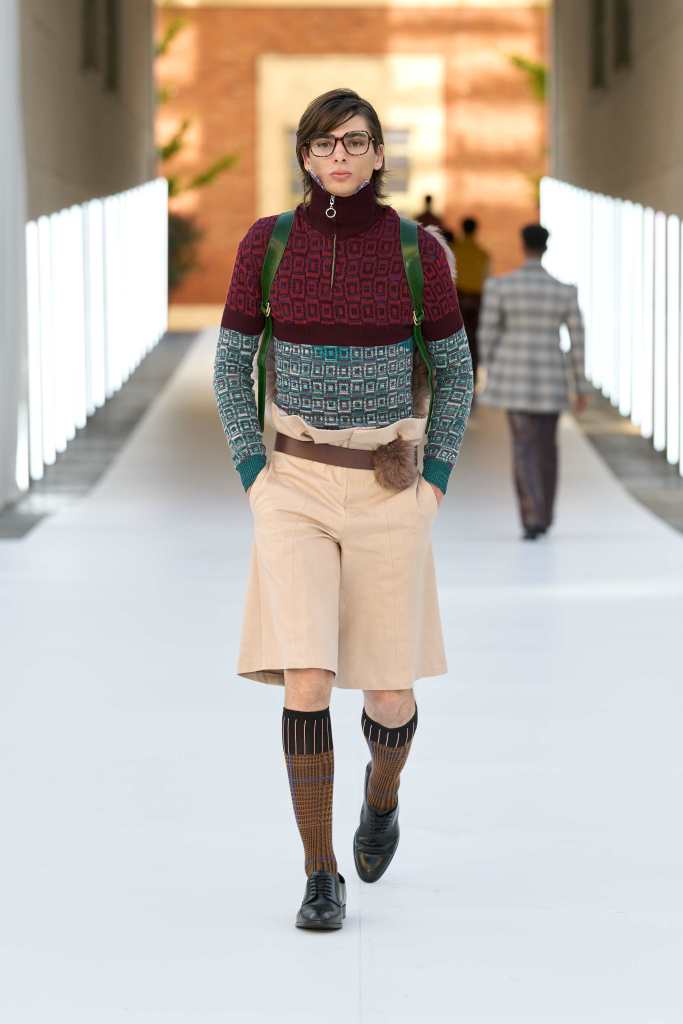
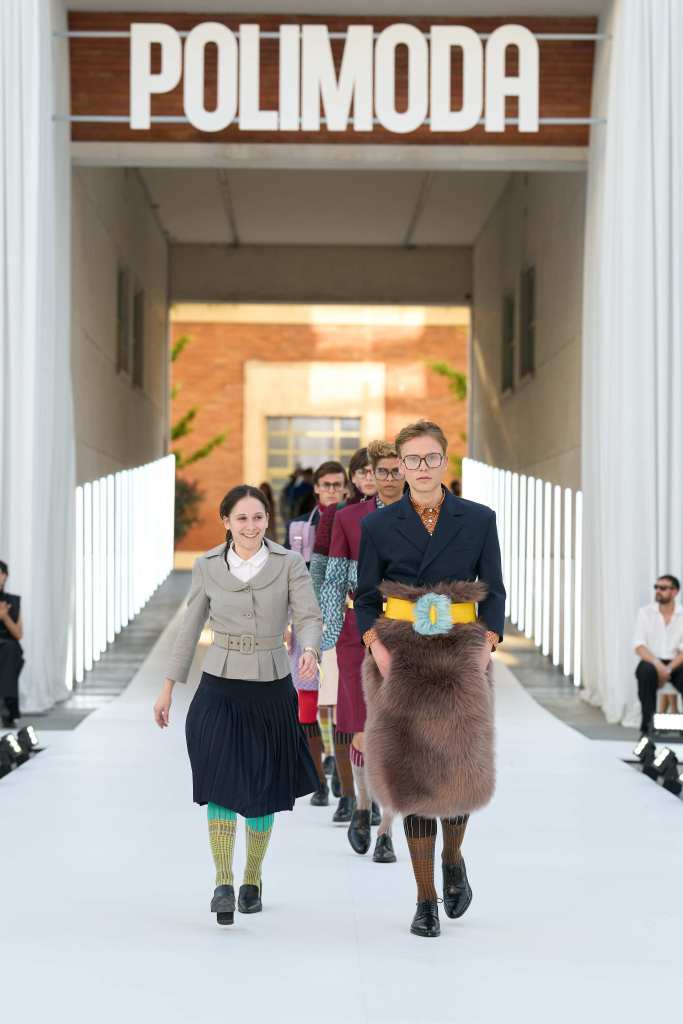
Isabella “Zaz” Alvarino (USA) | Hot Nerds | @zalvarino
Hot Nerds by Isabella “Zaz” Alvarino is a collection dedicated to her late friend Jay, a person who, growing up queer in rural Texas, chose to embrace who he was with fearless curiosity. That spirit of freedom became the emotional foundation of the work. Rooted in tailoring, the collection traces back to a blazer Isabella altered from her father’s old suits: the tension between the original masculine shoulder and a dramatically cinched waist, between what is inherited and what is reshaped, became both its defining silhouette and central metaphor. References move fluidly. between Alessandro Michele’s romantic eclecticism, Miuccia Prada’s combination of intelligence with emotional freedom, and the liberation of 1960s and 70s glamour. Materials reflect the idea of moulting, shedding an outer layer in order to grow, with suiting fabrics combined with unexpected textures to mirror a transformation that is uneven, ongoing, and deeply personal. Jay is a collection about freedom, friendship, queerness, and the idea of allowing yourself to fully become who you are.
Lisa Criaco (Belgium) followed with The Pressure, using specialized textiles to evoke the crushing depths of the ocean—a metaphor for the loss of her father, a diver. It was a masterclass in how fashion can serve as a tool for catharsis.
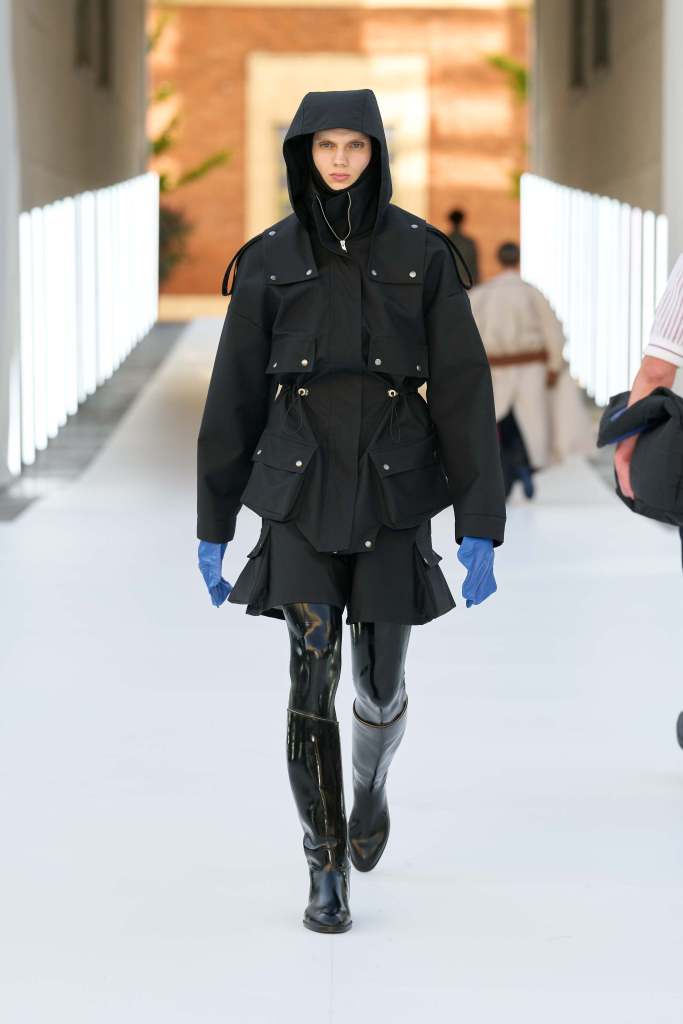
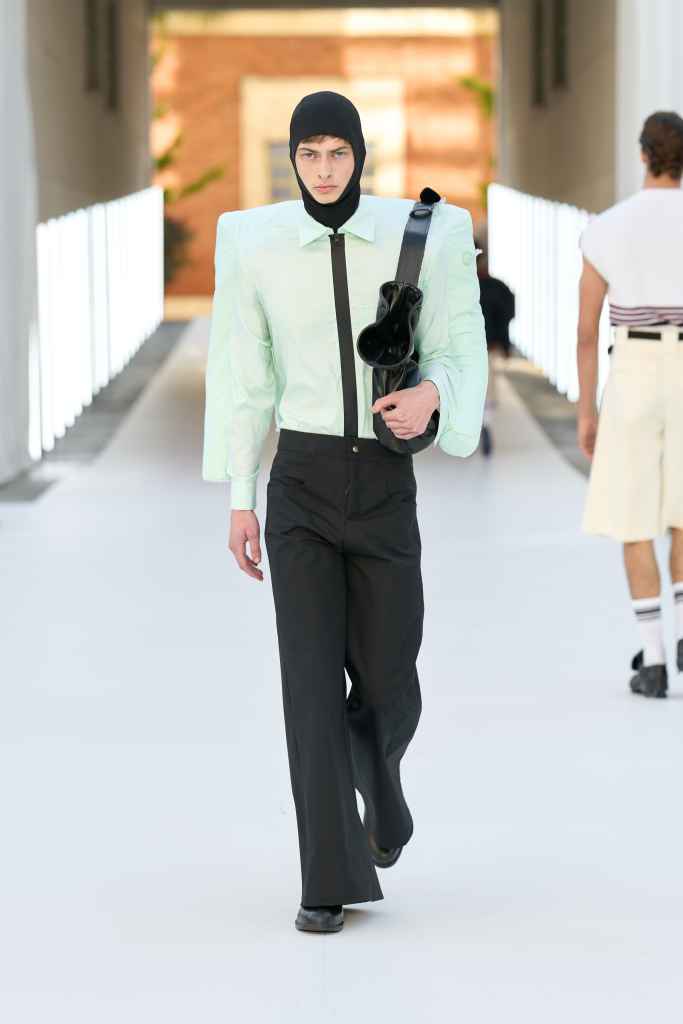
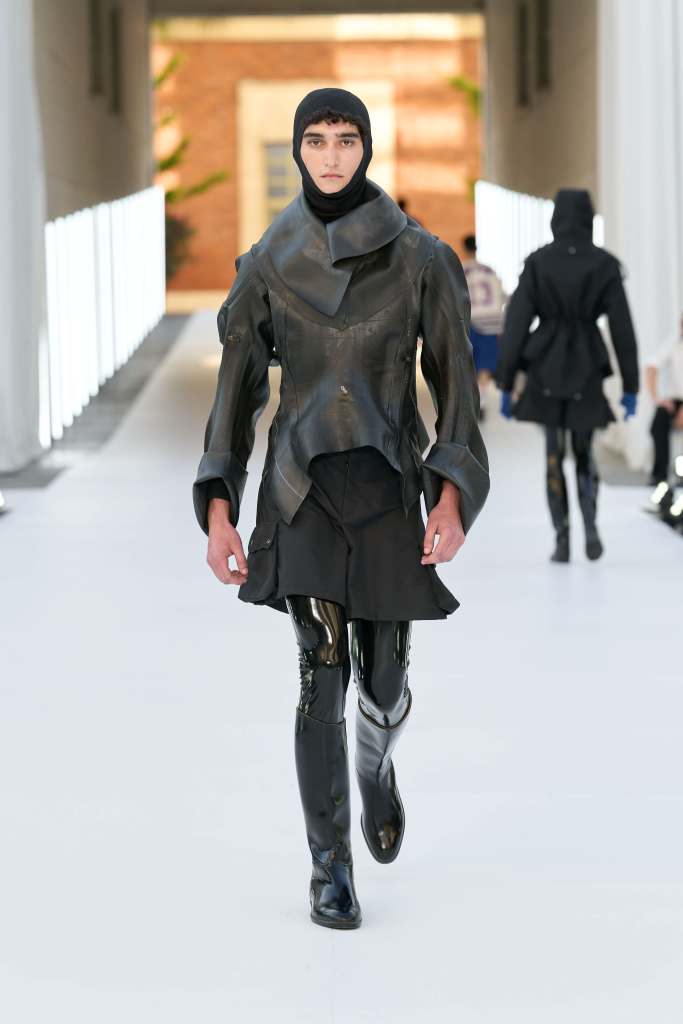
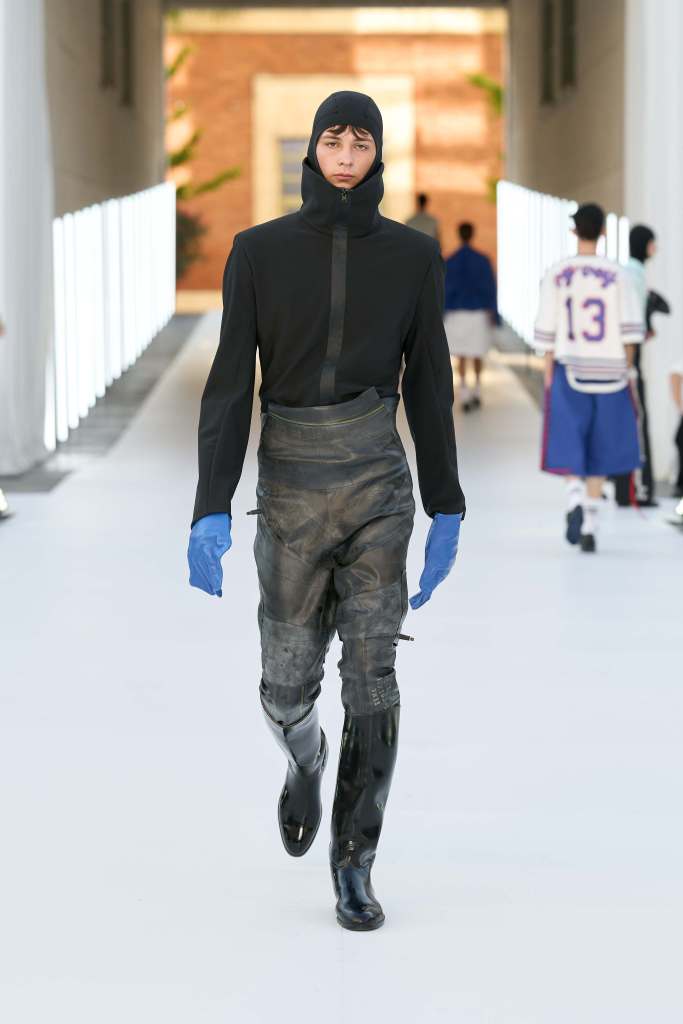
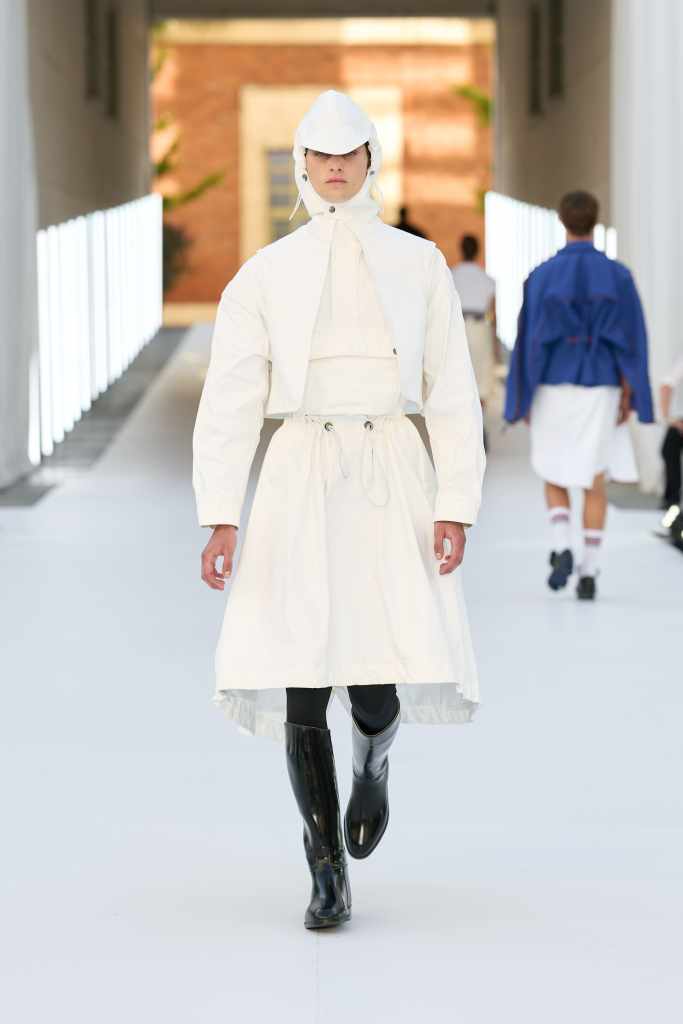
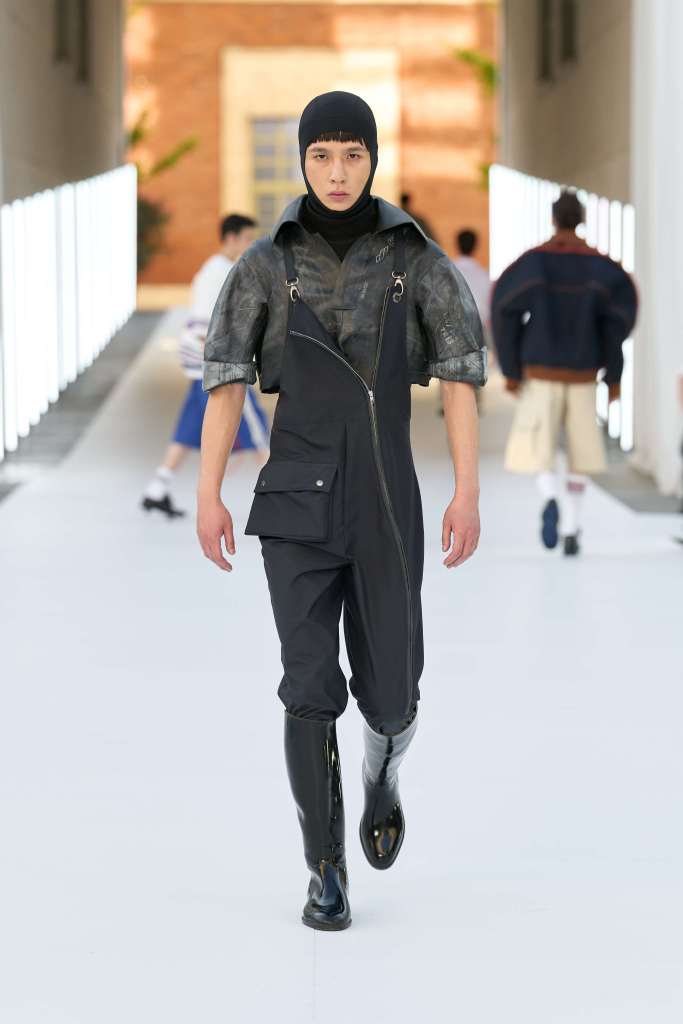
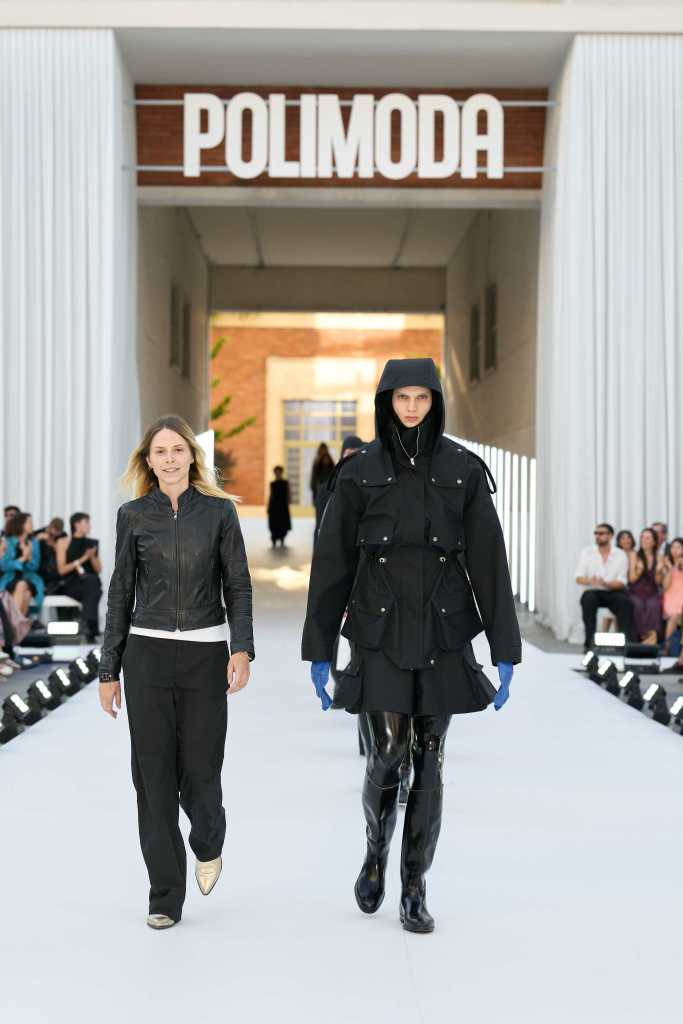
Lisa Criaco (Belgium) | The Pressure | @lisacriaco
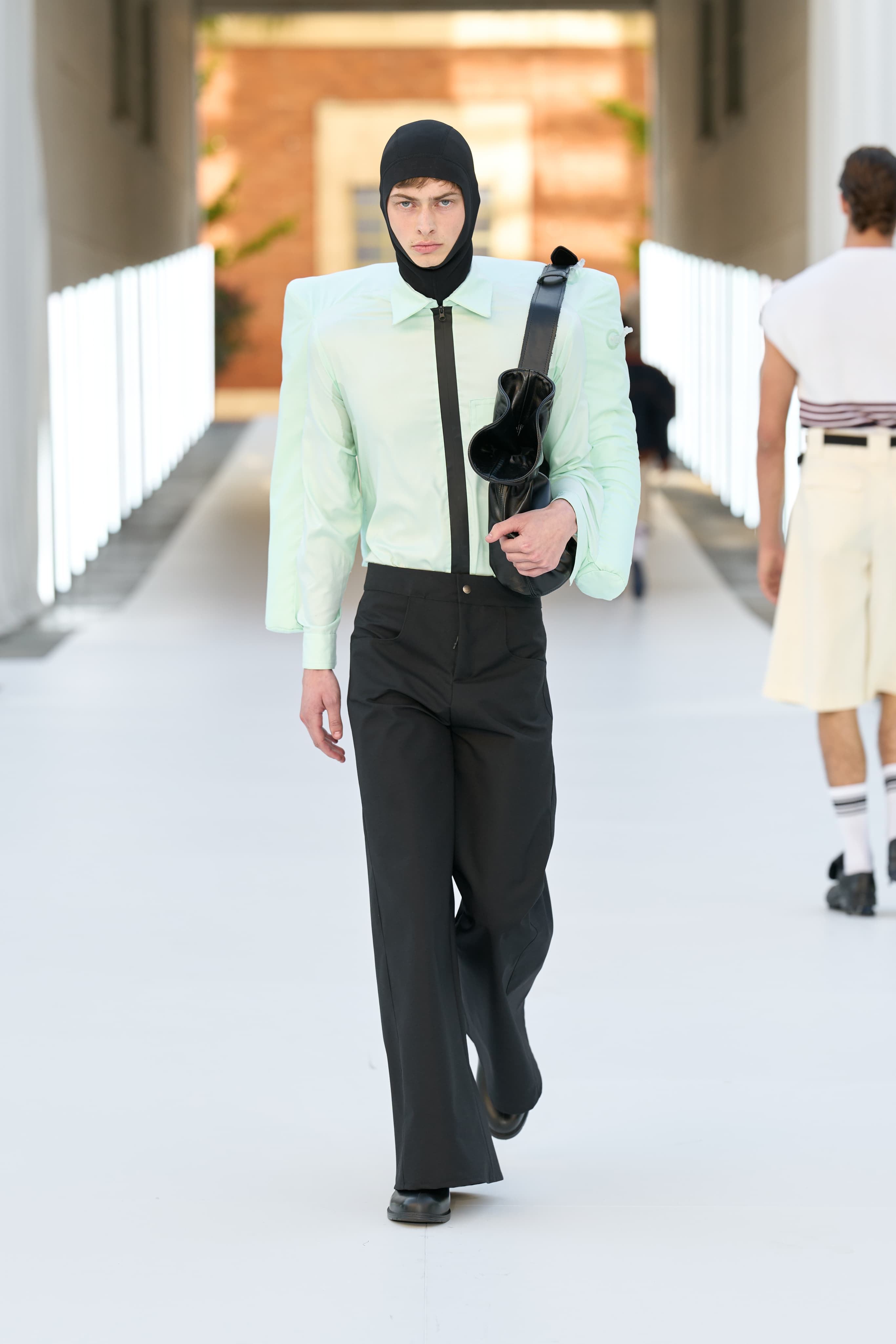
The Pressure by Lisa Criaco draws from grief and personal transformation, channelling loss through the metaphor of deep-sea diving, a reference to her late father, who was a diver. The ocean becomes a space of descent, pressure, and introspection, while tailoring enters as its counterforce: structure, precision, and discipline as a search for order in the aftermath of emotional upheaval. Silhouettes draw from classic diving suits, with metal buttons echoing traditional diving helmets, waterproof zippers, and deliberately placed seams reinforcing the underwater narrative.
A predominantly dark palette evokes weight and hardship, punctuated by moments of colour and a single white look that introduce clarity and renewal. Rubber, inflatable materials, and technical fabrics are combined with natural fibres, creating a dialogue between innovation and the organic. The Pressure is a collection about navigating the depths, and the long, careful work of resurfacing.
The dialogue between tradition and rebellion was a recurring theme. Matteo Bardi (Italy) challenged the tropes of masculinity with VULNERA, juxtaposing the rugged leather of biker culture with delicate, vulnerable silhouettes.
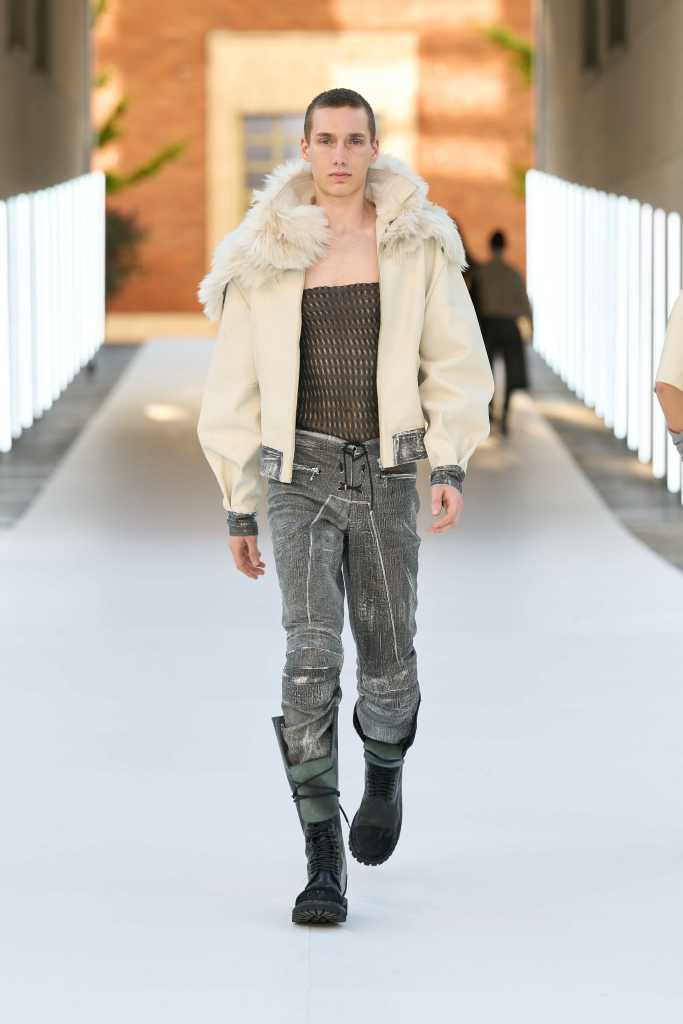
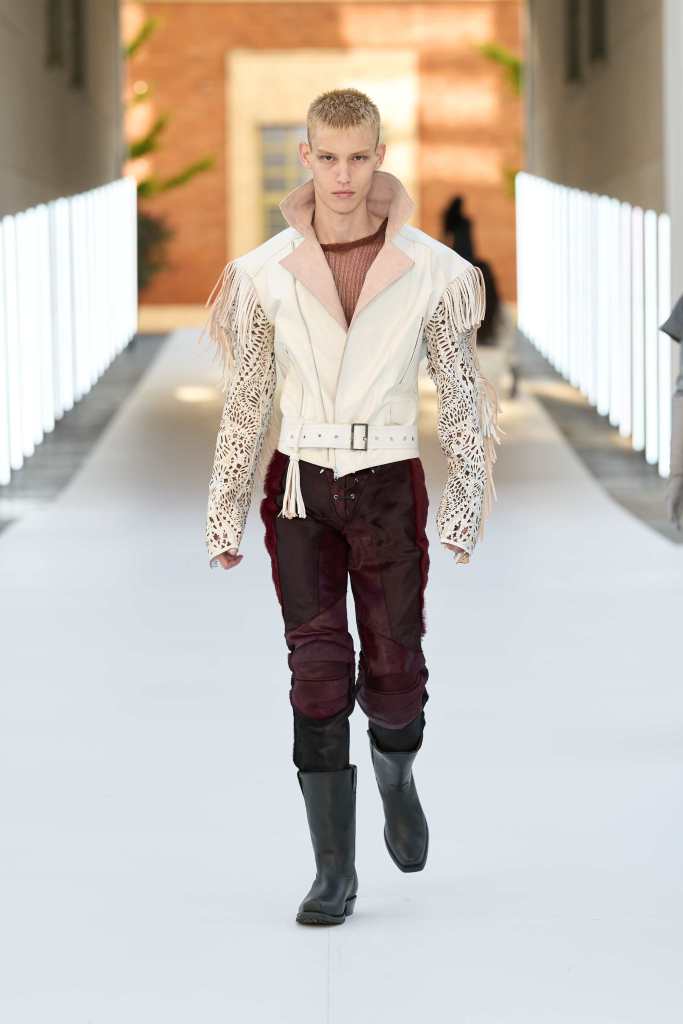
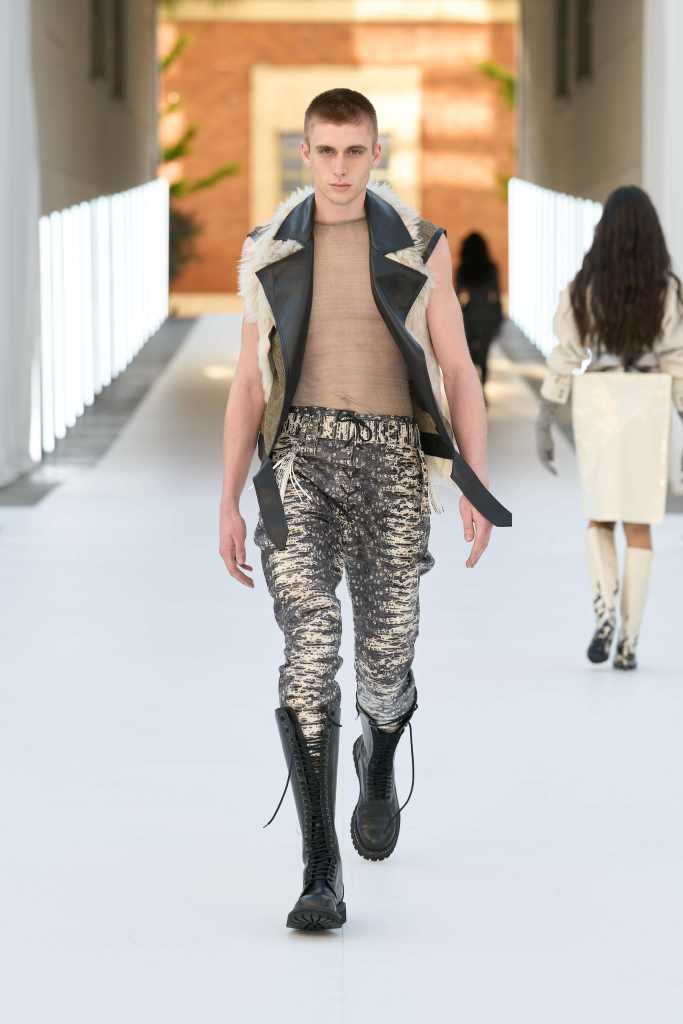
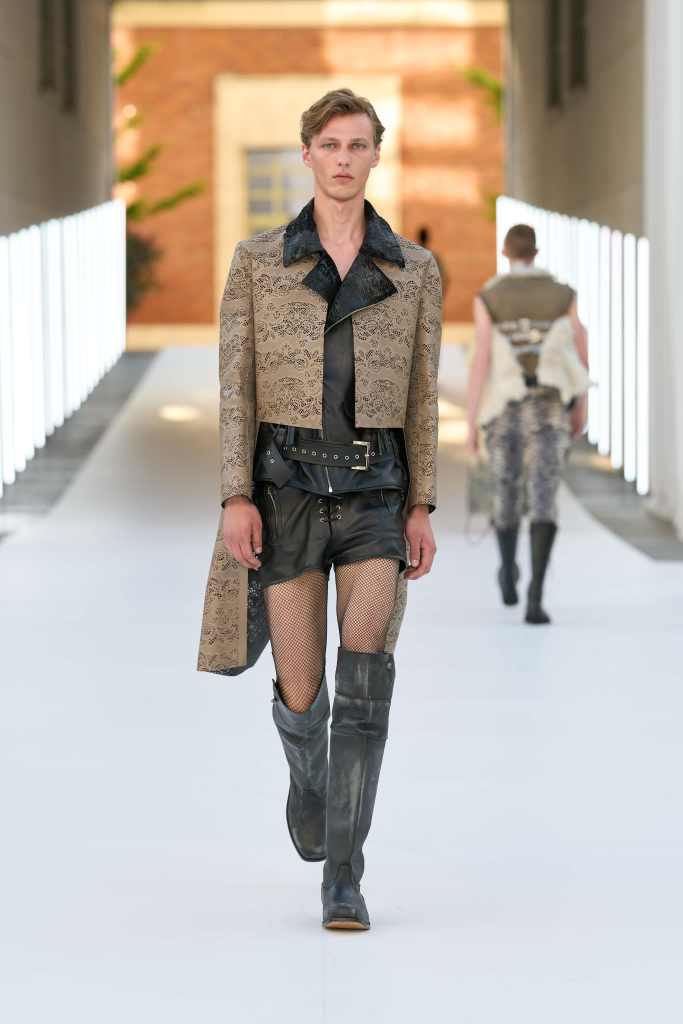
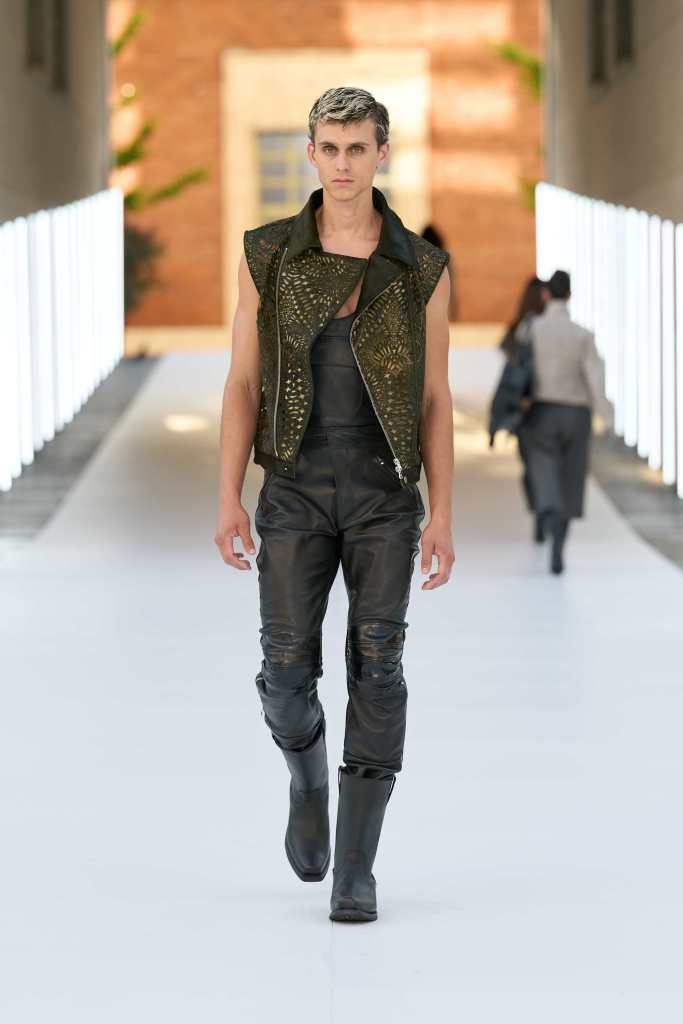
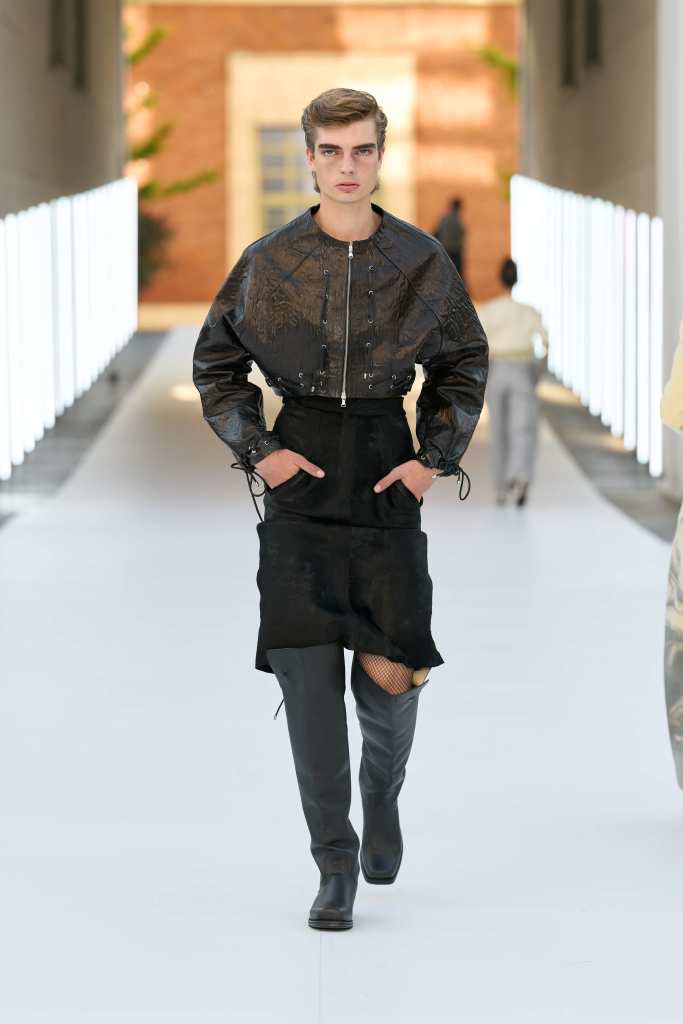
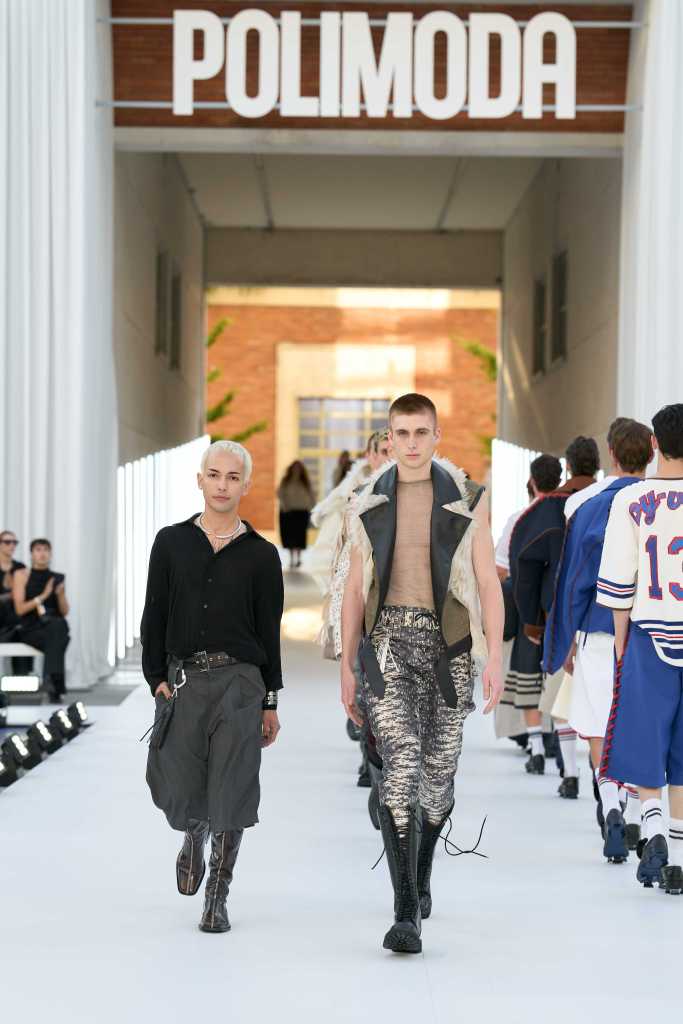
Matteo Bardi (Italy) | VULNERA | @matteo_bardi
VULNERA by Matteo Bardi examines the contradictions and tensions within the queer community through a dialogue between two opposing archetypes: the hardened biker and the delicate boy he derides. Drawing on the visual world of motorcycles and biker culture, the collection confronts the policing of softness and femininity within queer spaces, reclaiming vulnerability as a form of power. Emotional honesty becomes a radical and defiant act, an assertion that tenderness is not weakness, but resistance. Rooted in personal truth and a deep connection to his own origins, VULNERA is a collection that refuses to harden itself, finding its strength in softness and vulnerability.
Meanwhile, Emily Horton (USA) tackled the complexities of Jewish identity through the lens of American baseball in Being Jew…ish, a collection that skillfully balanced cultural pride with athletic aesthetics.
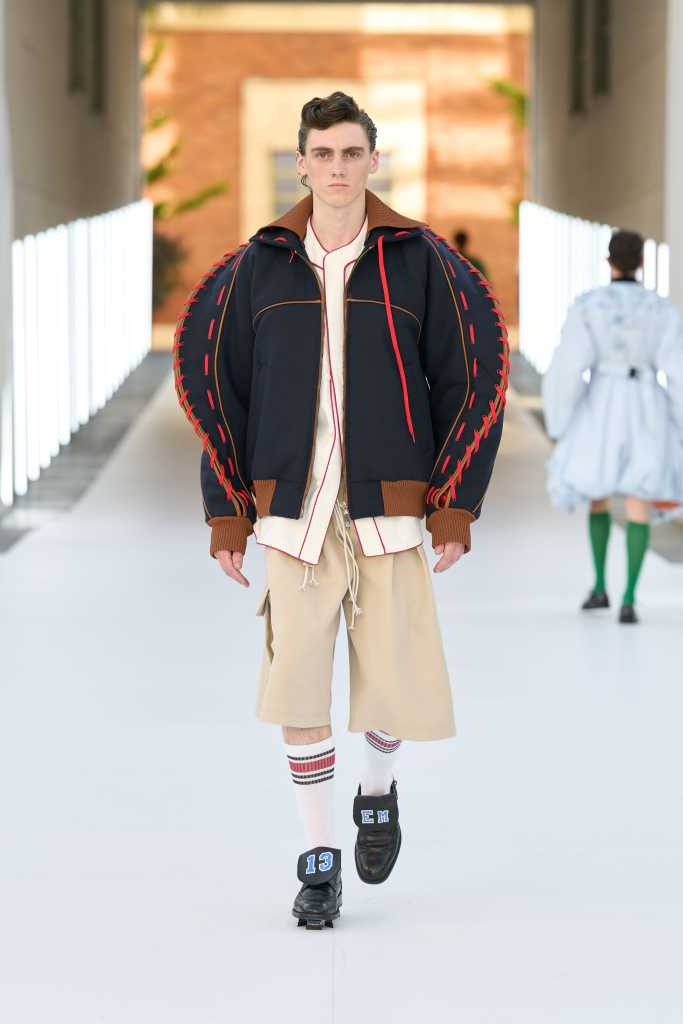
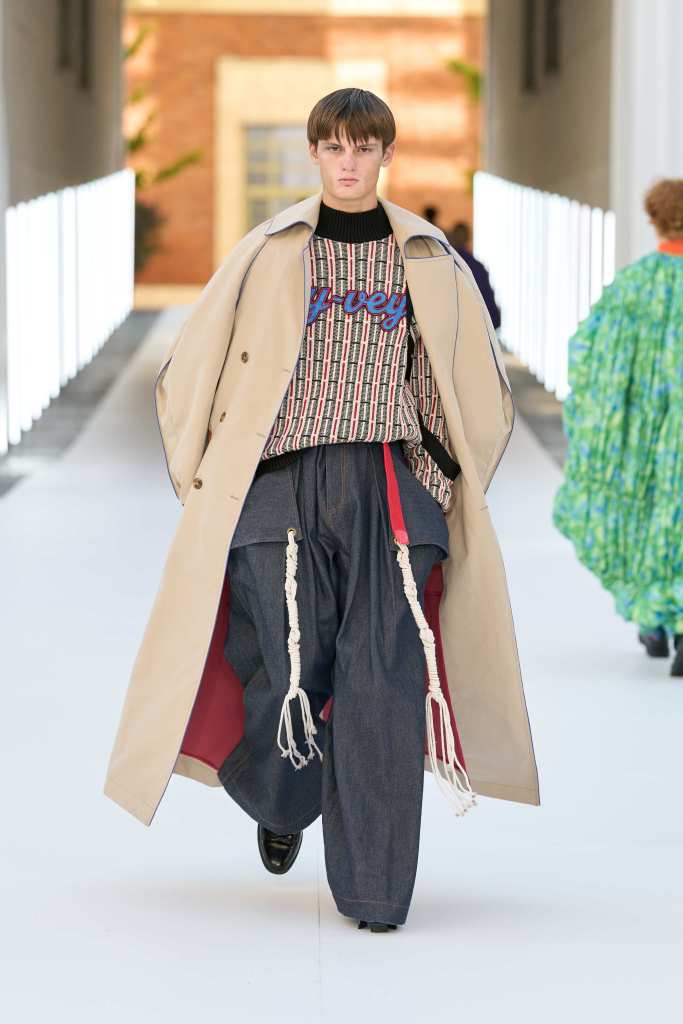
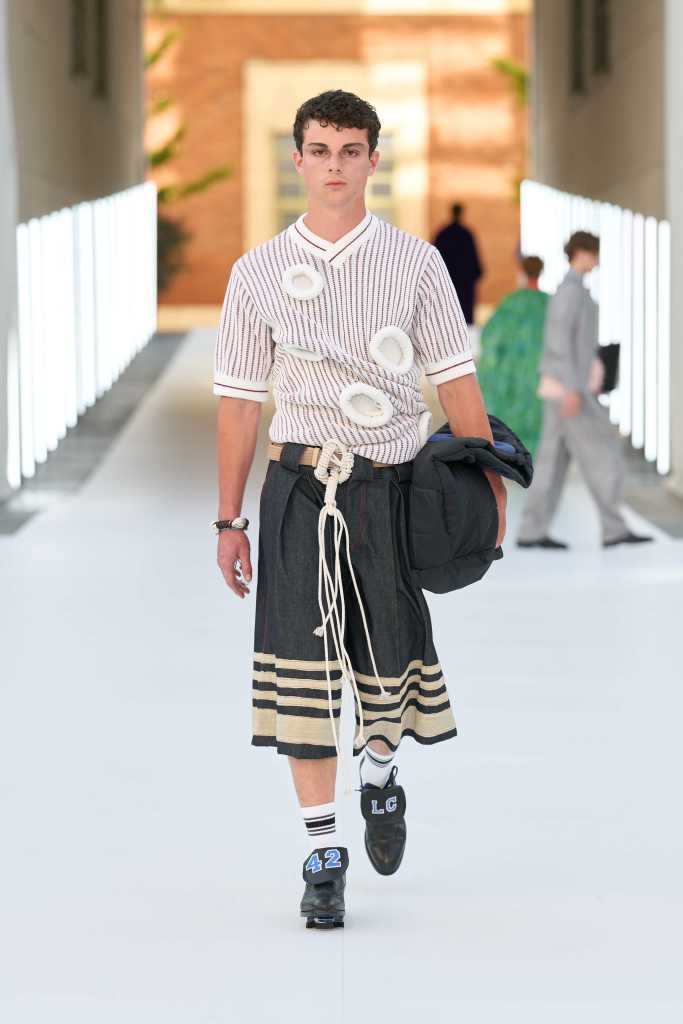
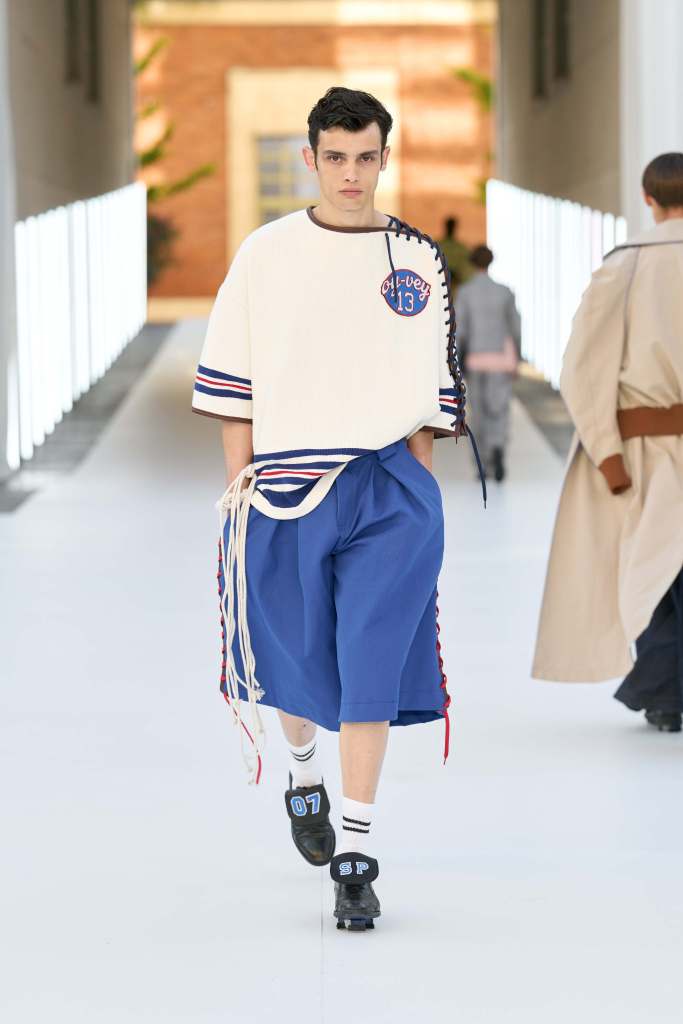
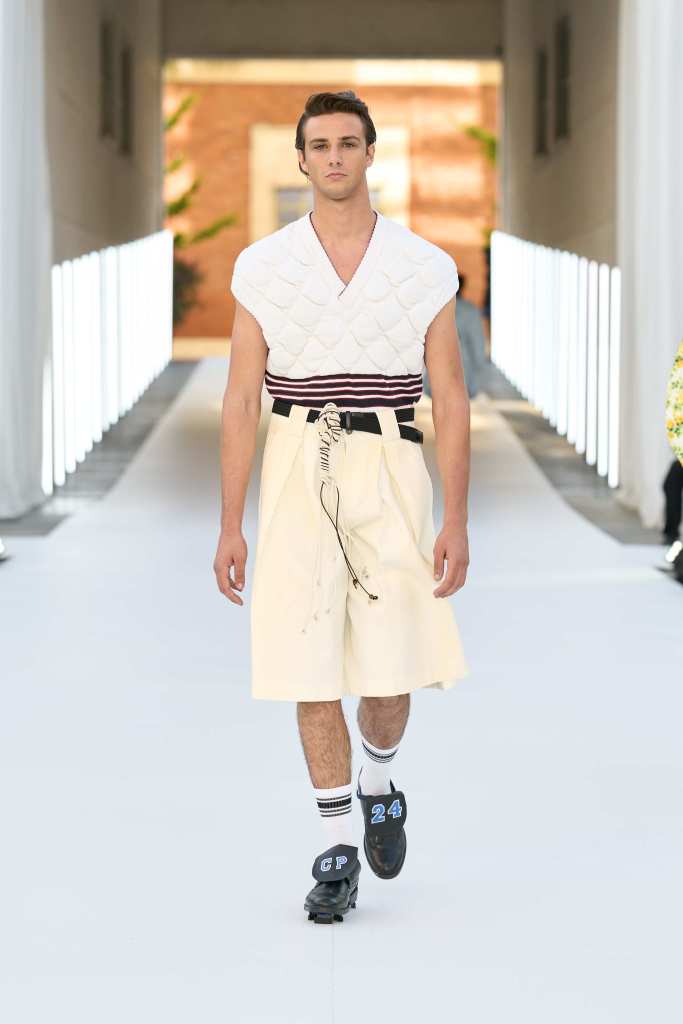
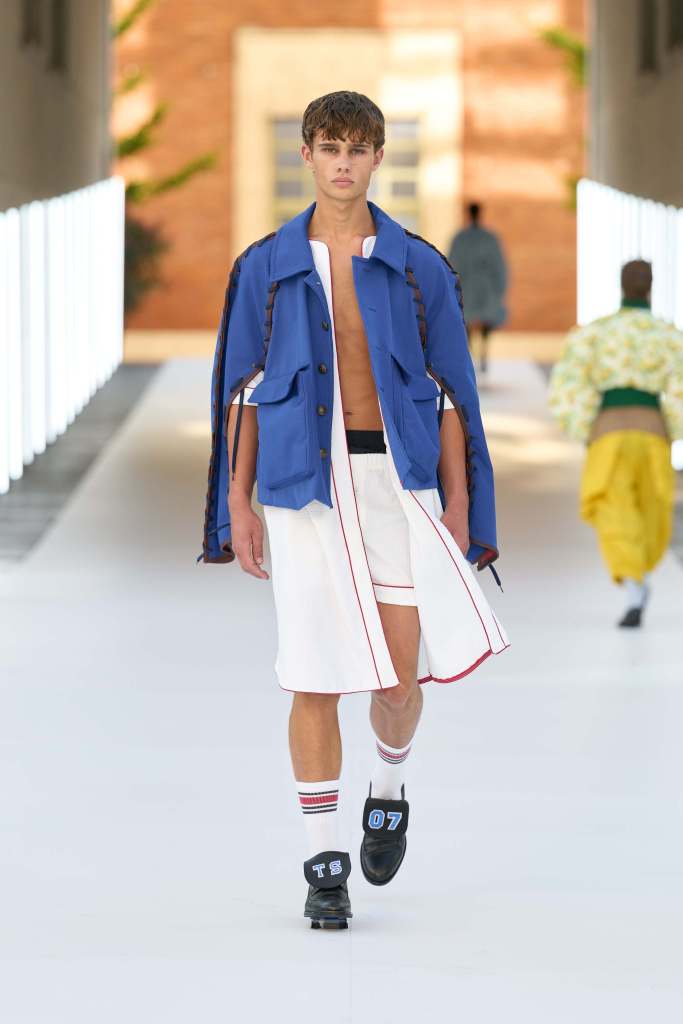
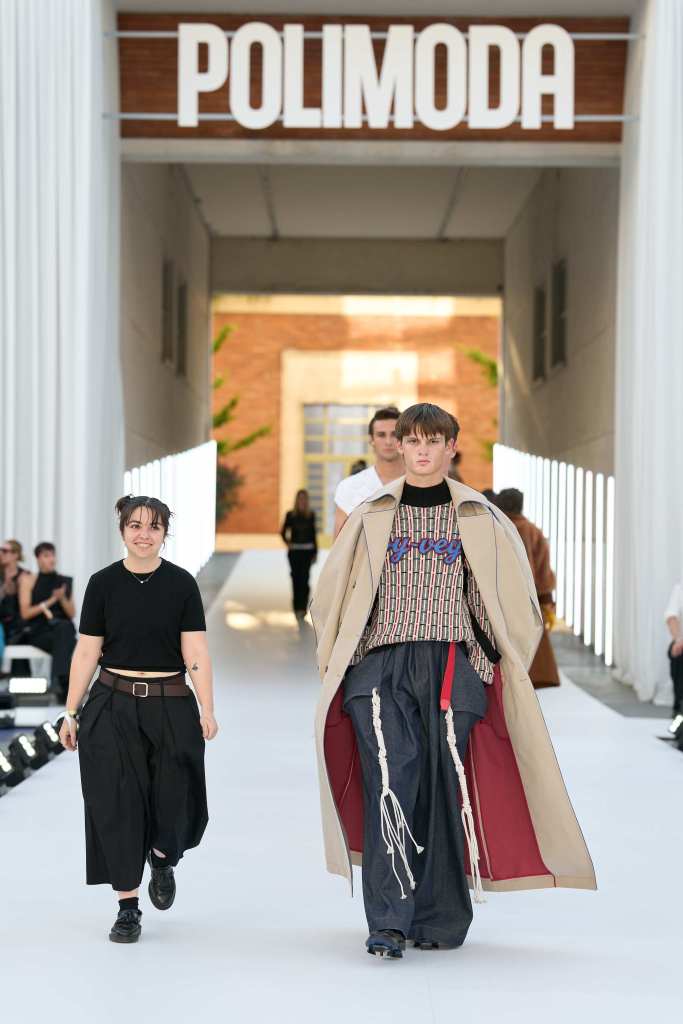
Emily Horton (USA) | Jew…ish | @emilyyalta
Jew…ish by Emily Horton draws from the experience of growing up Jewish in America, navigating inherited religion, cultural identity, and the desire to belong. The collection finds its resolution on the baseball field, where a shared and immediate passion creates community that transcends personal and cultural difference. Silhouettes and a colour palette rooted in baseball uniforms and athletic gear are balanced with draped shapes and stripes derived from Jewish cultural garments, merging the aesthetics of the sports field with historical heritage. Cotton fabrics reference the pre-synthetic era of the game, grounding the collection in tradition, while heavy wool and canvas provide the structural integrity needed to hold its specific forms. Jew…ish is a collection about the tension between difference and belonging, and the unexpected places where that tension quietly dissolves.
The show reached a visual crescendo with Emilie Wenckstern (Germany). Her collection, No Longer Human, acted as a sculptural inquiry into the digital age, where cracked porcelain textures and constructed anatomy blurred the line between the biological and the synthetic.
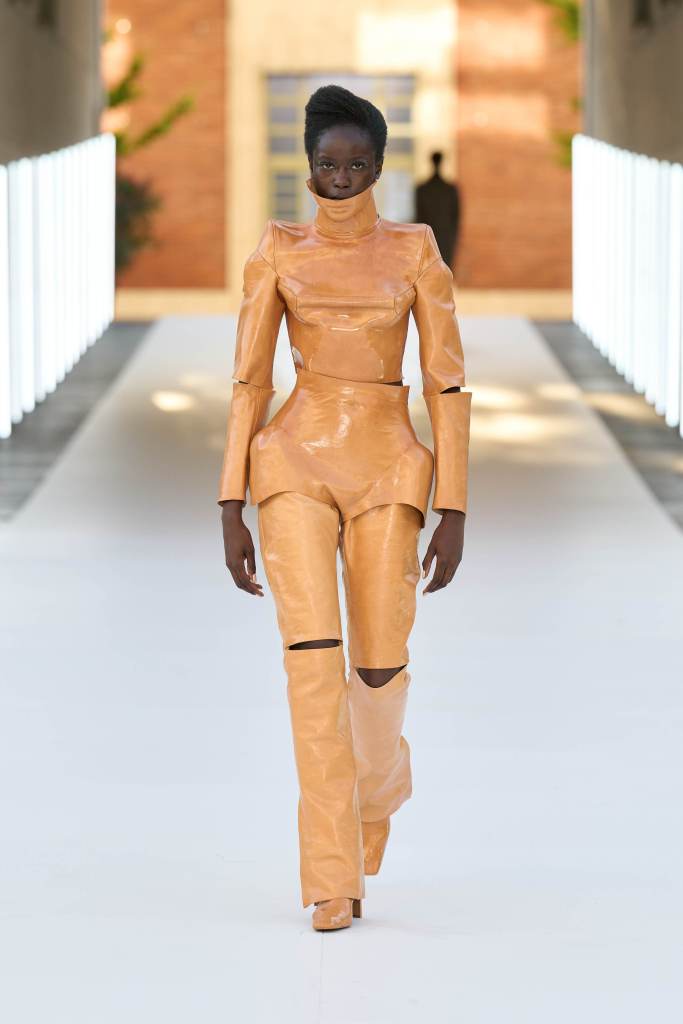
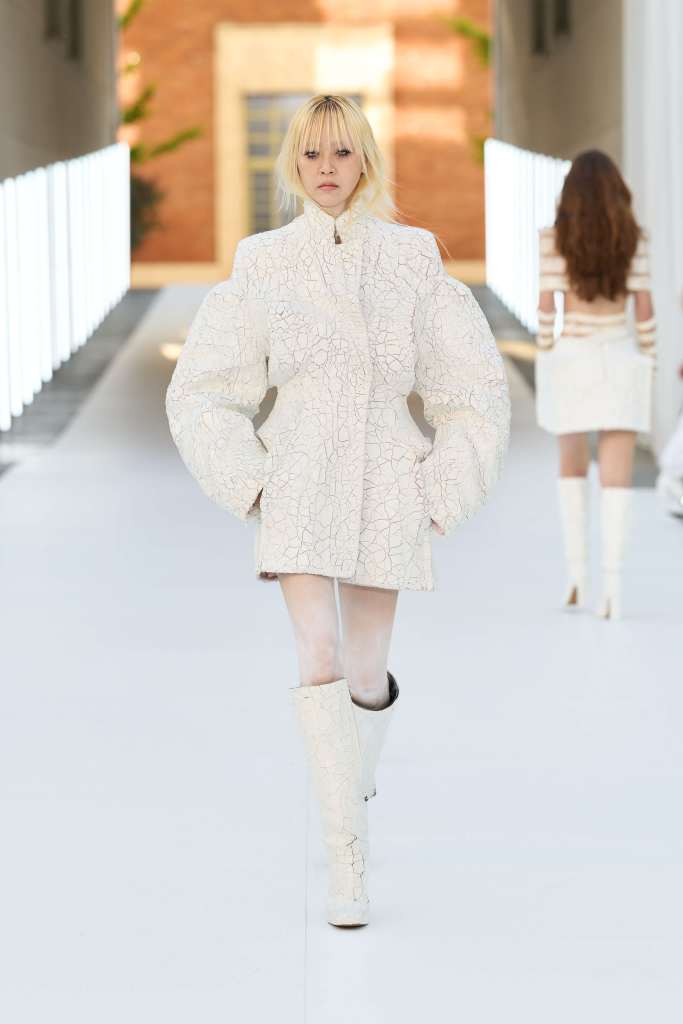
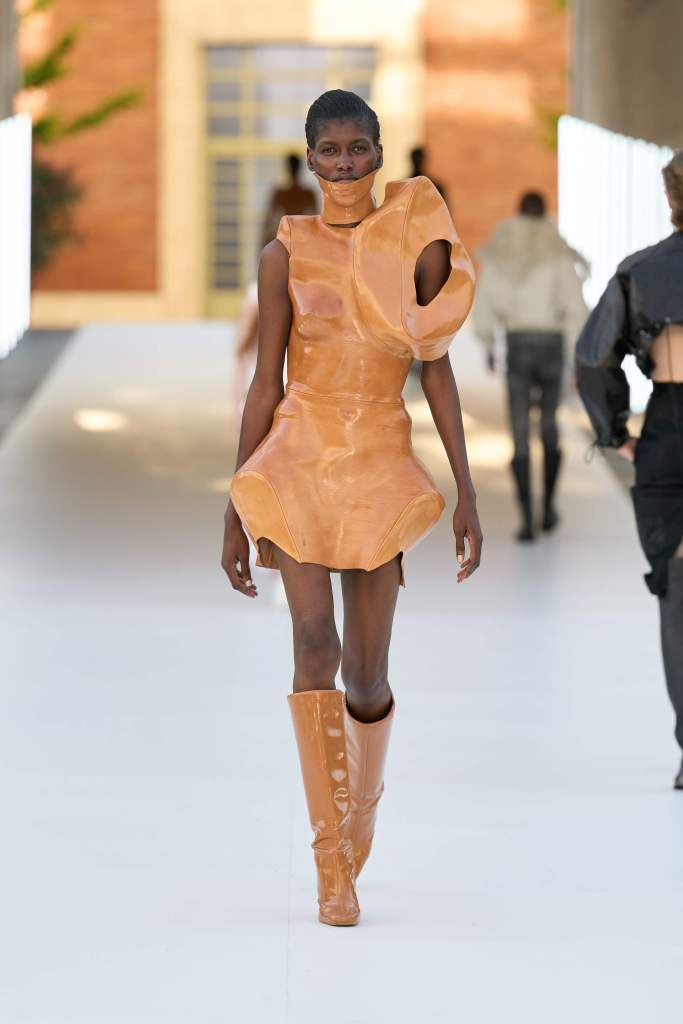
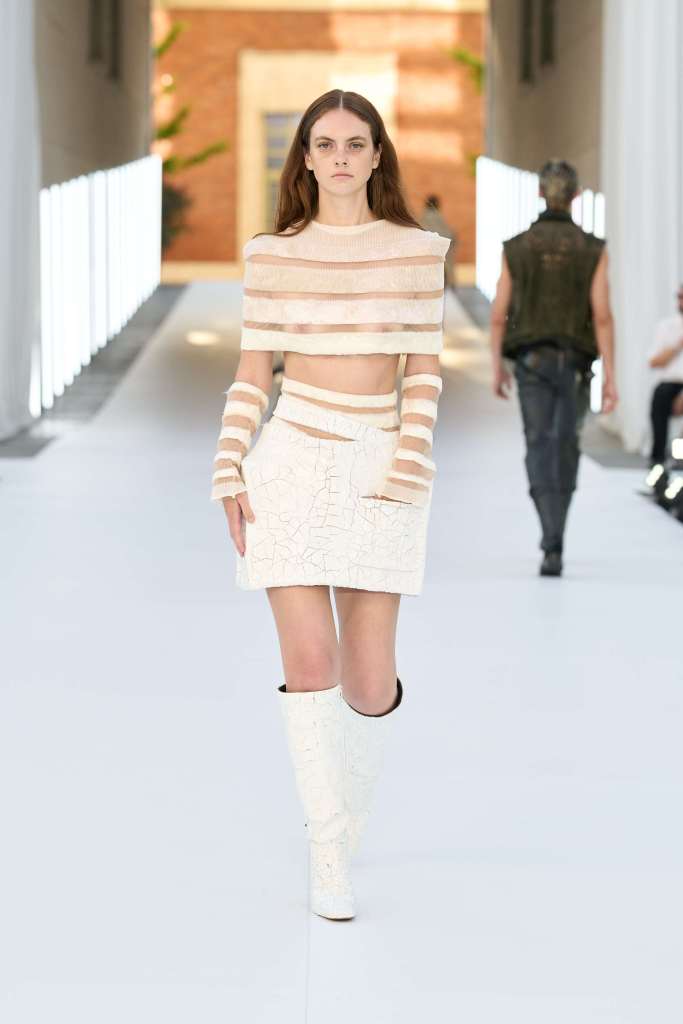
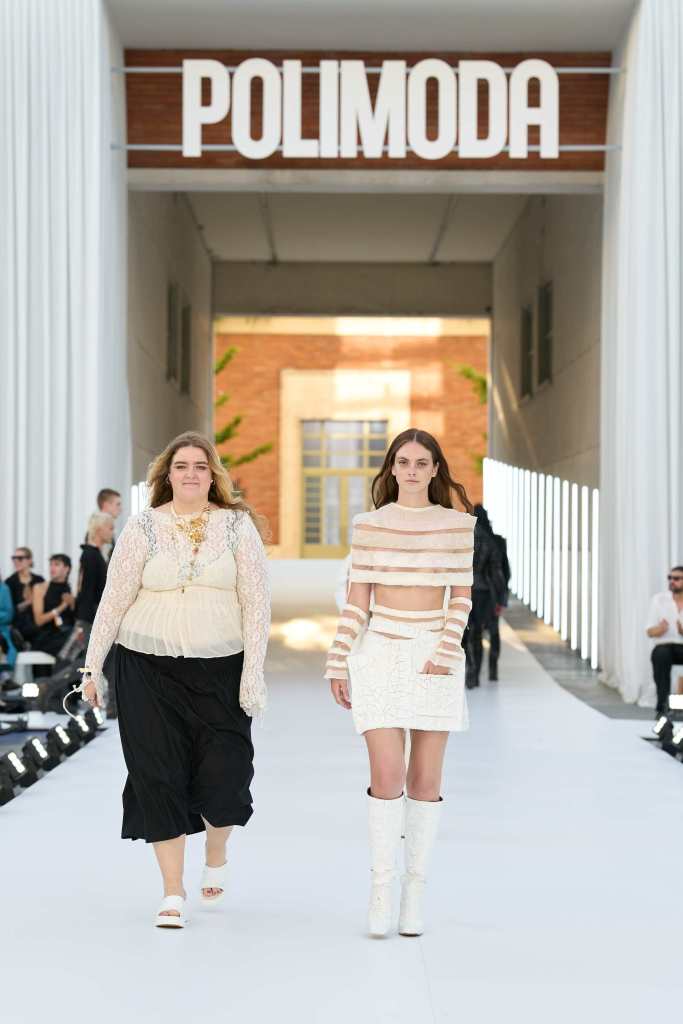
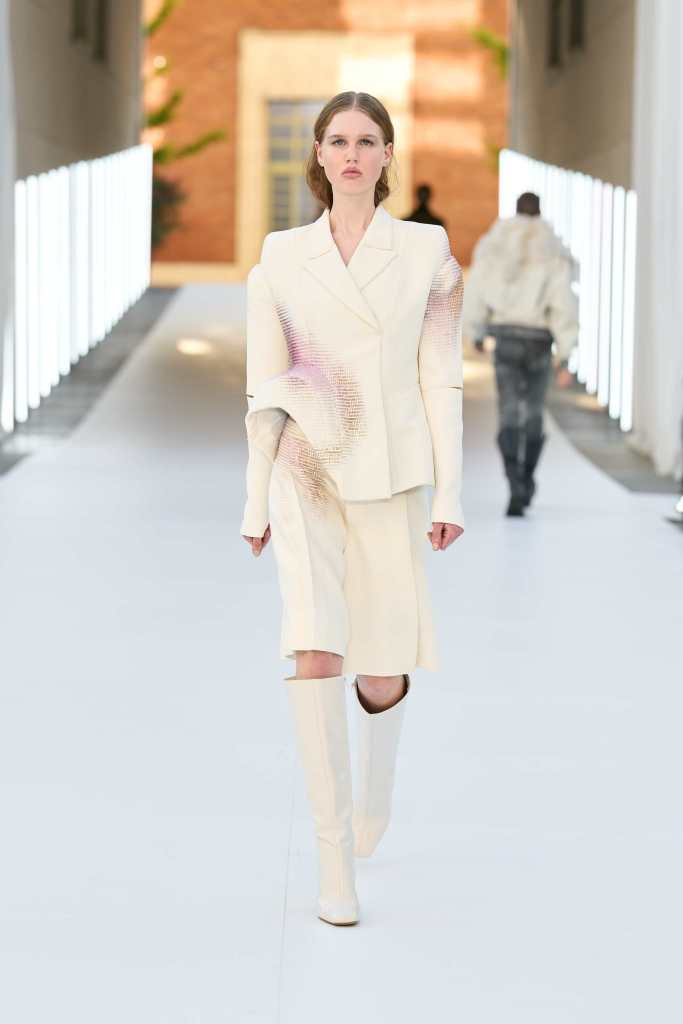
Emilie Wenckstern (Germany) | No Longer Human | @emilie.wenckstern
No Longer Human by Emilie Wenckstern examines the body in an age where it can be generated, edited, and constructed before it is ever physically present. Inspired by dolls, mannequins, sculptural figures, and digital avatars, the collection probes the boundary between human and artificial, asking not just what a body is, but when it ceases to be one. Exaggerated silhouettes draw from the junction points of dolls, evoking a sense of constructed anatomy rather than natural form, while a muted palette of white, beige, pale pink, and synthetic skin tones hovers between the flesh-like and the digitally rendered. Cracked surfaces referencing porcelain dolls introduce fragility and damage, contrasted with leather moulding that shapes and controls the body into something artificial and precise. Positioned between fashion and sculpture, No Longer Human is a collection that finds beauty in imperfection, and unease in how close the constructed comes to the real.
Diana Avetisian (Armenia / Russia) | Another Role| @dianavetisian
Another Role by Diana Avetisian is a collection that explores femininity as something constructed, performed, and constantly adjusted. Inspired by David Lynch’s Lost Highway, vintage cars, and mechanic uniforms, the collection follows an actress lost between performance and reality: a woman repairing herself as much as the machines around her.
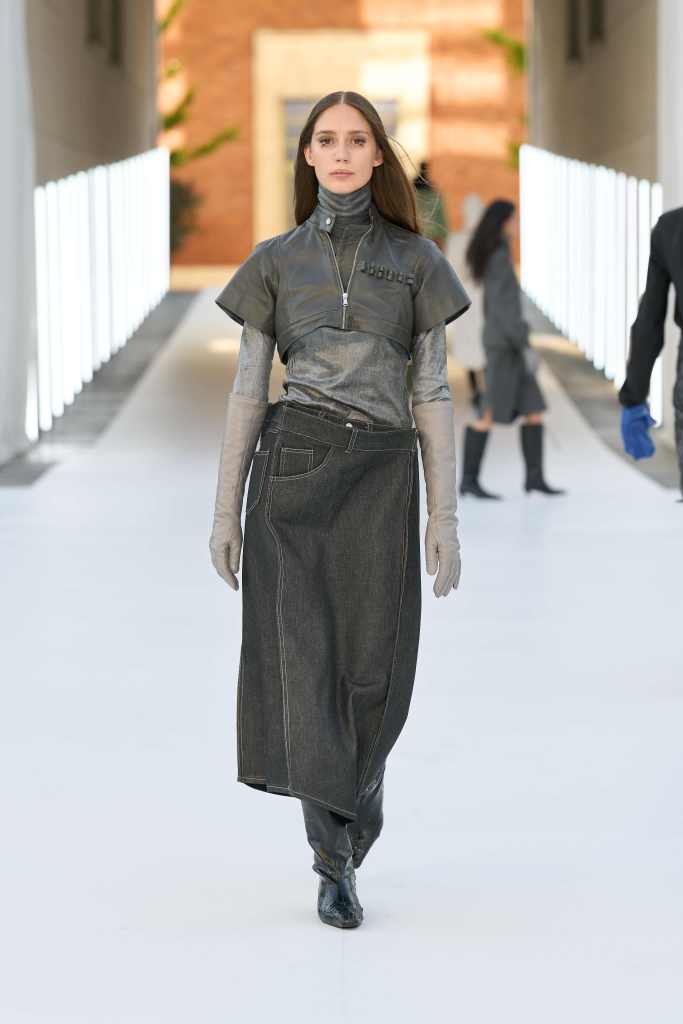
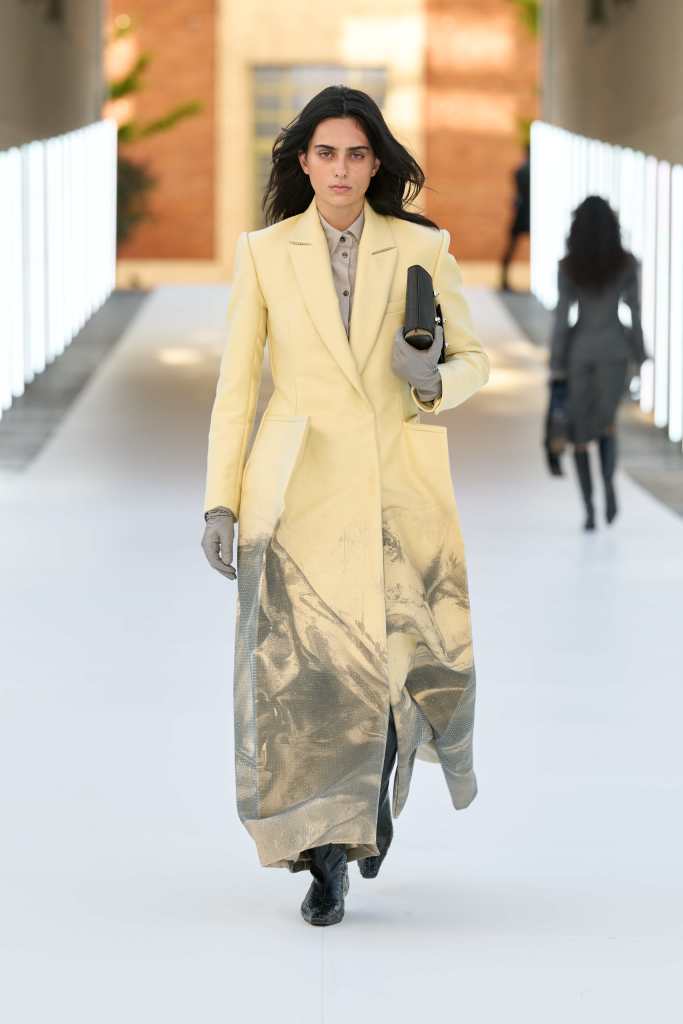
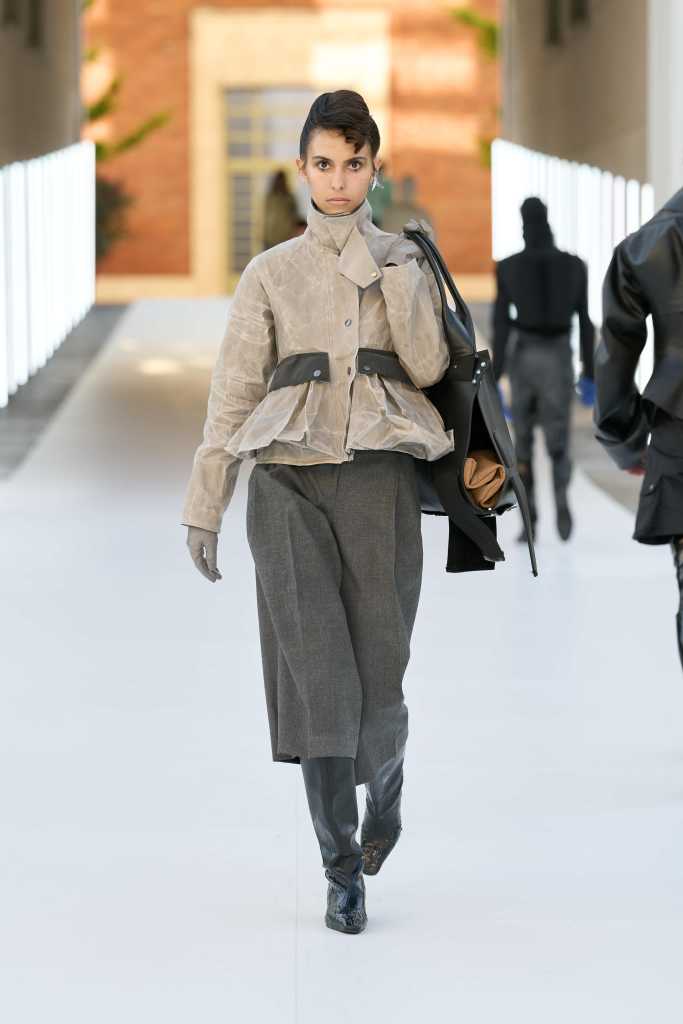
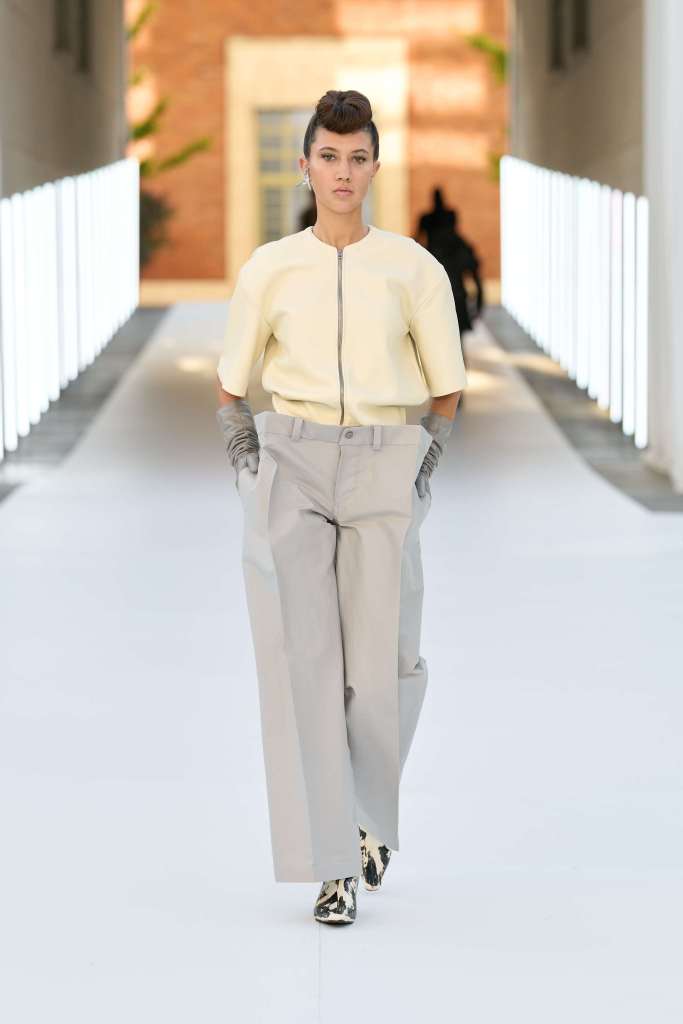
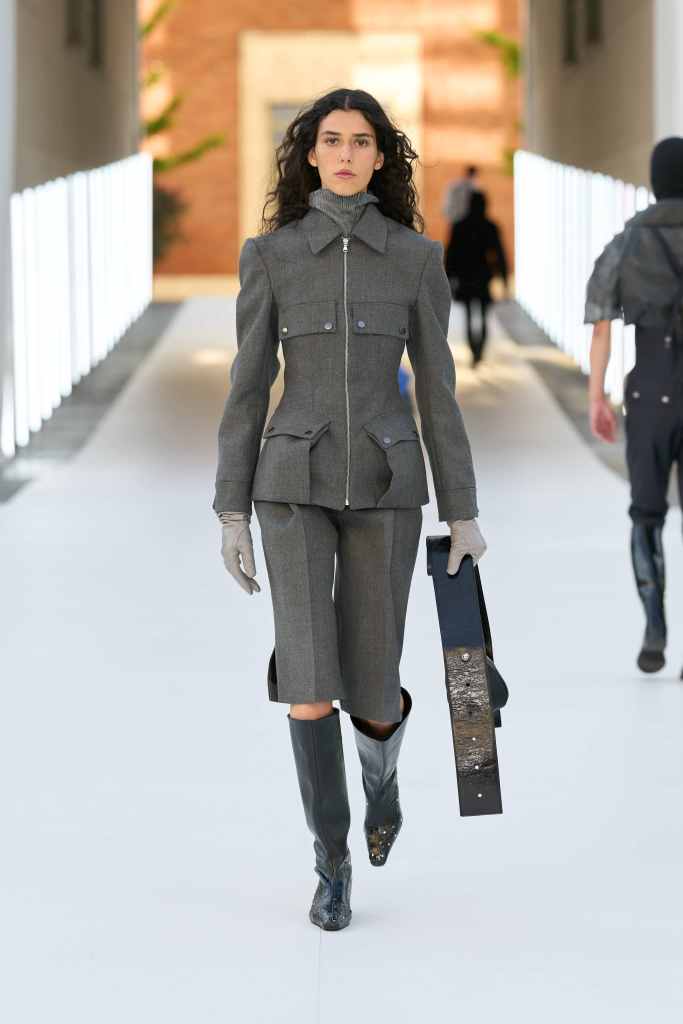
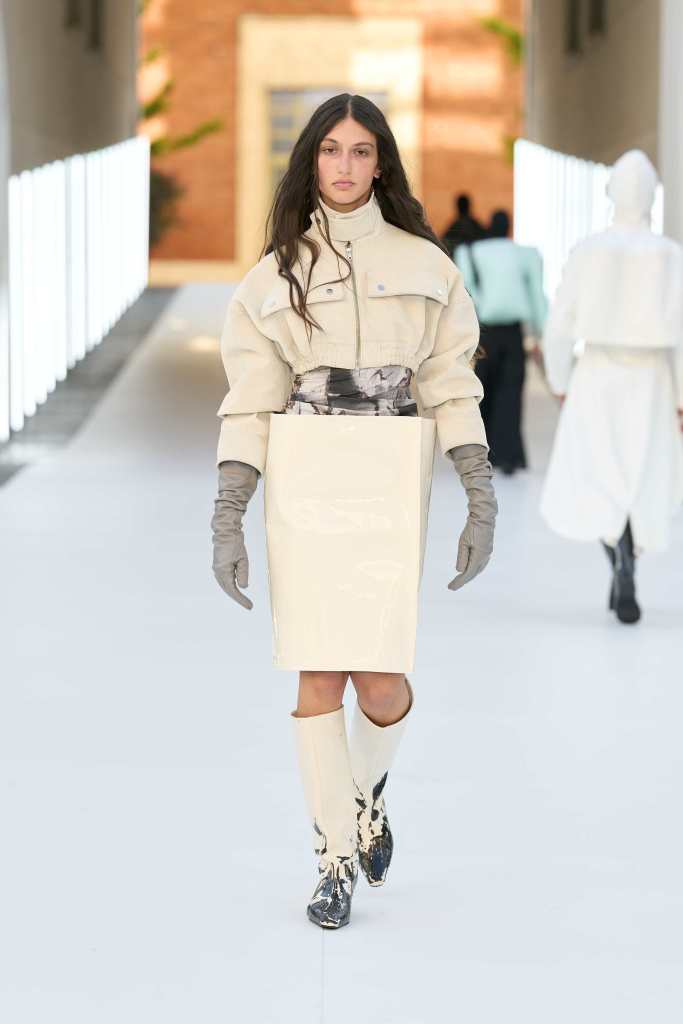
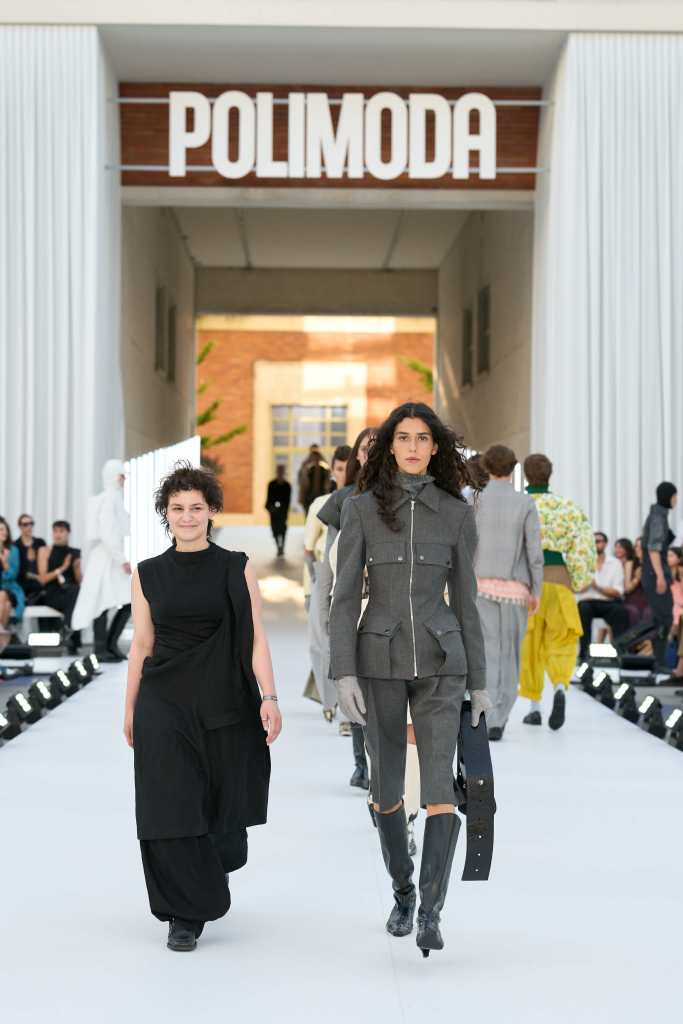
Structured, exaggerated silhouettes reference the boxy forms of vintage automobiles, while waxed fabrics, patent leather, and coated finishes evoke oil, metal, and glossy car surfaces. Utilitarian workwear elements are contrasted with refined tailoring, culminating in a showpiece coat adorned with Preciosa crystals over a crashed car print. A cool palette of greys, yellows, and muted beiges ties the collection together. Ultimately, Another Role is an invitation to find freedom in never quite fitting the role you were given.
Victor Brial (Réunion, France) | Souvenirs of Wondering | @vicbrial
Souvenirs of Wandering by Victor Brial follows a young man overwhelmed by the noise of modern life who chooses to disconnect, embarking on a journey that leads him to Réunion Island. Rather than documenting his travels through a screen, he collects objects and textures, allowing his experiences to reshape both his environment and the way he dresses.
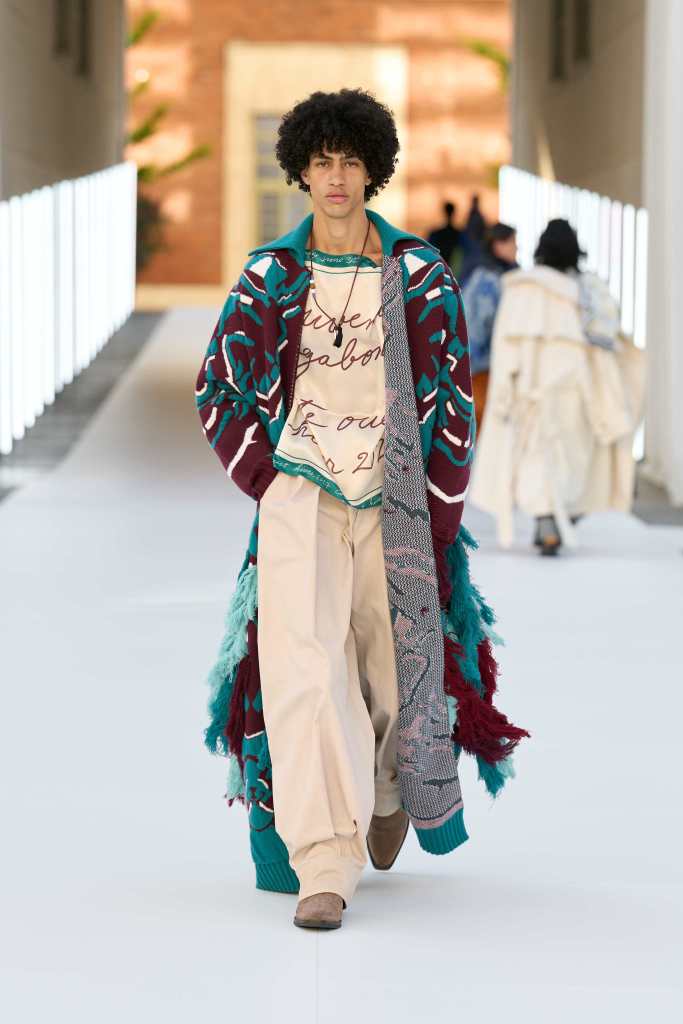
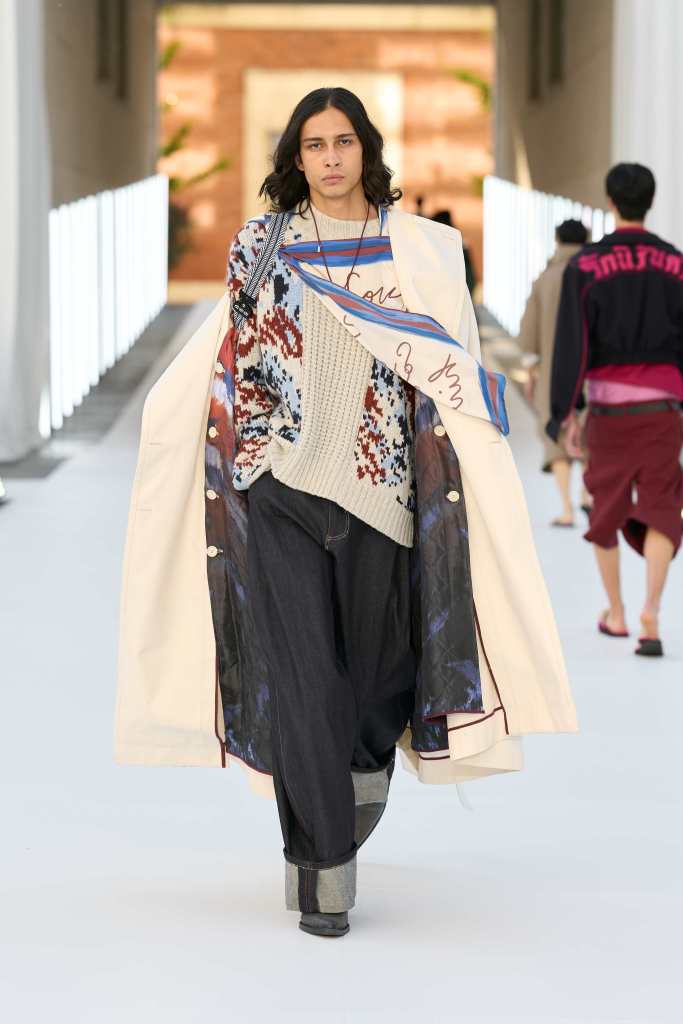
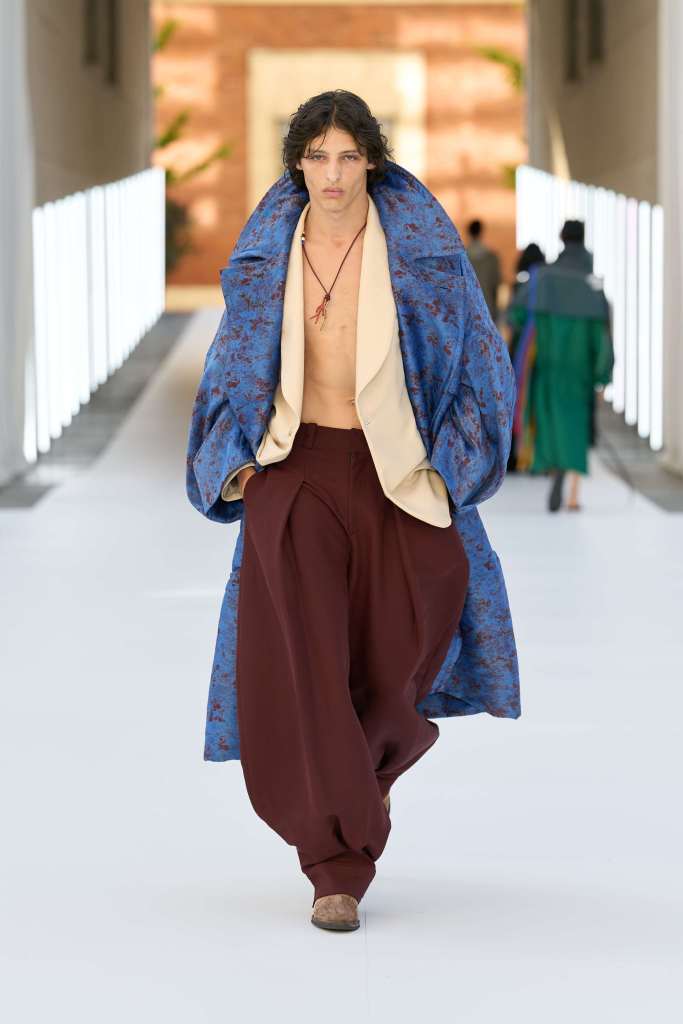
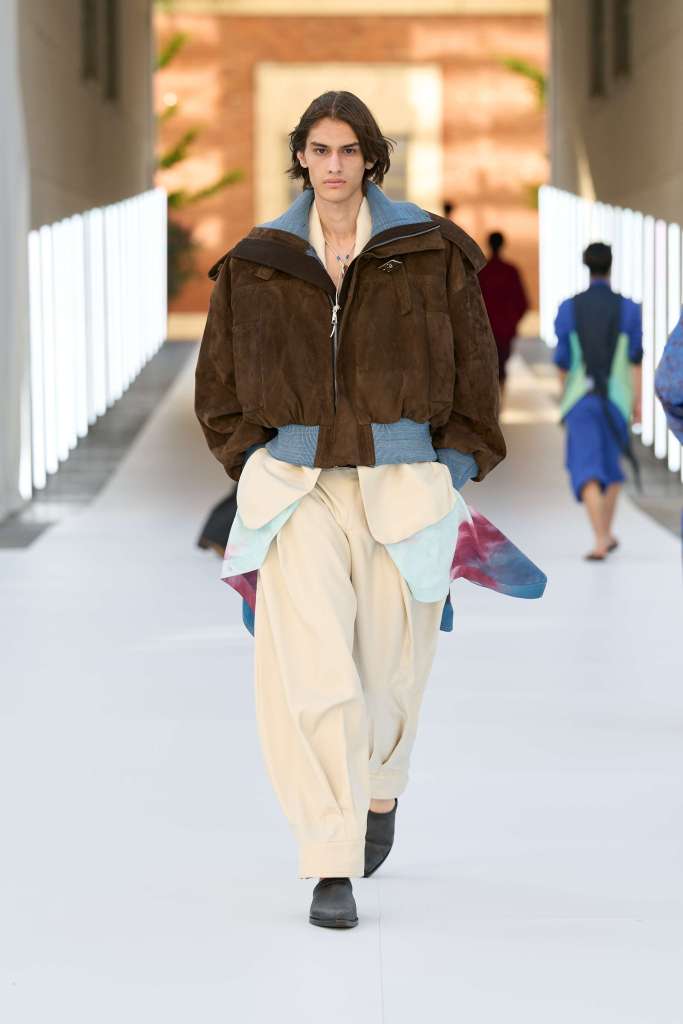
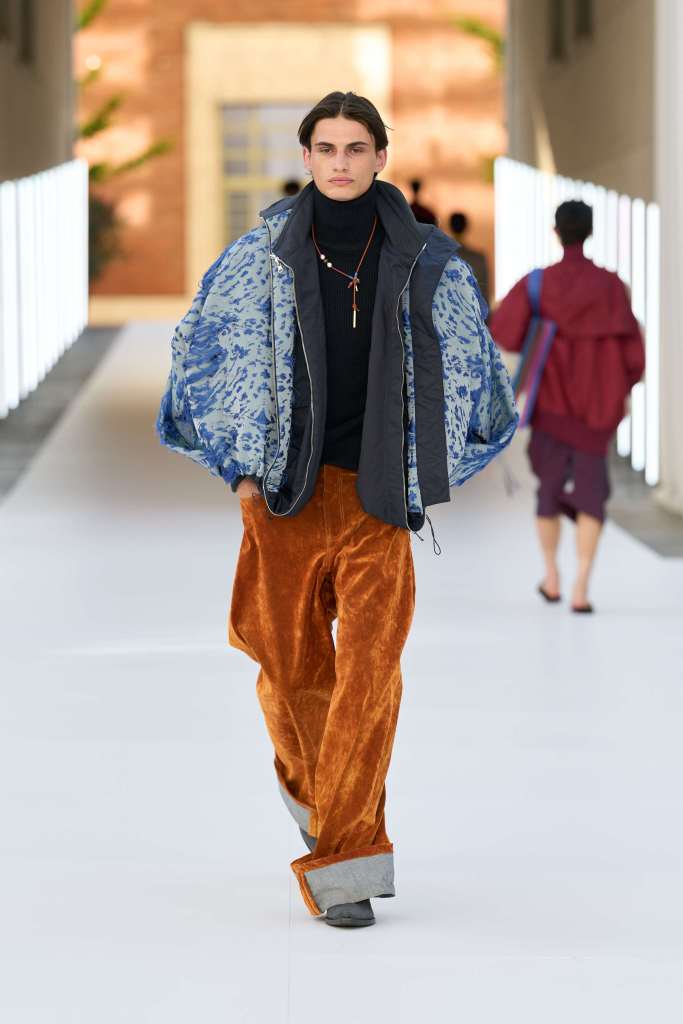
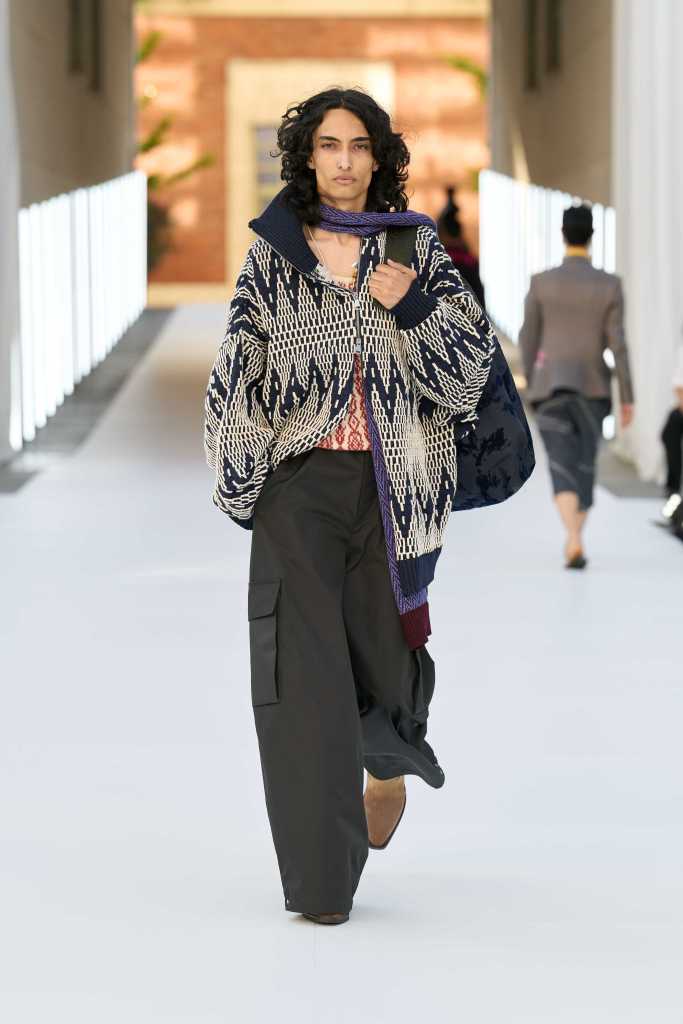
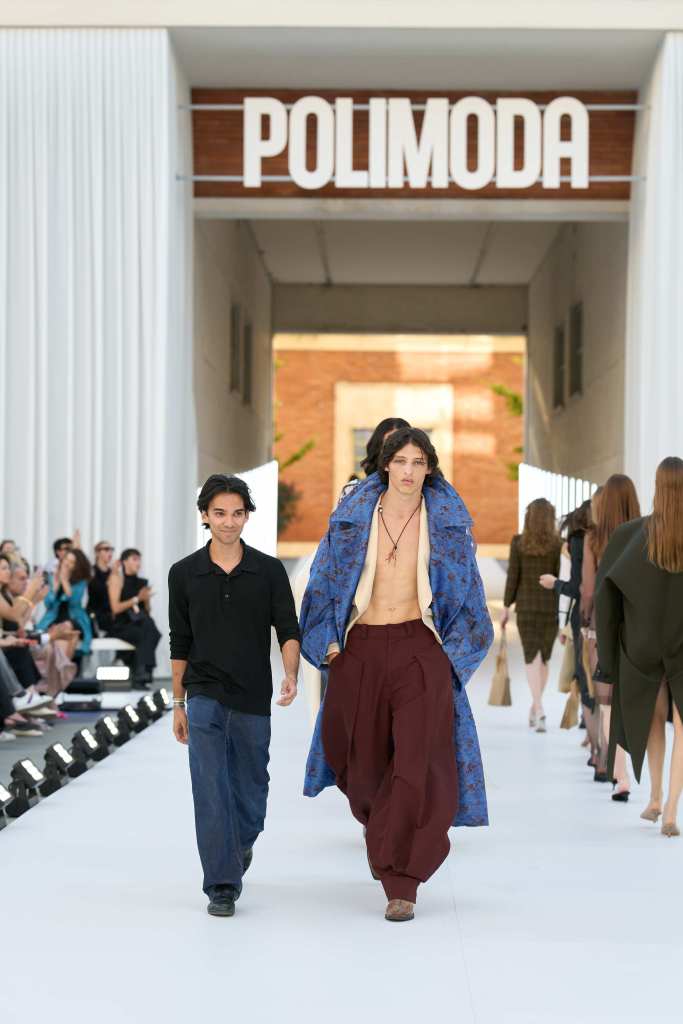
The collection contrasts travel memories with a contemporary wardrobe, blending organic richness with nonchalant, modern confidence. Oversized and rounded silhouettes draw from the sculptural language of Henry Moore, while the colour palette takes cues from Réunion’s lush nature, toned into deeper, darker shades evoking volcanic landscapes and humid mountains for a Fall-Winter sensibility. Through carefully chosen materials that feel instinctive and tactile, Souvenirs of Wandering is ultimately a meditation on how movement through the world quietly builds the self.
Idan David Segal (Israel) | Frame Me If You Can | @idandavidsegal
Frame Me If You Can by Idan David follows a group of ultra-wealthy elderly women who orchestrate a jewellery heist, not for money, but for the thrill of it. Driven by spectacle, power, and excess, these women don’t blend in: they command attention.
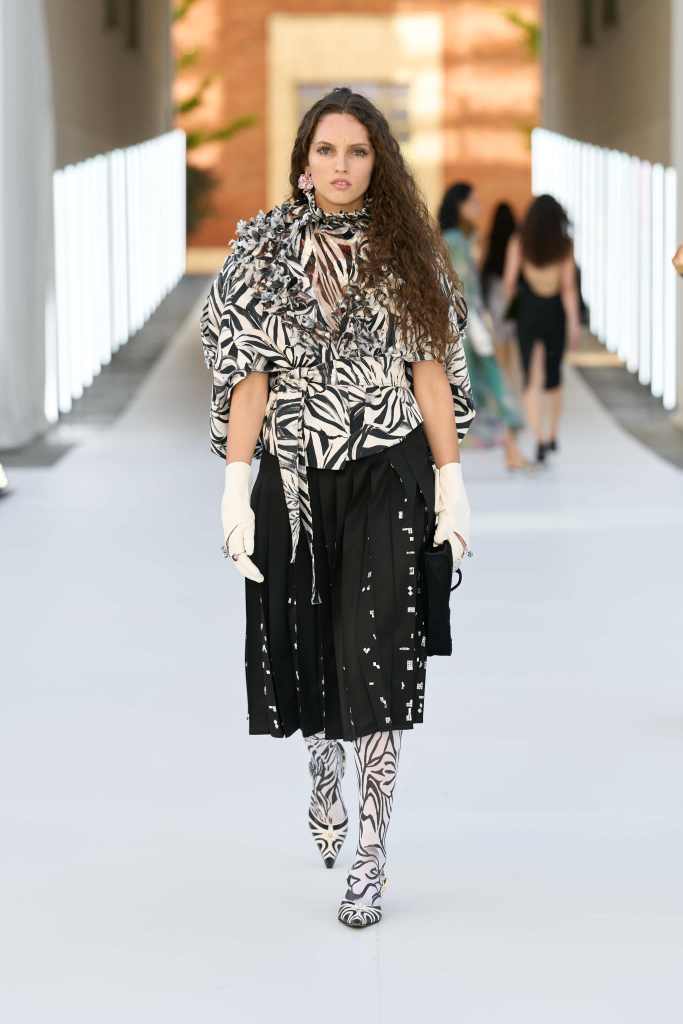
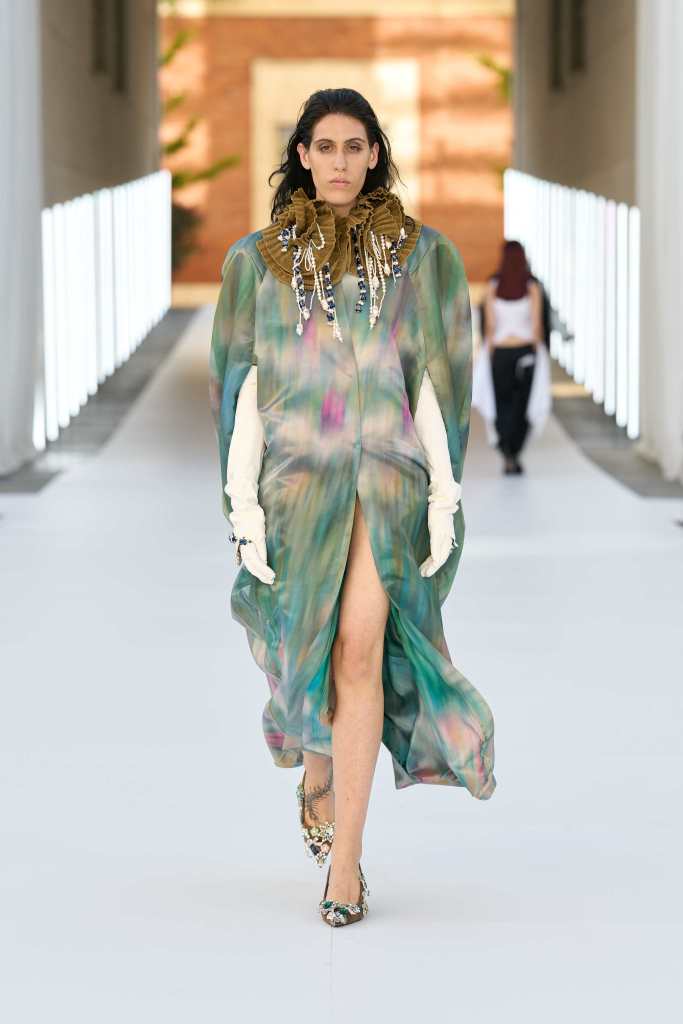
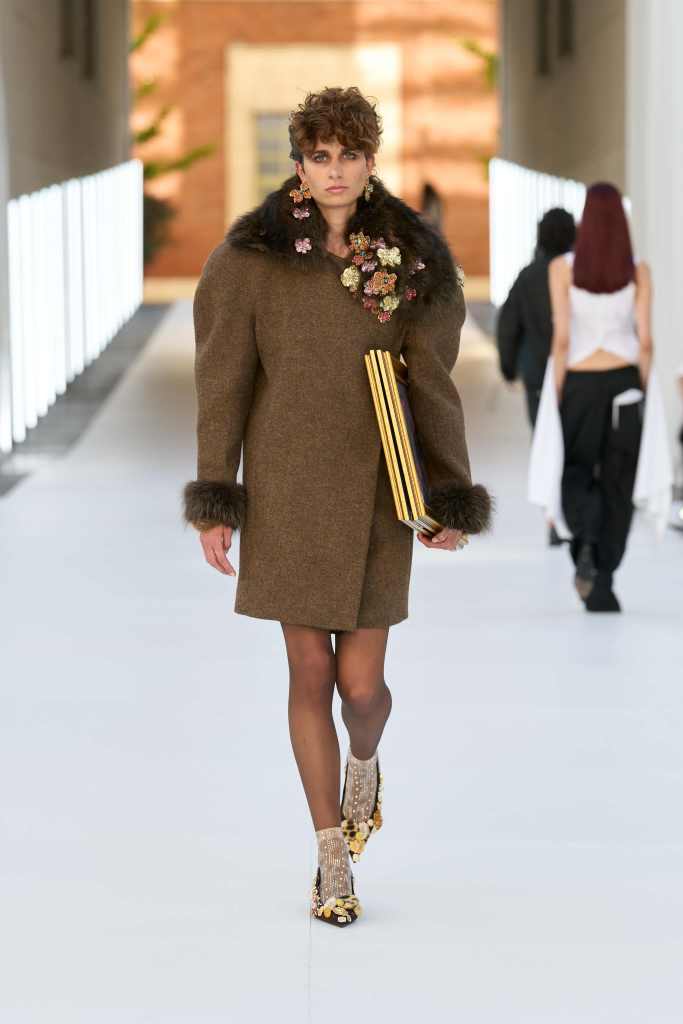
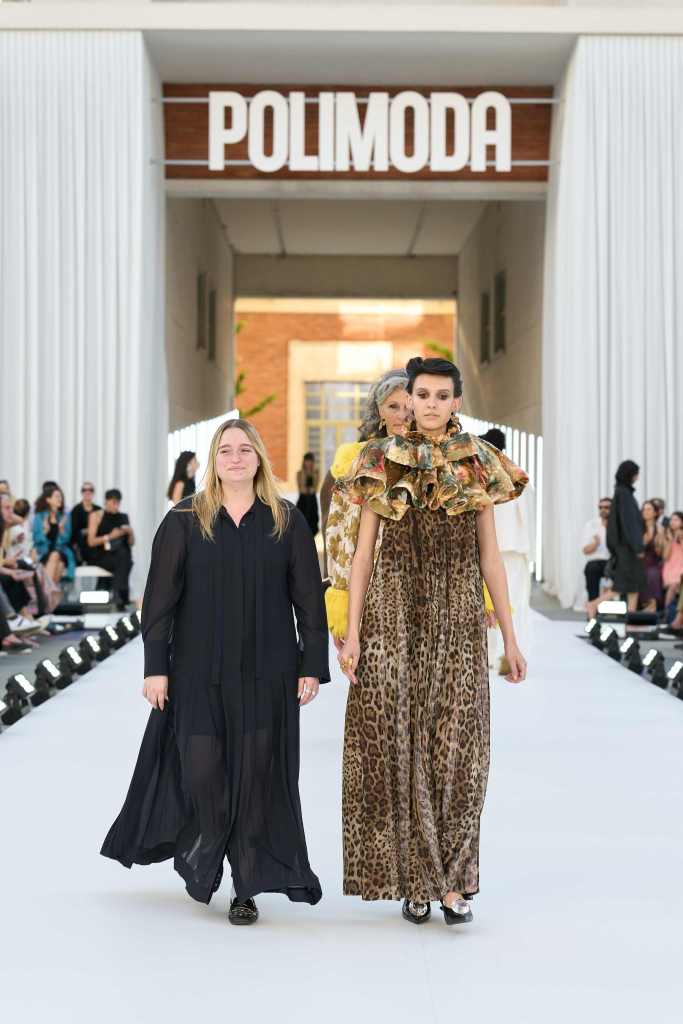
Inspired by the grandeur of the Louvre and the fearless maximalism of Iris Apfel, the collection translates the visual language of museum spaces, ornate frames, sculptures, gilded surfaces, into bold 1980s- inflected silhouettes that express confidence and uncompromising femininity. Intricate pleatwork conceals Precios crystals within the garments, creating a tension between matte surfaces and hidden brilliance, reverse camouflage at its most luxurious. Silk and other refined fabrics reinforce the sense of a life lived at the finest possible register, while rich colour combinations and extravagant layering achieve a maximalism that remains elegant and intentional. Frame Me If You Can is a collection that asks: what would you wear to rob a museum?
Aaron Dillworth (USA / Jamaica) | SUN IS HIGH SO AM I | @aarondillworth
SUN IS HIGH SO AM I by Aaron Dillworth is rooted in the warmth of two places: Miami, where he grew up, and Jamaica, where his mother was born and raised.
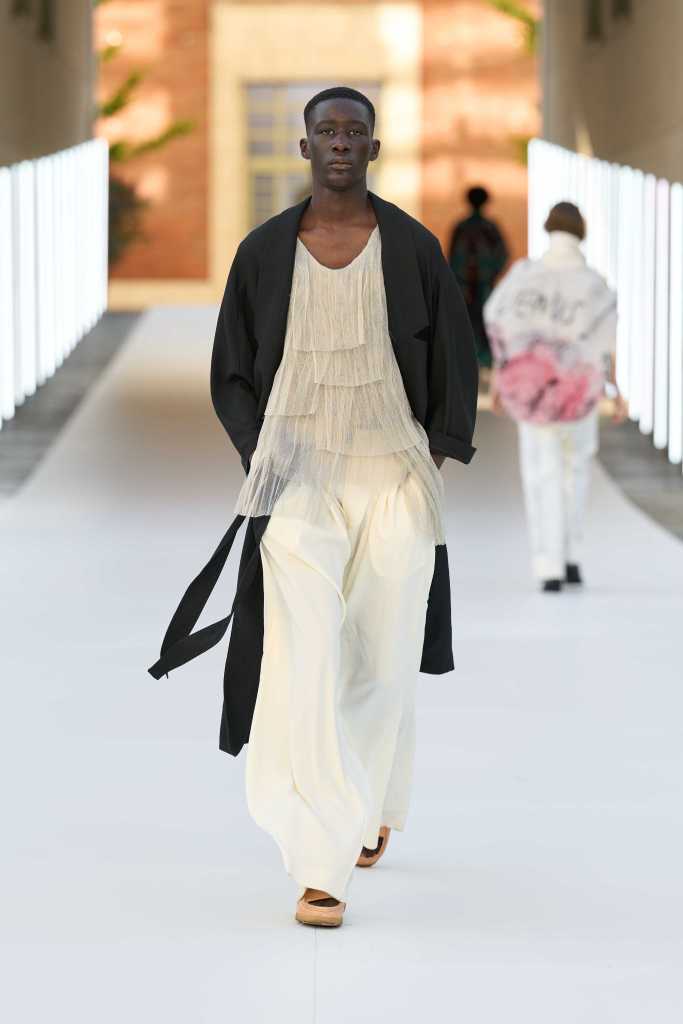
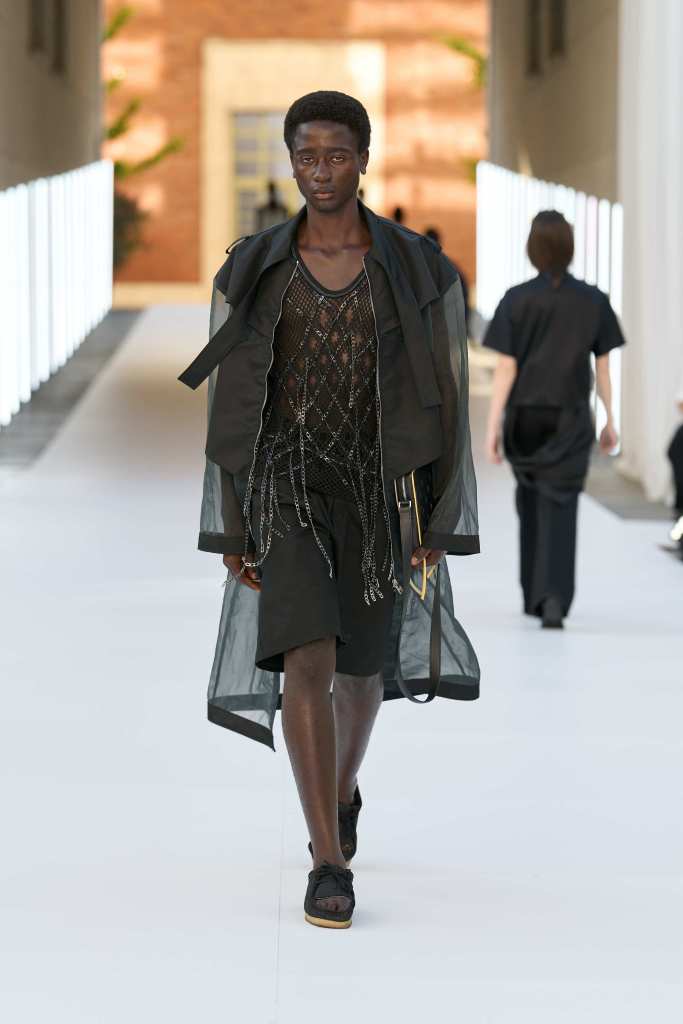
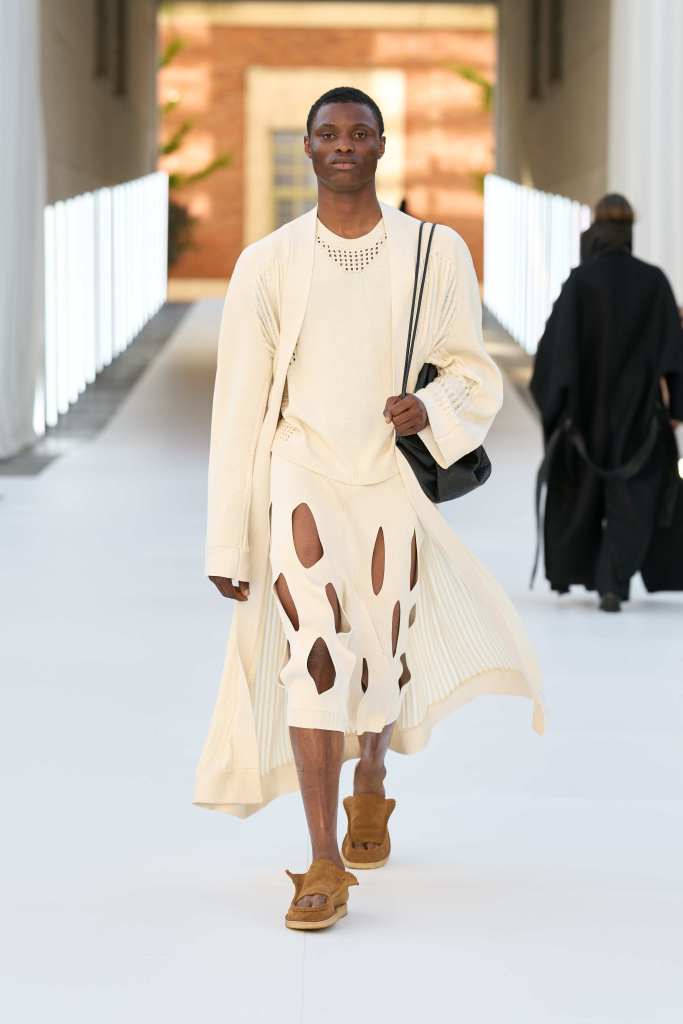
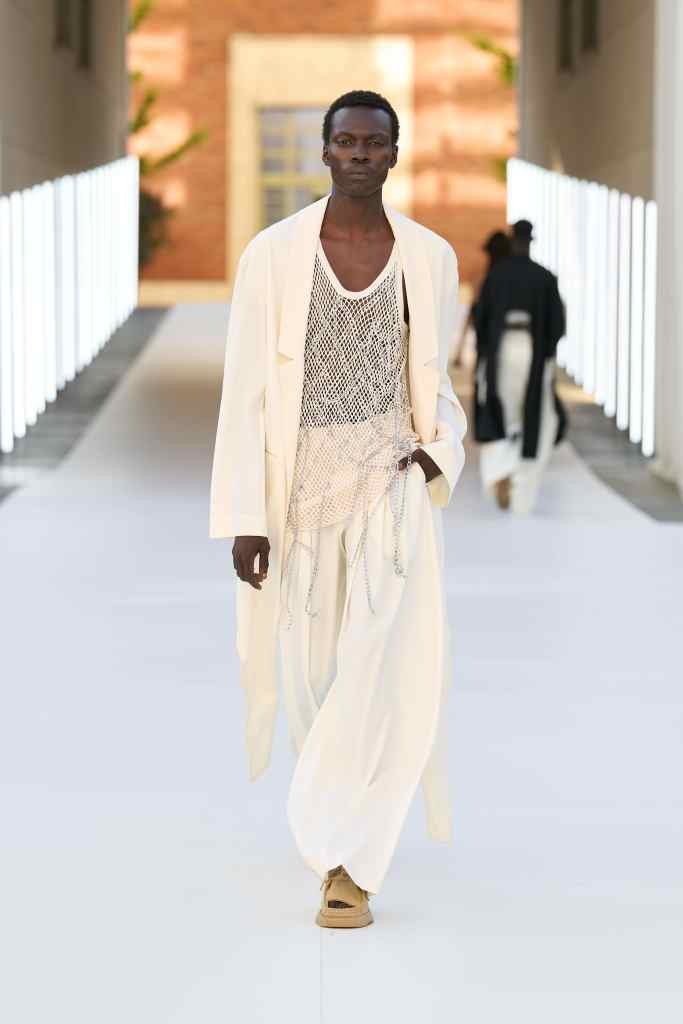
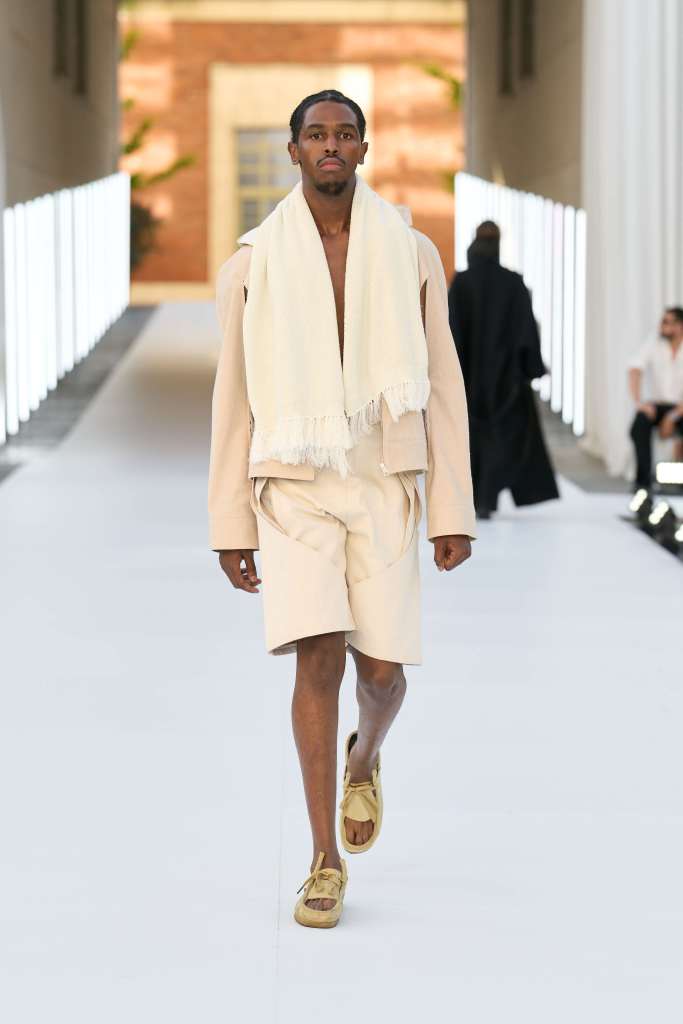
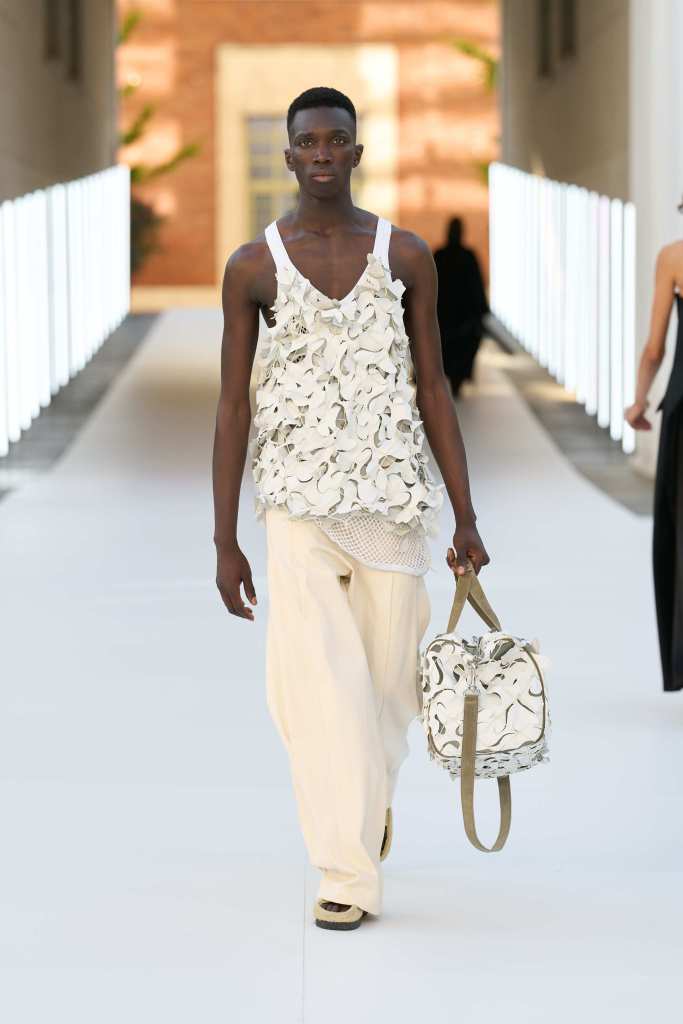
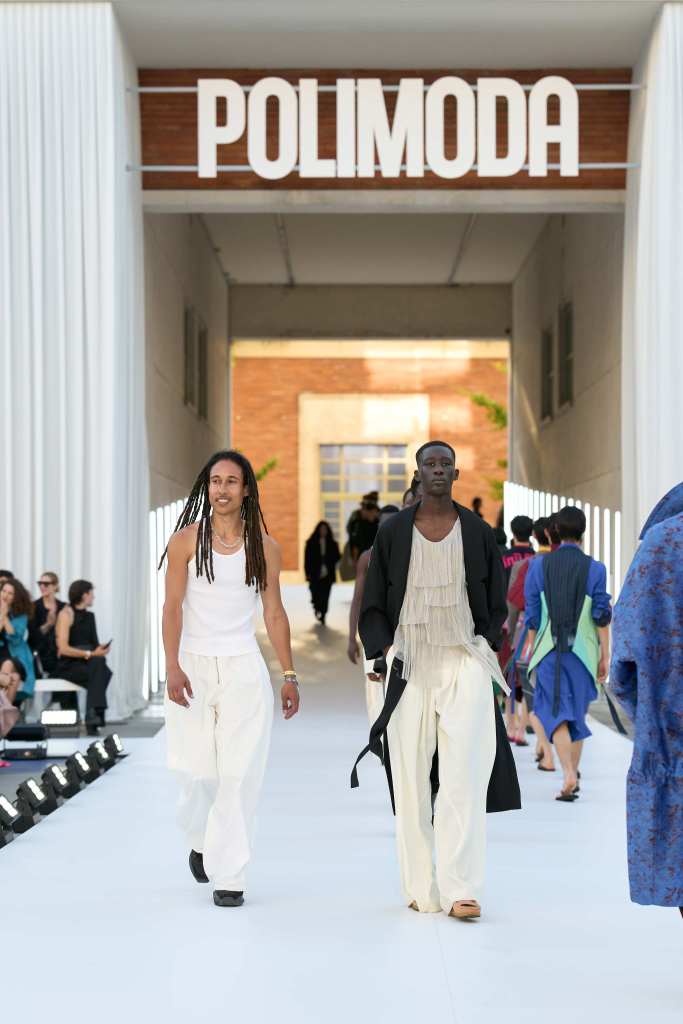
The collection is designed entirely with the tropical climate in mind, clothes that breathe, move, and feel good against the body. Lightweight fabrics, meshes, and loose or oversized silhouettes prioritise comfort and ease, with material quality taking precedence over colour. The result is a wardrobe shaped by lived experience, cultural heritage, and the particular freedom that comes with heat and open air. SUN IS HIGH SO AM I is unhurried and instinctive, clothing that carries the feeling of a place as much as its aesthetic.
Jing Jirat Jitdee (Thailand) | Cool Back Home | @jing.jitd
Cool Back Home by Jirat Jitdee follows a group of unruly young men from the Thai countryside who arrive in Bangkok chasing dreams, dressed in a boldly outdated vision of cool shaped by the pop culture of their youth.
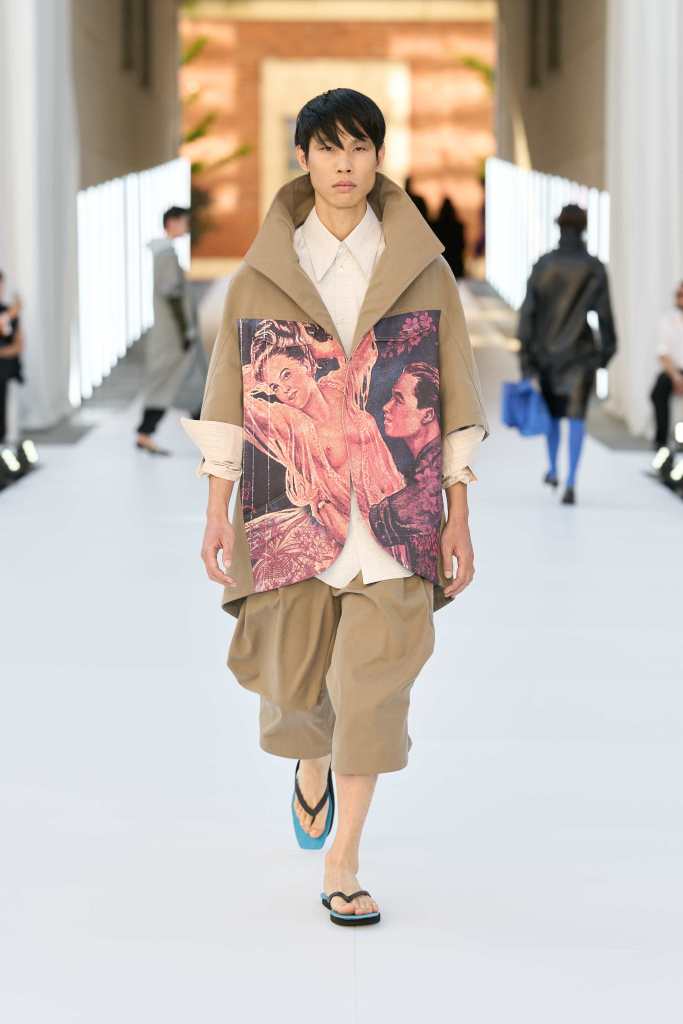
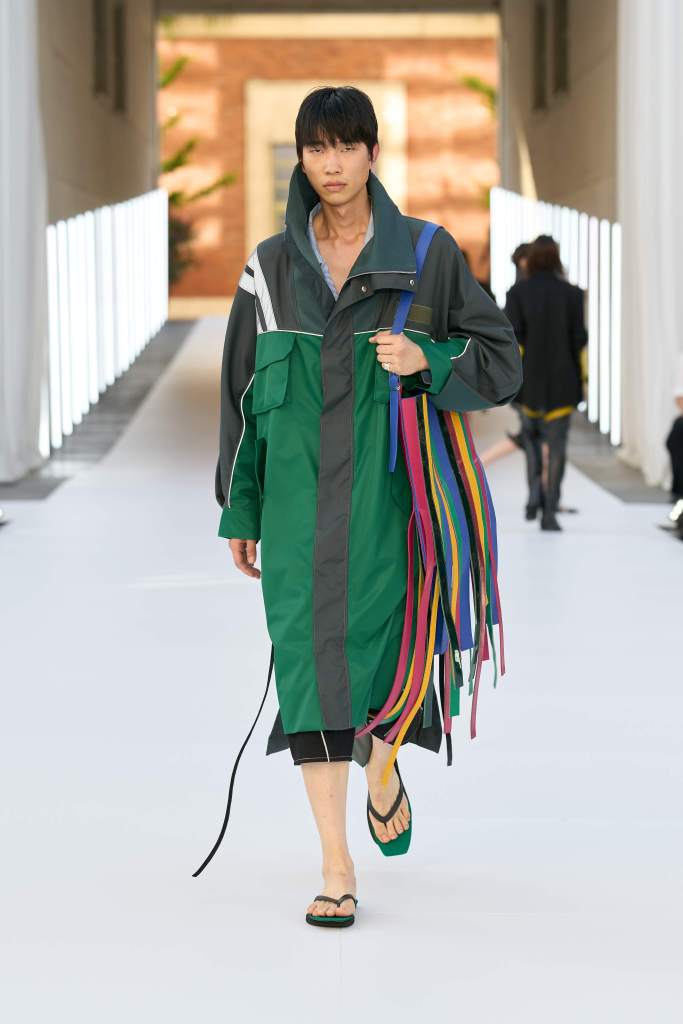
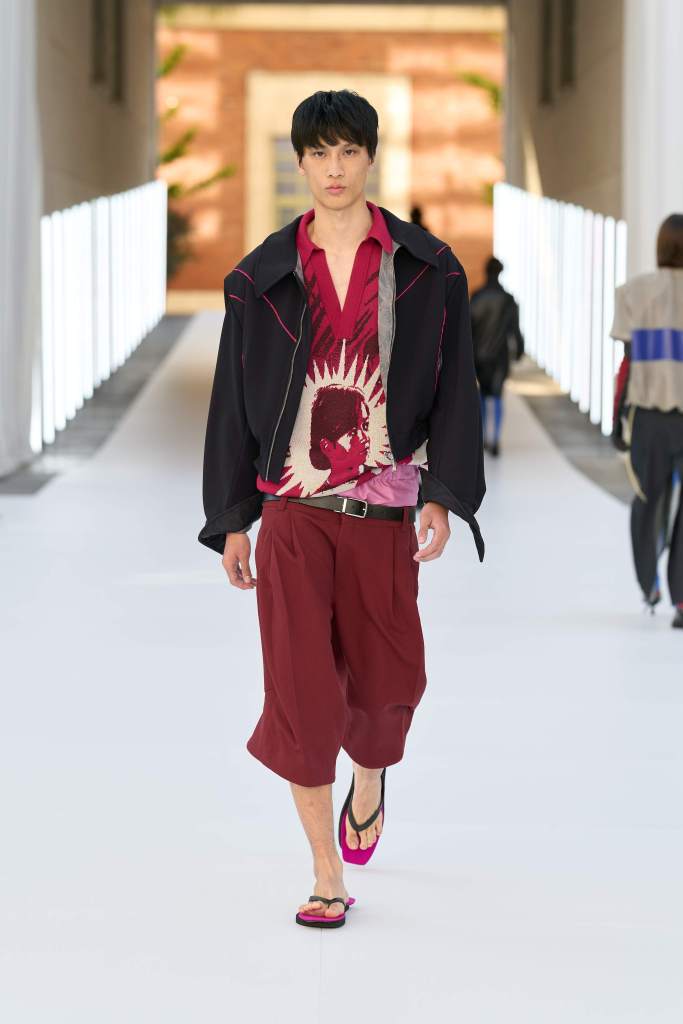
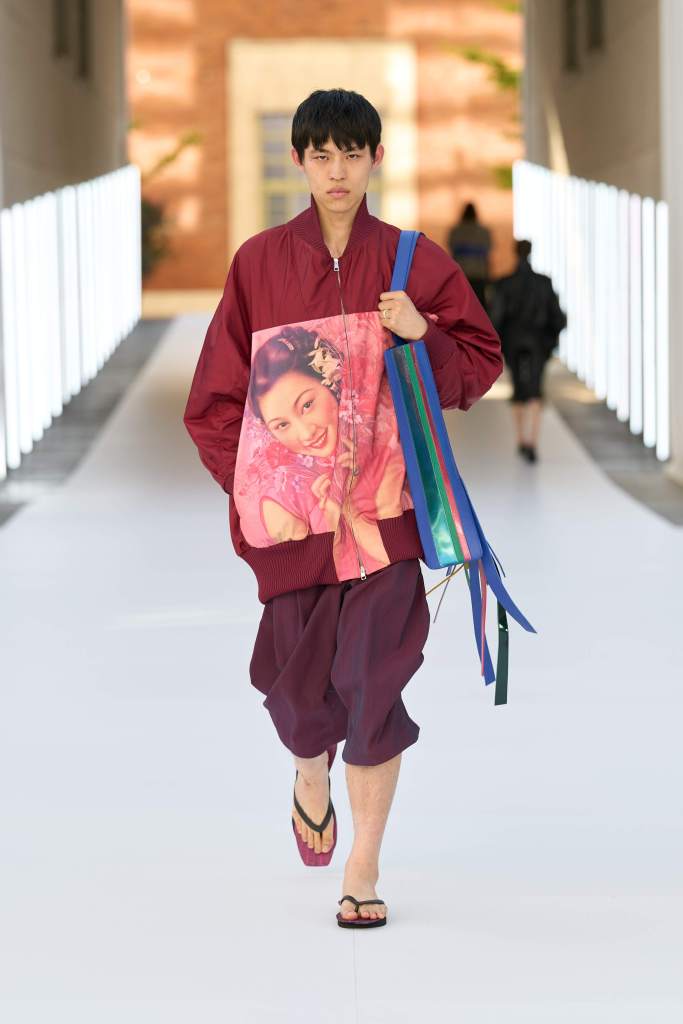
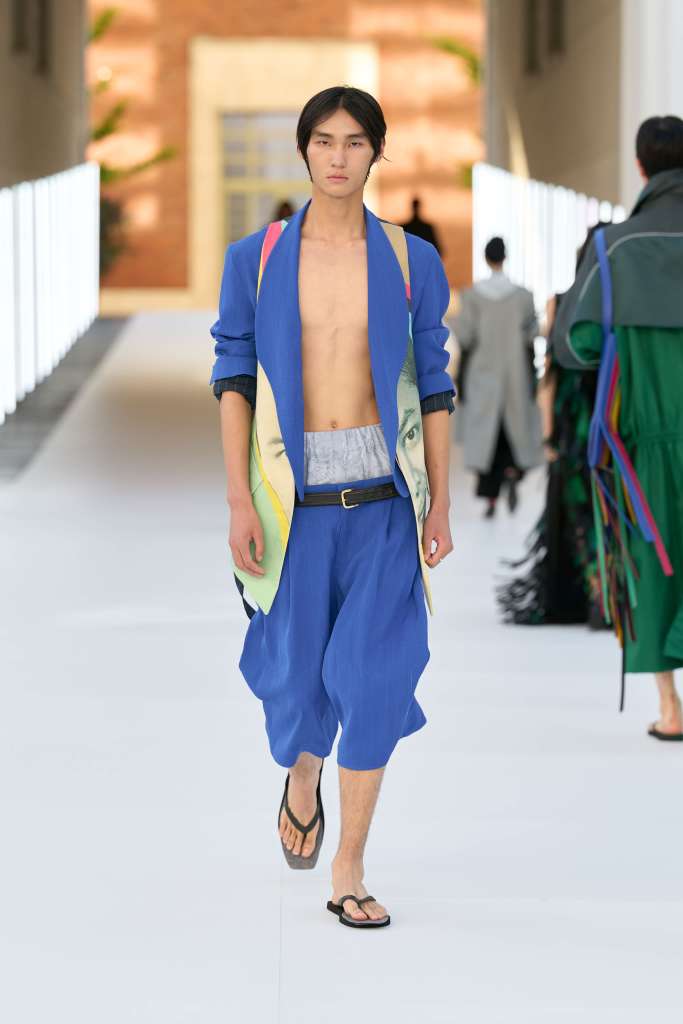
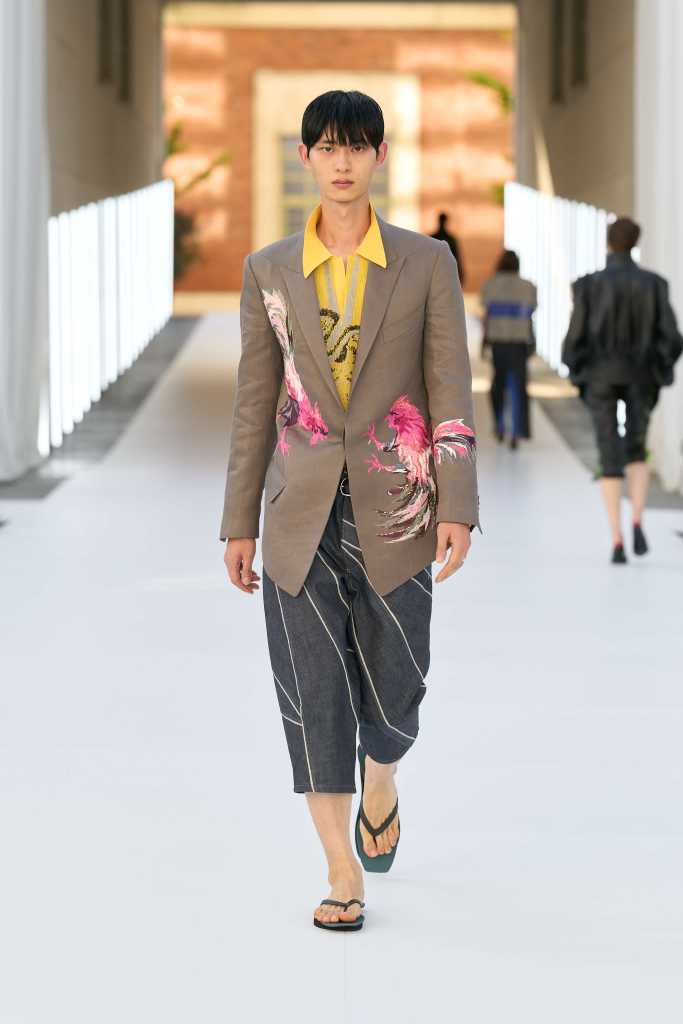
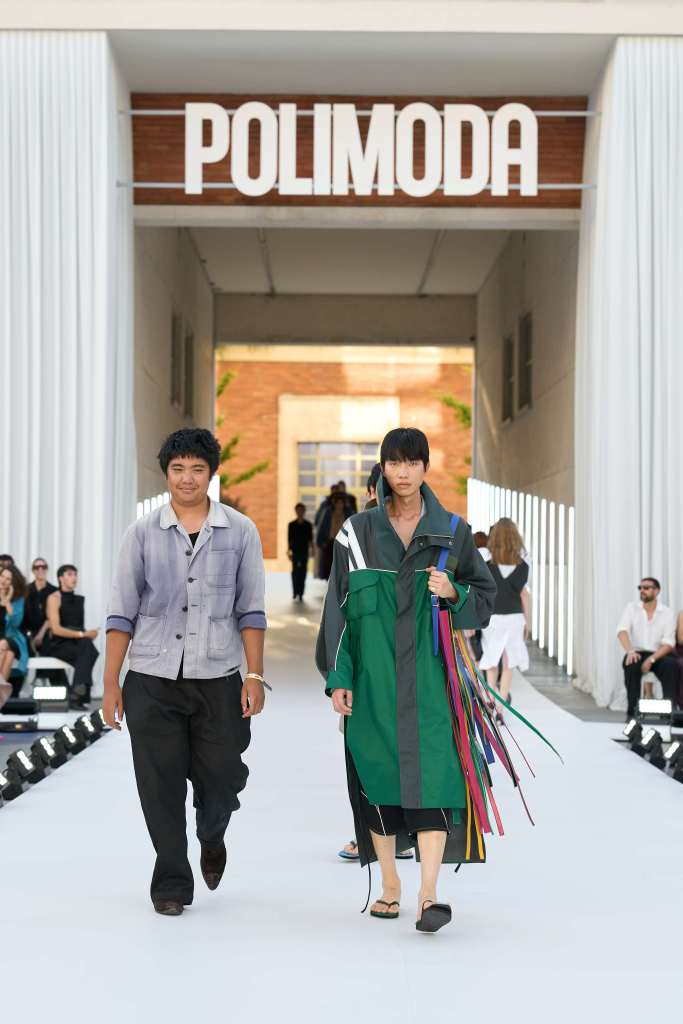
Loud, confident, and proudly stuck in another era, they stand out in the city without apology. With humor and irony, the collection celebrates their self-belief and carefree attitude, reinterpreting familiar menswear silhouettes through shifting proportions, construction, and context. References range from traditional Thai sarongs to early 2000s Helmut Lang and Carol Christian Poell, while the colour palette draws from the traditional Thai day-of-the-week colours, paired with faded graphics and vintage details. Lightweight cottons, linens, silks, and viscose bring a summery Bangkok warmth to each piece. Cool Back Home is menswear that feels both deeply recognizable and unexpectedly fresh
Evelina Kryvopust (Ukraine) | UN | @evikrv
UN by Evelina Kryvopust takes the archetype of the piano teacher, a figure of discipline, control, and precision, as its starting point, exploring what she calls conservative ambiguity: the illusion of transformation without true rebellion.
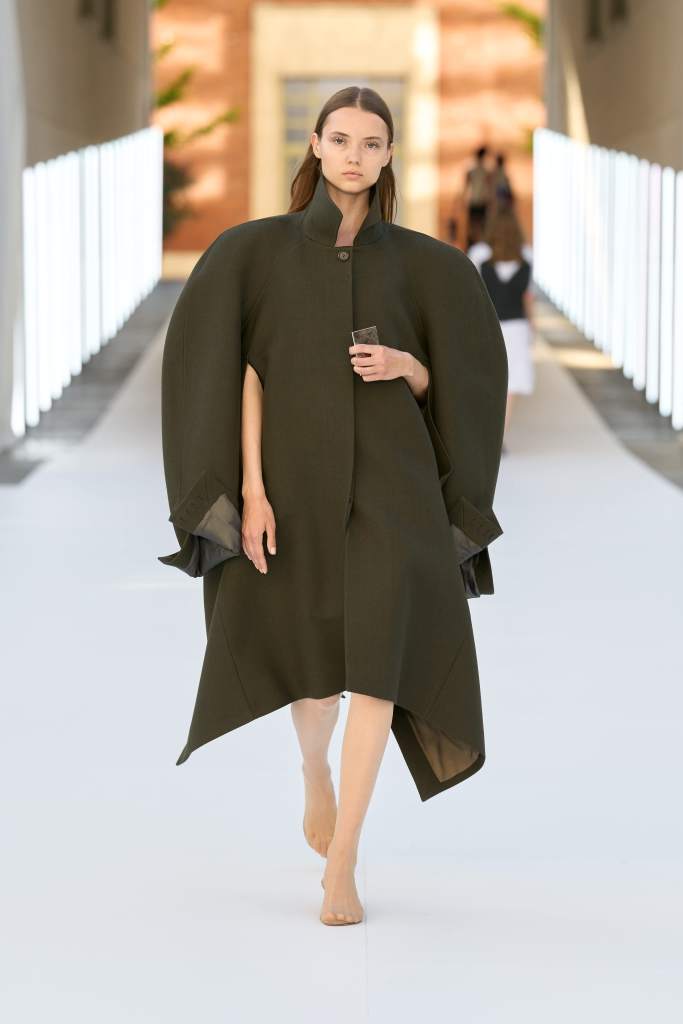
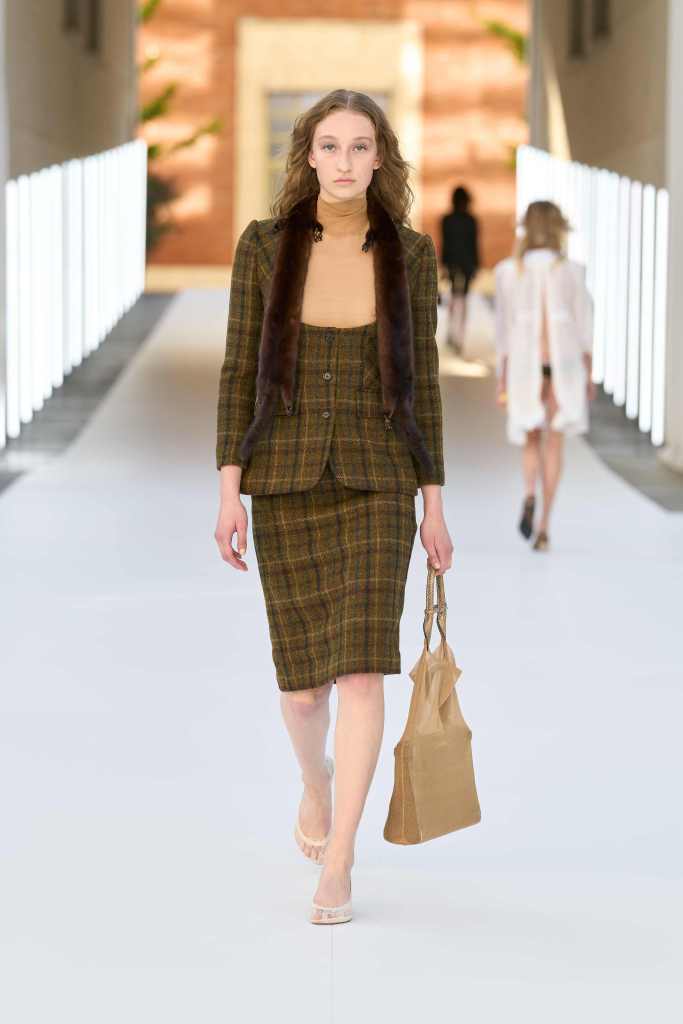
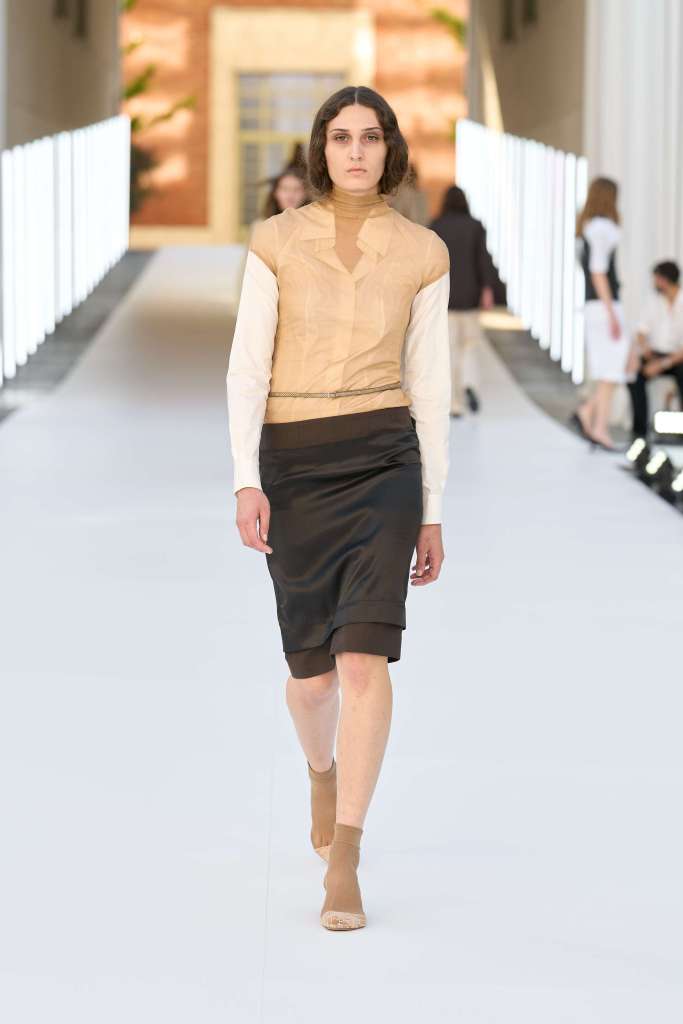
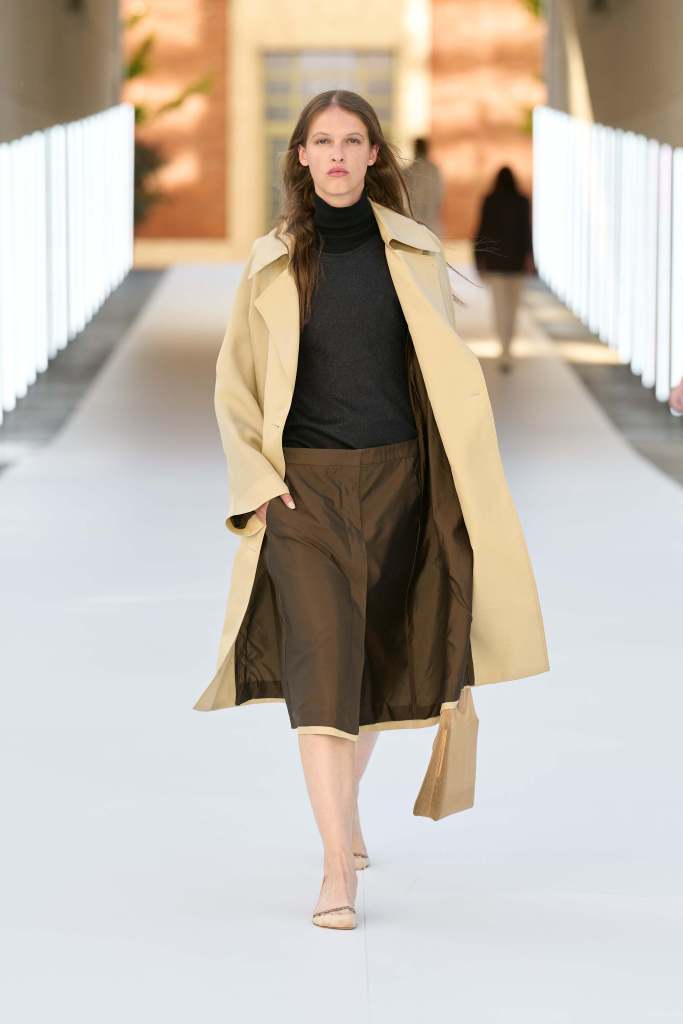
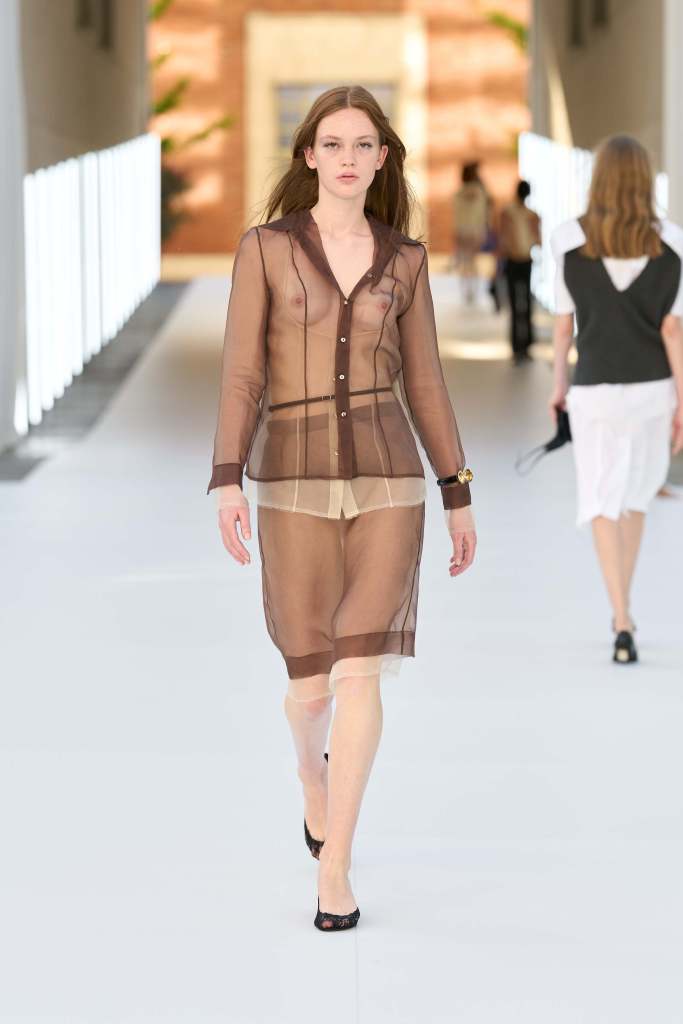
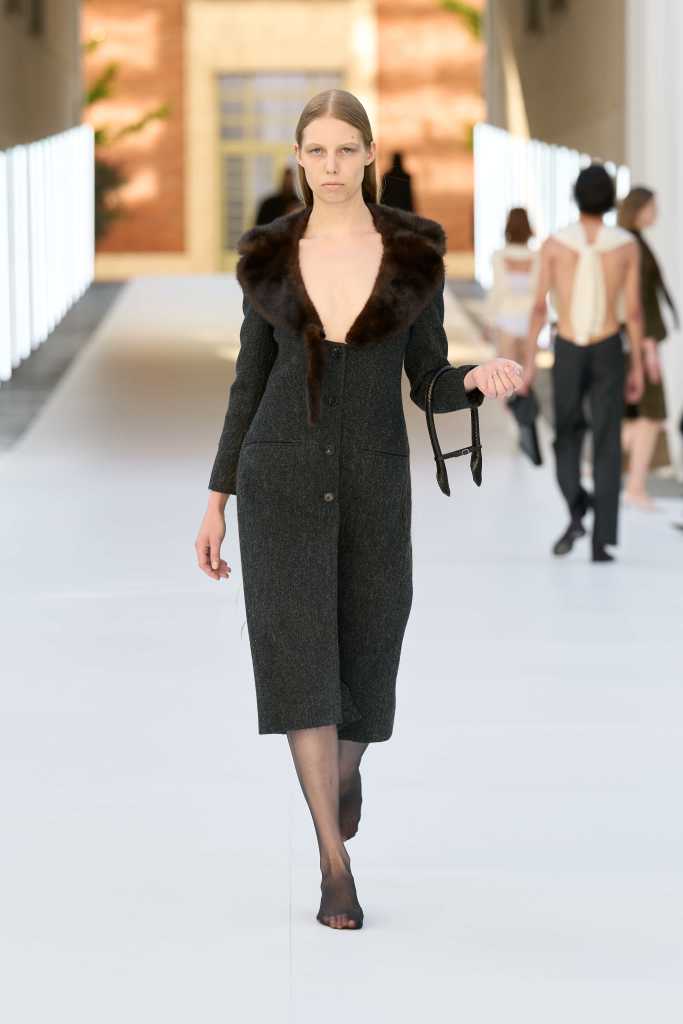
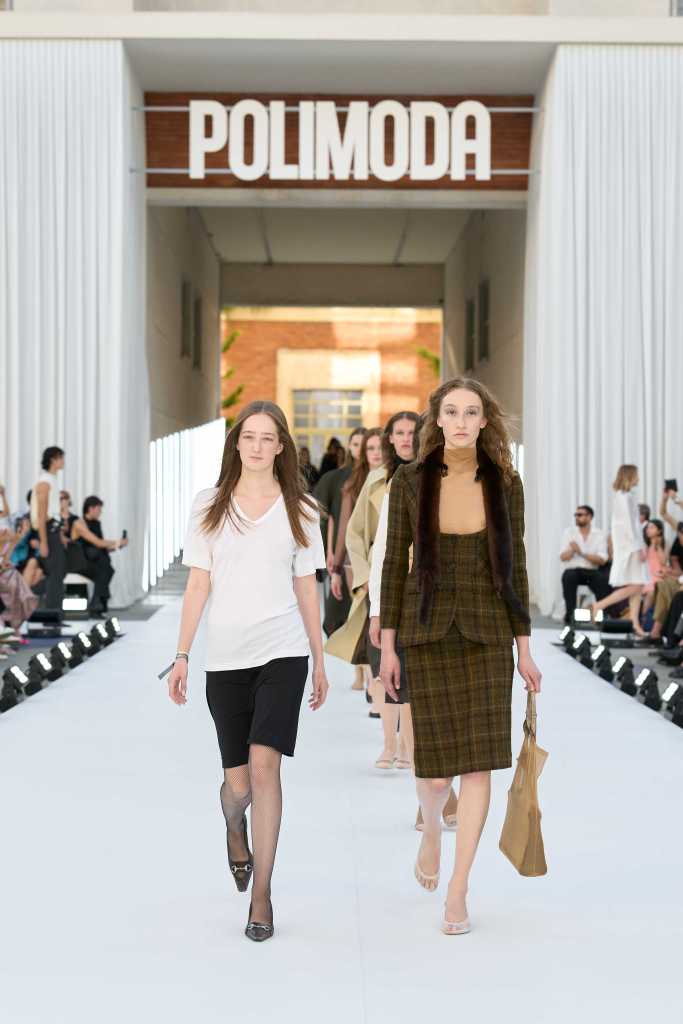
The wearer steps out, experiments, and retreats, never fully breaking free from existing structures of power. Restrained silhouettes and a controlled mood draw from cinematic references including Michael Haneke’s The Piano Teacher and Chantal Akerman’s Les Rendez-vous d’Anna, while Carlo Mollino’s Polaroids and Pierre Molinier introduce an undercurrent of erotic tension beneath the surface. Materials were chosen to feel timeless and lived- in: itchy British wool evokes dusty suits, silk taffeta carries a naturally crinkled instability, and a thin silk knit clings to the body like a second skin. UN is a collection that sits quietly at the edge of subversion, and chooses to stay there.
Anson Lorence Lin (Taiwan / Sri Lanka) | Packages | @ansonlorencelin
Packages by Anson Lorence Lin (Lin Huan En) captures the unglamorous, in-between moment backstage before a fashion show, models half-prepared, wrapped in bathrobes, hair unfinished, bodies subject to a thousand adjusting hands.
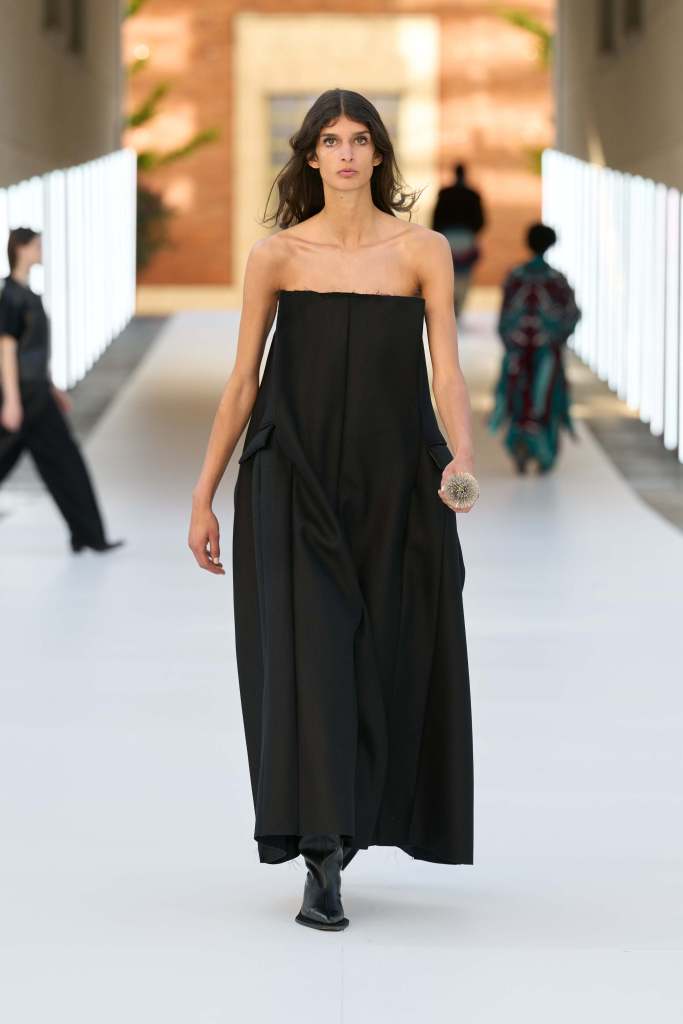
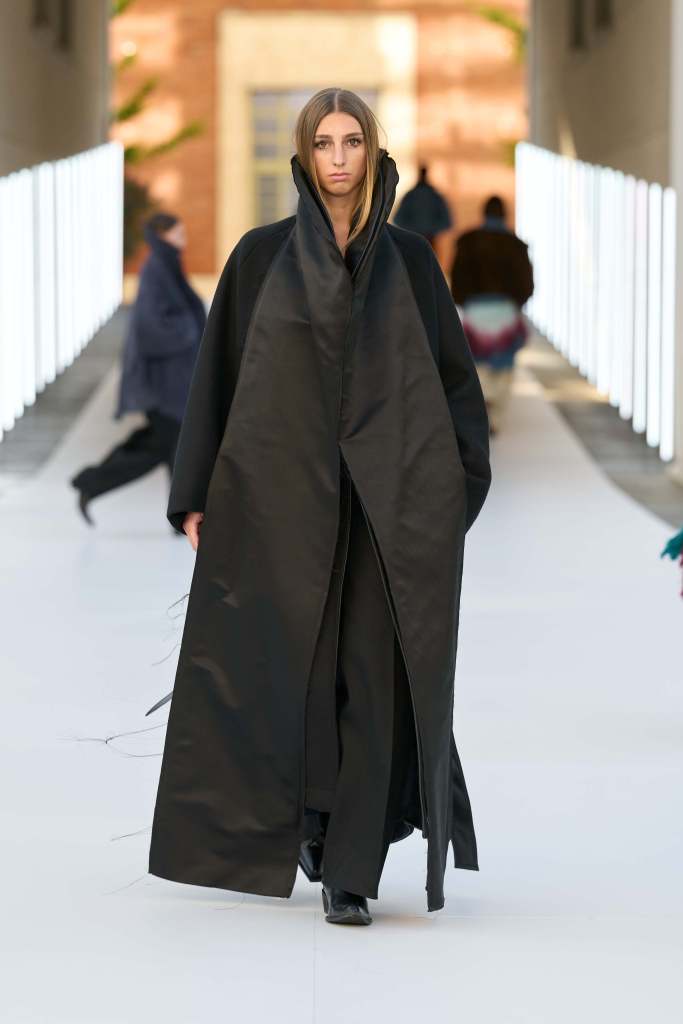
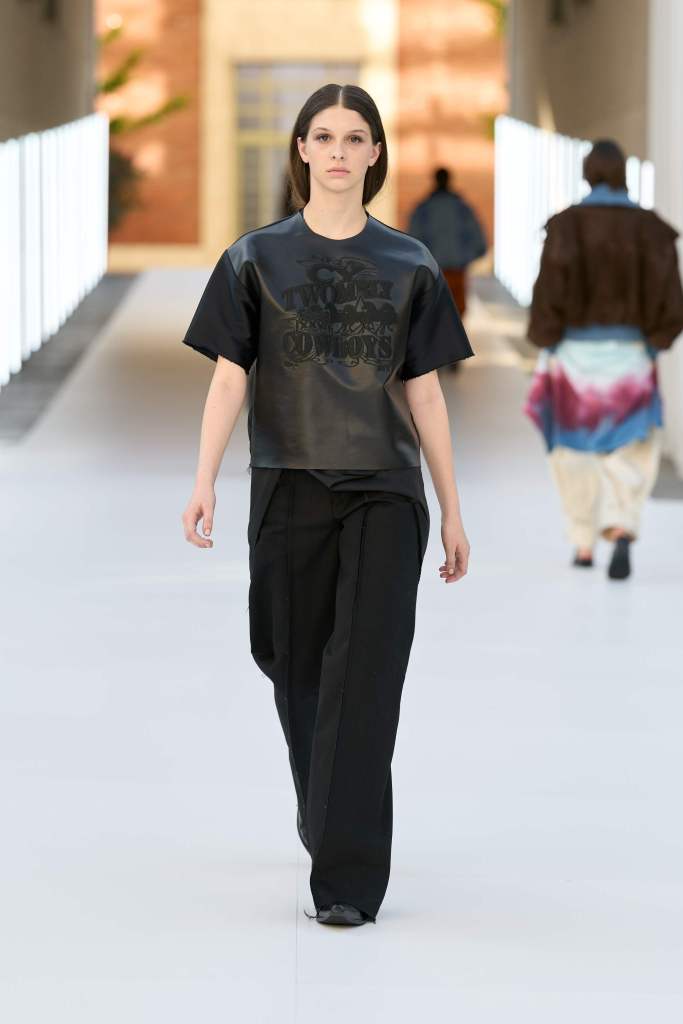
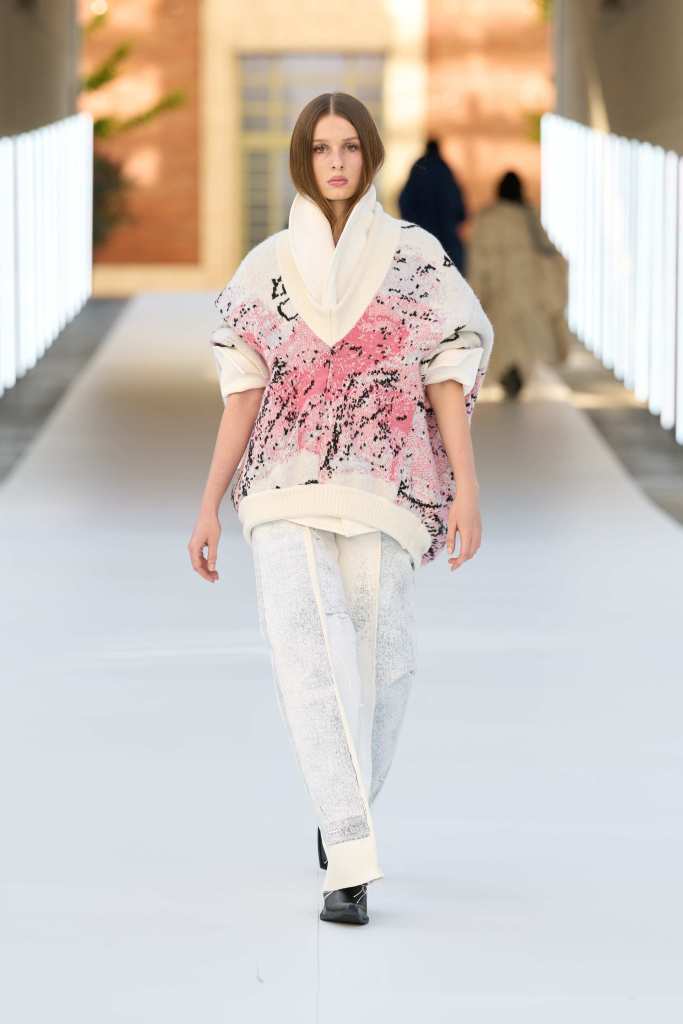
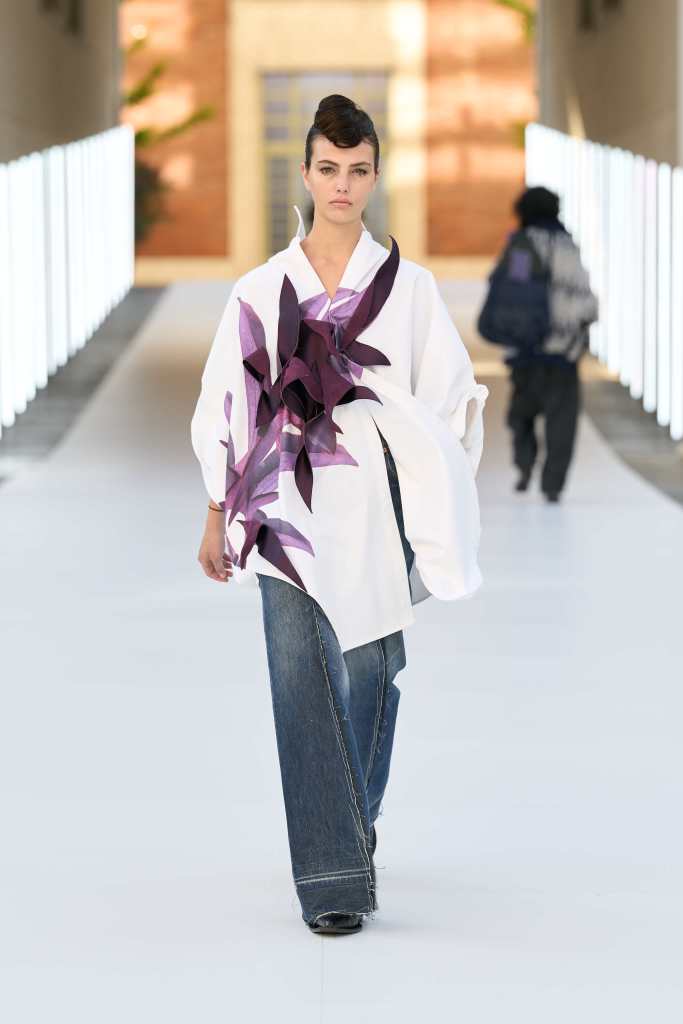
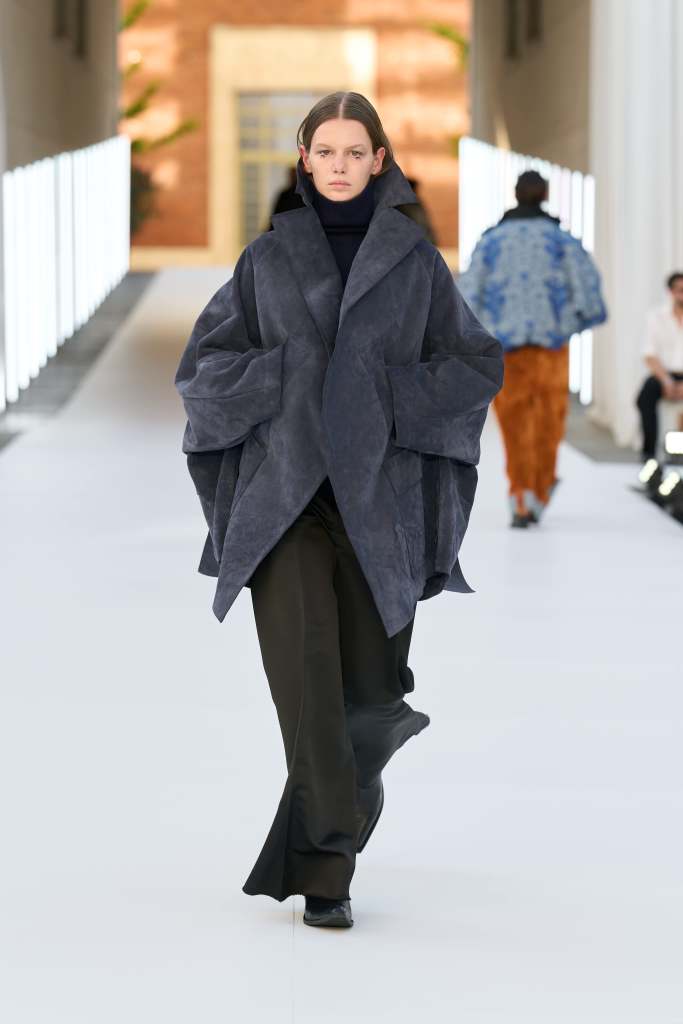
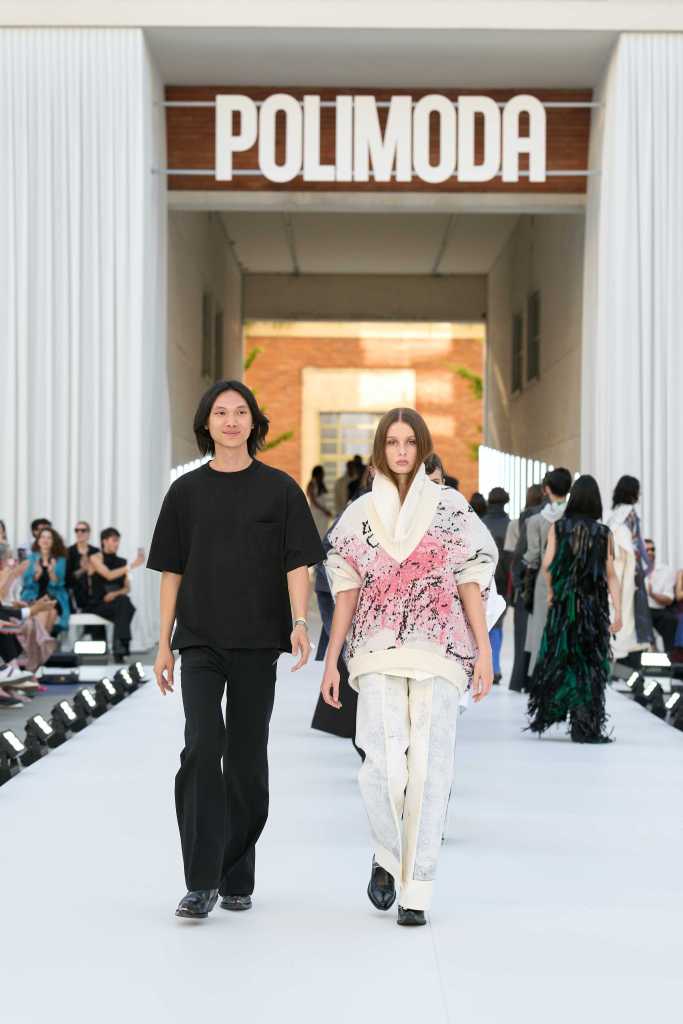
This transitional state becomes both the visual and conceptual foundation of the collection. Drawing from the lesser-known sculptural works of Cy Twombly, particularly his wooden box constructions that open, collapse, and flatten, the collection treats garments as constructed objects rather than decorative surfaces. Deep patternmaking experimentation drives the work, with folding, layering, and structural manipulation bridging backstage functionality with sculptural form. Suede recalls the marks left by touch, while silk beneath heavier constructions preserves a sense of aliveness within the structure. Rooted in process over polish, Packages ultimately reveals something refined and considered, beauty that only becomes visible once the preparation is complete.
Vincenzo Junior Marrazzo (Italy) | Il Latte delle Vergini | @vimarrazzo
Il Latte delle Vergini by Vincenzo Marrazzo is built around the tension between the desire for purity and its inevitable contamination, innocence captured only at the moment it is violated. Drawing from Pier Paolo Pasolini’s Salò and Teorema, where the erotic becomes an unwanted political act, and from Georges Bataille’s Histoire de l’Oeil, in whichpassion ultimately dissolves its subject, the collection exists in a space of voyeuristic familiarity and quiet destruction.
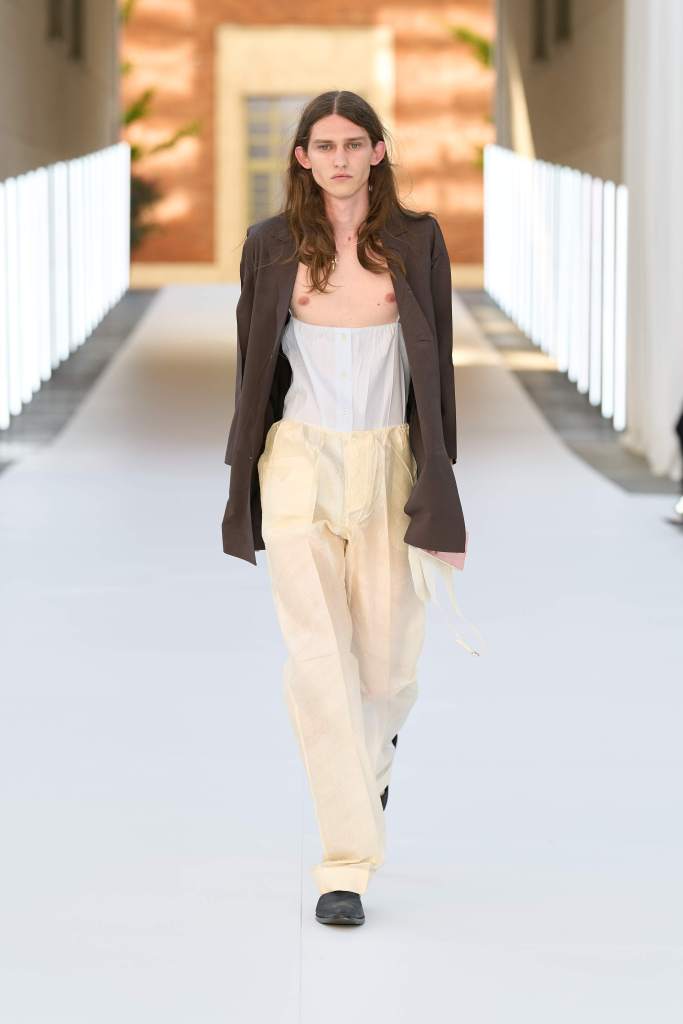
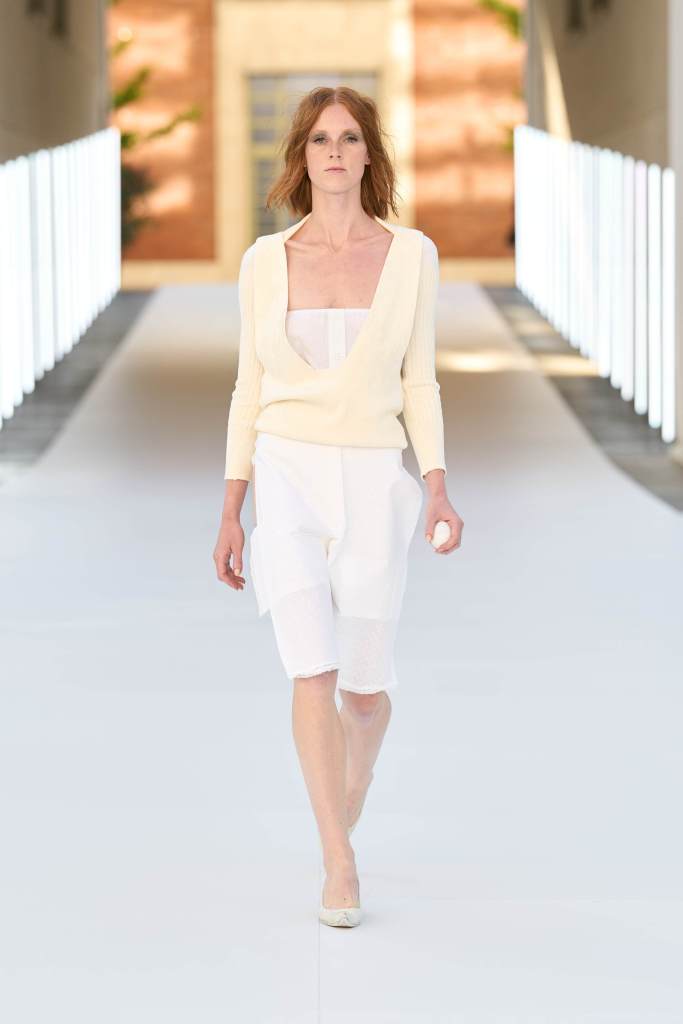
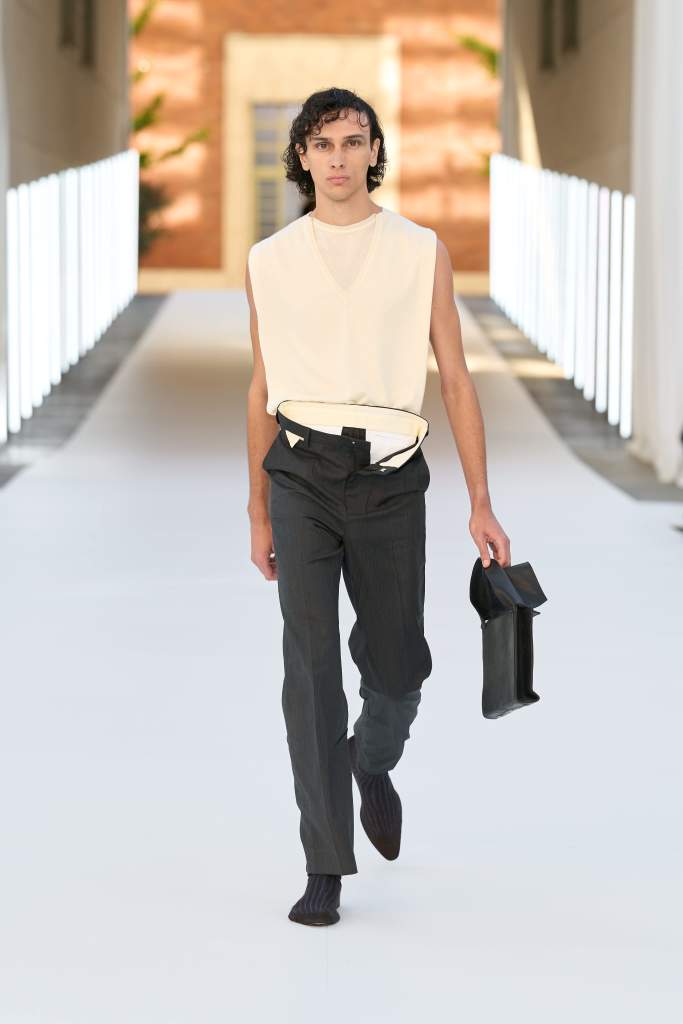
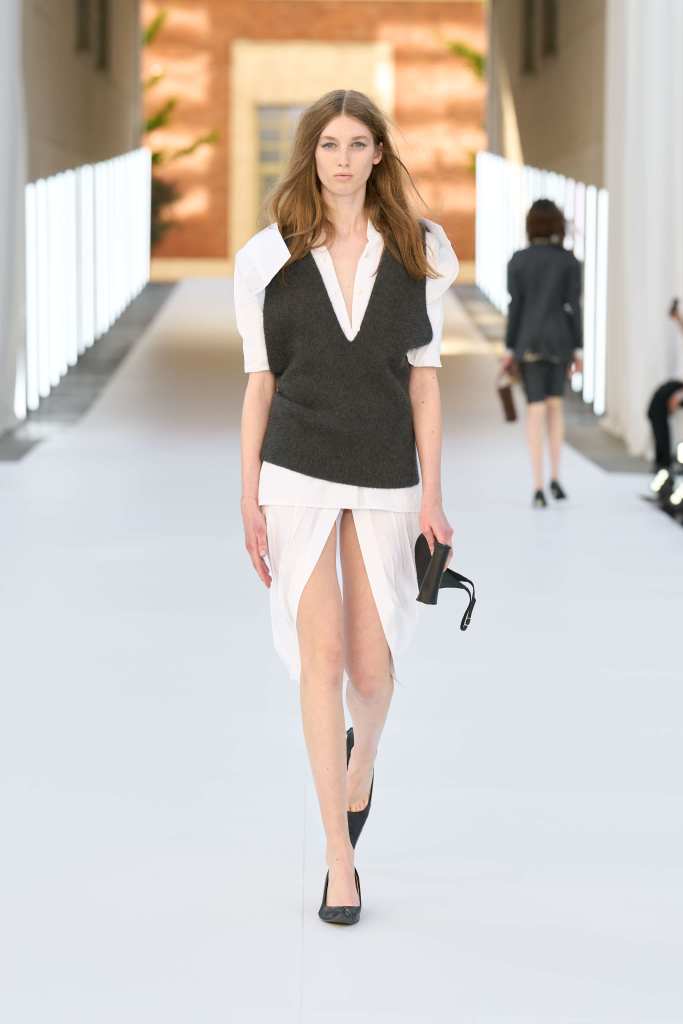
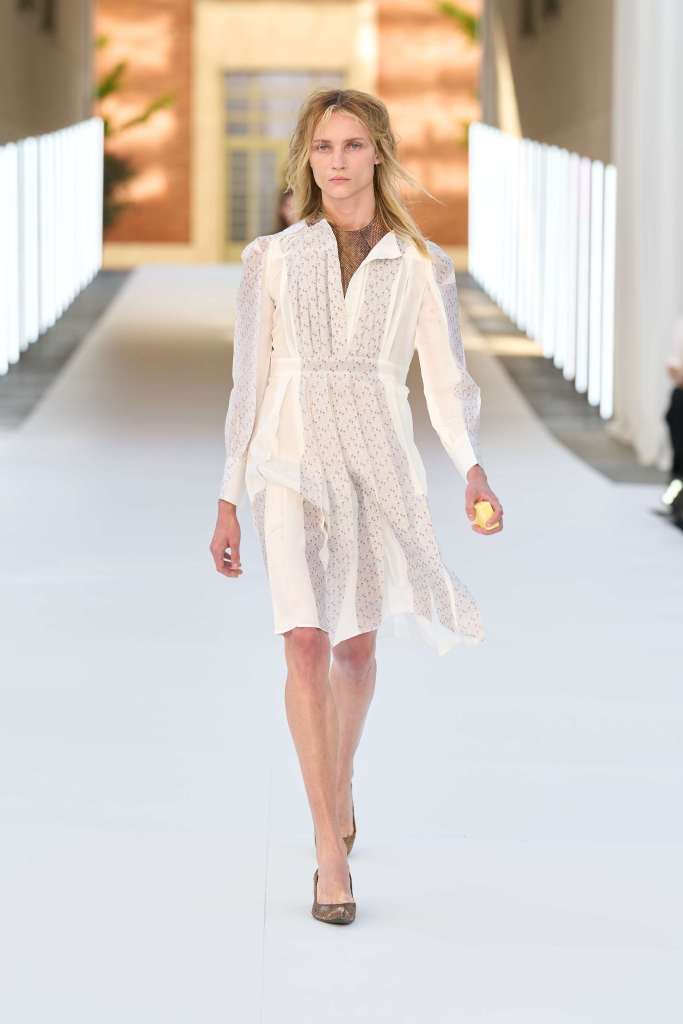
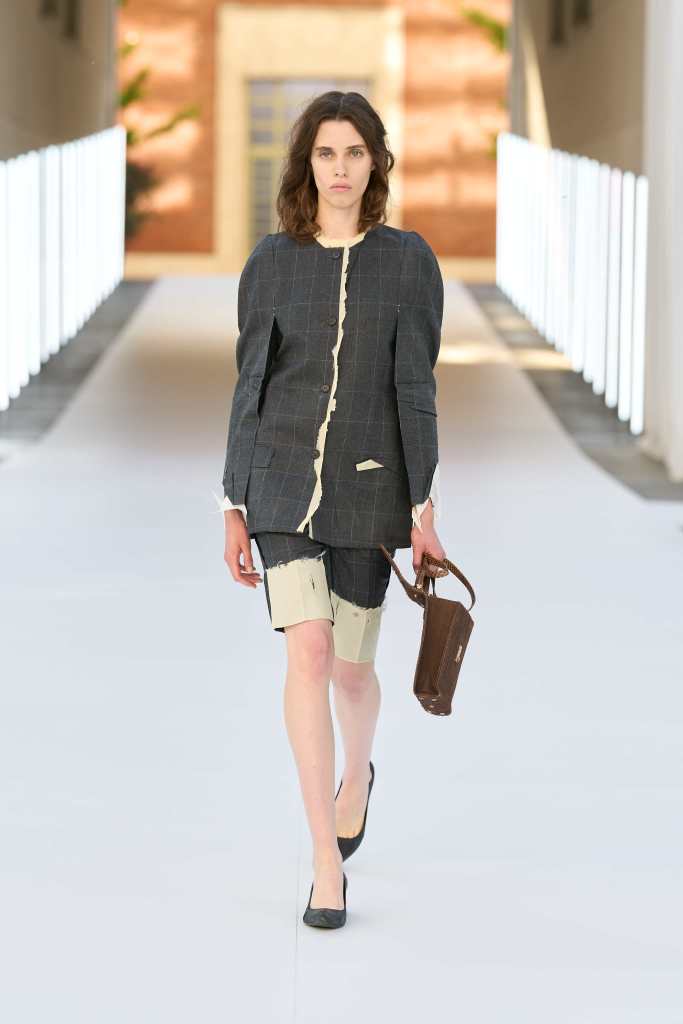
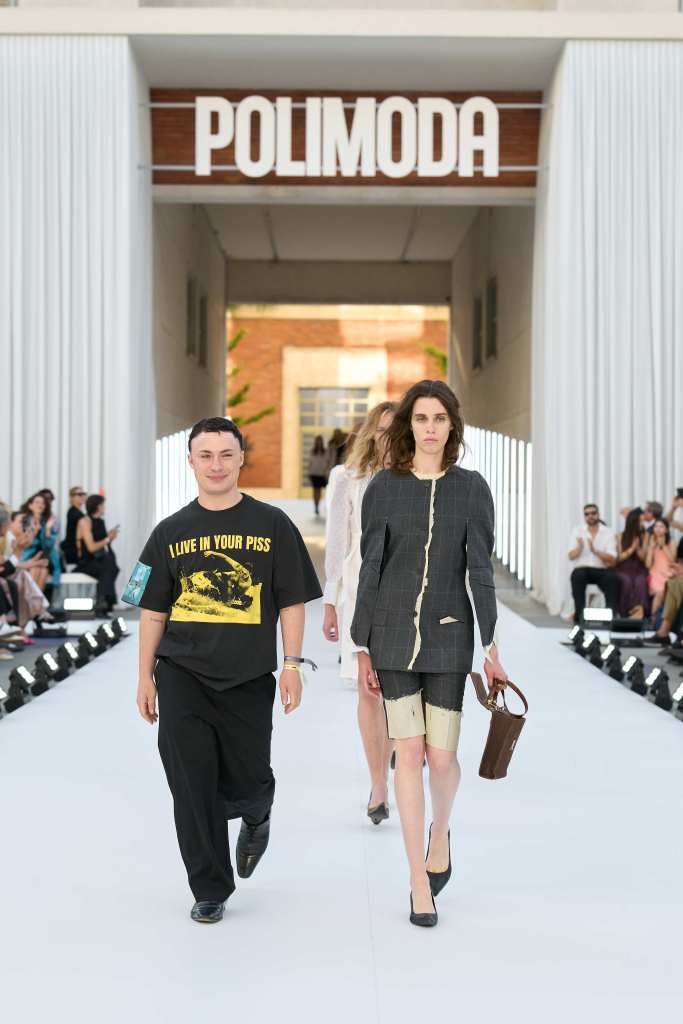
Silhouettes are deliberately vintage and lived-in, as though pulled from a wardrobe after decades untouched. Materials reference the silks and cottons of old nightgowns, robes, and lingerie, not as new, but aged,stained, hardened, and fragile. From the garments to the accessories, everything seems to invite handling and consumption. Il Latte delle Vergini does not preserve, it surrenders, drawing the viewer into a cycle of desire they become complicit in.
Lusine Mkrtchyan (Armenia) | The Parajanov Street | @moonehlol
The Parajanov Street by Lusine Mkrtchyan explores the cycle of influence, inspiration, and intuition, the way external voices gradually become your own. Having grown up beside Sergei Parajanov’s museum in Yerevan, Lusine has always been surrounded by his name and his art; the collection imagines him as a quiet, guiding presence throughout the creative process.
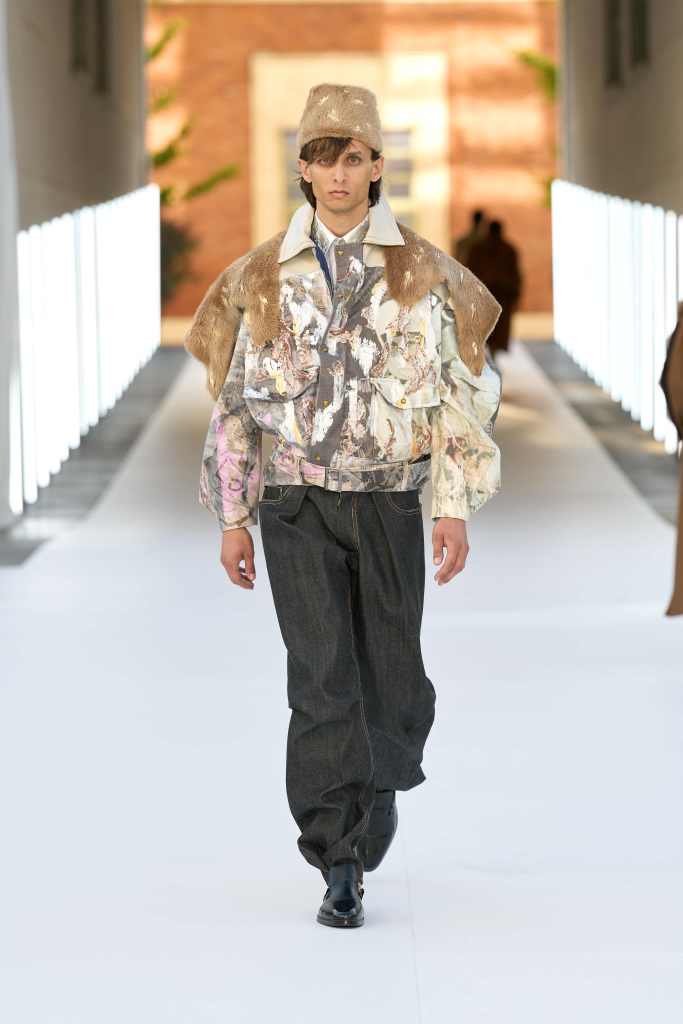
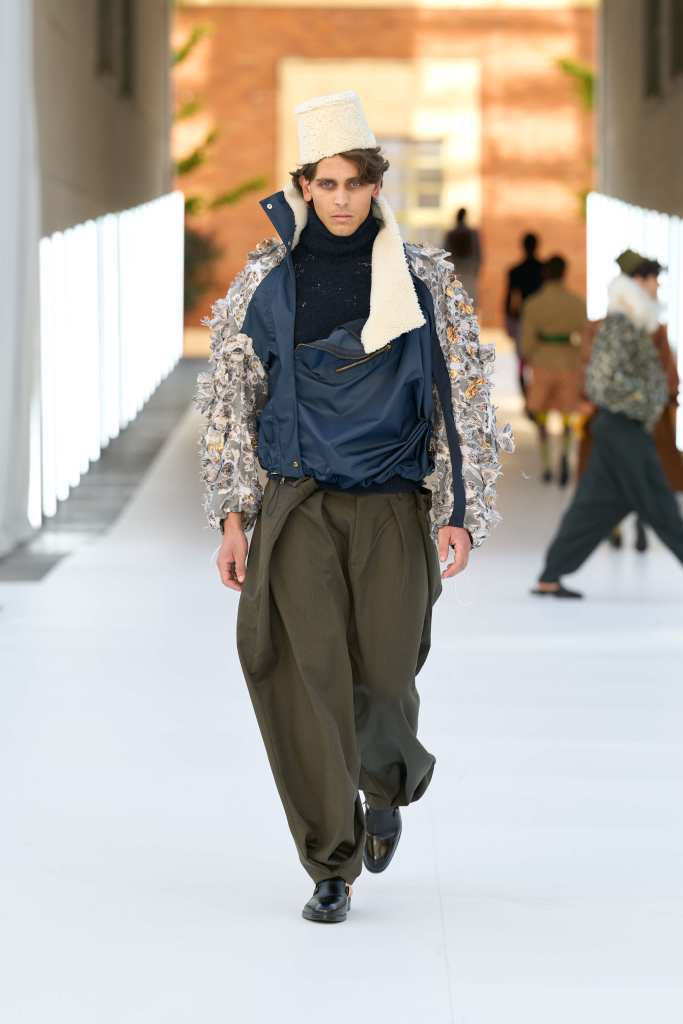
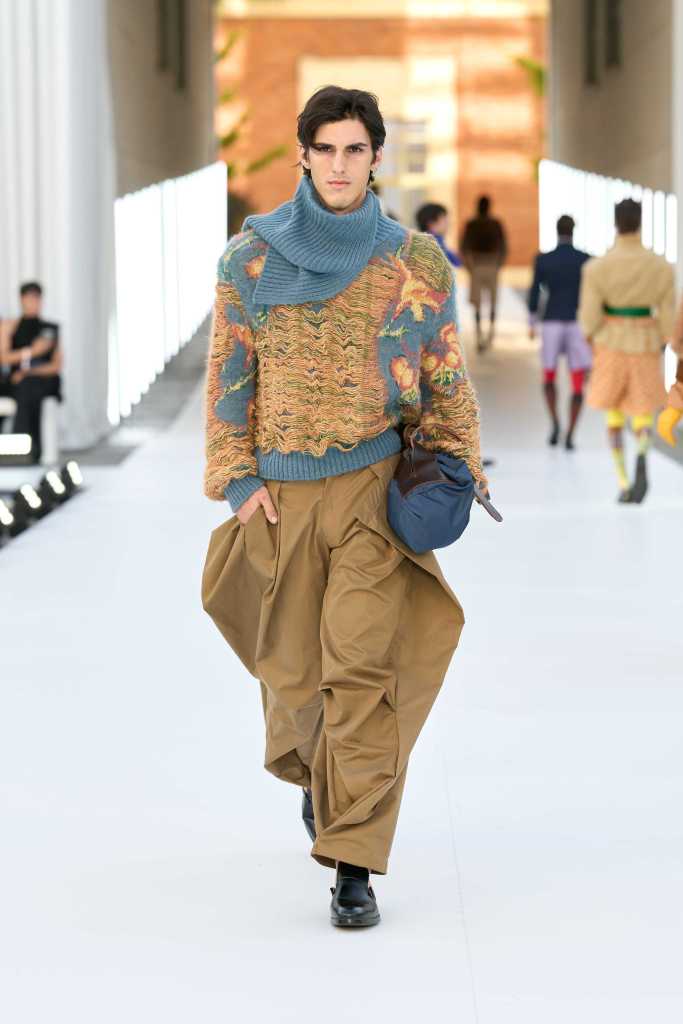
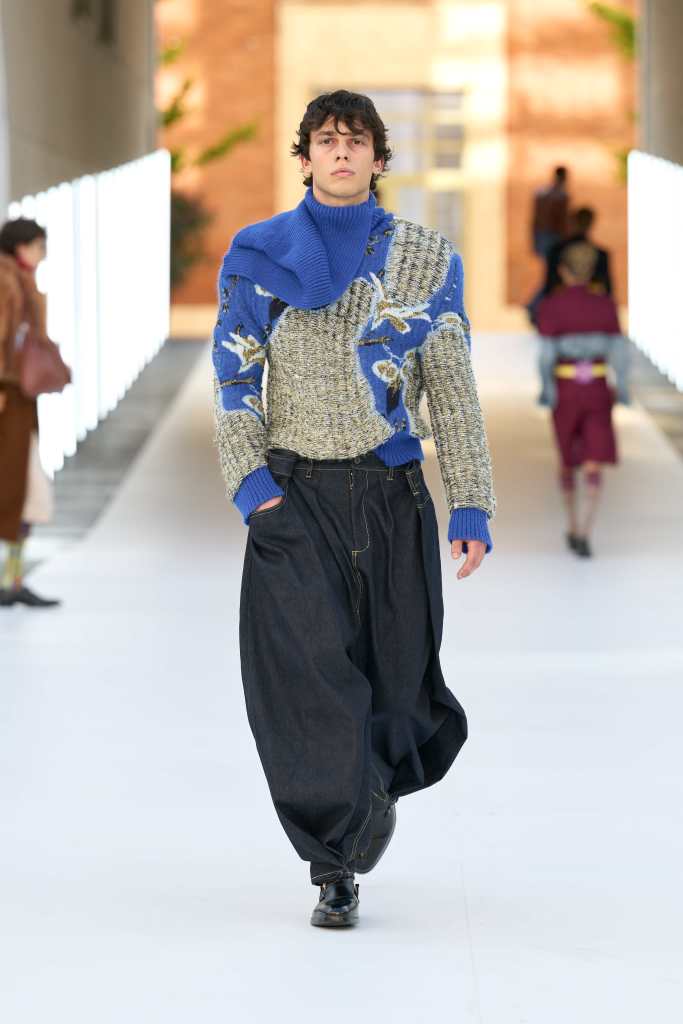
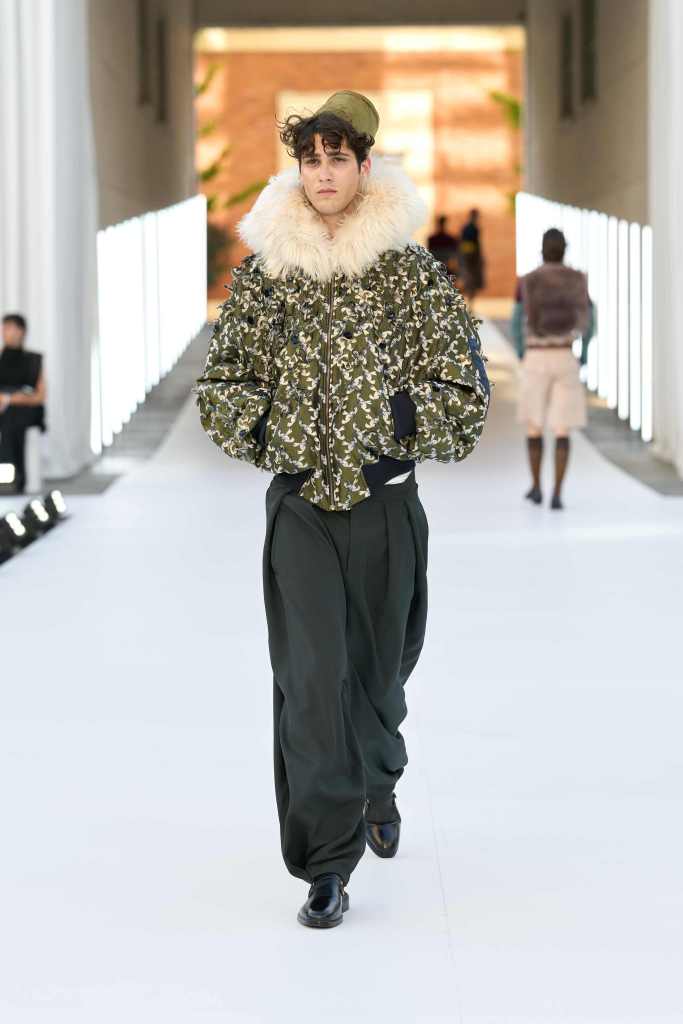
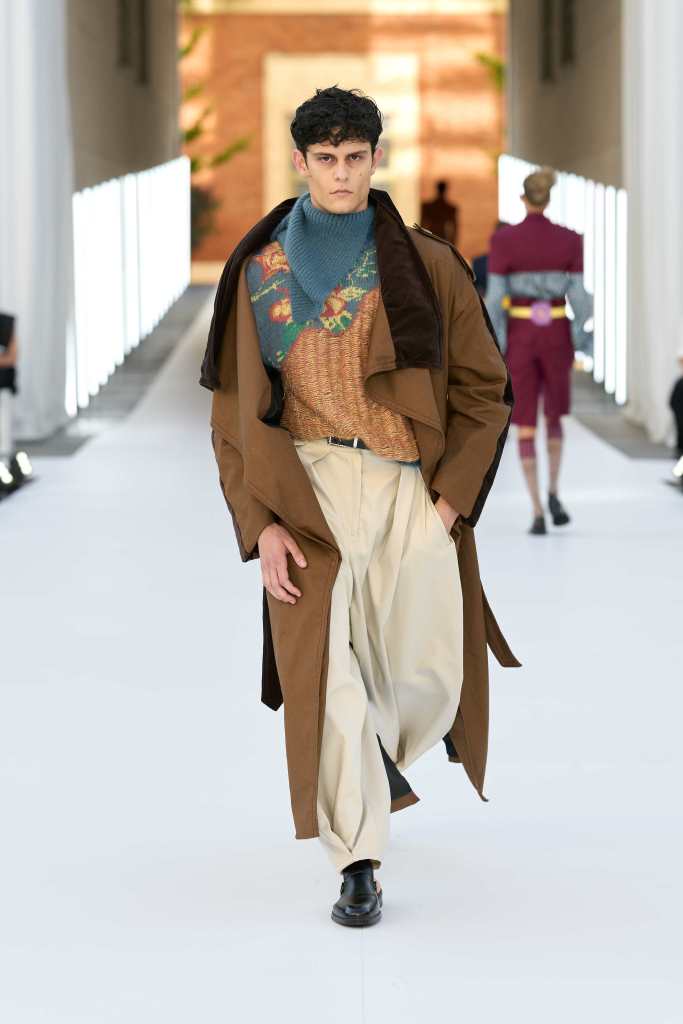
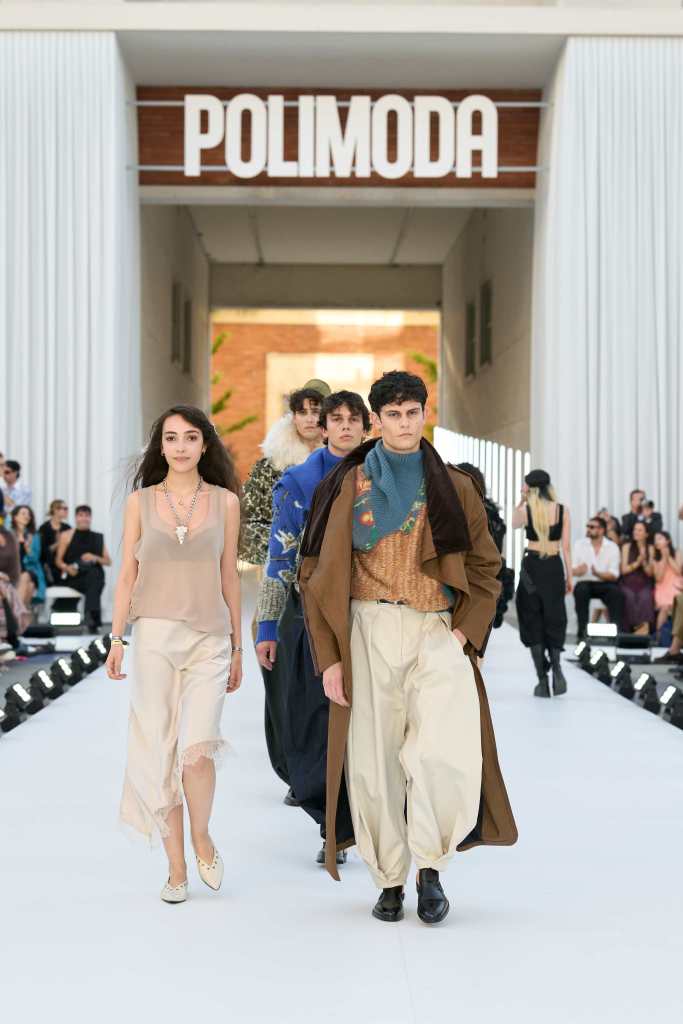
Shapes draw from the shells and sculptural forms found throughout Parajanov’s museum and films, while the colour palette is lifted directly from his cinematic scenes: shades of green, navy, gold, chocolate brown, grey, and beige, with faded pink, yellow, and deep purple woven through the prints. Materials were chosen to serve the mood and silhouette of the project, reinforcing its atmospheric, almost devotional quality. The Parajanov Street is a collection about the moment inspiration stops being something you seek and becomes something you simply are.
Jakob Nittmann (Austria) | Unlearning Neutral | @jakobnittmann
Unlearning Neutral by Jakob Nittmann begins with a provocation: colour was not always absent from menswear. In 18th century aristocratic dress, colour was natural, learned, and intentional, a conscious expression of status and personality.
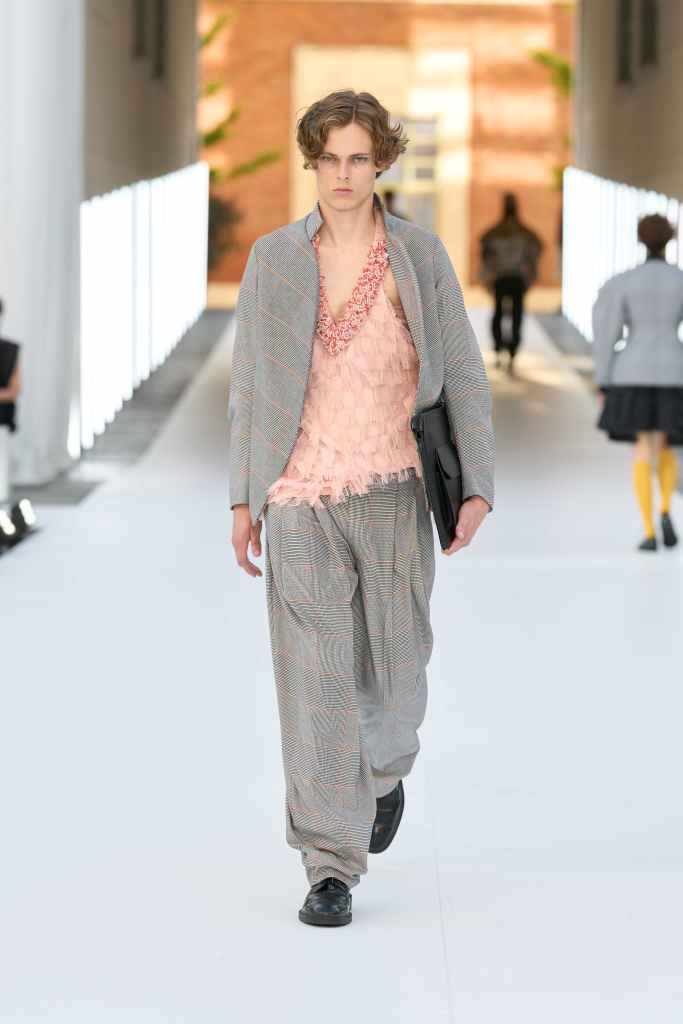
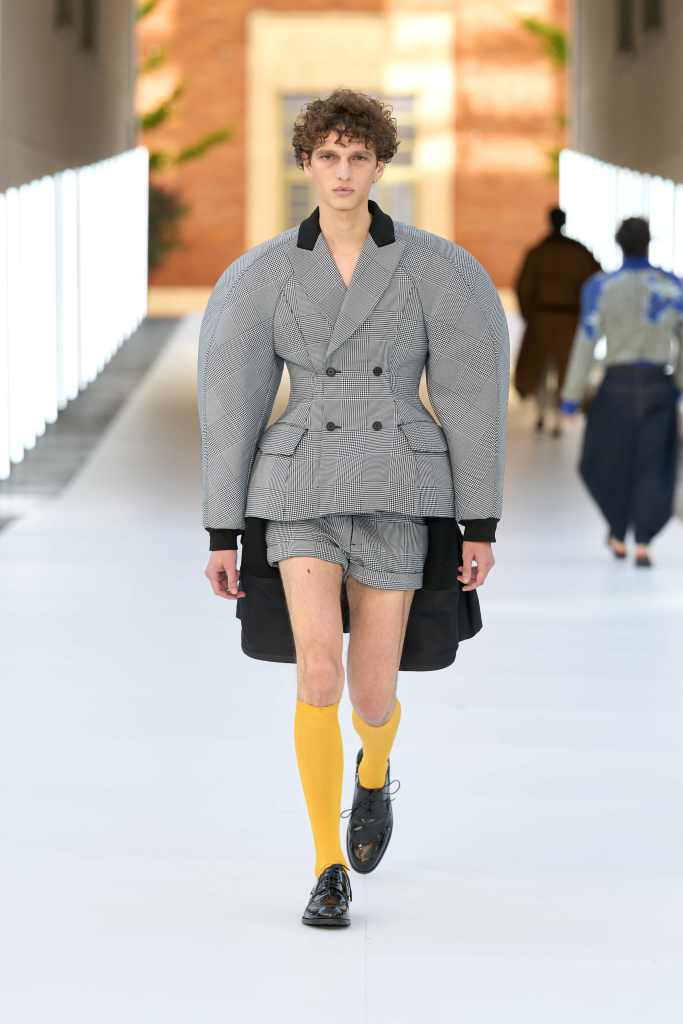
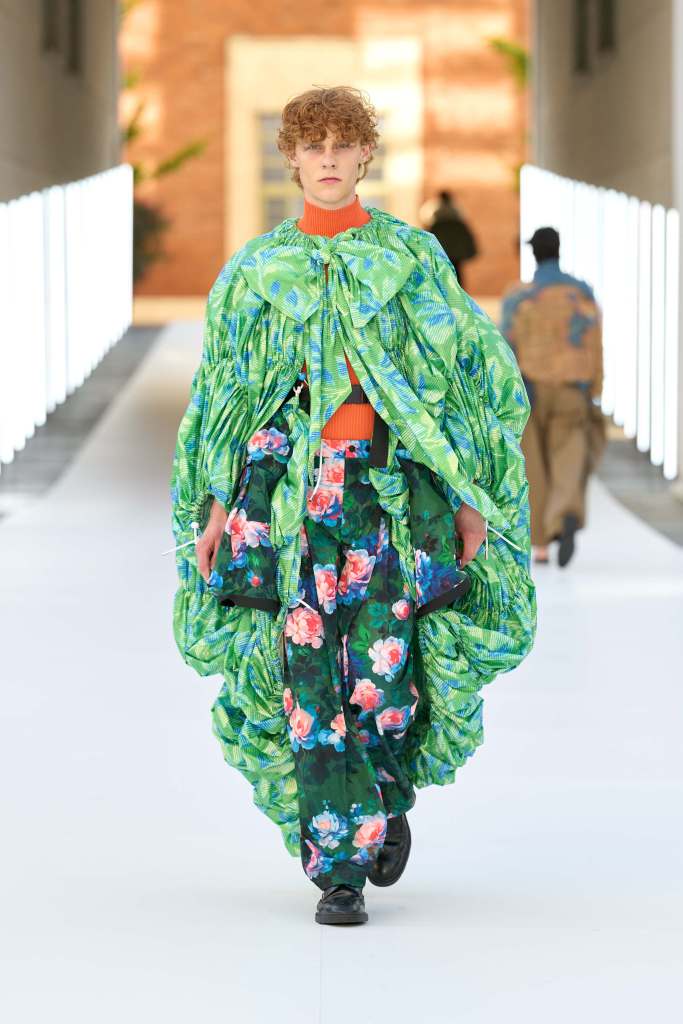
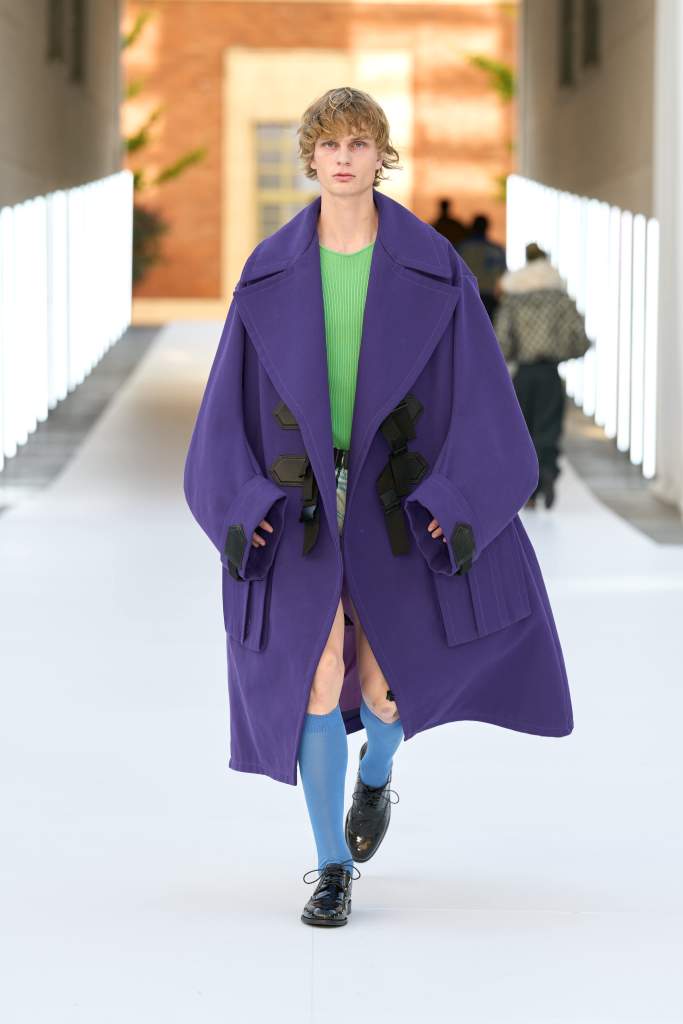
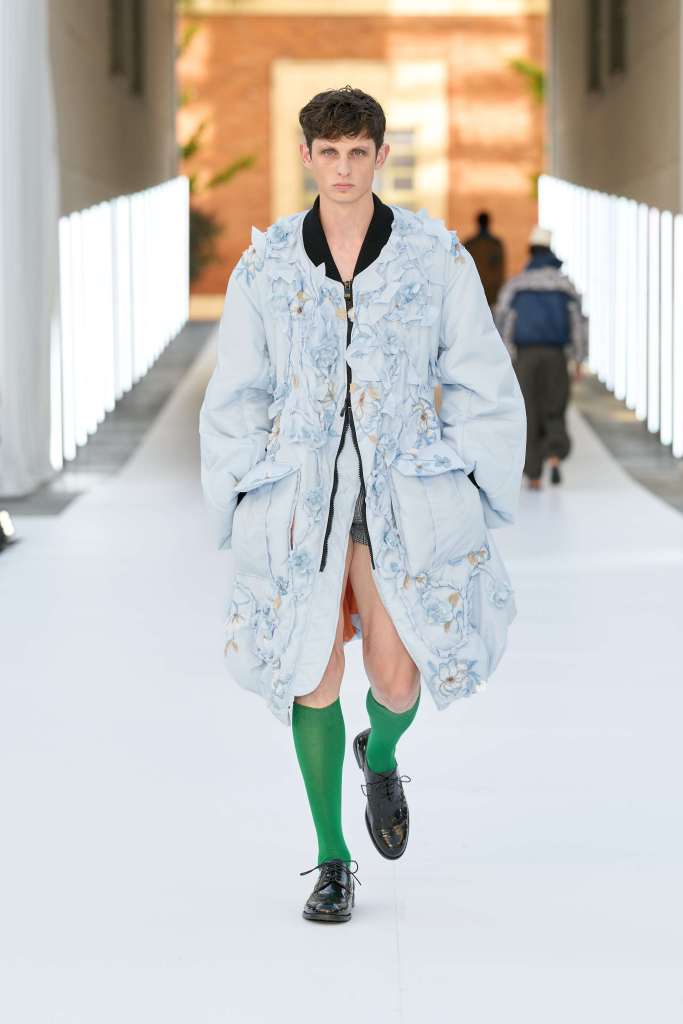
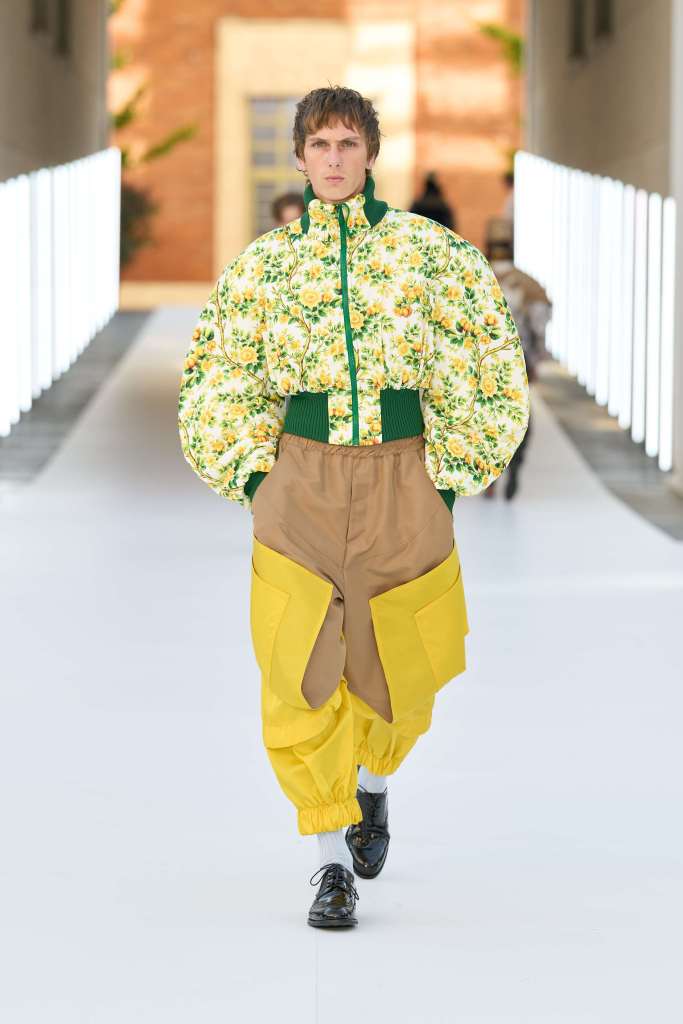
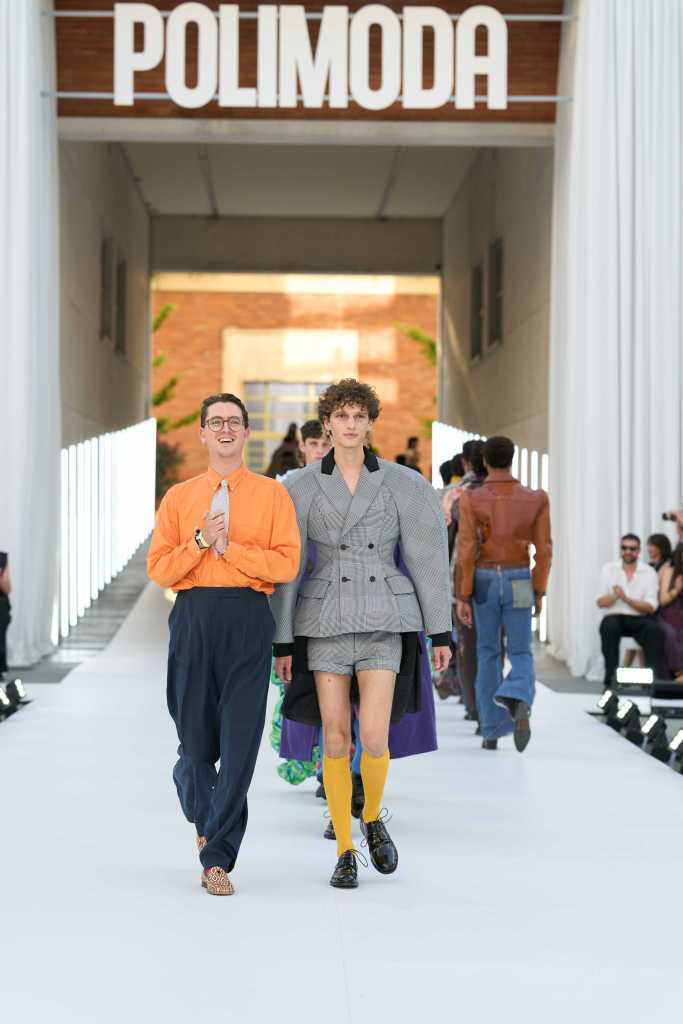
Its disappearance, Jakob argues, came not from rejection but from insecurity, as the rise of the middle class brought conformity and the knowledge of colour was gradually lost. The collection sets out to reclaim that courage. Patterns and silhouettes from 18th century menswear coats are translated into contemporary forms, bombers, trench coats, skiing jackets, while embroidery, prints, and accessories carry the same historical spirit into the present. Technical, modern fabrics provide a deliberate contrast to the richness of the references, grounding the collection firmly in today. Inspired by interior design and gardens, the palette is joyful and considered. Unlearning Neutral is an invitation for men to make themselves visible again, and to remember that dressing with joy is not frivolous, but radical.
Isabel Antonia Richter (Germany) | Simulation | @isabelantonia____
Simulation by Isabel Antonia Richter explores the blurring boundary between the digital and the real, how life in 2026 can feel like a simulation, and how we become projections of what we consume. Screens, gas stations, and car washes serve as visual anchors, evoking both the artificiality of modern environments and a deep urge for escapism.
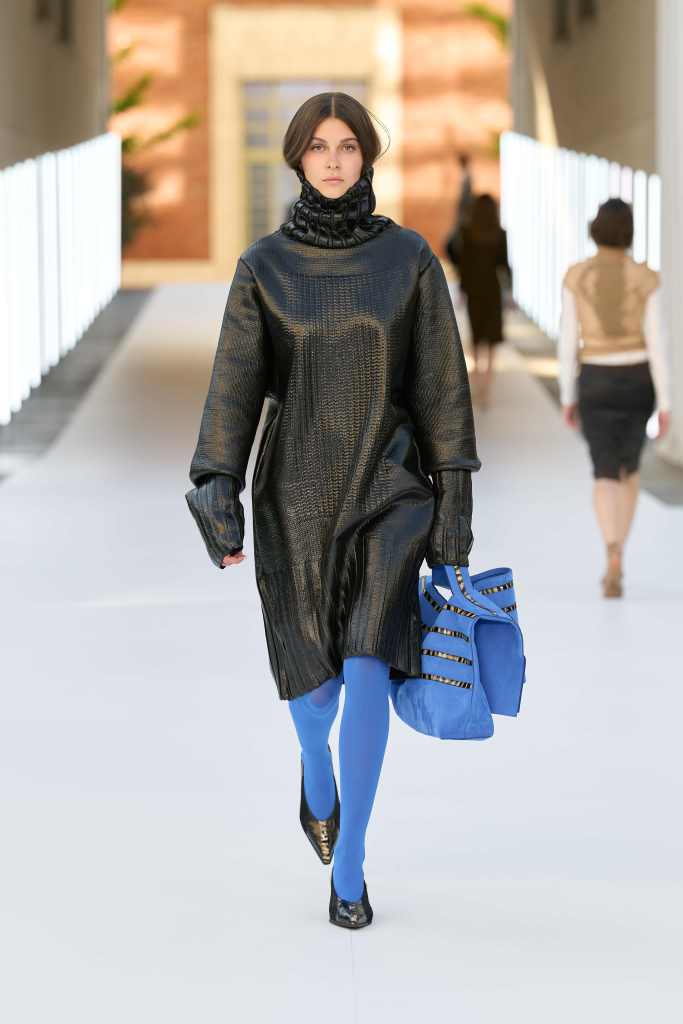
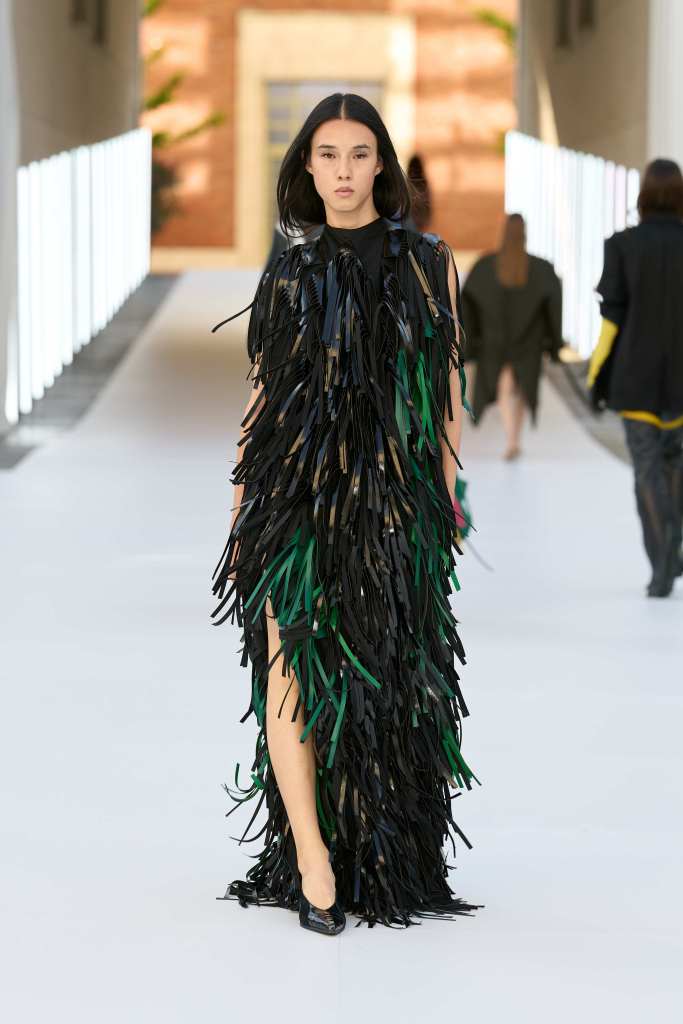
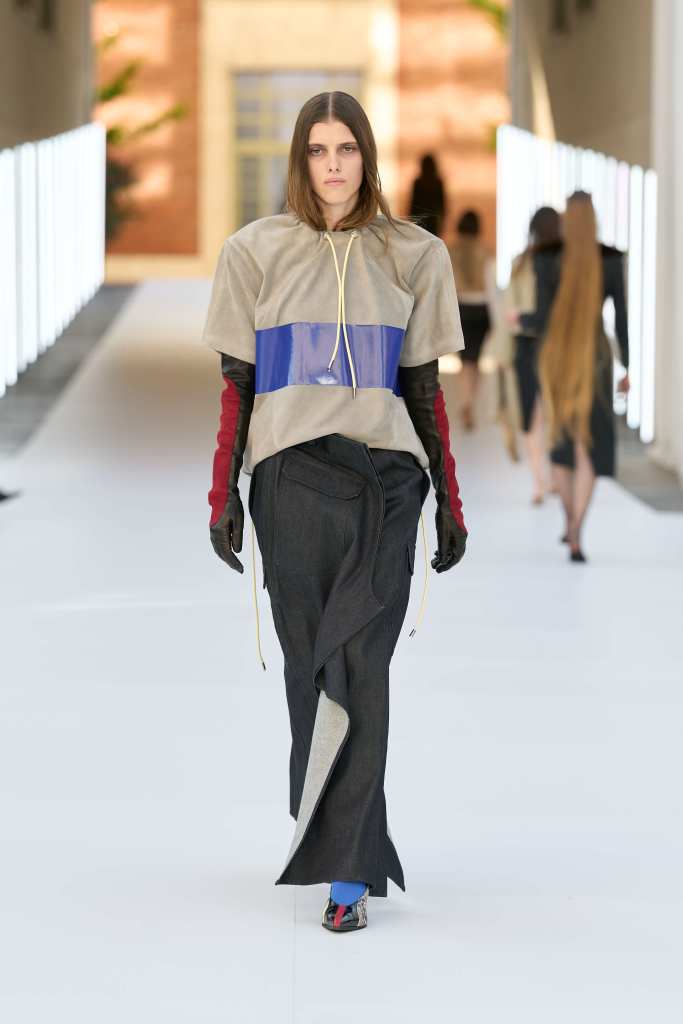
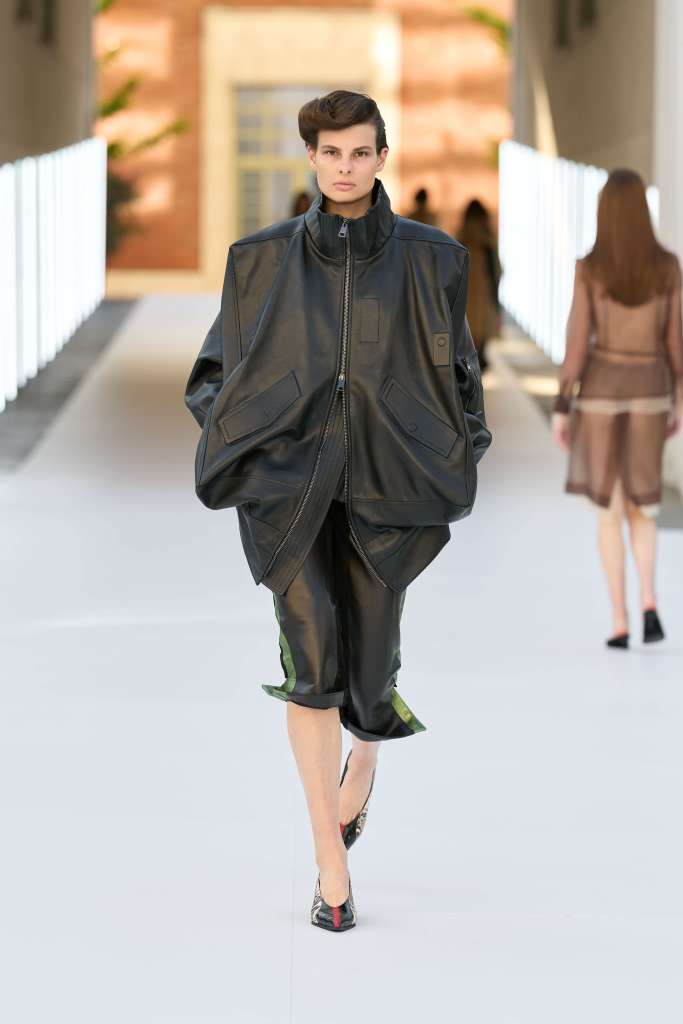
Primary colours contrast sharply against black backgrounds, reflecting the sleek, industrial quality of the digital world we inhabit. Leather, nylon, coatings, laminations, and printed fabrics create illusions on the body, reinforcing that sense of surface and spectacle. Yet at its core, the collection is built for the young, modern, independent woman of today, sharp silhouettes and decisive shapes designed to feel empowering, sophisticated, and quietly sexy. Simulation is a wardrobe that doesn’t ask a woman to disappear into her environment, but to move through it with authority.
Lucia Romagnoli (Italy) | Ab Umbra Lumen | @romagnoli.lc
Ab Umbra Lumen by Lucia Romagnoli explores the feeling of living as someone’s shadow, and the quiet courage it takes to step away and find one’s own light. The shadow does not seek to overpower, but to carve out its own space to exist and shine.
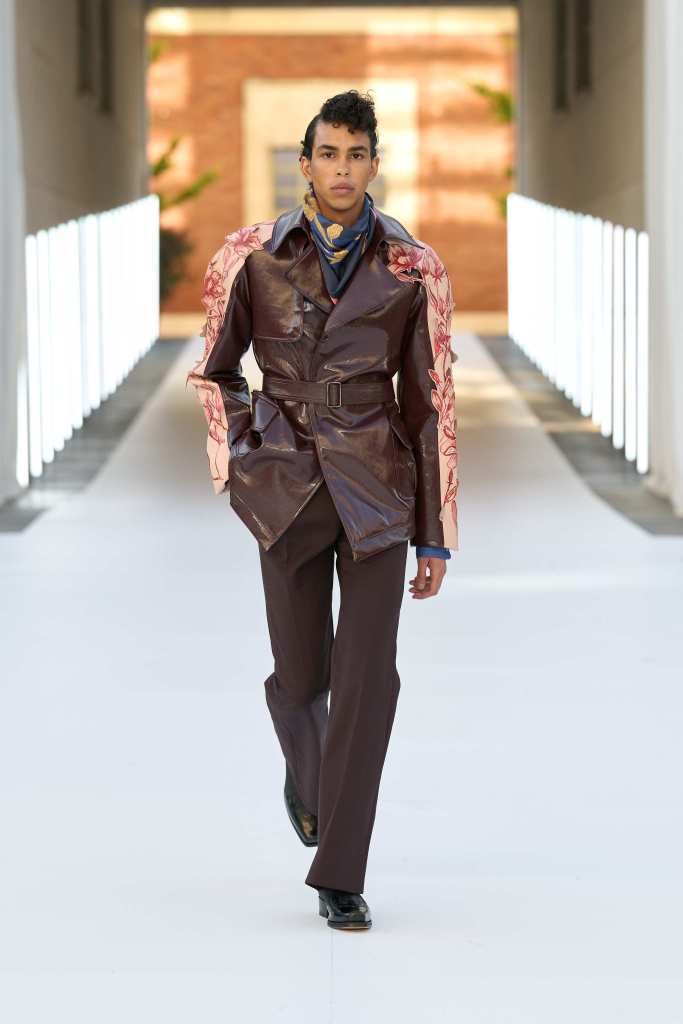
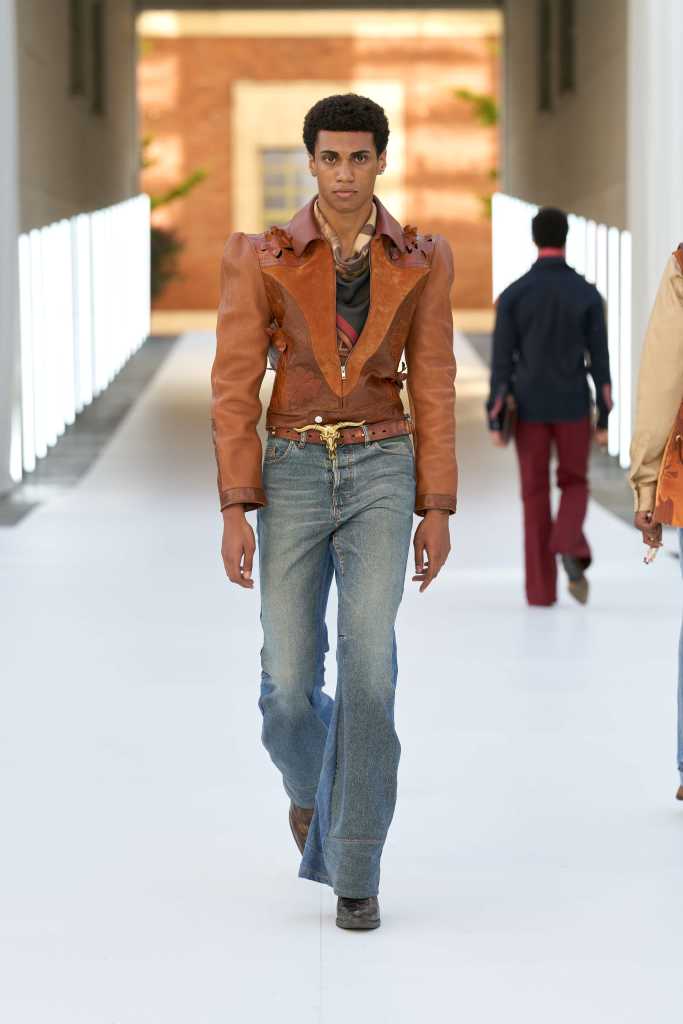
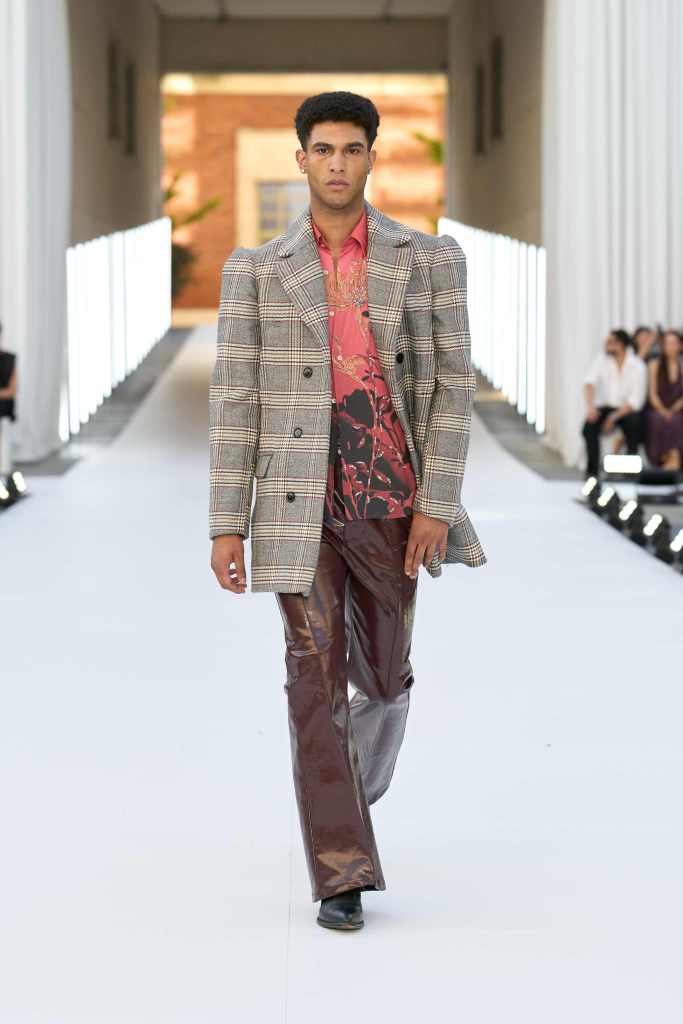
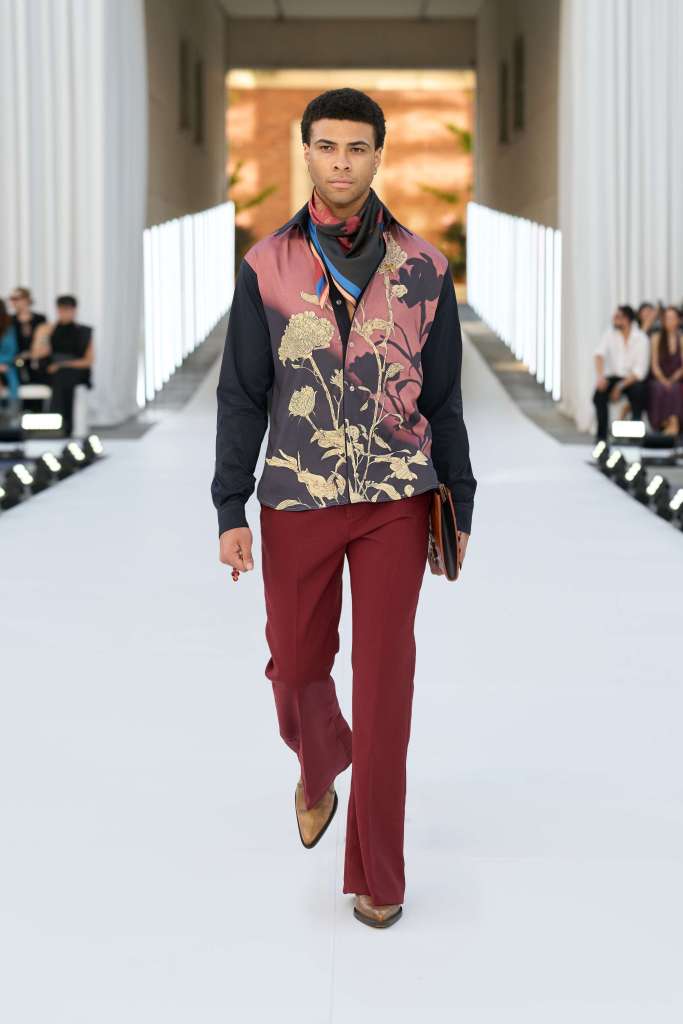
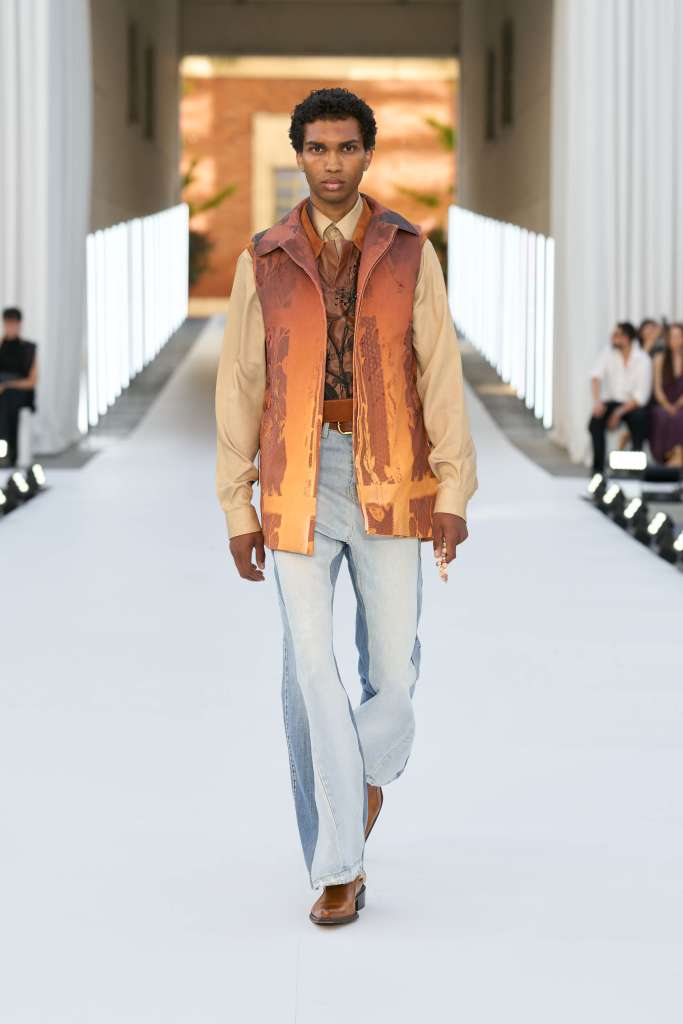
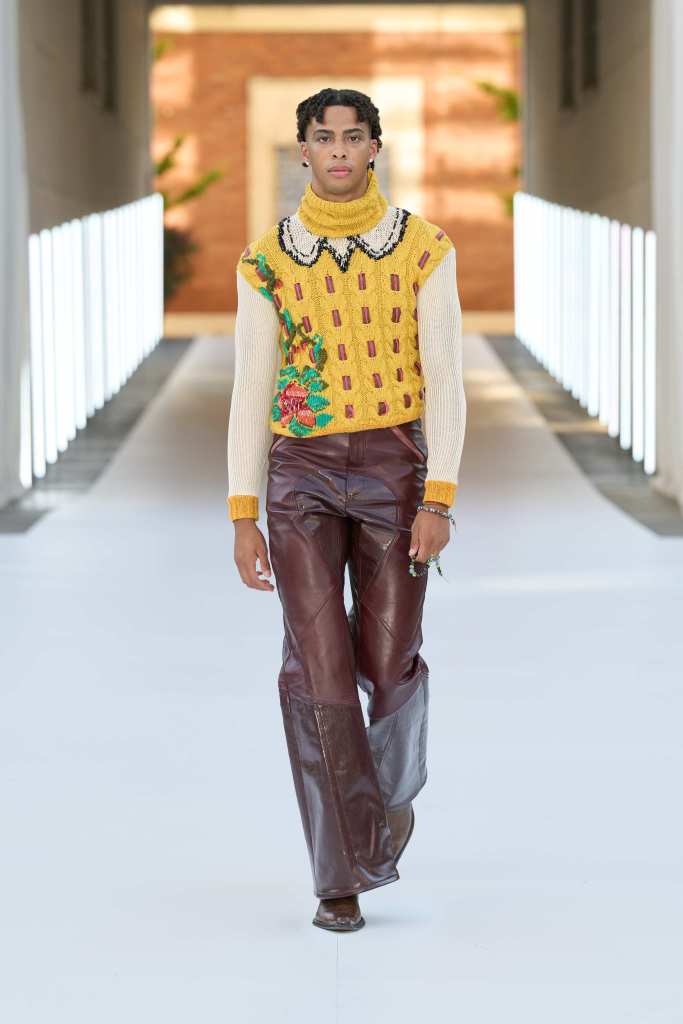
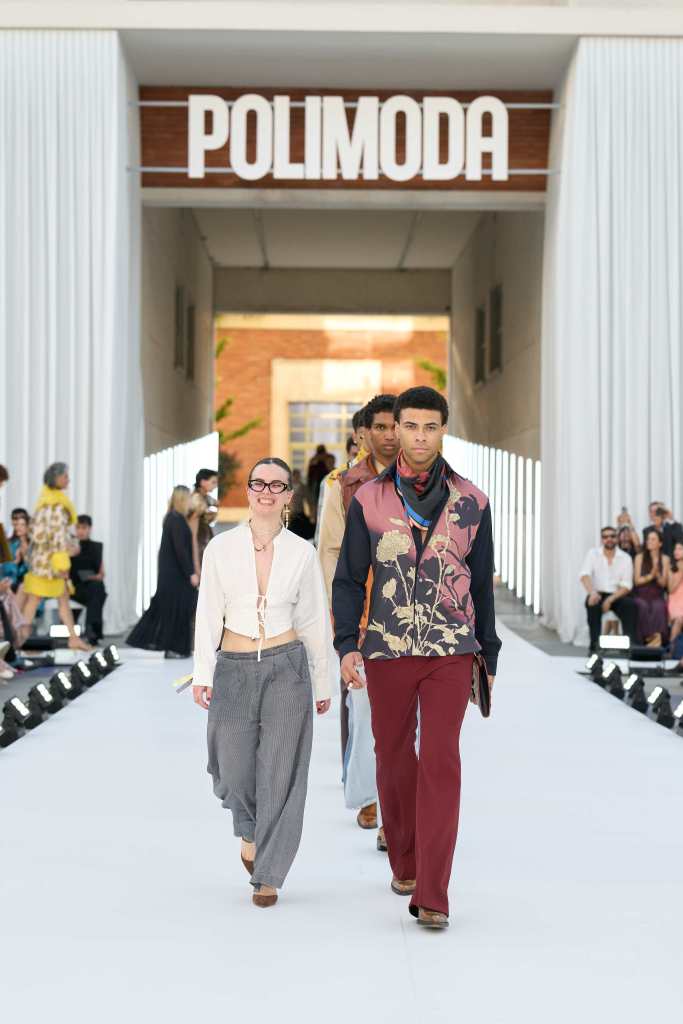
Structured 1970s silhouettes serve as the architectural foundation, their rigidity referencing walls whose shadows trace a path toward emergence, while three-dimensional floral details carry the symbolic weight of courage and renewal. Rather than leaning into darkness, the palette draws from the warmth and brightness of the decade, suggesting transformation over melancholy. Wool, leather, and coated denim are combined with two distinct knitwear techniques, a painted weave that merges light and shadow conceptually, and an embroidered jacquard where flowers appear to emerge from the surface itself. Ab Umbra Lumen is a collection about becoming visible, slowly, structurally, and on one’s own terms.
Matilde Terranova (Italy) | Teenager Boys | @_mati_tt_
Teenager Boys by Matilde Terranuova begins in slow, empty places where nothing happens, and follows a group of teenagers who turn the outlaw into a language. What starts as imitation and play gradually becomes a precise construction of identity, as the city arrives and being seen becomes necessary.
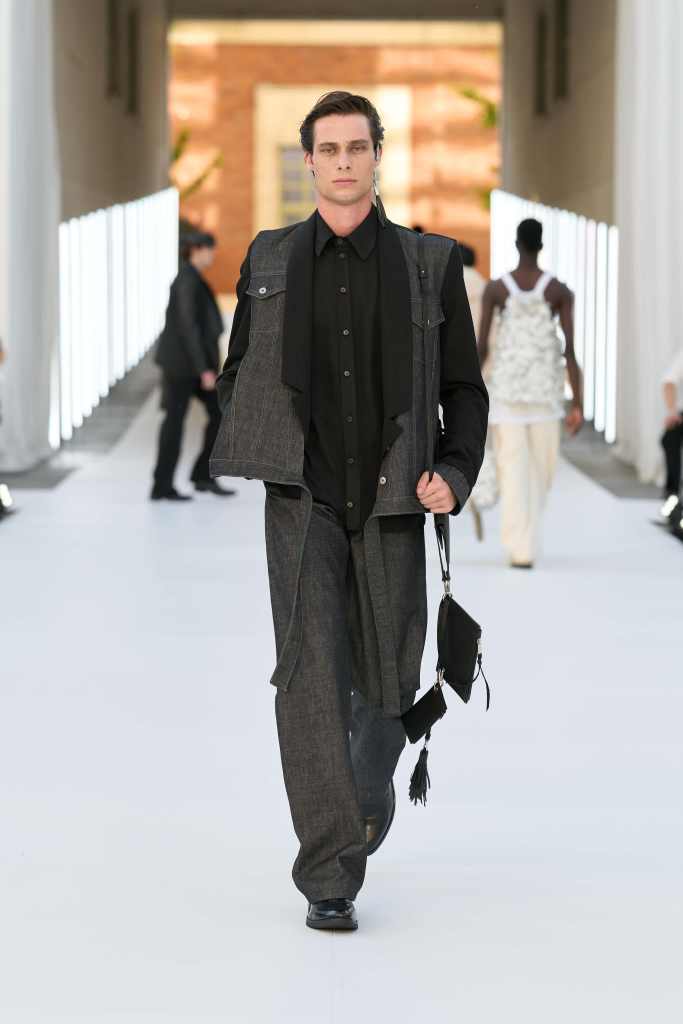
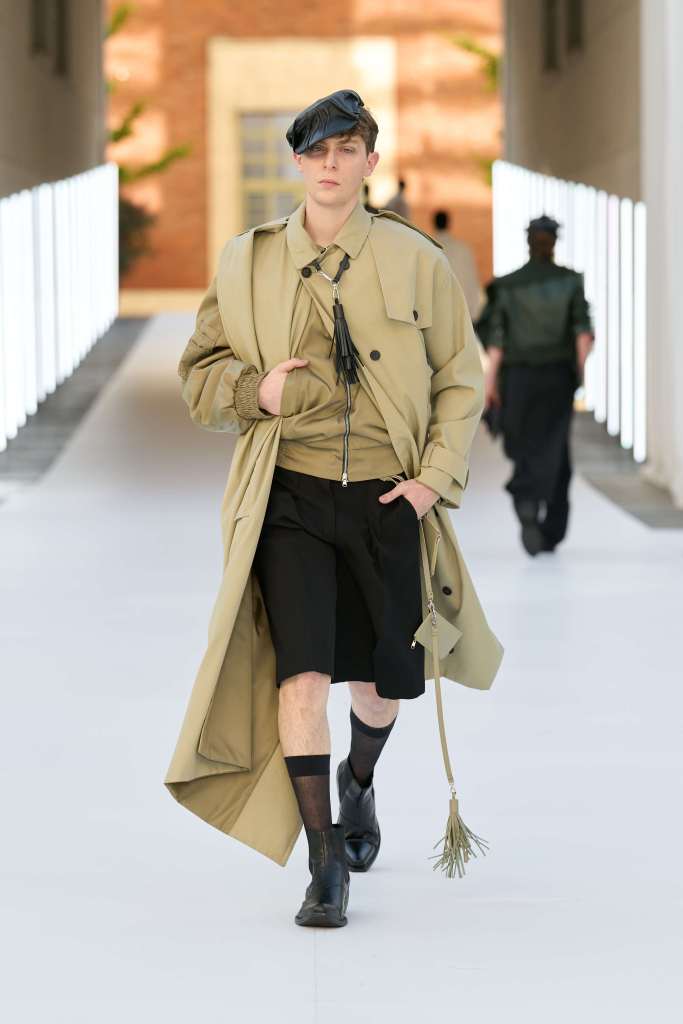
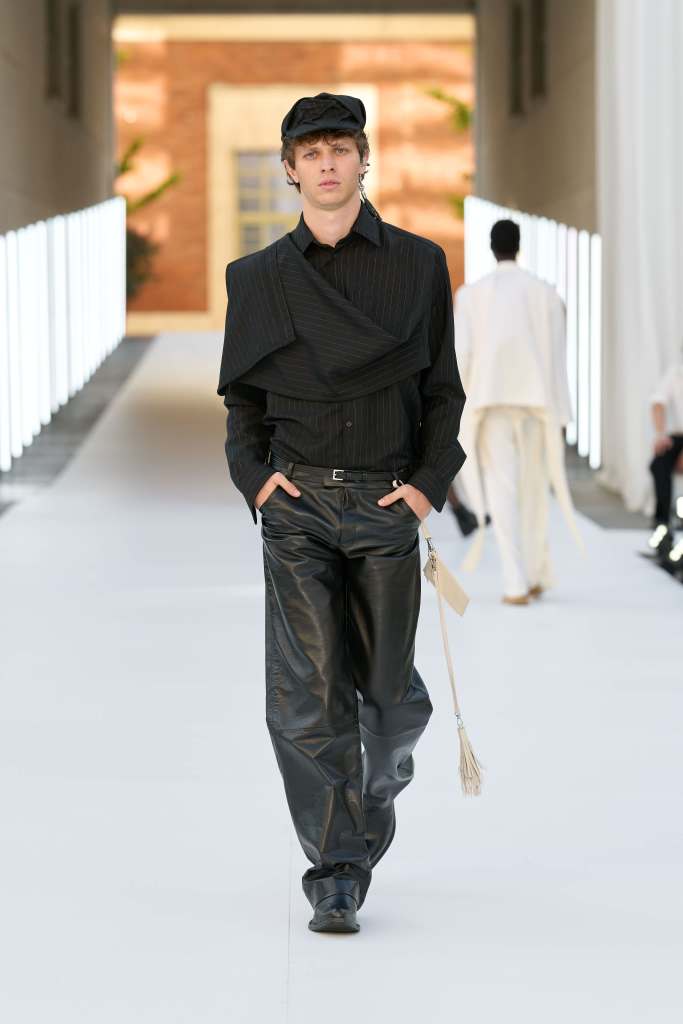
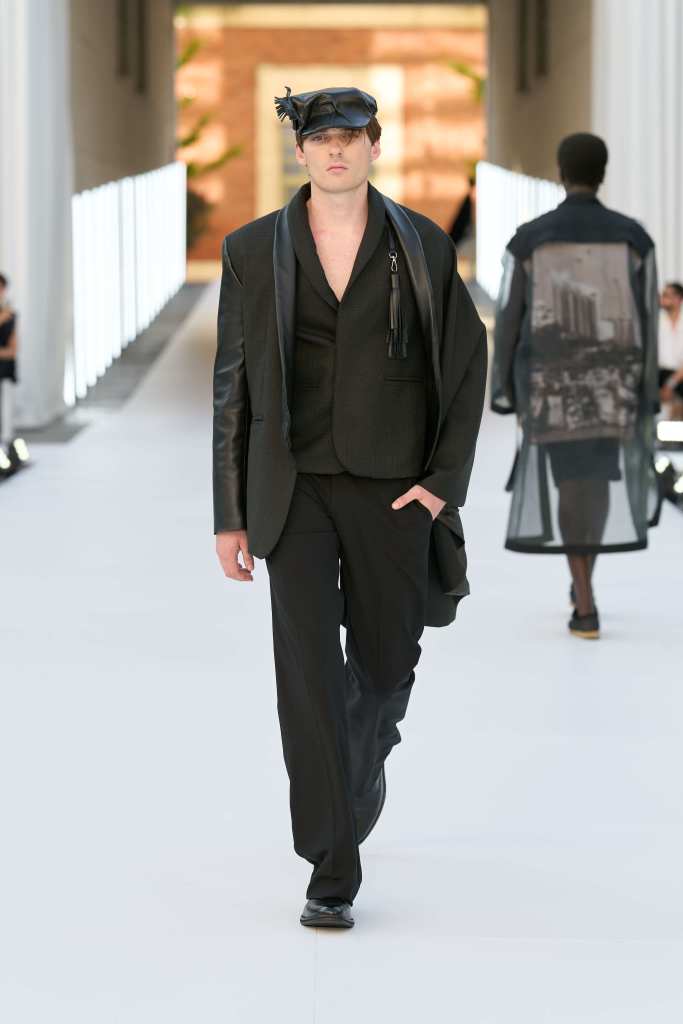
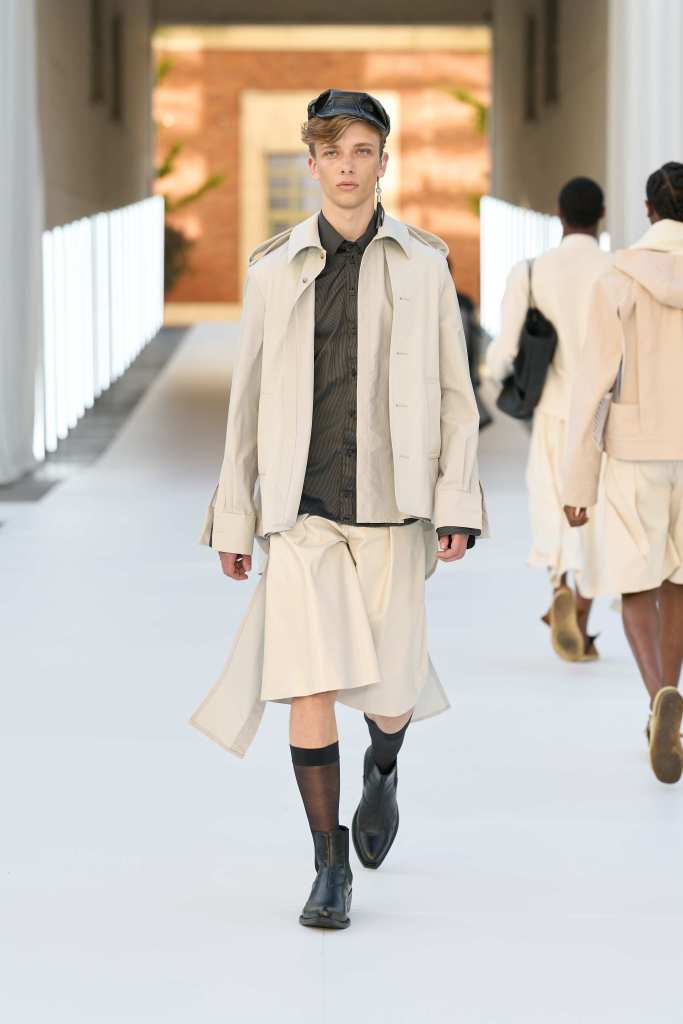
Inspired by the visual tribal language of Walter Hill’s The Warriors (1979), the collection reinterprets urban nocturnal imagery through a contemporary and introspective lens, especially in the way the film transforms a gang into a visual language and a symbol of belonging. Hybrid garments, bombers fused with trench coats, denim merged with tailoring, create slim, elongated, nervous silhouettes suspended between rebellion and elegance. A palette of charcoal black, washed military green, dirty beige, and dusty grey appears worn and almost oxidized, while washed denim, dry wool, worn leather, and technical nylon merge workwear, streetwear, and sartorial construction into a single new identity. Teenager Boys is about the moment a role becomes the only possible way to exist.
Francesca Valivano (Italy) | Nel silenzio dell’attimo | @_fraangente
Nel silenzio dell’attimo by Francesca Valivano explores time as an unstoppable force, and the suspended figure caught between movement and stillness. Using chess as a central metaphor, every decision becomes urgent, strategic, and irreversible, while shadows introduce the emotional undercurrent of each move: hesitation, fear, and memory.
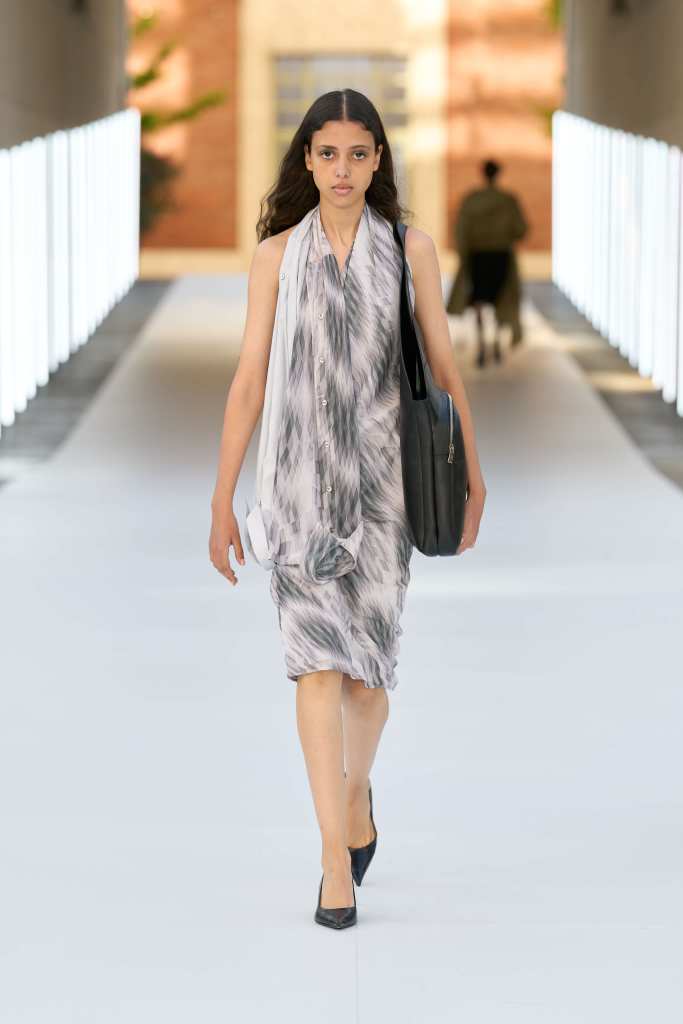
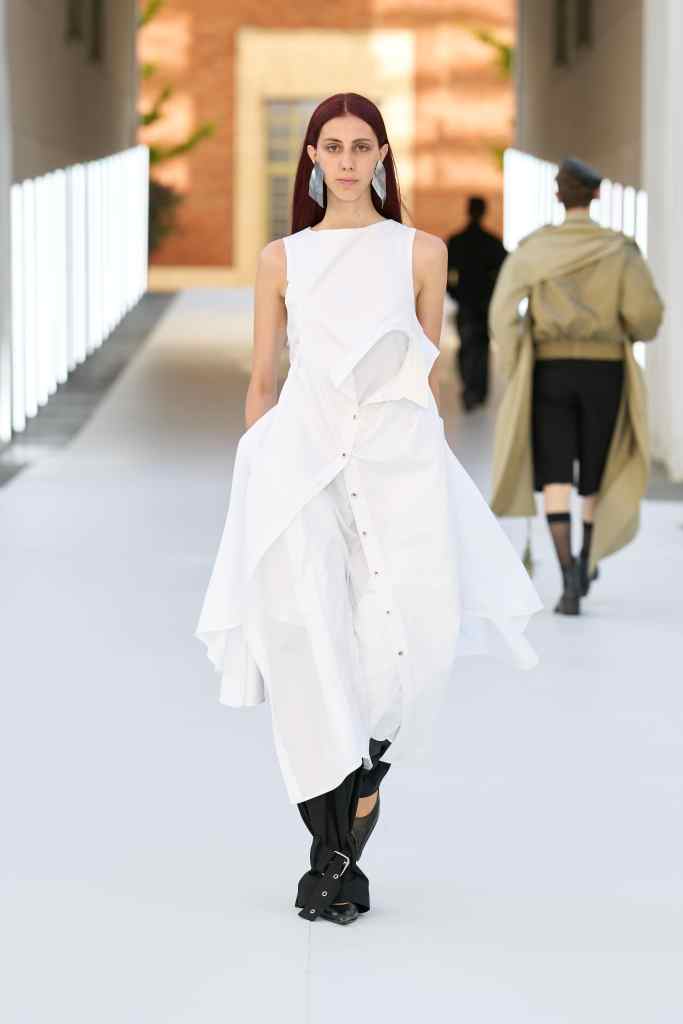
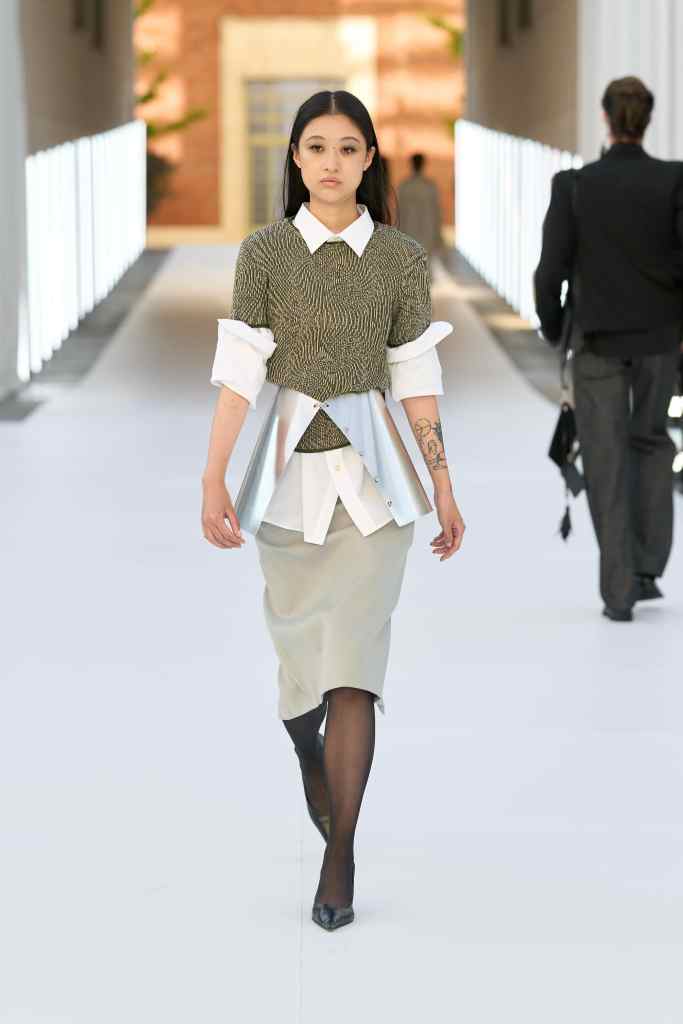
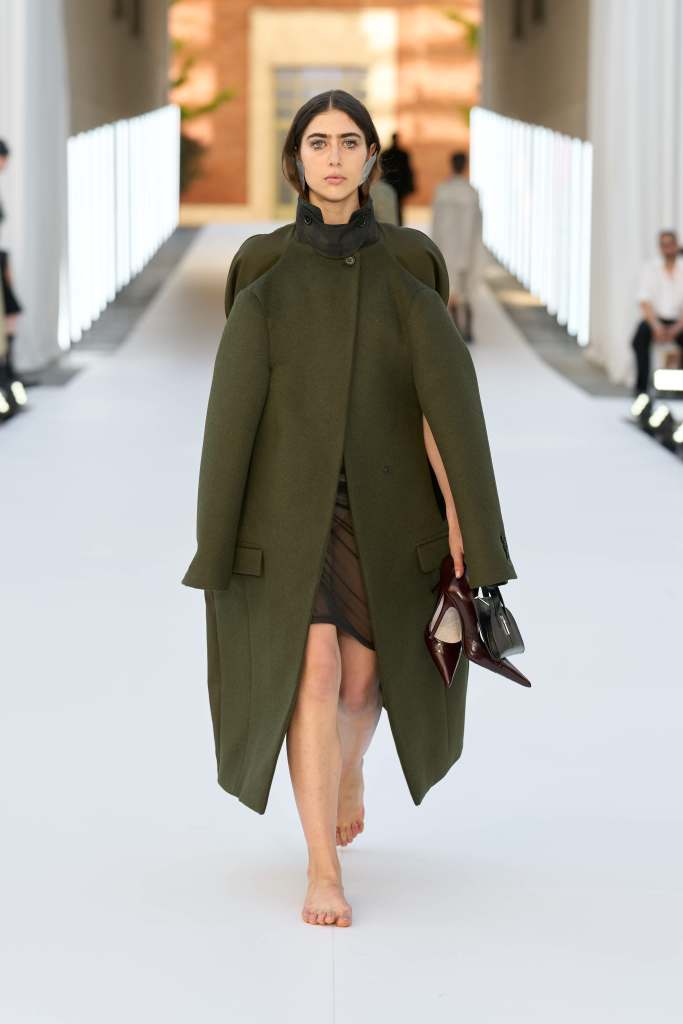
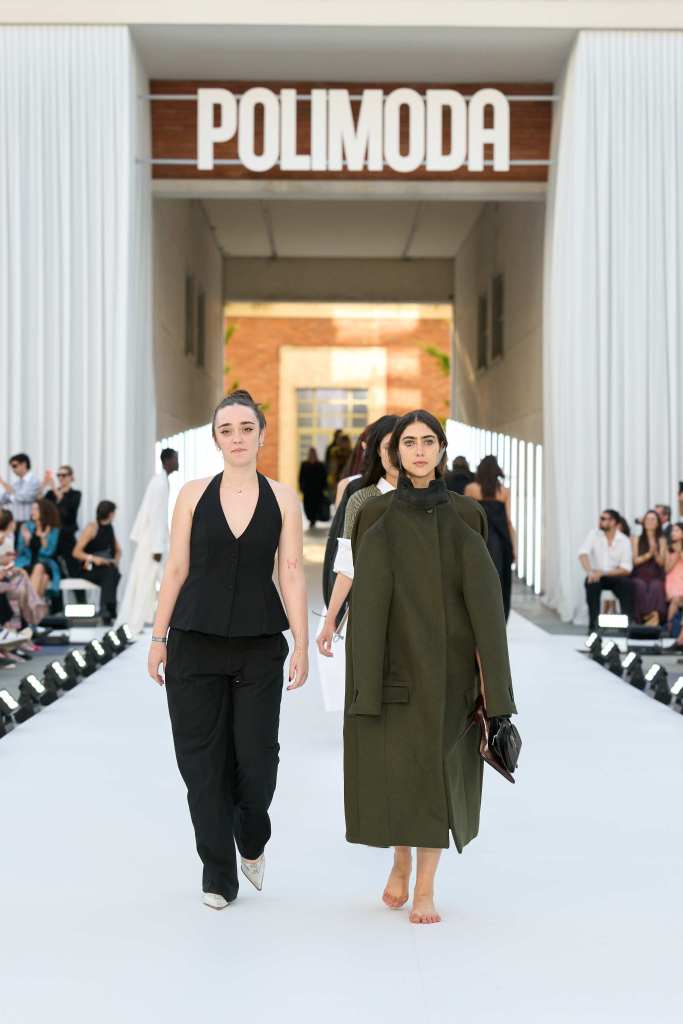
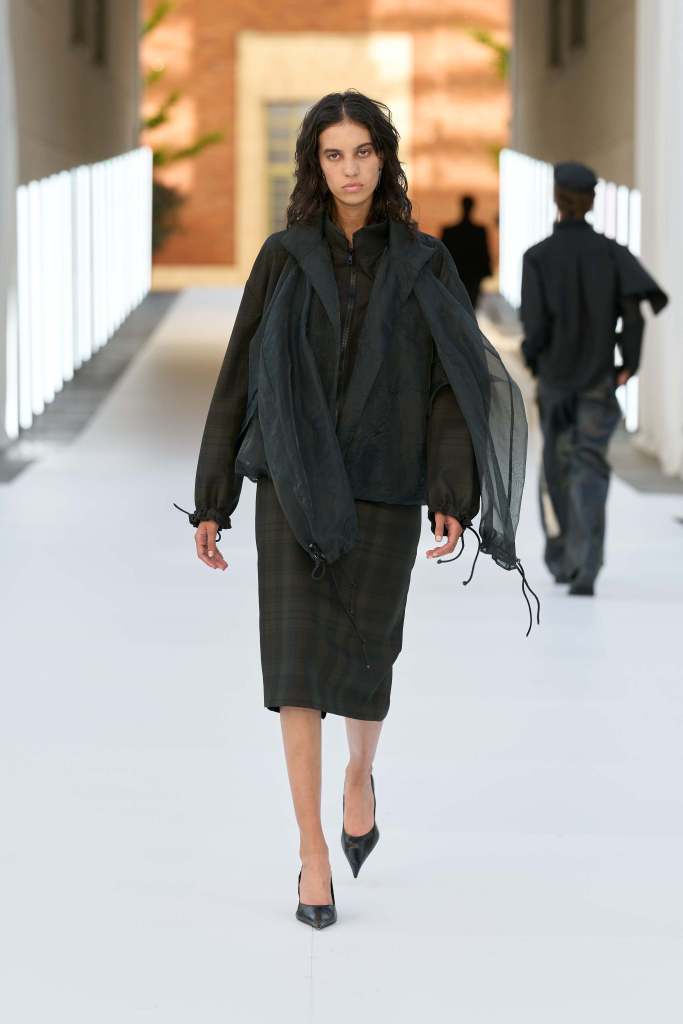
Silhouettes appear frozen mid-motion, as though collapsing or crystallising in the instant before resolution, shaped through draping and construction that balance structure with fluidity. The sharp geometry of chess is contrasted with softer, organic distortions inspired by shadow, while a palette of deep, dark tones alongside lighter, neutral shades evokes both emotional depth and absence. Classic materials are layered with contemporary fabrics, creating a dialogue between tradition and innovation that reinforces the collection’s central tension. Nel silenzio dell’attimo captures a moment that cannot fully resolve, and finds its power precisely there.
What distinguishes a Polimoda graduate is the “hands-on” approach. Every garment seen on the runway was conceived and executed within the school’s 12,000 square meters of state-of-the-art laboratories. The synergy with the Italian supply chain was evident, bolstered by technical sponsors like Graziano Ricami, Lineapiù, and Lanecardate. This “know-how” ensured that even the most avant-garde concepts remained rooted in the reality of high-end manufacturing. The stakes were high, as a world-class jury—including Eva Cavalli, Eugene Rabkin of StyleZeitgeist, and actress Simona Tabasco—observed from the front row to select the “Best Collection 2026.” Their presence underscored Polimoda’s role not just as a school, but as a critical scouting ground for the global fashion industry.
With 80% of its 2,000 students coming from abroad, Polimoda has effectively turned Florence into a “cultural platform” where 107 nationalities converge. The 2026 Graduate Show was the culmination of this diversity. It was a reminder that fashion, at its best, is a universal language used to interpret and give meaning to the world we inherit. As the final models walked the square of Manifattura Tabacchi, the 40th-anniversary show left the audience with a clear message: the next generation of designers is not interested in superficiality. They are looking for authenticity, rootedness, and a fashion that speaks as loudly as it wears. For Polimoda, the last forty years have been about building the foundation; the next forty, it seems, will be about changing the world, one stitch at a time.
Credits:
• Creative Direction: Massimiliano Giornetti
• Mentorship: Luke and Lucie Meier
• Styling: Serge Girardi
• Sound Design: Frédéric Sanchez
• Media Partners: Vogue Italia, 1 Granary, Next Gen Magazine
 33 MAGAZINE